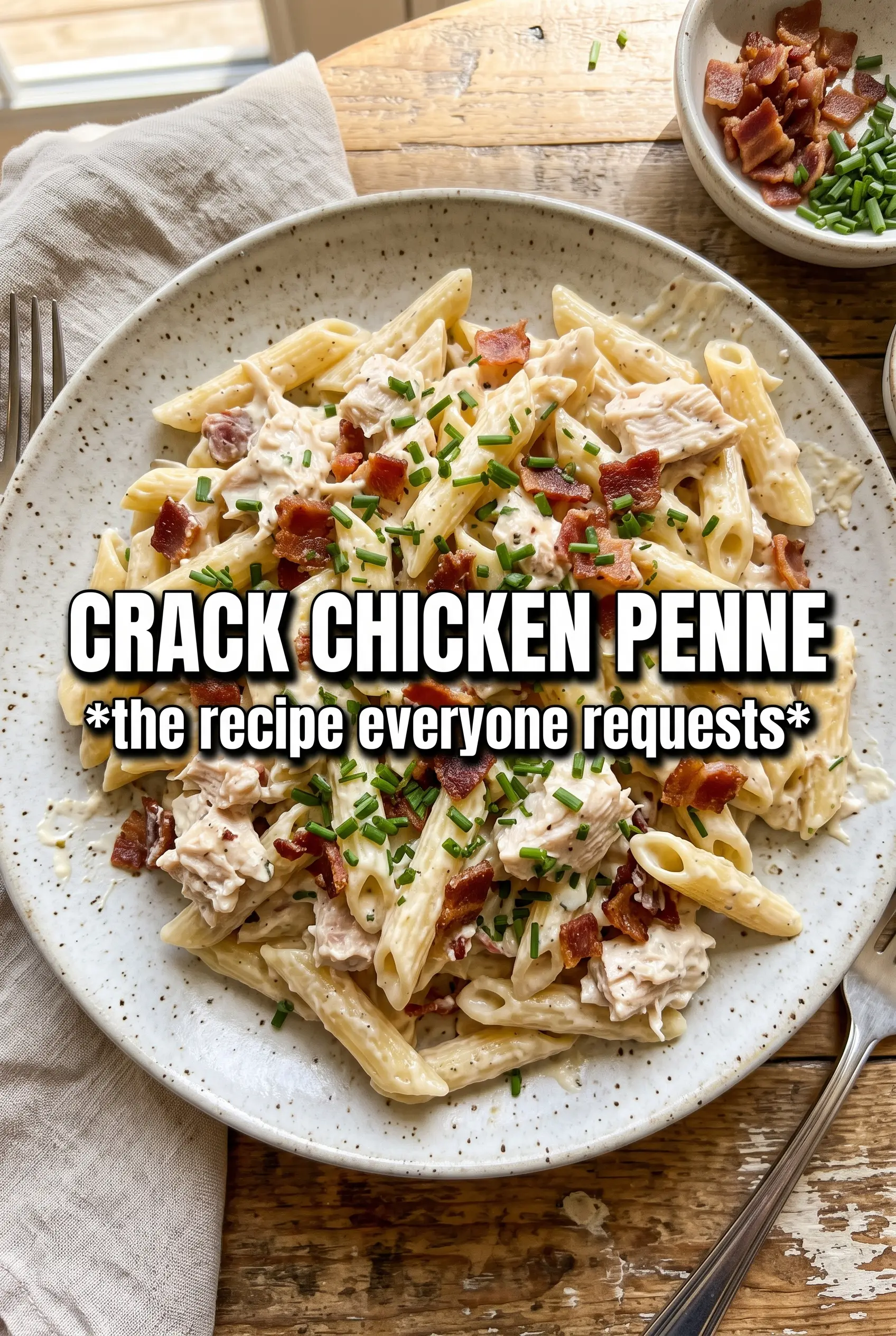
Penne coated in a thick ranch cream cheese sauce has a way of disappearing fast, especially when the pan is loaded with shredded chicken, crispy bacon, and melted cheddar. This version lands on the table with that spoon-coating creaminess people expect, but it still holds enough structure that the pasta doesn’t turn into a heavy, gluey tangle. The bacon stays crisp in all the right places, the sauce clings to every ridge of the penne, and the whole dish tastes like it was built for seconds.
What makes this work is the order of the sauce. The cream cheese melts slowly with the broth first, which keeps the base smooth instead of grainy, and the heavy cream goes in after the ranch seasoning has started to loosen everything up. That gives you a sauce that thickens in the skillet instead of breaking or turning oily. Using cooked chicken and already-cooked pasta keeps the timing short, which matters here because this dish is at its best when the sauce is glossy and hot.
Below, I’ll walk through the small details that keep the sauce silky, plus a few swaps that still give you that same ranch-bacon comfort without ruining the texture.
The sauce coated every piece of penne instead of pooling at the bottom, and the bacon stayed crisp on top even after serving. I used rotisserie chicken and dinner was on the table in under 30 minutes.
Creamy crack chicken penne with bacon, cheddar, and ranch is the kind of dinner you’ll want to keep handy for busy nights.
The Sauce Stays Smooth If You Melt the Base First
The biggest mistake with cream cheese pasta is dumping everything into a hot pan at once and hoping it turns silky. That usually gives you little lumps of cream cheese or a sauce that looks split before the pasta even hits the skillet. Here, the broth gives the cream cheese space to soften first, and the heat stays low enough that the dairy melts instead of seizing.
The other thing that matters is keeping the sauce moving once the ranch seasoning goes in. Ranch mix thickens fast, and if the pan gets too hot, the dairy can tighten up around the edges while the center still looks loose. Stir until the sauce looks glossy and unified, then let it simmer just long enough to thicken lightly before the pasta joins the pan.
What Each Ingredient Is Actually Doing in This Dish

- Cooked shredded chicken — Rotisserie chicken works beautifully here because it’s already seasoned and tender. Any cooked chicken is fine, but shred it fairly small so the sauce can coat every bite instead of sitting around big chunks.
- Cream cheese — This is the backbone of the sauce, and softened cubes melt much more evenly than one cold block dropped into the pan. Low-fat cream cheese will work in a pinch, but the sauce won’t taste as rich and it can turn a little less smooth.
- Chicken broth — This loosens the cream cheese and gives the sauce enough body to cling to the pasta. Water won’t give you the same depth, so use broth if you can.
- Heavy cream — This rounds out the ranch flavor and helps the sauce stay velvety. Half-and-half can work, but the sauce will be a touch thinner and less plush.
- Cheddar cheese — Shred it yourself if possible. Pre-shredded cheese is coated to prevent clumping, which can make the sauce a little grainy when it melts.
- Bacon — Use it for both flavor and texture. Adding most of it at the end keeps some pieces crisp, while the garnish gives the dish that salty finish people expect from this kind of pasta.
Building the Skillet in the Right Order
Waking Up the Garlic
Start with the garlic in olive oil and cook it just until fragrant, about a minute. You want it soft and aromatic, not browned, because browned garlic turns bitter fast in a creamy sauce. If your pan is too hot here, lower it before you add anything else. Garlic burns faster than the rest of the dish can recover from.
Melting the Cream Cheese Without the Lumps
Add the chicken broth and cream cheese cubes, then stir over medium-low heat until the cheese melts completely. The broth helps the cream cheese loosen gradually, which is why this sauce stays smooth instead of breaking into little bits. If you see stubborn pieces, keep stirring and give them another minute; don’t crank up the heat to force it.
Thickening the Ranch Sauce
Stir in the ranch seasoning and heavy cream, then let the sauce simmer for 3 to 4 minutes. It should look glossy and slightly thicker, like it can coat the back of a spoon. If it starts to bubble hard, pull the pan down to low. A hard boil is the fastest way to turn a creamy sauce greasy.
Finishing With Chicken, Bacon, and Pasta
Add the shredded chicken, most of the bacon, and the cooked penne, then toss until everything is evenly coated. The pasta should look drenched in sauce, not lightly dressed, because this dish thickens a little as it sits. Sprinkle the cheddar over the top, cover the skillet for 2 to 3 minutes, and stop as soon as it melts. Too much heat here can make the cheese stringy instead of smooth.
The Final Garnish
Finish with the remaining bacon and fresh chives. The bacon adds crunch at the end, and the chives cut through the richness just enough to keep each bite from feeling heavy. Serve it right away while the sauce is still glossy and loose.
Three Ways to Change It Without Losing the Creamy Ranch Feel
Gluten-Free Penne
Swap in a sturdy gluten-free penne and cook it just to al dente. Gluten-free pasta can soften fast once it hits the sauce, so drain it a little earlier than you would with regular pasta. The flavor stays the same, but the texture is best when you serve it immediately.
Lighter Dairy Version
Use reduced-fat cream cheese and half-and-half instead of heavy cream if you want something a little lighter. The sauce won’t be quite as plush, but it still coats the pasta well if you keep the heat low. I wouldn’t swap both dairy ingredients for milk, because the sauce gets thin and loses its body.
Extra Veggie Add-In
A handful of steamed broccoli or sautéed mushrooms fits in well here. Add them with the chicken so they pick up some sauce, but keep the pieces small enough that the pasta still feels like the main event. Mushrooms add savoriness; broccoli adds a little freshness and helps balance the richness.
Make It Spicier
Stir in a pinch of cayenne or red pepper flakes with the ranch seasoning. The heat works best as a back note under the bacon and cheddar, not as a loud burn. Start small, because the cream sauce carries heat more than people expect.
Storage and Reheating
- Refrigerator: Store leftovers in an airtight container for up to 3 days. The sauce will thicken as it chills.
- Freezer: It freezes, but the texture changes a bit because cream cheese sauces can separate after thawing. If you do freeze it, cool it completely first and reheat gently.
- Reheating: Warm it slowly on the stove or in the microwave with a splash of broth or cream to loosen the sauce. High heat is the main mistake here, because it can make the dairy break and turn the pasta dry.
Answers to the Questions Worth Asking
Crack Chicken Penne
Ingredients
Equipment
Method
- Heat a large skillet with olive oil over medium heat, then cook the minced garlic for 1 minute until fragrant and lightly softened.
- Add the chicken broth and cubed softened cream cheese, then stir over medium-low heat until the cream cheese melts completely and the mixture looks smooth.
- Stir in the ranch seasoning mix and heavy cream, then simmer for 3-4 minutes until the sauce is slightly thickened and glossy.
- Add the shredded chicken, most of the crumbled bacon, and the cooked penne, then toss until every piece is coated in the ranch cream cheese sauce.
- Top the pasta with shredded cheddar, cover, and cook for 2-3 minutes until the cheddar is fully melted and slightly bubbly.
- Garnish with the remaining bacon and fresh chives, then serve hot.