Pasta salad only earns a permanent spot in the rotation when the dressing clings to the noodles instead of pooling at the bottom of the bowl. This classic Italian version gets that balance right: sturdy rotini, pepperoni, mozzarella, and crisp vegetables all hold up after a long chill, and every bite tastes seasoned all the way through. It’s the kind of side dish that disappears fast at cookouts, but it works just as well tucked into a weekday lunch box.
The trick is simple but important. Rinse the pasta cold so it stops cooking and stays firm, then give the salad enough time in the fridge for the noodles to absorb the dressing. That resting time is what turns this from a bowl of separate ingredients into an actual pasta salad. A little extra dressing before serving wakes everything back up if the pasta has soaked up more than you expected.
Below you’ll find the small details that make the difference, from the right way to handle the cheese and pepperoni to the storage tip that keeps leftovers tasting fresh instead of dry.
The pasta soaked up the dressing overnight without getting mushy, and the pepperoni added just enough saltiness. I tossed in a splash more dressing before serving and it tasted like it had been made that day.
Save this classic Italian pasta salad for potlucks, cookouts, and make-ahead lunches when you need a cold side that gets better after chilling.
The Dressing Needs a Head Start, Not Just a Toss
The mistake that ruins most pasta salads is serving them right after mixing. The noodles taste like plain pasta, the vegetables taste separate, and the dressing sits on the outside instead of sinking in. This version works because it gets time in the fridge, and that chill does more than cool the bowl. It lets the rotini grab the dressing in the ridges and gives the salt in the pepperoni and Parmesan time to season the whole dish.
Cold pasta salad should still taste lively, not flat. If it seems a little dry after chilling, that’s not a failure. Pasta keeps absorbing liquid as it sits, especially if it was drained very thoroughly. A small splash of extra Italian dressing before serving brings the whole bowl back into balance without making it soggy.
What Each Ingredient Is Actually Doing in This Bowl
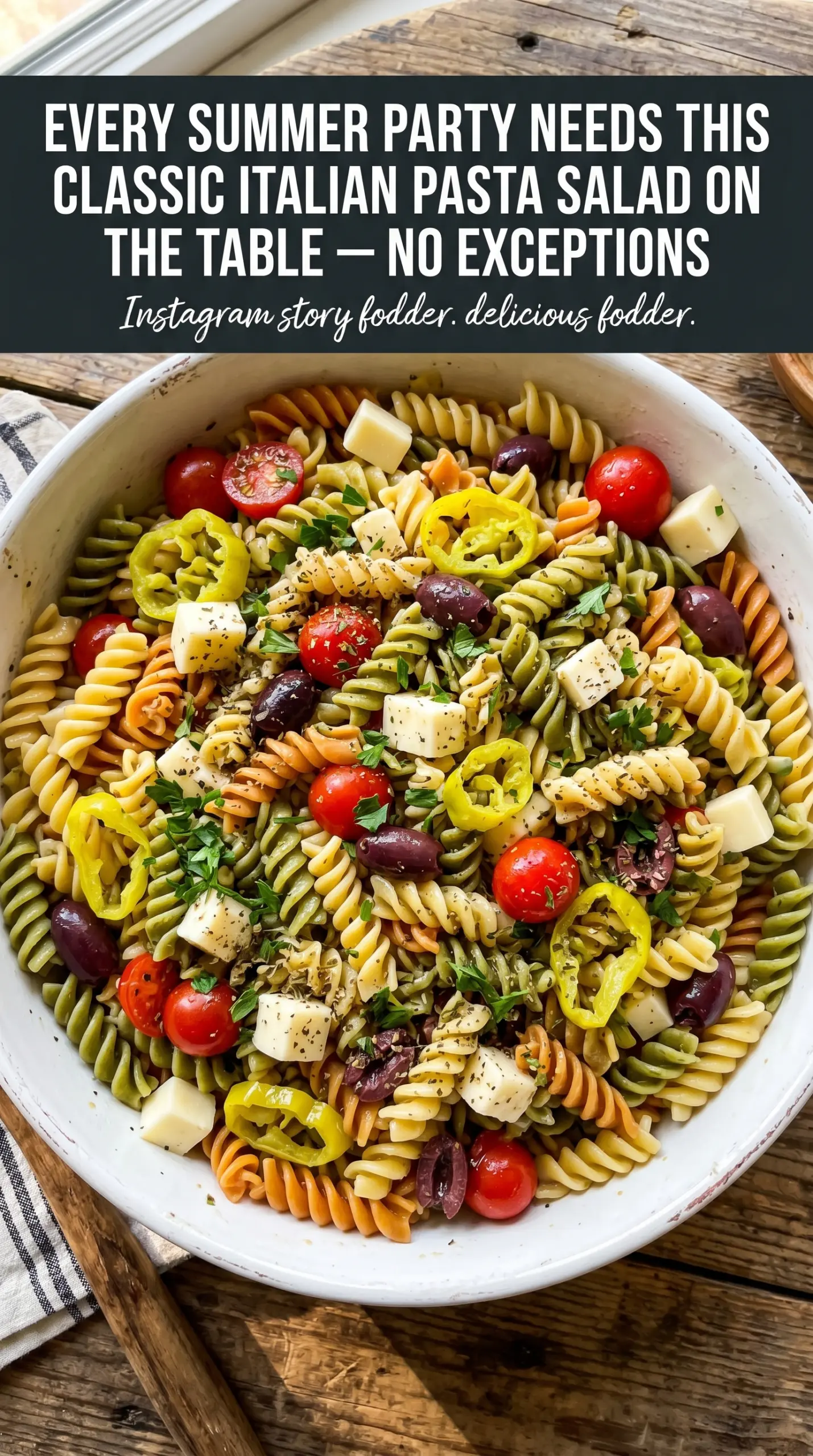
- Tri-color rotini — The spirals catch dressing in every groove, which is why they work better here than long pasta. Plain pasta will taste less seasoned because it doesn’t hold the sauce as well.
- Italian dressing — This is the backbone of the salad, so a good bottled version matters more than anything else in the bowl. If yours tastes sharp or oily on its own, whisk in a little extra Parmesan and let the salad rest so it softens.
- Pepperoni — It adds salt, fat, and that familiar Italian-American deli flavor. Halving the slices keeps each bite from feeling bulky and helps the meat blend into the pasta instead of sitting on top of it.
- Mozzarella — Cubed mozzarella gives you a creamy, milder bite that balances the dressing and pepperoni. Fresh mozzarella can work, but the firmer block-style version holds its shape much better after chilling.
- Cherry tomatoes, bell pepper, red onion, and olives — These bring crunch, acid, and color. If red onion feels too sharp, soak the diced pieces in cold water for 10 minutes, then drain well before mixing.
- Parmesan and Italian seasoning — Parmesan helps the dressing cling and gives the salad a deeper savory note. Italian seasoning reinforces the herbs already in the dressing, which matters if the bottle is mild.
The Chill Time That Makes It Taste Like It Belongs Together
Cooking the Pasta Past the Raw Stage
Boil the rotini until it’s just tender, not mushy. You want it to hold its shape after chilling, because pasta that’s already soft will turn heavy once it absorbs the dressing. Drain it well and rinse with cold water until the pasta feels cool to the touch. If you skip the rinse, the noodles keep cooking and the salad turns sticky.
Building the Bowl While the Pasta Drains
Combine the pepperoni, mozzarella, tomatoes, bell pepper, olives, and red onion in a large bowl before you add the pasta. That keeps the mix even, so the dressing coats the whole salad instead of getting trapped at the bottom. Add the pasta while it’s fully drained but not bone-dry. A little surface moisture helps the dressing spread without thinning it too much.
Letting the Dressing Settle In
Pour in the Italian dressing, Parmesan, and Italian seasoning, then toss until every piece looks lightly coated. The salad should look glossy, not swimming. Refrigerate it for at least 3 hours, and toss it once or twice during that time if you can. That quick mix redistributes the dressing and keeps the top layer from drying out.
Finishing Before It Hits the Table
Right before serving, taste the salad again. Pasta often drinks up more dressing than you expect, especially overnight. Add a splash more dressing if the bowl looks tight or dull, then season with salt and pepper only if it needs it. The goal is a cold salad that still tastes bright and seasoned, not one that relies on the dressing sitting at the bottom.
Three Easy Ways to Adjust This Pasta Salad Without Losing Its Shape
Make it vegetarian without changing the feel
Leave out the pepperoni and add extra olives, chopped roasted red peppers, or cubes of salami-style vegetarian deli slices if you want a meatier bite. You’ll lose some of the salty richness, so taste the salad after chilling and add a little more Parmesan or dressing to bring it back.
Make it dairy-free for a picnic crowd
Skip the mozzarella and Parmesan, then add extra vegetables or pepperoni if you still want plenty of substance. Use a dairy-free Italian dressing with enough acidity to keep the salad bright, because cheese usually softens that edge. The result is lighter and a little less creamy, but it still tastes like a proper pasta salad.
Use a stronger pasta if you’re making it ahead overnight
Rotini works well, but small shells or fusilli also hold dressing nicely if that’s what you have. Whatever shape you choose, cook it just to al dente so it doesn’t collapse after a long chill. This matters most if the salad will sit overnight, because softer pasta loses its structure faster.
Storage and Reheating
- Refrigerator: Store covered for up to 4 days. The pasta will keep absorbing dressing, so expect the salad to look a little drier on day two.
- Freezer: Don’t freeze this one. The vegetables lose their crunch, the mozzarella changes texture, and the dressing separates.
- Reheating: Serve it cold. If the salad has been chilled overnight, toss in a spoonful or two of extra dressing before serving instead of trying to warm it up.
Answers to the Questions Worth Asking
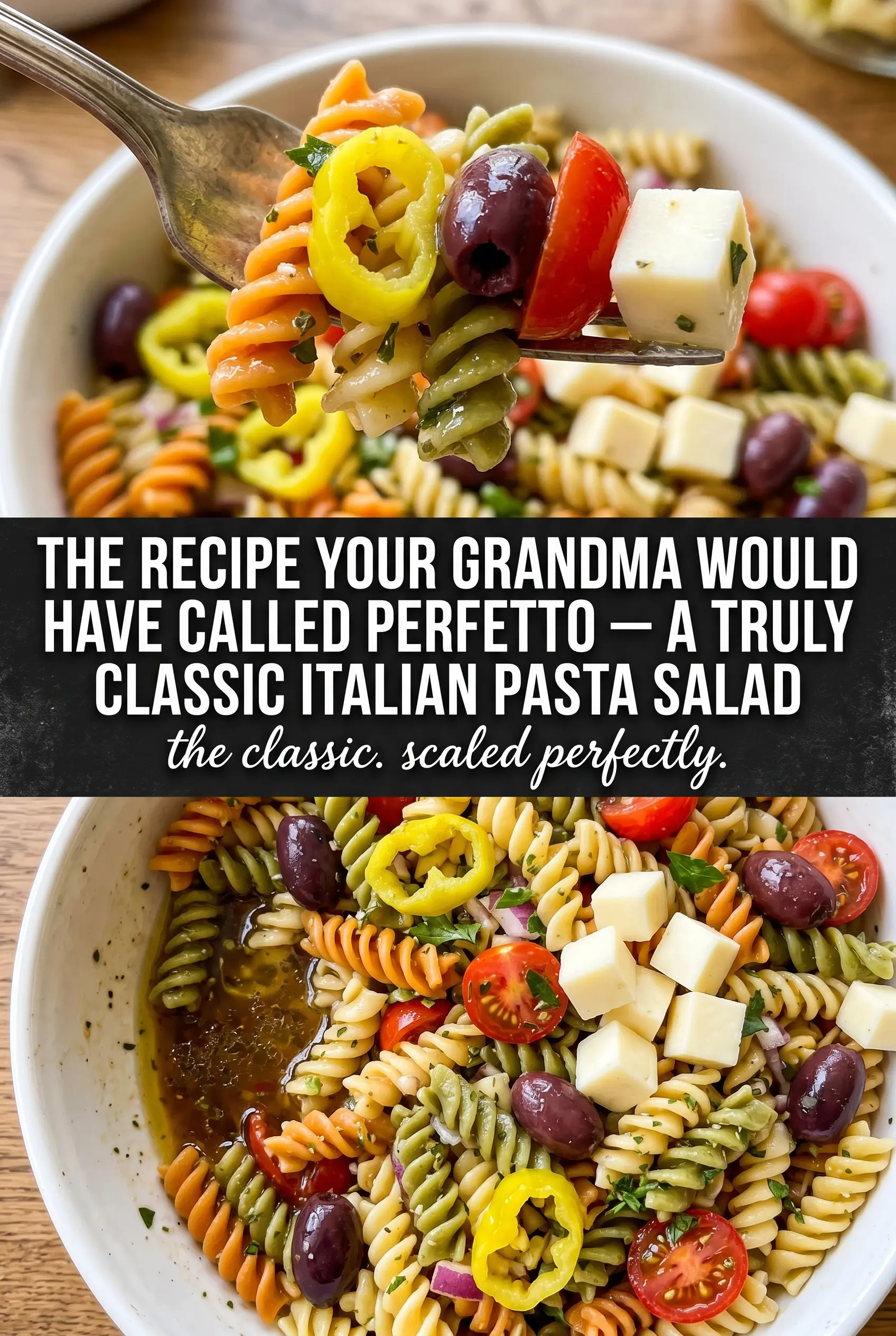
Classic Italian Pasta Salad
Ingredients
Equipment
Method
- Cook tri-color rotini pasta according to package directions, then drain it and rinse with cold water.
- Spread the rinsed pasta onto a sheet pan to stop further cooking and cool while you prep the add-ins.
- In a large bowl, combine pasta, pepperoni slices, mozzarella cheese, cherry tomatoes, green bell pepper, black olives, and red onion.
- Add Italian dressing, grated Parmesan cheese, and Italian seasoning, then toss until everything is evenly coated.
- Season with salt and pepper, then toss again to distribute the seasoning.
- Cover and refrigerate for at least 3 hours or overnight, tossing occasionally, until the pasta salad is thoroughly chilled.
- Right before serving, toss again and add more Italian dressing if needed to loosen the salad and refresh the coating.