Glossy chicken lo mein hits the table with slick noodles, tender chicken, and vegetables that still have a little crunch. The sauce clings to every strand instead of pooling in the bottom of the bowl, which is what makes this version worth making at home. It tastes like takeout in the best way, but the texture is fresher and the whole dish comes together fast enough for a weeknight.
The trick is keeping the sauce balanced and the heat high. A little oyster sauce gives depth, hoisin adds body, and brown sugar rounds out the soy without turning the noodles sticky-sweet. The chicken cooks first, then comes back at the end so it stays juicy instead of drying out while the vegetables finish.
Below, I’ll walk through the one part that matters most: how to toss everything so the noodles coat evenly instead of clumping. I’ve also included the swaps that work when you’re using spaghetti instead of lo mein noodles or need to skip an ingredient you don’t keep on hand.
The noodles soaked up the sauce without turning soggy, and the chicken stayed juicy even after tossing everything back in the wok. I used spaghetti and it still had that restaurant-style texture.
Save this chicken lo mein for the nights when you want glossy noodles, tender chicken, and a fast takeout-style dinner at home.
The Trick to Keeping Lo Mein Sauce on the Noodles, Not the Pan
The biggest mistake with lo mein is crowding the pan or letting the sauce sit around long enough to reduce before the noodles go in. That gives you dry patches, clumps, and a sauce that tastes sharp instead of glossy. The goal is to move fast once the noodles hit the wok so the sauce can coat everything while the heat is still high.
Cook the chicken first and pull it out while it’s just done. That keeps the meat tender and prevents the vegetables from overcooking while you finish the rest. When the noodles go back in, they should look loose and a little slick at first; after a minute or two of tossing, the sauce tightens and starts clinging to the strands.
What the Sauce Ingredients Are Doing in This Bowl
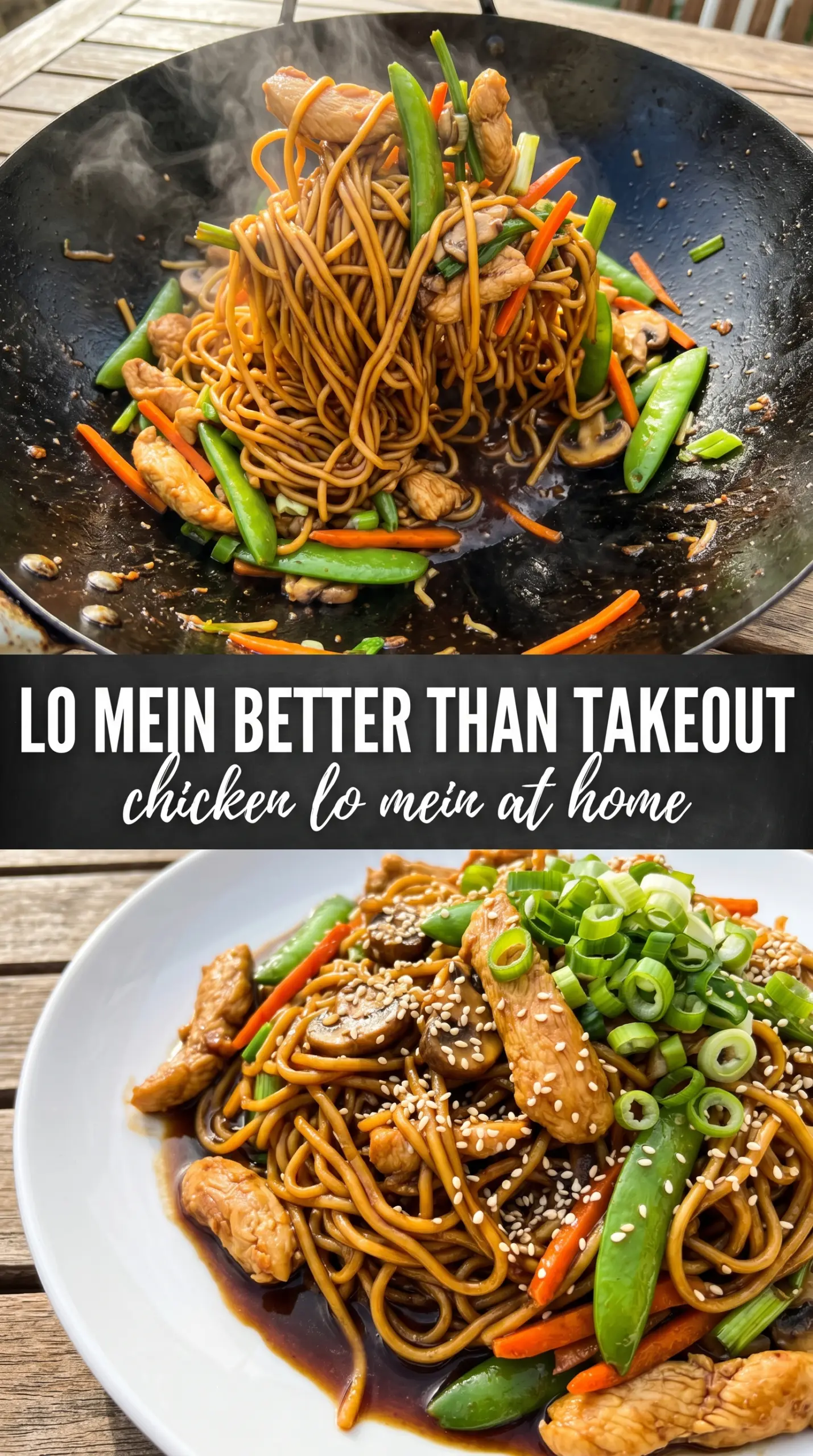
- Lo mein noodles or spaghetti — Fresh lo mein noodles give you the most authentic chew, but spaghetti works well because it holds sauce and stays separate if you don’t overcook it. Salt the cooking water enough that the noodles taste seasoned on their own; bland noodles make the whole dish flatter.
- Chicken breast — Thin slices cook quickly and stay tender in a hot wok. If the pieces are too thick, they’ll finish unevenly and the outside will dry before the inside is ready.
- Bok choy or cabbage — Bok choy brings a juicy crunch and a mild, clean flavor, while cabbage gives you a sturdier bite and holds up well if you need the dish to sit for a few minutes. Either one needs high heat so it softens at the edges without turning limp.
- Oyster sauce, soy sauce, and hoisin — This is the backbone of the flavor. Soy sauce brings salt, oyster sauce adds savory depth, and hoisin rounds everything out with a little body and sweetness. If you skip oyster sauce, the dish still works, but it loses that takeout-style richness.
- Sesame oil — Use it twice: once in the sauce and once at the end for aroma. Don’t cook it hard for long periods; it’s there for fragrance, not for frying.
Building the Wok in the Right Order
Whisking the Sauce First
Mix the sauce before you turn on the heat so you can add it quickly when the noodles are ready. The brown sugar should dissolve almost completely, and the mixture should look smooth and dark. If you try to measure and stir at the stove, the vegetables will overcook while you’re still reaching for bottles.
Cooking the Chicken Fast and Hot
Get the vegetable oil hot before the chicken goes in. The pieces should sizzle immediately and develop a little color around the edges in just a few minutes. If the pan looks crowded, cook the chicken in two batches; otherwise it steams and turns rubbery instead of picking up a light sear.
Stir-Frying the Vegetables
Add the garlic and ginger for just 30 seconds, until they smell fragrant but not browned. Then put in the bok choy, carrots, and bean sprouts. The vegetables should soften slightly and brighten in color while still keeping some snap; if the pan is too cool, they’ll release water and make the noodles slippery instead of glossy.
Finishing the Noodles
Return the chicken and noodles to the wok, pour in the sauce, and toss constantly over high heat. The first minute looks messy, then the sauce starts disappearing into the noodles and coating everything evenly. Finish with sesame oil, green onions, and sesame seeds once the pan is off the hottest part of the burner so the garnish stays fresh and fragrant.
How to Adapt Chicken Lo Mein Without Losing the Good Part
Make it gluten-free
Use gluten-free noodles or rice noodles and swap in tamari for the soy sauce. Check your oyster sauce and hoisin carefully, since many versions contain wheat. The result is still savory and glossy, but the noodles will be a little softer than classic lo mein.
Use chicken thighs instead of breast
Chicken thighs stay juicier if you like a little more richness in the finished dish. Slice them thin and cook them the same way, but expect a slightly deeper flavor and a bit more browning in the pan.
Turn it vegetarian
Skip the chicken and add mushrooms, snow peas, or extra cabbage. You’ll lose some of the meaty bite, but the sauce still carries the dish as long as you don’t overload the pan. A handful of sautéed mushrooms brings back some of the savory depth.
Storage and Reheating
- Refrigerator: Store leftovers in an airtight container for up to 3 days. The noodles soak up more sauce as they sit, so they’ll be a little softer the next day.
- Freezer: It freezes, but the vegetables lose their crunch and the noodles soften after thawing. I only freeze it if I’m okay with a softer, more casserole-like texture.
- Reheating: Reheat in a skillet over medium heat with a splash of water or chicken broth, tossing until hot. The extra liquid loosens the noodles before they tighten up again; microwaving straight from the fridge tends to dry out the chicken and make the sauce patchy.
Questions I Get Asked About This Recipe
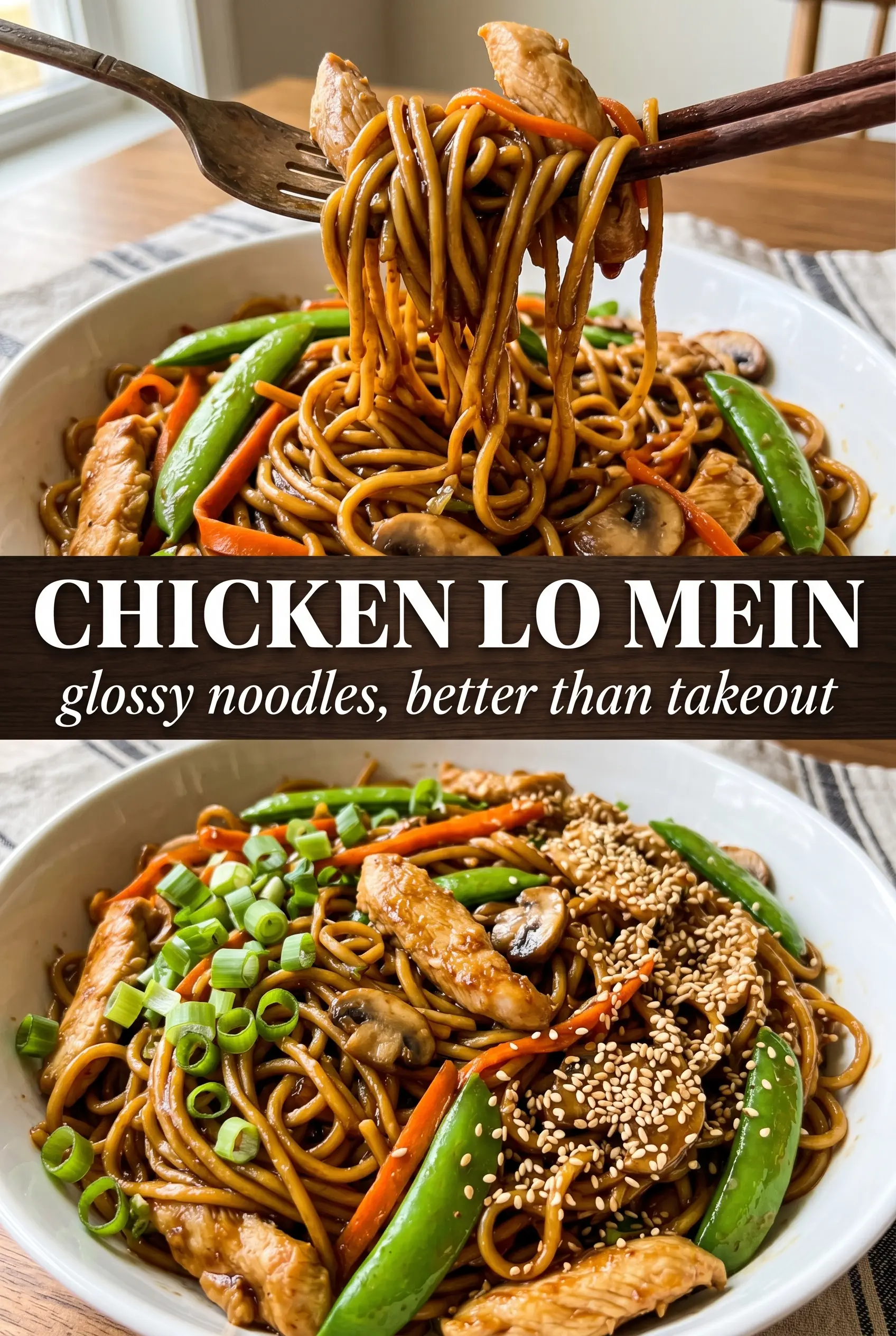
Chicken Lo Mein
Ingredients
Equipment
Method
- Whisk the soy sauce, oyster sauce, hoisin sauce, brown sugar, and 1 teaspoon sesame oil together in a bowl, then set aside so it’s ready to pour.
- Heat 2 tablespoons vegetable oil in a wok or large skillet over high heat, then add the sliced chicken and cook for 3–4 minutes until cooked through; remove to a plate.
- In the same wok, add the remaining 1 tablespoon vegetable oil, then stir-fry the minced garlic and grated ginger for 30 seconds until fragrant.
- Add the chopped bok choy (or cabbage), shredded carrots, and bean sprouts, then cook for 3 minutes, stirring to keep vegetables bright and crisp-tender.
- Return the cooked chicken to the wok, add the cooked lo mein noodles, then pour the sauce over everything.
- Toss the noodles and fillings over high heat for 2 minutes until noodles are evenly coated and heated through, with a glossy sheen on the strands.
- Drizzle with the remaining sesame oil, then top with sliced green onions and sesame seeds and serve immediately.