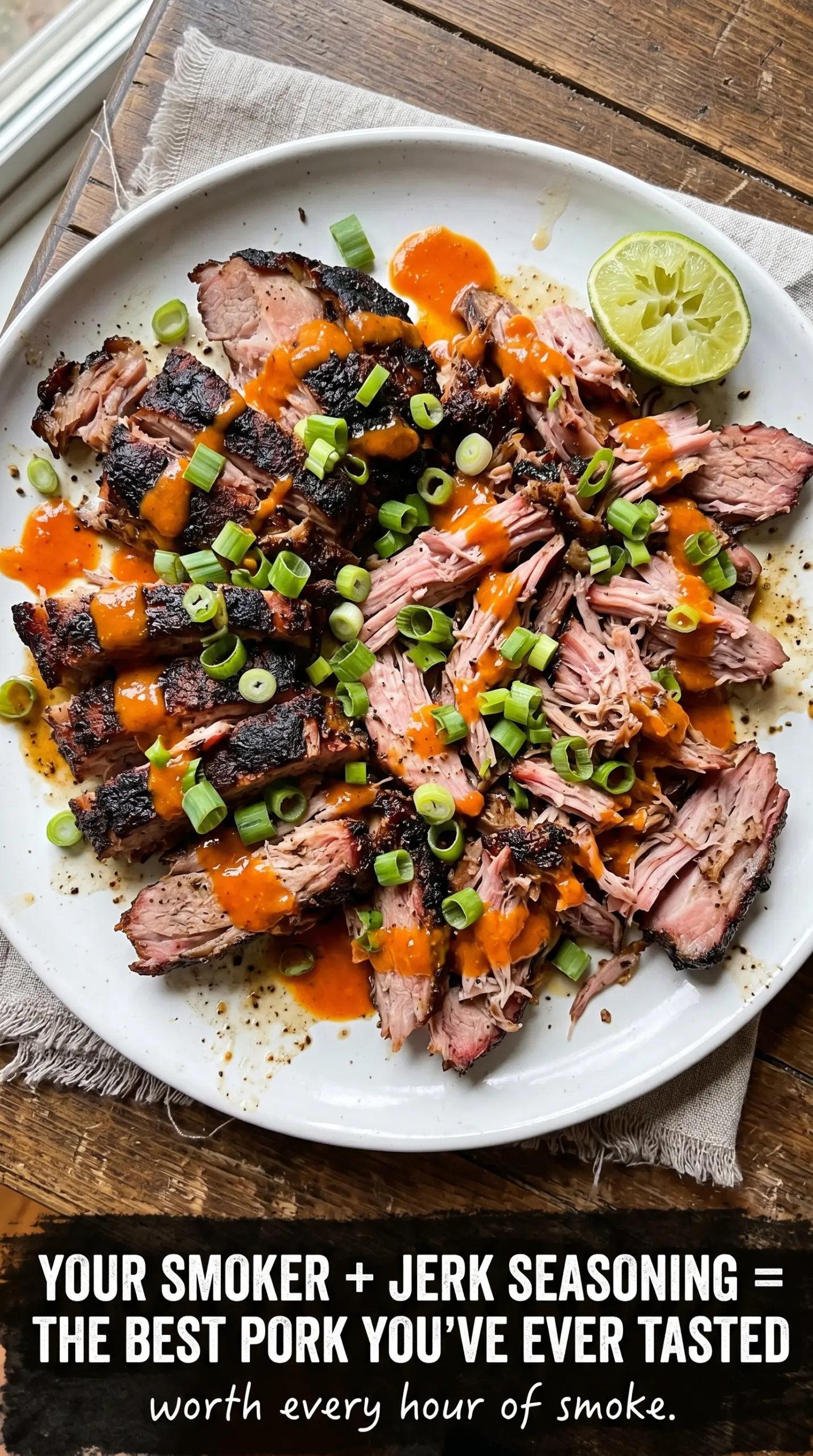
Caribbean jerk smoked pork comes off the smoker with a dark, crackly bark, a deep smoke ring, and meat that pulls apart in long, juicy strands. The spice paste does the heavy lifting here: scotch bonnet heat, thyme, allspice, garlic, and lime sink into the pork overnight, then the low smoke turns all of that into a crust that tastes bigger than the ingredient list looks on paper.
The key is giving the marinade time to penetrate the scored shoulder before it ever sees the smoker. Pork shoulder can handle bold seasoning, but it needs that overnight rest so the salt, acid, and spices reach beyond the surface. Fruit wood works especially well because it stays gentle and lets the jerk seasoning stay front and center instead of getting buried under heavy smoke.
Below, I’ve included the little details that matter most: how to keep the bark from burning, what temperature tells you the pork is actually ready to pull, and a few smart swaps if you need to work around the peppers or the heat level.
The bark set up beautifully and the pork stayed juicy all the way through. I used fruit wood like suggested and the jerk spice came through without tasting harsh or burned.
Caribbean jerk smoked pork with that dark bark and smoke ring is worth saving for your next cookout.
The Overnight Marinade Is What Gives This Pork Its Jerk Backbone
Jerk seasoning needs time to move past the surface. If you rush the marinade, you get spicy bark on the outside and plain pork underneath. The lime juice, soy sauce, and salt in the blend start breaking down the exterior while the spices soak into the scored cuts, and that overnight rest is what makes each bite taste seasoned all the way through.
The other mistake people make is piling on heat without enough aroma. Scotch bonnet gives the punch, but thyme, allspice, cinnamon, and nutmeg are what make this taste like jerk instead of just hot pork. Fruit wood supports that balance because it smokes clean and lets the seasoning stay sharp.
- Pork shoulder — This cut has enough fat and connective tissue to stay juicy through a long smoke. Leaner cuts dry out before they get tender. If you only have a smaller shoulder, shorten the cook and go by temperature and tenderness, not the clock.
- Scotch bonnet peppers — These bring the real jerk heat and a fruity burn that jalapeños can’t fully match. Seeded peppers still pack plenty of spice. If you need less heat, use one pepper and add a bit more thyme and lime so the marinade still tastes complete.
- Allspice, thyme, cinnamon, and nutmeg — These are the signature notes that make the pork taste unmistakably Caribbean. Don’t swap them for an all-purpose barbecue rub; you’ll lose the layered warmth. Fresh thyme matters more than dried here because it keeps the marinade from tasting dusty.
- Lime juice and soy sauce — Lime brightens the seasoning and soy adds salt plus depth. The soy also helps the marinade cling. If you need a gluten-free version, use tamari in the same amount and keep everything else the same.
- Brown sugar — This helps the bark darken and balances the pepper heat. Too much sugar can scorch on a hot smoker, so keep the smoker in the 225-250°F range. The sugar should look glossy in the marinade, not grainy.
What Each Ingredient Is Actually Doing in Overnight Jerk Marinade
- Jerk spice blend (all-spice, thyme, heat) — The spices need overnight to penetrate deeply. These flavors develop and mellow as they sit.
- Acid (vinegar, citrus, or lime juice) — The acid tenderizes slowly over the long marinade. Overnight gives it time to penetrate without over-tenderizing.
- Oil to carry and protect — Oil helps the spices adhere and penetrates along with the acid. It also prevents the meat from drying during the long marinate.
- Garlic and ginger (minced fine) — These add depth and become mellow after overnight. They taste integrated, not sharp.
- Scallions or onions (if using) — These add freshness that doesn’t cook away. They balance the deep, long-cooked flavors.
- Salt (moderate amount) — Salt draws moisture deeper into the meat during the long marinate. This helps the meat stay juicy despite the long time.
- Cold storage for the full overnight — The marinade works best cold. This allows the flavors to develop without over-tenderizing the meat.
- The overnight soak develops backbone flavor — This is the whole point. The spices, acid, and time work together to create deep jerk flavor that can’t be rushed.
Smoking the Shoulder Until It Shreds Cleanly
Building the Jerk Paste
Blend the green onions, scotch bonnets, garlic, thyme, brown sugar, allspice, black pepper, cinnamon, nutmeg, soy sauce, lime juice, and oil until the mixture turns smooth and thick enough to coat a spoon. You want a paste that spreads easily but still looks rustic, not a thin puree that runs off the meat. If the blender struggles, stop and scrape down the sides instead of adding extra liquid, because a loose marinade won’t cling well to the scored pork.
Scoring and Marinating the Pork
Cut shallow slashes across the pork shoulder and work the marinade deep into those cuts with your hands. That’s where the flavor starts building, and it matters more than a quick rub on the outside. Refrigerate it overnight in a covered dish or bag, and turn it once if you can; if the surface looks dry the next day, it means the marinade was too thin or the pork wasn’t coated evenly.
Running the Smoker Low and Steady
Set the smoker to 225-250°F and use fruit wood for a cleaner, gentler smoke. Place the pork on the grate and leave it alone unless you need to check fuel or temperature. Heavy peeking drops the heat and extends the cook, and harsh smoke will make the spices taste bitter before the shoulder has a chance to tenderize.
Knowing When It’s Done
Smoke the pork for 6-8 hours, but trust tenderness and internal temperature together. You’re looking for 195-203°F and meat that gives easily when probed. If it stalls for a long time, that’s normal with pork shoulder; don’t crank up the heat just to force it through, because the bark can dry out before the connective tissue fully melts.
Resting Before You Pull
Let the pork rest for 30 minutes before pulling it apart. That pause keeps the juices from flooding the cutting board the second you shred it. If the pork seems a little tight when you start pulling, it needs a few more minutes of rest, not more force.
How to Adjust the Heat, Smoke, and Seasoning Without Losing the Jerk Character
Milder Heat Without Flattening the Flavor
Use one scotch bonnet instead of four and keep the thyme, allspice, and lime exactly the same. That keeps the marinade bright and aromatic instead of dull and overly hot. If you cut the pepper and nothing else, the pork still tastes like jerk, just with a gentler burn.
Gluten-Free Jerk Pork
Swap the soy sauce for tamari in the same amount. Tamari gives you the same salty depth without changing the texture of the marinade, and the rest of the seasoning can stay exactly as written. Coconut aminos will work in a pinch, but they’re sweeter and the bark will come out softer and lighter.
No Smoker, Same Seasoning
You can roast the marinated pork shoulder in the oven at 300°F until it reaches the same internal temperature range, then finish it under high heat for a little crust. You won’t get the same smoke ring or wood flavor, but the jerk seasoning still develops a deep, sticky bark. A wire rack over a sheet pan helps the heat circulate around the roast.
Storage and Reheating
- Refrigerator: Store pulled pork in an airtight container for up to 4 days. The bark softens a bit, but the flavor stays strong.
- Freezer: It freezes well for up to 3 months. Portion it with a little of its juices so it doesn’t dry out when thawed.
- Reheating: Warm it covered in a skillet or baking dish with a splash of broth or reserved juices over low heat. High heat tightens the meat and dries out the edges before the center is hot.
Questions I Get Asked About This Recipe

Caribbean Jerk Smoked Pork
Ingredients
Equipment
Method
- Blend the green onions, scotch bonnet peppers, garlic, fresh thyme, brown sugar, allspice, black pepper, cinnamon, and nutmeg until smooth.
- Blend in soy sauce, lime juice, and vegetable oil until fully combined.
- Score the pork shoulder deeply, cutting across the surface so the marinade can reach the interior.
- Rub the jerk marinade all over the scored pork shoulder, working it into the cuts and crevices.
- Marinate the pork overnight in the refrigerator, covered.
- Prepare the smoker and stabilize it at 225-250°F using fruit wood.
- Smoke the pork shoulder for 6-8 hours, until the internal temperature reaches 195-203°F, with visible bark forming by the end.
- Turn off the smoker and remove the pork, keeping the smoke ring intact and the bark dark and set.
- Let the pork rest for 30 minutes so juices redistribute before pulling.
- Pull the pork and serve hot, showing the spice crust and tender strands.