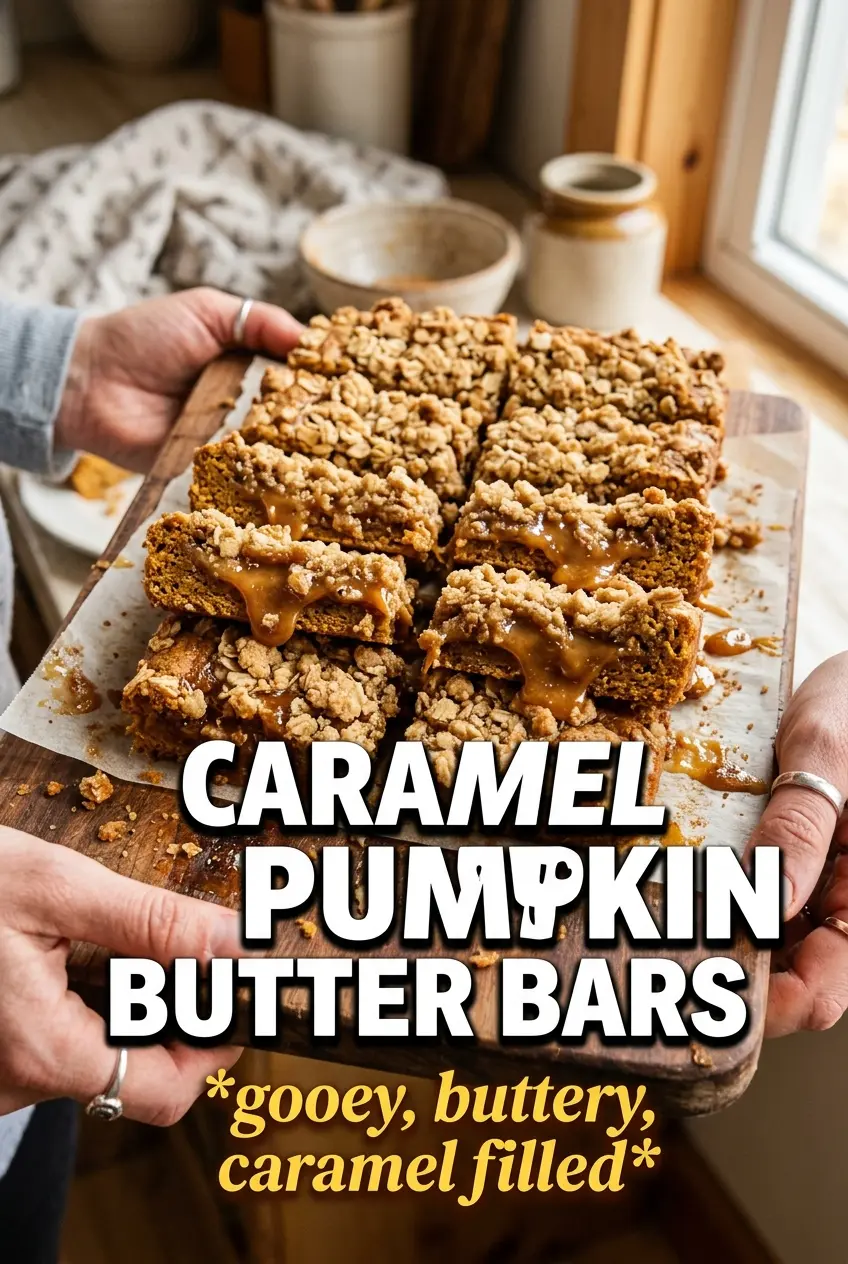
Caramel pumpkin butter bars bake up with a buttery shortbread base, a thick pumpkin-caramel center, and a crumbly topping that turns lightly crisp at the edges. The filling sets into clean slices once cooled, but it still tastes soft and custardy in the middle, with just enough salt on top to keep the sweetness in check. It’s the kind of dessert that disappears fast because every bite hits creamy, chewy, and sandy all at once.
The shortbread layer matters here. Cornstarch keeps it tender instead of tough, powdered sugar gives it that melt-in-your-mouth texture, and cold butter is what creates the crumb you can press and sprinkle. The filling uses both caramel sauce and pumpkin puree, so it needs a proper bake time to set without turning gummy. Pulling the bars when the center is just set gives you neat squares after cooling instead of a filling that smears everywhere.
Below, I’m sharing the little details that keep the crust crisp and the filling sliceable, plus a few smart swaps if you need to work around what’s in your kitchen.
The crust stayed sandy and buttery, and the pumpkin-caramel layer set up perfectly once it cooled. I added the flaky salt at the end and it made the whole pan taste like a bakery bar instead of just another pumpkin dessert.
Love the buttery crumb and gooey pumpkin-caramel center? Save these Caramel Pumpkin Butter Bars for the next time you want a sliceable dessert with a salty-sweet finish.
The Trick to a Crumb That Stays Tender After Baking
A lot of bar cookies go wrong because the base gets overmixed or the butter starts to melt before it hits the oven. That turns a shortbread crust into something dense and bready instead of crumbly and delicate. Here, the cornstarch and powdered sugar do a lot of the work, but only if the butter stays cold long enough to bake in pockets and create that sandy texture.
Press most of the mixture firmly into the pan so it bakes into a stable base, then save the rest for the top. If the crust feels too dry to hold together, keep working it with your fingertips until it clumps when squeezed. If it looks greasy, the butter got too warm, and the bars will lose that clean shortbread snap.
- Cornstarch — This is what keeps the crust tender. You can’t fully replace it with flour and get the same melt-in-your-mouth texture.
- Cold butter — Use it straight from the fridge and cube it small. If the butter softens before baking, the base spreads instead of staying crumbly.
- Caramel sauce — Thick caramel matters here. Thin sauce can make the filling loose and overly sweet instead of rich and sliceable.
- Pumpkin puree — Use plain pumpkin puree, not pumpkin pie filling. Pie filling is already sweetened and spiced, and it throws the balance off fast.
What Each Ingredient Is Doing in the Filling
- Heavy cream — This loosens the caramel enough to whisk smoothly with the pumpkin, then helps the filling bake into a soft, custardy layer. Milk works in a pinch, but the filling will be thinner.
- Brown sugar — Just a little deepens the caramel note and helps the filling set with a richer finish. You can skip it if your caramel sauce is very sweet, but the bars will taste flatter.
- Eggs — These are the structure. They turn the filling from a loose pumpkin mixture into bars that hold their shape once cooled.
- Pumpkin pie spice and vanilla — The spice brings warmth, and the vanilla rounds out the caramel so it tastes fuller, not one-note. If you only have cinnamon, use it, but the bars will be less layered.
Building the Bars So the Filling Sets Cleanly
Mix the Crumb Without Warming the Butter
Cut the cold butter into the flour mixture until you see pea-sized bits and sandy clumps. Stop before it turns into a paste. Those little butter pieces melt in the oven and leave you with a shortbread base that stays tender instead of tough. If you overwork it, the crust will bake up compact and hard to slice neatly.
Give the Base a Head Start
Press the crust firmly into the parchment-lined pan and bake it until it looks pale golden around the edges. It does not need to brown deeply at this stage. That first bake sets the structure so the filling doesn’t soak through and soften the bottom. If the crust is underbaked, the bars will cut messy even after a full chill.
Whisk the Filling Until It Looks Smooth and Glossy
Combine the pumpkin, caramel, cream, brown sugar, spice, vanilla, and eggs until the mixture is fully smooth. Scrape the bowl well so there are no streaks of egg left behind. Pour it over the hot crust while the base is still warm, then sprinkle the reserved crumb across the top. That hot-crust step helps the layers bond, which matters when you want clean squares instead of a crumbly seam.
Bake Until the Center Still Has a Slight Jiggle
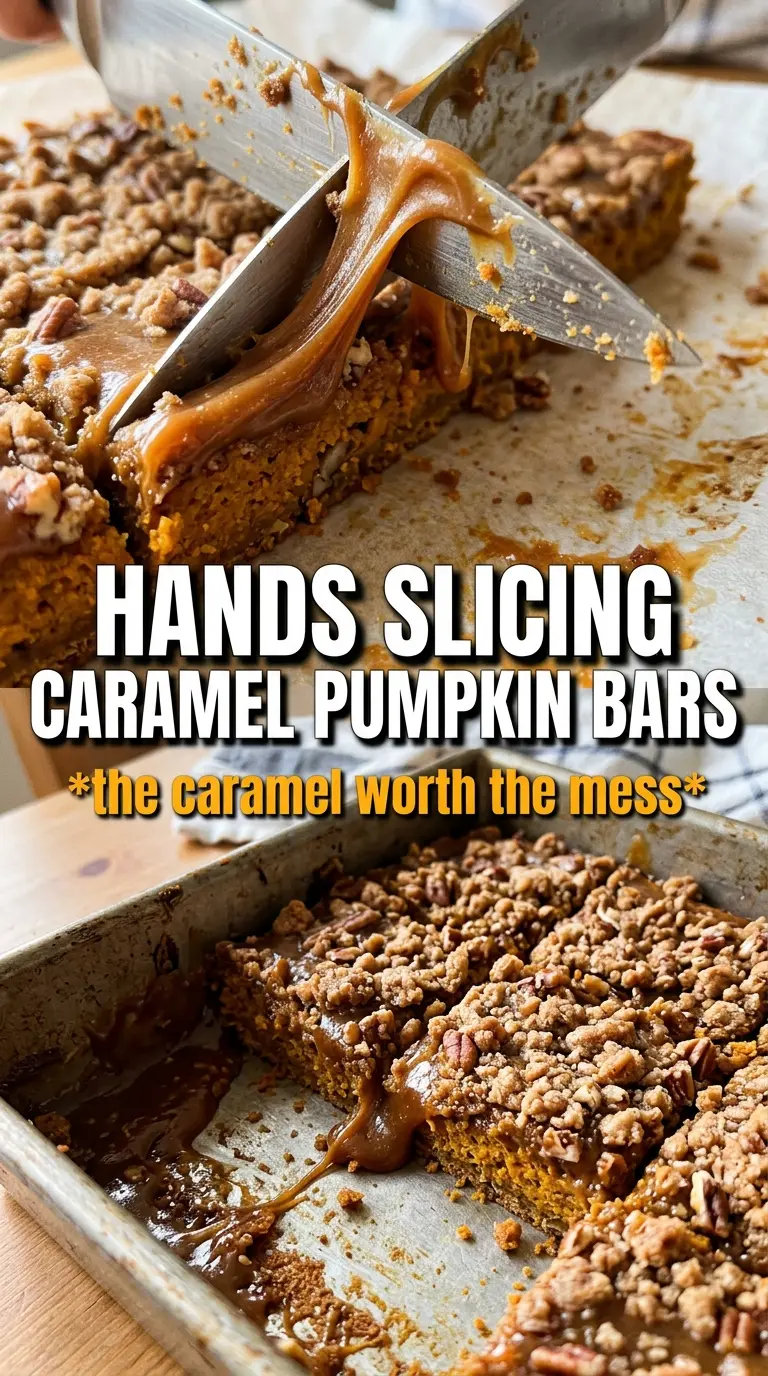
The bars are done when the edges look set and the center moves just a little when you nudge the pan. If the middle sloshes, it needs more time; if it looks completely firm in the oven, it’s probably already overbaked. Pull it when it still has a faint wobble, then let the residual heat finish the job. Cool completely before cutting, or the filling will smear and the topping will break apart.
Dairy-Free Version
Use a plant-based butter that bakes well and swap the heavy cream for full-fat coconut cream. The bars will still set, but the filling will taste a little more coconut-forward and the crust may brown a touch faster.
Gluten-Free Crumb Bars
Use a 1:1 gluten-free baking flour in place of the all-purpose flour. The texture will be a little more delicate and less crisp, so let the bars cool fully before lifting them from the pan.
Extra-Salty Finish
If you like a stronger sweet-salty contrast, add the flaky sea salt right after the bars come out of the oven and again lightly after cooling. The second pinch stays on the surface instead of melting in, so every bite pops a little more.
Make Them Neater for Serving
Chill the baked bars for an hour before slicing if you want the cleanest edges. Room temperature gives you a softer bite, but a short chill helps the caramel layer firm up enough for bakery-style squares.
Storage and Reheating
- Refrigerator: Store in an airtight container for up to 5 days. The crust stays best when the bars are fully cooled before packing.
- Freezer: These freeze well. Wrap individual bars tightly and freeze for up to 2 months, then thaw in the fridge so the filling doesn’t weep.
- Reheating: Serve chilled or at room temperature. If you warm them, use just a few seconds in the microwave; too much heat softens the filling and makes the crumb soggy.