Caramel apple sangria pours like a fall party in a glass: crisp white wine, spiced cider, and just enough caramel to make every sip taste rounded and smooth without turning heavy. The fruit stays fresh and bright, but after a couple hours in the pitcher it picks up that cider-caramel edge that makes people come back for a second glass before dinner even starts.
The trick here is balance. Pinot grigio gives you a clean, dry base, which matters because caramel vodka or caramel sauce can get cloying fast if the wine is too soft or sweet. Ginger ale goes in at the end for lift, not while everything is sitting in the fridge, so the sangria keeps its fizz. If you use caramel sauce instead of vodka, whisk it in well before the fruit goes in so it doesn’t settle at the bottom.
Below you’ll find the small details that make this sangria taste polished instead of muddled, plus a few easy swaps if you want to adjust the sweetness or make it fit what you have on hand.
The caramel stayed blended, and after two hours the apples had soaked up just enough cider flavor without getting mushy. I added the ginger ale at the end like you said, and it still had a nice little sparkle when we served it.
Save this caramel apple sangria for the next time you want a crisp, cinnamon-spiked pitcher drink with a caramel rim.
The Reason This Sangria Stays Bright Instead of Muddy
Most sangria falls flat because it sits too long with ingredients that all pull in the same direction: sweet wine, sweet juice, and sweet liqueur. This version stays lively because the pinot grigio brings structure, the cider adds apple depth, and the caramel plays more like an accent than the whole drink. You want the fruit to infuse the pitcher, not collapse into a soft, over-sweet mash.
The other important piece is timing. The fruit needs time in the liquid, but the ginger ale does not. If you add the soda early, the bubbles disappear and the drink tastes dull. Pour it in right before serving so the sangria still has lift in the glass.
- Chilled wine — Start with cold wine straight from the fridge. Warm wine makes the whole pitcher taste flat, and then you end up relying on extra ice to fix it, which waters everything down.
- Caramel vodka or caramel sauce — Vodka gives the cleanest caramel note. If you use sauce, whisk it into the wine and cider until the mixture looks uniform; otherwise it can sink or streak along the bottom of the pitcher.
- Firm apples and pears — Use fruit that still has crunch. Soft fruit breaks down fast and turns the pitcher cloudy. A crisp apple like Honeycrisp or Fuji holds up well.
- Cinnamon sticks — Whole sticks infuse gently without making the drink gritty. Ground cinnamon clouds the pitcher and settles in a way that never looks quite right.
What Each Ingredient Is Actually Doing in This Recipe
- Primary ingredient (the star) — Quality matters most. Choose the best you can find.
- Cooking medium (oil, butter, or broth) — This carries flavors and prevents dryness.
- Seasonings (salt, pepper, spices, herbs) — Layer flavors so nothing overpowers. Build depth gradually.
- Aromatics (garlic, onion, herbs) — Cook with fat to bloom flavors. Become the foundation.
- Supporting ingredients — Complement the main ingredient without overpowering it.
- Sauce or liquid (if applicable) — Brings flavors together. Balance richness with acid.
- Acid (lemon, vinegar, wine, or other) — Brightens and prevents flat-tasting results.
- Final finish (garnish, glaze, or sauce) — Prevents one-dimensional taste and adds visual appeal.
Building the Pitcher So the Caramel Stays in Balance
Mix the Base First
Pour the wine, cider, and caramel vodka into a large pitcher and stir until the liquid looks even. If you’re using caramel sauce, whisk longer than you think you need to; the sauce has to disappear into the drink before the fruit goes in. If you see little ribbons of caramel at the bottom, keep whisking. That’s the part that prevents a sweet, sticky first pour and a bland last pour.
Add the Fruit and Cinnamon
Stir in the apple slices, pear slices, and cinnamon sticks. The fruit should be fully submerged so it can flavor the drink instead of just sitting on top. Thin slices infuse faster than big wedges, but don’t slice them paper-thin or they’ll turn soft after a couple hours. The cinnamon should smell faintly spiced after chilling, not overpower the whole pitcher.
Chill Without the Bubbles
Refrigerate the sangria for at least 2 hours. That window gives the fruit time to soak up the cider and caramel notes while the wine stays crisp. Don’t add the ginger ale yet, or it will go flat before the pitcher even reaches the table. If you’re making it farther ahead, hold the soda and wait to rim the glasses until serving time.
Finish Right Before Serving
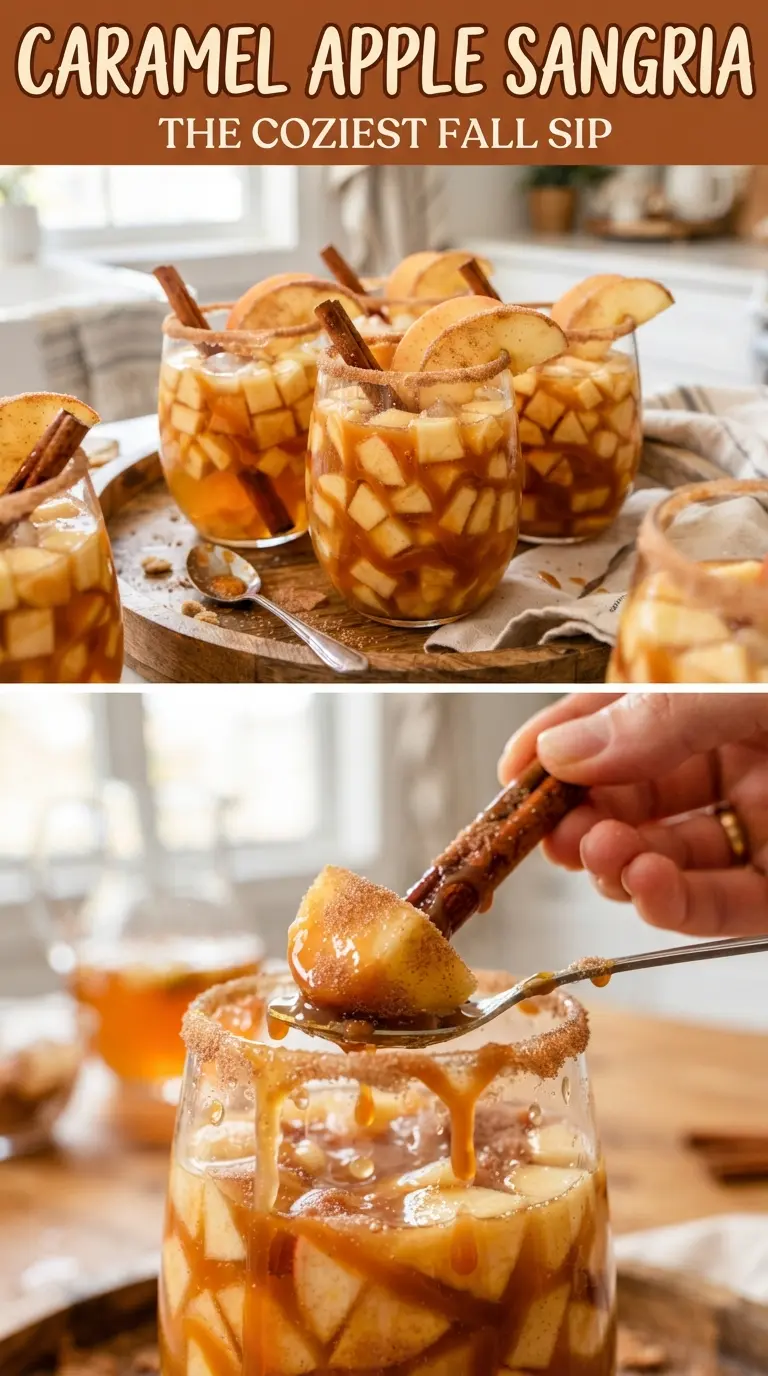
Dip the glass rims in caramel sauce, then coarse sugar, and fill each glass with ice and a few pieces of fruit. Add the ginger ale to the pitcher just before pouring so the drink still has that fresh fizz. Stir gently after adding it; one quick turn is enough. Too much stirring knocks the carbonation right out.
How to Adapt the Sweetness, Sparkle, and Booze Level
Less Sweet, More Crisp
Use club soda instead of ginger ale and cut the caramel vodka back a bit if you want the drink to read more tart than dessert-like. You still get the caramel rim and fruit flavor, but the finish is cleaner and more wine-forward.
Alcohol-Free Version
Swap the wine and caramel vodka for a mix of sparkling white grape juice, apple cider, and a little caramel sauce whisked in well. It won’t taste like traditional sangria, but it keeps the apple-caramel idea intact and still pours beautifully for a crowd.
Gluten-Free and Naturally Safe
This recipe is already naturally gluten-free as written, as long as your caramel vodka or caramel sauce is certified gluten-free. If you want to be extra cautious, use plain vodka with a spoonful of caramel sauce you’ve checked yourself.
Storage and Serving Timing
- Refrigerator: Keep the sangria base, without the ginger ale, chilled for up to 24 hours. After that, the fruit starts to soften more than you want.
- Freezer: Don’t freeze it. The fruit texture turns unpleasant and the wine base doesn’t come back cleanly after thawing.
- Serving: Add ginger ale at the last minute and pour over ice. If the pitcher has been chilling for a while, stir gently first so the flavor is even from top to bottom.
Answers to the Questions Worth Asking
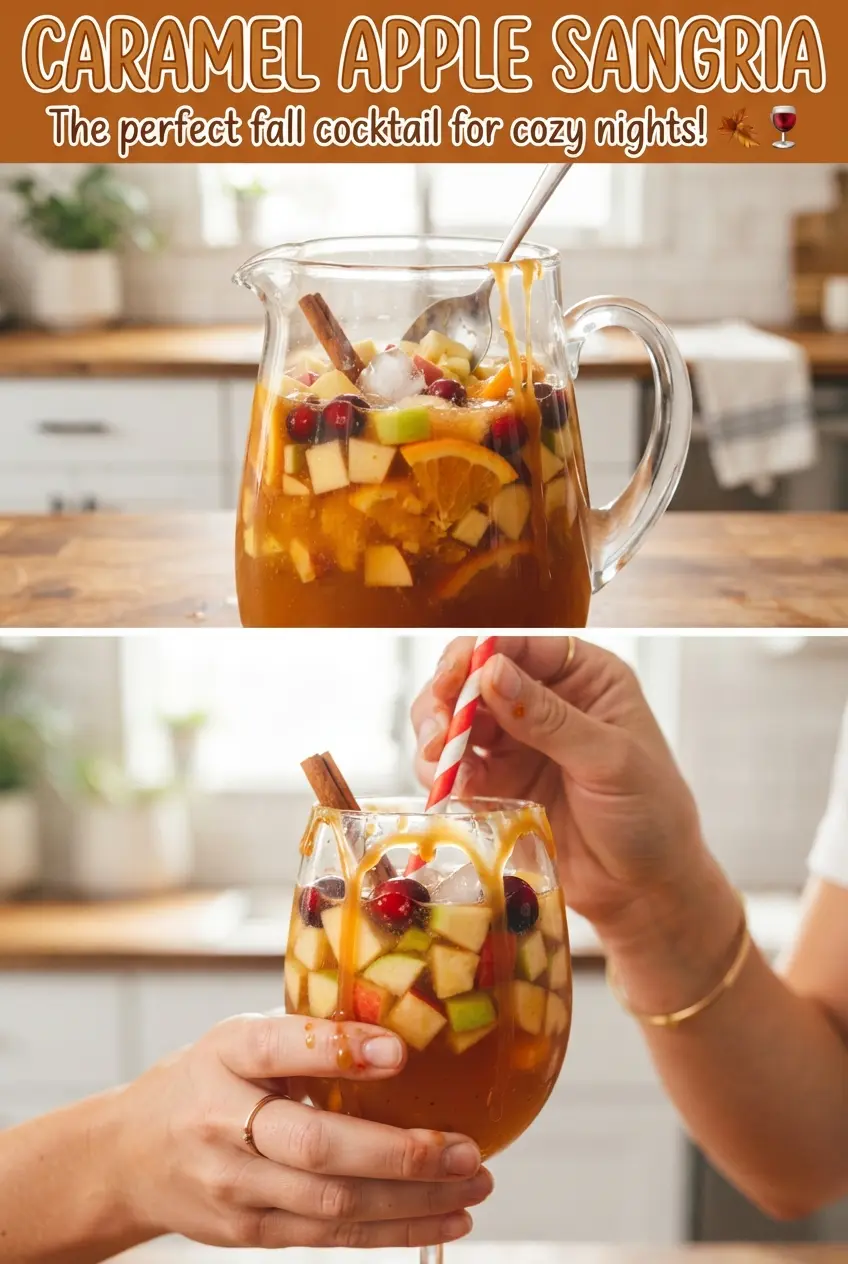
Caramel Apple Sangria
Ingredients
Method
- Combine the pinot grigio, apple cider, and caramel vodka in a large pitcher, whisking well if using caramel sauce.
- Add the thinly sliced apples, pear slices, and cinnamon sticks to the pitcher.
- Chill the mixture for at least 2 hours so the fruit soaks up the flavor.
- Dip glass rims in caramel sauce, then in coarse sugar to coat the edges.
- Top the pitcher with ginger ale just before serving, then pour over ice with some fruit in each glass.