Butternut squash casserole bakes into that rare side dish that lands somewhere between savory comfort and a little bit of dessert, and that’s exactly why people keep going back for seconds. The squash turns silky and rich, the cinnamon and vanilla round out the flavor without making it taste like pie, and the pecan topping gives every scoop a crisp, buttery crunch.
The part that makes this version work is balance. The squash gets boiled until fully tender, then drained well before mashing, which keeps the casserole from turning watery. A modest amount of brown sugar sweetens the filling and the topping without overpowering the squash, while eggs and butter help it set into something spoonable but still creamy.
Below, I’ve included the small details that keep the texture right, plus a few smart swaps if you need to work around what’s in your pantry. The topping is the last thing to look at before it goes into the oven, because that’s where you’ll catch whether it’s crumbly enough to bake up crisp instead of pasty.
The squash came out creamy instead of watery, and the pecan topping stayed crisp even after sitting on the table for a while. I’ll be making this for every holiday meal now.
Save this butternut squash casserole for holiday dinners, potlucks, and any table that needs a creamy squash side with a crunchy pecan topping.
The Secret to Keeping This Casserole Creamy Instead of Watery
Butternut squash holds a lot of water, and that’s the thing that trips people up. If the squash isn’t cooked until fully tender and drained thoroughly, the casserole can bake up loose in the center and the topping can sink instead of staying crisp on top. Boiling works here because it softens the squash quickly and evenly, but draining is just as important as the cooking itself.
The other key is how you handle the mash. You want it smooth, but not thinned out with extra liquid from the pot. The eggs help the casserole set, so once they go in, mix everything until combined and stop there. Overmixing won’t hurt the flavor, but it can make the texture gluey.
What the Squash, Butter, and Pecans Each Bring to the Table
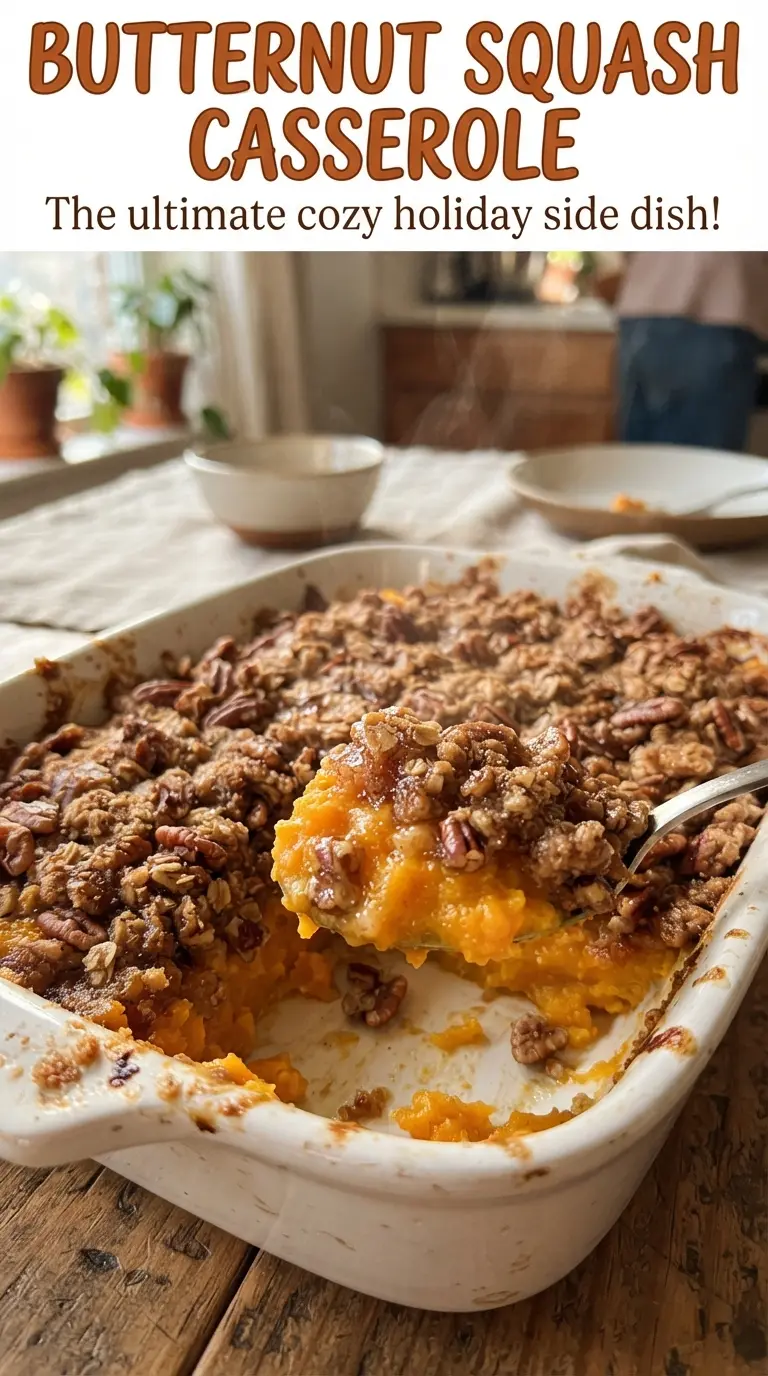
- Butternut squash — This is the base of the whole dish, so freshness matters more than brand name. A firm, heavy squash with deep orange flesh gives you a naturally sweet, velvety casserole. Pre-cut squash works in a pinch, but it’s often drier and can cook a little unevenly, so check it early for tenderness.
- Butter — Melted butter carries the brown sugar and helps the topping bake into a crisp crumble. If you need to cut back on richness, you can reduce the butter slightly, but the casserole will lose some of its silky finish and the streusel will be less crisp.
- Brown sugar — This gives the dish its warm sweetness and a little molasses depth. Light brown sugar is fine here. Dark brown sugar will make the casserole taste a little deeper and more dessert-like.
- Pecans — They’re not just garnish; they’re the contrast that keeps the casserole from feeling soft all the way through. Chop them fairly small so the topping stays cohesive and easy to scoop.
- Milk and eggs — These are what turn mashed squash into a casserole instead of a puree. Whole milk gives the best texture, but 2% will work. Don’t skip the eggs, because they’re what help the filling set into neat, creamy servings.
Building the Casserole So the Topping Stays Crisp
Cooking the Squash Until It Gives Cleanly
Boil the cubed squash until a fork slides through without resistance and the pieces start to look soft at the edges. If you pull it too early, you’ll end up with little firm bits that never fully smooth out. Drain it in a colander and let it sit for a few minutes so steam can escape, because trapped water is what makes the filling slack.
Mashing Into a Smooth, Spoonable Base
Mash the squash with the butter, brown sugar, eggs, milk, vanilla, cinnamon, and salt until it looks creamy and even. A few tiny lumps are fine, but big chunks will bake into an uneven layer. The filling should spread easily in the dish without puddling at the edges.
Making the Streusel That Bakes Up Golden
Mix the flour, pecans, remaining butter, and remaining brown sugar until the texture looks like damp crumbs. If it looks paste-like, the butter was too warm or the flour ratio is off. Sprinkle it evenly over the squash without pressing it down, because a packed topping bakes dense instead of crisp.
Baking Until the Edges Bubble
The casserole is done when the topping is deep golden and the edges are bubbling. The center should look set, not wet, but it can still have a little softness under the crust. If the top browns too fast, lay a loose sheet of foil over the dish for the last few minutes.
Make It Less Sweet for a Savory Table
Cut the brown sugar in the filling by a couple of tablespoons and keep the full streusel on top. You’ll get a more squash-forward dish that still has enough sweetness to balance the pecans. This is the version I’d serve next to ham or roast turkey.
Dairy-Free Version
Use plant-based butter and an unsweetened non-dairy milk with some body, like oat milk. The casserole will still set because of the eggs, but the topping may brown a little faster, so watch the last 10 minutes closely. The texture stays rich, just with a slightly lighter finish.
Gluten-Free Swap
Replace the all-purpose flour in the topping with a cup-for-cup gluten-free flour blend. The crumble won’t be quite as crisp as the original, but it will still bake into a nicely browned, buttery topping. Don’t swap in almond flour alone, or the topping can turn greasy and too soft.
Make-Ahead for a Crowd
Assemble the filling and topping separately, then keep them chilled until you’re ready to bake. If you top the casserole too early and refrigerate it for hours, the streusel will soften. Bake it fresh and add a few extra minutes if it goes into the oven cold.
Storage and Reheating
- Refrigerator: Store covered for up to 4 days. The topping will soften a bit, but the casserole stays creamy.
- Freezer: It freezes well if you cool it completely and wrap it tightly. Freeze in portions or as a whole unbaked casserole; thaw overnight in the fridge before baking or reheating.
- Reheating: Reheat in a 325F oven, covered loosely with foil at first, until warmed through. The mistake to avoid is the microwave, which turns the topping soggy and can make the filling separate.
Answers to the Questions Worth Asking
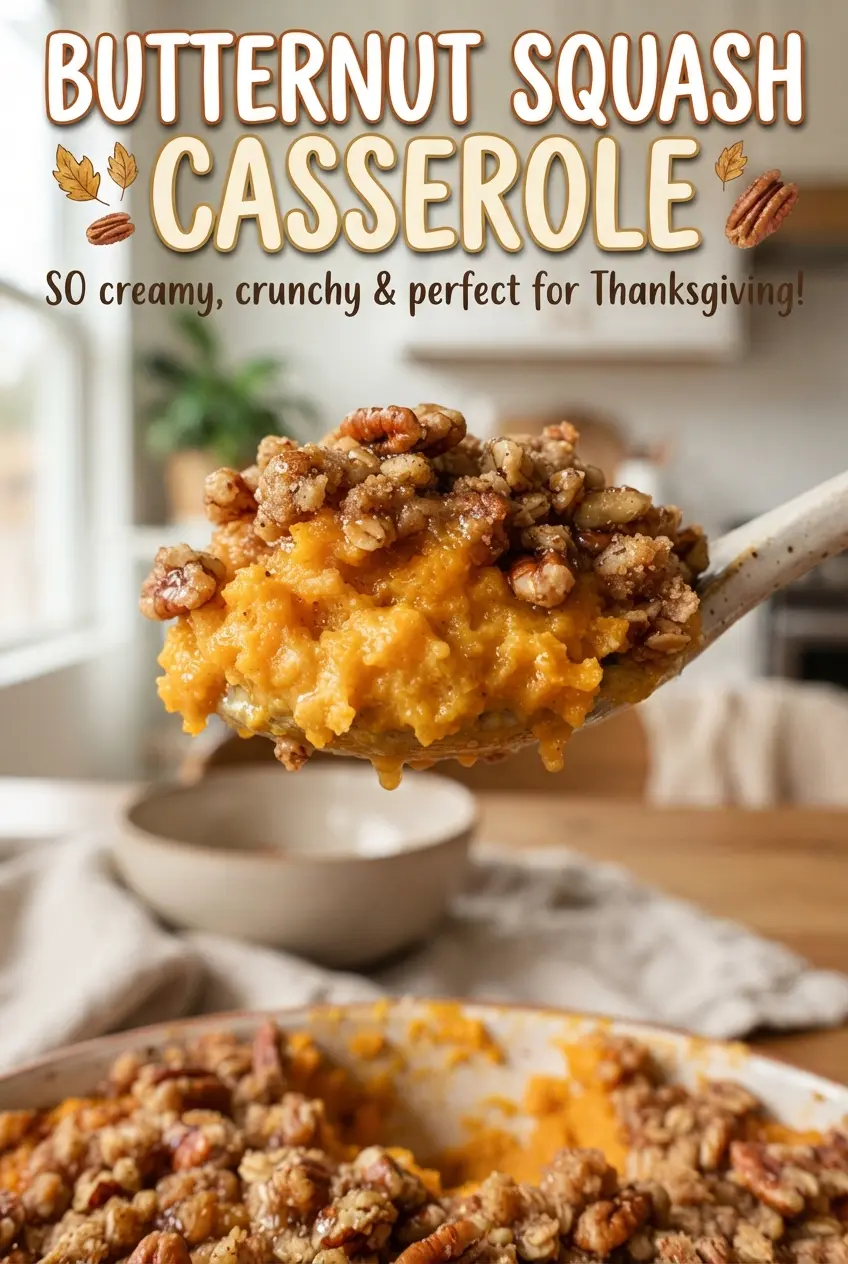
Butternut Squash Casserole
Ingredients
Equipment
Method
- Boil the butternut squash for 15 minutes until very tender, then drain well.
- Preheat the oven to 350F and grease a 9x13-inch baking dish.
- Mash the squash with 1/4 cup butter, 1/4 cup brown sugar, eggs, milk, vanilla extract, ground cinnamon, and salt until smooth.
- Spread the mashed squash mixture into the greased baking dish.
- Mix the all-purpose flour, chopped pecans, remaining butter, and remaining brown sugar until crumbly.
- Sprinkle the crumbly topping over the squash.
- Bake at 350F for 35-40 minutes until the topping is golden and the edges bubble, then let it settle slightly before serving.