Brown sugar ham glaze turns a good holiday ham into the kind people remember for the sticky, burnished edges and the glossy slices that hold onto every bit of sweetness. It settles into the cuts of a scored ham, caramelizes in the oven, and finishes with that balance of sweet, tangy, and just enough spice to keep each bite from tasting flat.
The trick is keeping the glaze smooth and slightly loose when it goes on. Brown sugar, honey, and juice build the shine, while Dijon and cider vinegar keep the sweetness in check and help the glaze cling instead of sliding off the ham. A short simmer is all it needs; if you cook it too long, it turns dense and starts to harden before it has a chance to lacquer the meat.
Below, I’ll show you how to keep the glaze glossy all the way to the table, what to do if you want a deeper citrus note, and how to use the same method on sliced ham without wasting a drop.
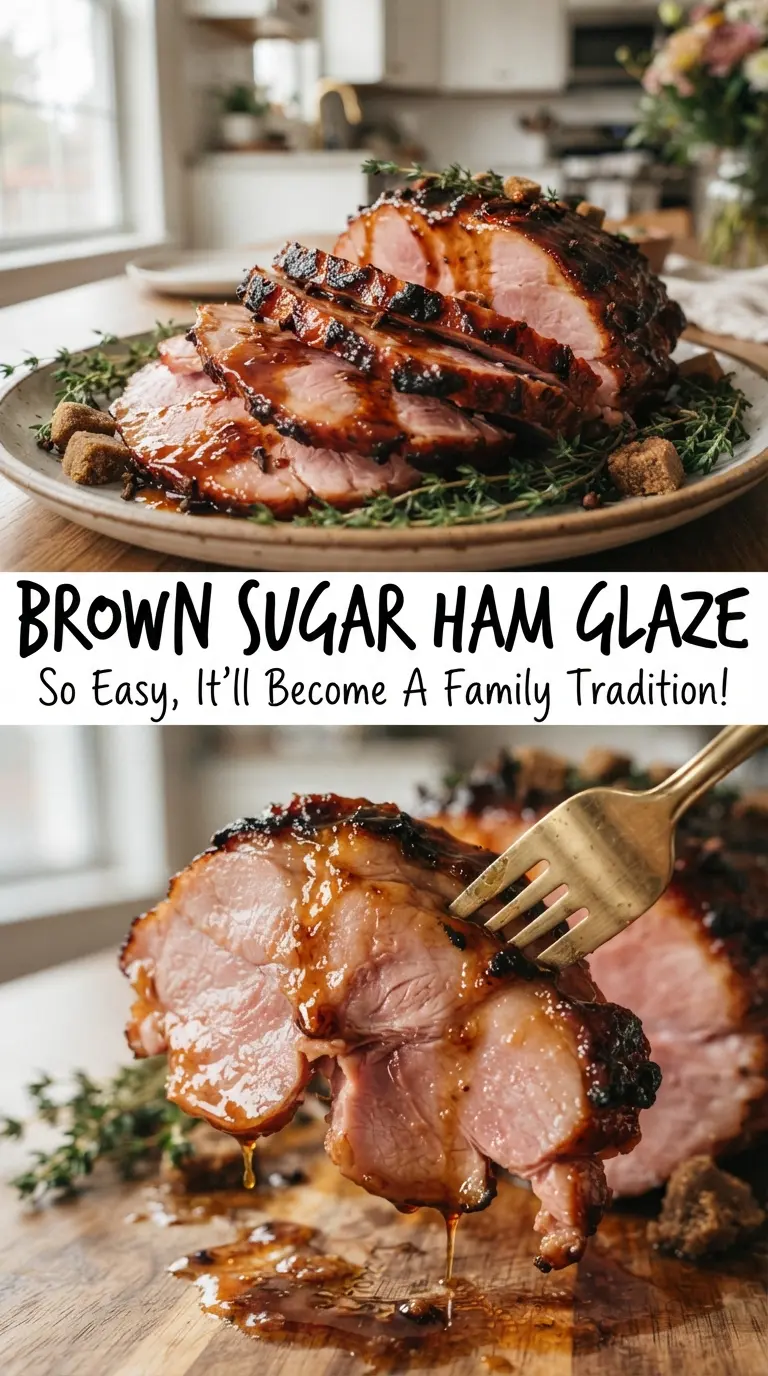
The glaze thickened up just enough to stick to the ham, and brushing it on every 10 minutes gave me that shiny, caramelized finish without burning the edges.
Brush this brown sugar ham glaze on for a shiny, spiced finish that clings to every slice.
The Secret to a Glaze That Sticks Instead of Sliding Off
A ham glaze fails when it’s too thin going into the oven or too cooked on the stove. If it’s watery, it runs right down the ham pan before it has time to caramelize. If it’s cooked down too far, the sugar tightens up and turns tacky before the ham is done, which leaves you with dark spots instead of a glossy coat.
This version works because it starts with enough sugar and honey to shine, but the Dijon, vinegar, and juice keep the mixture fluid until it hits the heat of the oven. That balance matters. You want a glaze that brushes on in a thick ribbon and settles into the scored lines, not one that sets up in the pan.
- Brown sugar gives the glaze its body and that deep molasses note. Pack it firmly so the measurement is accurate.
- Honey adds shine and helps the glaze cling. Maple syrup will work in a pinch, but it changes the flavor and gives a lighter finish.
- Dijon mustard keeps the sweetness from becoming one-note and helps the glaze taste rounded instead of candy-like.
- Apple cider vinegar is the small sharp note that keeps the glaze lively. Don’t skip it; the ham needs that contrast.
What Each Ingredient Is Actually Doing in This Glaze
The orange or pineapple juice adds moisture and a little fruit brightness, which is what keeps this glaze from tasting heavy. Orange gives a cleaner citrus note. Pineapple brings more tang and a slightly sharper sweetness, so use it when you want the glaze to read a little bolder on the ham.
The butter smooths everything out and gives the glaze that finished, satin look when it cools slightly. Cinnamon and cloves do the quiet work here; they should smell warm and festive, not like a spice cabinet got dumped into the pan. A small amount is enough. Too much clove takes over fast.
Building the Glaze So It Stays Glossy in the Oven
Heating Until the Sugar Dissolves
Combine everything in a saucepan and bring it to a gentle simmer over medium heat, stirring until the sugar disappears into the liquid. You’re looking for a smooth, unified sauce with no gritty sugar at the bottom. If the heat is too high, the mixture can bubble aggressively before the sugar melts evenly, which makes the glaze feel grainy later.
Letting It Thicken Just Enough
Simmer for 3 to 4 minutes, just until the glaze looks glossy and slightly syrupy. It should coat a spoon, but it still needs to brush easily. If it reduces too much on the stove, it will harden fast on the ham and won’t spread into the scored cuts.
Brushing in Thin Layers
Brush the glaze over a fully cooked ham during the last 30 minutes of baking, then repeat every 10 minutes. Thin layers build up better than one heavy coat, and they caramelize more evenly. If you pile it on all at once, the sugars can run before they set, leaving the pan full of wasted glaze.
Finishing at the Table
Warm the remaining glaze and spoon it over sliced ham just before serving. That last pass matters because the exposed slices soak it up immediately. If the glaze has thickened too much while sitting, add a teaspoon or two of hot juice and stir until it loosens again.
Ways to Adjust the Glaze Without Losing the Balance
Orange Glaze with a Brighter Finish
Use orange juice instead of pineapple juice for a cleaner citrus flavor and a softer sweetness. The glaze will still caramelize beautifully, but it tastes a little less tropical and a little more classic for a holiday ham.
Pineapple Glaze with More Tang
Use pineapple juice for a stronger sweet-tart edge. It cuts through the richness of the ham a little more aggressively than orange juice, which works well if your ham is especially salty or heavily cured.
Dairy-Free and Gluten-Free as Written
This glaze is naturally both dairy-free and gluten-free as long as your Dijon mustard is certified gluten-free if that matters for your kitchen. That makes it an easy choice when you need a crowd-friendly glaze without changing the texture.
Less Sweet, More Savory
Cut the brown sugar by 2 to 3 tablespoons and add a little more Dijon if you want the glaze to lean sharper instead of candy-sweet. You’ll lose a bit of lacquered shine, but you’ll gain a glaze that plays up the savory side of the ham.
Storage and Reheating
- Refrigerator: Store leftover glaze in a sealed container for up to 5 days. It will thicken as it cools.
- Freezer: Freeze for up to 2 months in a small airtight container. Thaw overnight in the refrigerator before reheating.
- Reheating: Warm gently in a saucepan over low heat or in short bursts in the microwave. Add a splash of juice if it looks too thick, and don’t boil it or the sugar can turn sticky and hard.
Questions I Get Asked About This Recipe
Brown Sugar Ham Glaze
Ingredients
Equipment
Method
- Combine brown sugar, honey, juice, Dijon mustard, butter, apple cider vinegar, ground cinnamon, and ground cloves in a saucepan. Stir until the mixture looks evenly combined before heating.
- Bring the saucepan to a simmer over medium heat, stirring until the sugar dissolves. Look for steady small bubbles across the surface.
- Simmer for 3-4 minutes until the glaze is slightly thickened and glossy, stirring during the last minute. Remove from heat when it coats the back of a spoon.
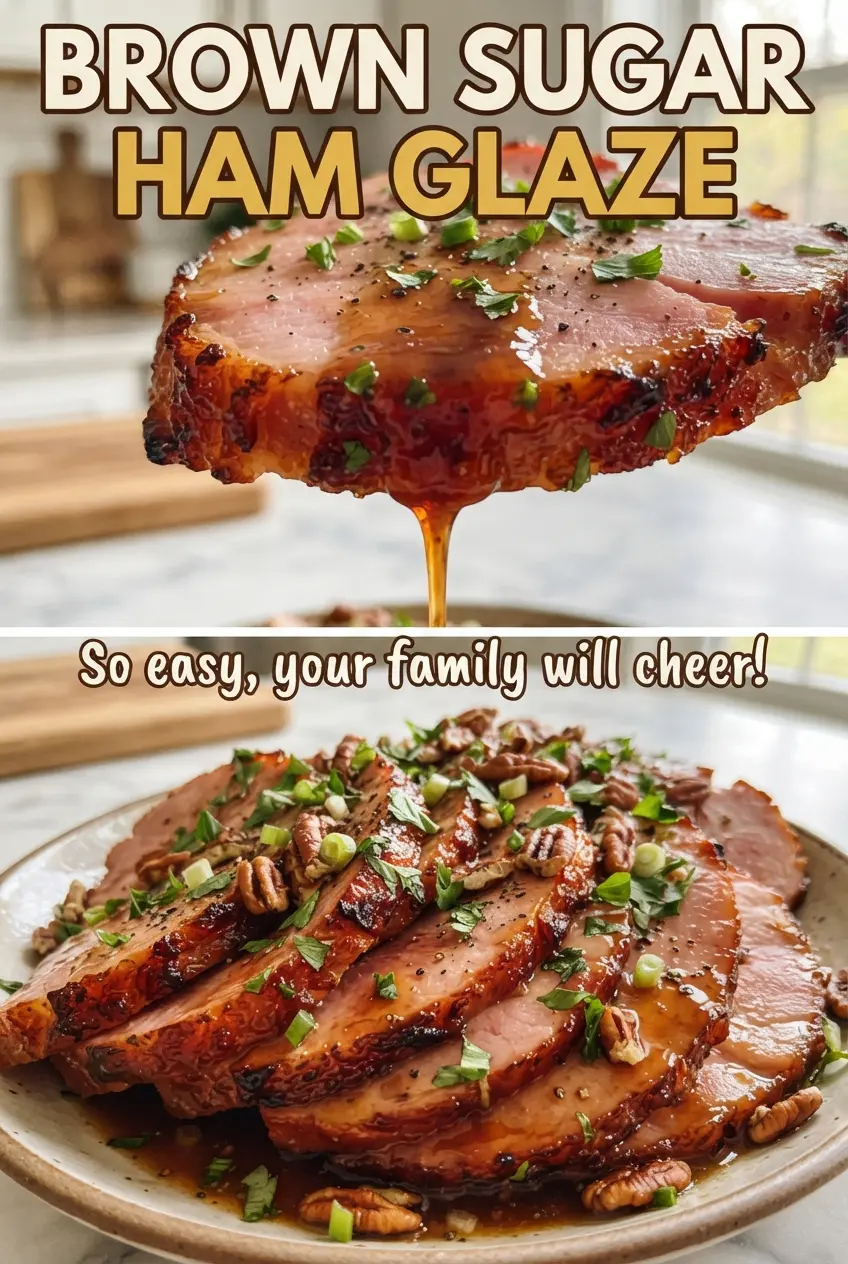
- Brush the warm glaze over a fully cooked ham during the last 30 minutes of baking. Use light, even strokes and let the glaze set between coats.
- Brush again every 10 minutes during the final 30 minutes, using up any remaining glaze from the saucepan as needed. Watch for a darker amber sheen developing on the ham’s surface.
- Spoon any remaining warm glaze over sliced ham at the table. The drizzle should look glossy and slightly thick as it pools in the cut surfaces.