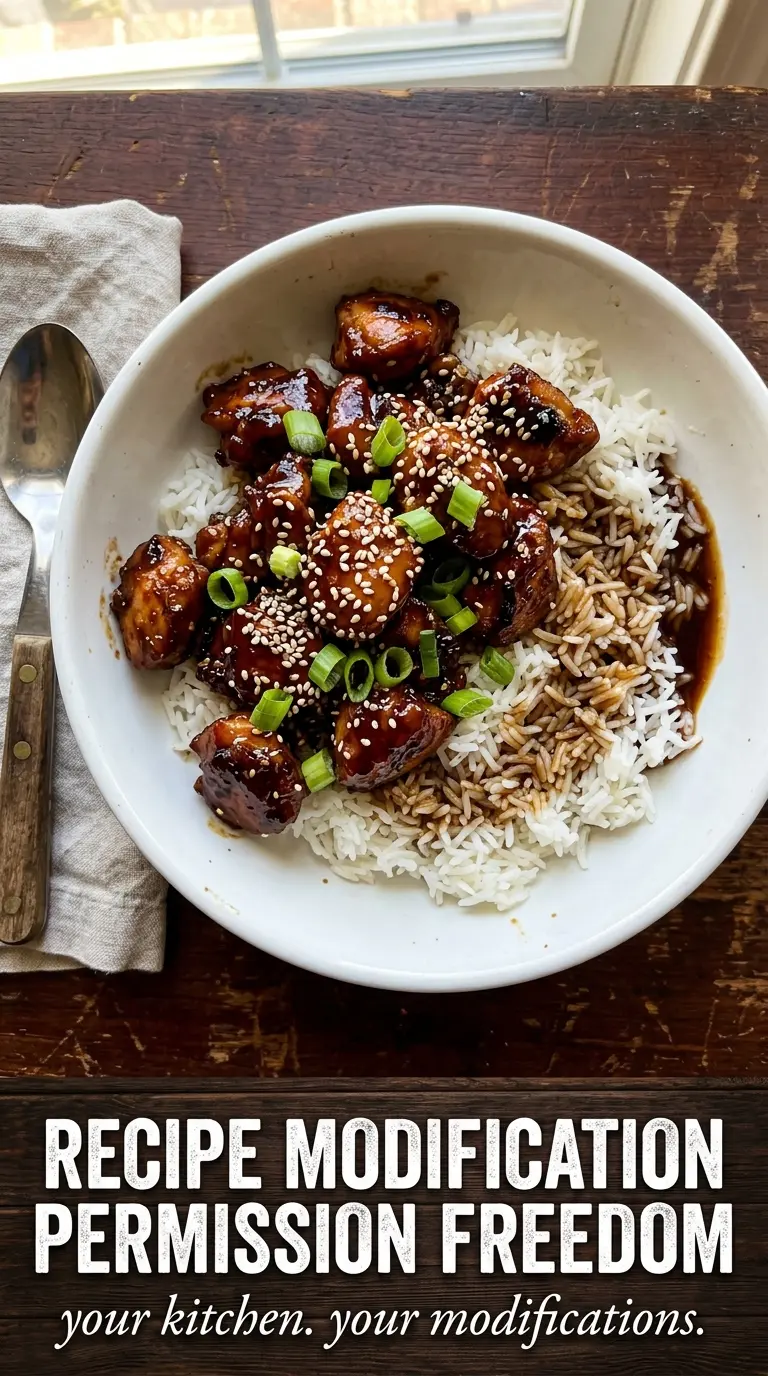
Glossy bourbon chicken earns its keep the second it hits a hot Blackstone. The pieces pick up a deep caramelized edge while the glaze turns sticky and shiny, clinging to every bite instead of pooling on the griddle. You get sweet, salty, tangy, and a little smoky all at once, which is exactly why this one disappears fast.
The trick is splitting the marinade before the chicken goes in. Half is for flavor and tenderizing; the reserved portion gets cooked separately and thickened with cornstarch, so you end up with a safe, spoonable glaze instead of trying to rescue raw marinade later. Chicken thighs are the right cut here because they stay juicy while the sugars in the sauce cook down.
Below, I’ll walk through the part that matters most on a flat-top: getting the sauce to caramelize without burning and knowing exactly when to thicken it. I’ve also included a few swaps and storage notes for the nights when you need to stretch this into lunches.
The sauce thickened right on the griddle and coated every piece instead of burning on the bottom. My husband kept sneaking bites before I even got the sesame seeds on.
Save this Blackstone Bourbon Chicken for the nights when you want sticky griddle-caramelized chicken with almost no cleanup.
The Griddle Move That Keeps the Glaze from Burning
Blackstone bourbon chicken can go from glossy to scorched fast because the sauce contains both sugar and bourbon. That’s not a reason to avoid it; it’s a reason to control when the sauce hits the heat. The chicken cooks first, gets some color, and only then do you add the thickened reserved marinade so it can bubble into a glaze instead of sitting on the griddle long enough to turn bitter.
The other mistake is crowding the chicken. If the pieces are packed too tightly, they steam and throw off liquid, which makes the sauce watery and slows down browning. Give the chicken some breathing room and stir often enough to keep the sugars moving across the hot surface. You’re looking for browned edges, not blackened spots.
- Chicken thighs — Thighs stay tender and forgiving on a hot griddle. Breast meat works in a pinch, but it dries out faster once the glaze starts reducing.
- Bourbon — This brings warmth and depth, but it also carries alcohol that needs to cook off. Use a bourbon you’d actually drink; you don’t need anything fancy, just something smooth.
- Brown sugar — This is what gives the sauce its sticky finish and helps it caramelize on the griddle. White sugar works, but the flavor is flatter and the glaze tastes less round.
- Cornstarch slurry — Don’t skip the slurry if you want that classic glossy coating. It thickens fast and cleanly; flour won’t give the same smooth sheen here.
What Each Ingredient Is Actually Doing in Griddle Glaze
- Glaze ingredients (sugar, soy, acid) — The glaze should be balanced so it caramelizes without burning. Too much sugar burns; too much acid doesn’t coat.
- Medium-high heat (not screaming hot) — The glaze needs heat to caramelize, but too high and it burns immediately. Medium-high is the sweet spot.
- Applied near the end of cooking — Brush the glaze on in the final minute or two. This prevents it from burning while the food cooks.
- Thin application (not pooling) — A light glaze caramelizes evenly. Too much glaze pools and burns in spots.
- Butter in the glaze (helps prevent burning) — A small amount of butter helps the glaze meld with the heat instead of burning. It also helps it coat evenly.
- Acid in the glaze (helps balance sweetness) — The acid prevents the glaze from tasting burnt. It also helps it set with a shine instead of a dull char.
- Quick brush-on (not repeated many times) — Apply once or twice, not constantly. Repeated applications make the glaze thick and burnt.
- Watch carefully (it burns fast) — High-sugar glazes burn in seconds on a hot griddle. Don’t walk away; stand by the griddle while the glaze cooks.
Building the Glaze in Two Distinct Passes
Mixing the Marinade
Combine the bourbon, soy sauce, brown sugar, vinegar, garlic, and ginger until the sugar mostly dissolves. That first mix should smell sharp, sweet, and a little boozy. Pull out one-third before the chicken goes in, because once raw chicken touches the marinade, it’s no longer usable as a finishing sauce unless it gets cooked later.
Marinating the Chicken
Let the chicken sit in the remaining marinade for 30 minutes. That’s long enough to season the meat without turning the texture mushy from the vinegar. If you leave it much longer, especially with smaller pieces, the outside can get a little soft before it even hits the griddle.
Searing on the Blackstone
Heat the oil over medium-high until it shimmers, then spread the chicken out in a single layer. You want to hear an active sizzle as soon as it lands. Stir frequently, but not nonstop; the pieces need a moment against the hot metal to pick up color, or you’ll end up with pale chicken in a wet sauce.
Turning the Reserved Marinade into Sauce
Whisk the cornstarch with water until smooth, then add it to the reserved marinade before pouring it over the cooked chicken. The mixture should thicken after a minute or two of bubbling. If it looks thin, keep it moving; if it looks clumpy, the heat was too high or the cornstarch wasn’t fully dissolved before it hit the pan.
Finishing with Shine
Toss the chicken in the thickened glaze until every piece looks lacquered. The sauce should cling in a thin, glossy layer and leave a trail when you drag a spatula through it. Pull it off the heat as soon as it coats the chicken, because it keeps reducing on the hot griddle even after the burner is off.
How to Adapt This for Different Kitchens and Different Nights
Gluten-Free Version
Use tamari or a certified gluten-free soy sauce in place of regular soy sauce. The flavor stays salty and deep, and the glaze still thickens the same way. Check your bourbon label if you’re cooking strictly gluten-free, since most are fine but it’s worth confirming.
Chicken Breast Swap
Boneless chicken breast works, but cut it into larger pieces and shave a few minutes off the cook time. Breast meat tightens up fast on a griddle, so pull it the moment it’s cooked through and let the sauce finish it. The result is a little leaner and less juicy than thighs, but still good.
No Bourbon, Less Alcohol
If you’d rather not cook with bourbon, use chicken broth plus 1 teaspoon vanilla and an extra tablespoon of brown sugar. You’ll lose some of the warm depth, but the sauce still lands in that sweet-savory lane and caramelizes well on the griddle.
Storage and Reheating
- Refrigerator: Store leftovers in an airtight container for up to 4 days. The glaze will thicken as it chills.
- Freezer: This freezes well for up to 2 months, though the sauce may loosen a little after thawing. Freeze in a flat container for faster reheating.
- Reheating: Warm it in a skillet over medium-low with a splash of water to loosen the sauce. Microwave reheating works too, but heat in short bursts so the sugar doesn’t turn sticky and hard around the edges.
Answers to the Questions Worth Asking

Blackstone Bourbon Chicken
Ingredients
Equipment
Method
- Combine bourbon, soy sauce, brown sugar, apple cider vinegar, garlic, and ginger in a bowl until the sugar dissolves and the mixture looks glossy.
- Reserve 1/3 of the marinade for later, then marinate the chicken in the remaining marinade for 30 minutes.
- Heat oil on the Blackstone griddle over medium-high heat until shimmering.
- Cook chicken for 10-12 minutes, stirring frequently, until cooked through and caramelized with browned edges.
- Mix cornstarch with water and add it to the reserved marinade, stirring until smooth.
- Pour the thickened marinade over the chicken and cook 2-3 minutes until the sauce thickens and coats the chicken with visible glaze.
- Garnish with sesame seeds and green onions right before serving.