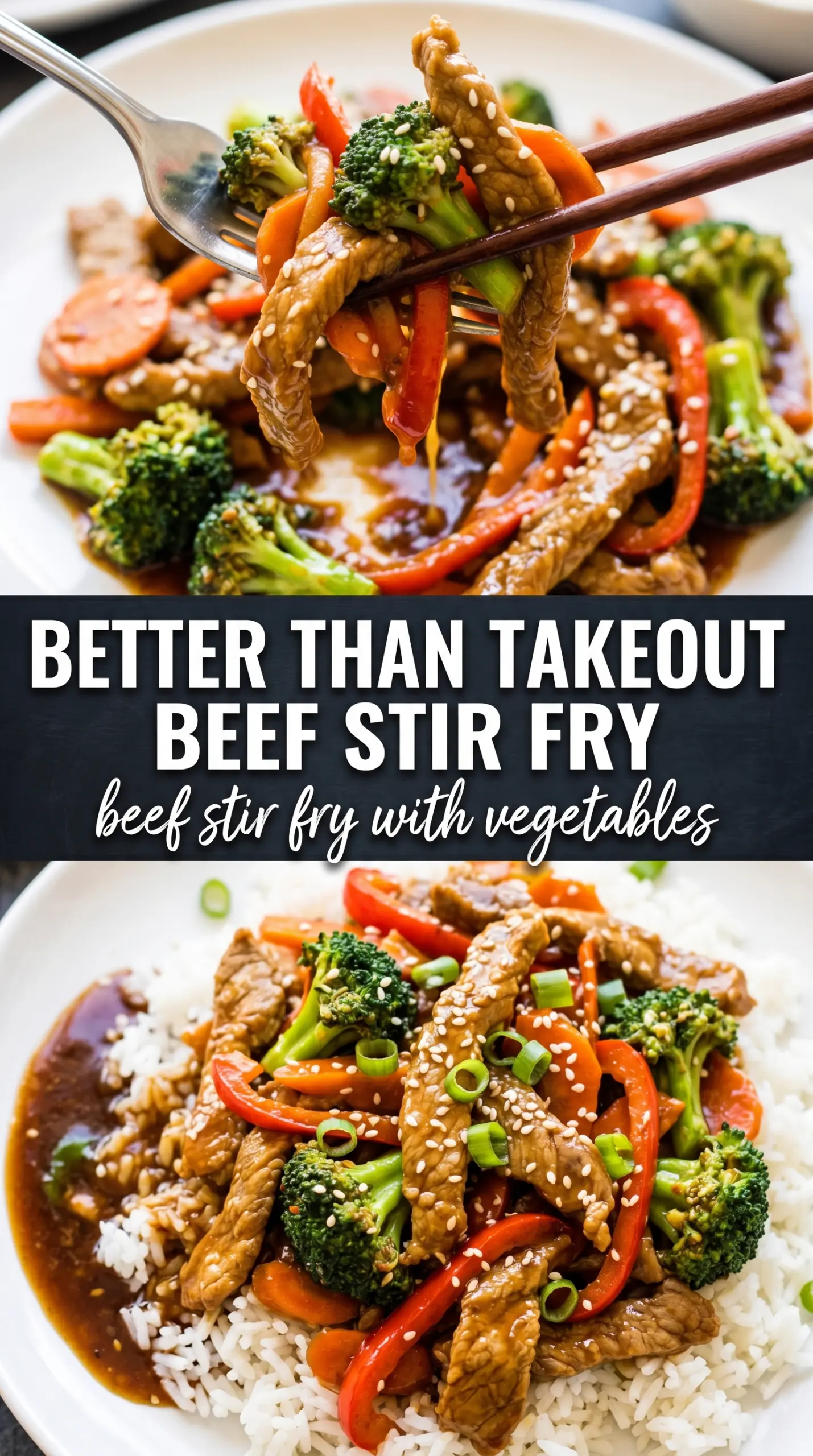
Thin slices of beef, crisp-tender vegetables, and a glossy soy-ginger sauce are what make this stir fry land on repeat. It cooks fast, but it doesn’t taste rushed. The beef stays tender because it’s sliced thin against the grain and seared in a hot pan before anything else touches the wok, while the vegetables keep enough bite to stand up to the sauce.
The sauce matters here. Soy sauce brings salt and depth, oyster sauce adds that savory backbone you can’t quite fake, and a little brown sugar rounds everything out without turning the dish sweet. The cornstarch slurry goes in at the end, after the beef and vegetables are back together, so it thickens into a clingy glaze instead of turning gummy in the pan.
Below, I’ll walk through the small details that keep the beef tender and the vegetables crisp, plus the swaps that still give you a stir fry worth serving over rice on a busy night.
The beef stayed tender and the sauce thickened up just enough to coat everything without making the vegetables soggy. I used the sliced mushrooms too, and they soaked up all that ginger-garlic flavor.
Save this beef stir fry with vegetables for the nights when you want glossy sauce, crisp-tender broccoli, and dinner on the table in 30 minutes.
The Trick to Tender Beef Before the Vegetables Even Start
The biggest mistake in a beef stir fry is crowding the pan and expecting a proper sear anyway. Beef needs direct contact with hot metal, and it needs room to brown instead of steam. When the pan is hot enough, the meat should sizzle hard the second it hits the oil, and you should leave it alone long enough for the edges to color before tossing it.
Slicing against the grain matters just as much as the heat. That shortens the muscle fibers and keeps each bite tender instead of chewy. If your slices are thicker than about 1/4 inch, they’ll cook before they brown, and you’ll lose the texture that makes this dish work.
- Flank or sirloin steak — Flank gives you a more pronounced beefy bite, while sirloin is a little more forgiving and tender. Either one works well as long as you slice it very thin across the grain.
- High heat — This is what gives you browning fast enough to keep the meat juicy. If the pan isn’t smoking lightly before the beef goes in, wait another minute.
- Vegetables — Broccoli, bell pepper, snap peas, and mushrooms all cook at different speeds, but they can still finish together if you cut them into similar-sized pieces. That keeps the stir fry balanced instead of giving you overcooked broccoli and raw mushrooms.
- Cornstarch slurry — The slurry thickens the sauce right at the end, after the beef and vegetables are already coated. Adding it too early can make the sauce tighten up before everything is fully tossed.
What Each Ingredient Is Actually Doing in This Recipe
- Primary ingredient (the star) — Quality matters most. Choose the best you can find.
- Cooking medium (oil, butter, or broth) — This carries flavors and prevents dryness.
- Seasonings (salt, pepper, spices, herbs) — Layer flavors so nothing overpowers. Build depth gradually.
- Aromatics (garlic, onion, herbs) — Cook with fat to bloom flavors. Become the foundation.
- Supporting ingredients — Complement the main ingredient without overpowering it.
- Sauce or liquid (if applicable) — Brings flavors together. Balance richness with acid.
- Acid (lemon, vinegar, wine, or other) — Brightens and prevents flat-tasting results.
- Final finish (garnish, glaze, or sauce) — Prevents one-dimensional taste and adds visual appeal.
Why the Sauce Gets Glossy Instead of Gloppy
First whisk the sauce before you turn on the heat. Once the cornstarch hits liquid, it wants to settle, so you want everything ready when the pan is moving fast. Soy sauce and oyster sauce bring the savory base, brown sugar softens the salt, and sesame oil is there for aroma rather than bulk.
Use the slurry only after the sauce is already on the food. If you pour cornstarch directly into a hot pan, you’ll get little lumps that never fully smooth out. When it goes in as a slurry and gets tossed over high heat for about a minute, it turns the whole dish shiny and coats the beef instead of pooling under it.
Flank Steak vs. Sirloin
Flank steak has a deeper beef flavor and a firmer bite, which works beautifully if you slice it very thin. Sirloin is a little more tender and easier for a quick weeknight dinner, especially if you’re not used to shaving meat for stir fry. Both are good choices; just don’t use thick chunks and expect the same texture.
Make It Gluten-Free
Use a gluten-free soy sauce or tamari and check that your oyster sauce is labeled gluten-free. The rest of the method stays the same, and you’ll still get the same glossy finish because the cornstarch slurry does the thickening, not wheat flour.
Swap the Vegetables by Season
You can swap in green beans, zucchini, carrots, or baby corn as long as you keep the pieces bite-size and cook the firmer vegetables first. The key is keeping some crunch in the pan so the finished stir fry doesn’t turn soft once the sauce goes in.
Lower-Sodium Version
Use low-sodium soy sauce and cut the oyster sauce back slightly, then taste after the sauce coats the beef. You’ll lose a little depth, but a touch more ginger or garlic brings the flavor back up without making the dish overly salty.
Storage and Reheating
- Refrigerator: Store leftovers in an airtight container for up to 3 days. The vegetables soften a bit, but the flavor holds well.
- Freezer: It freezes okay, though the vegetables lose some crispness. If you plan to freeze it, pull it off the heat just after the sauce thickens so the veg don’t get too soft.
- Reheating: Reheat in a skillet over medium heat with a splash of water until warmed through. The common mistake is blasting it in the microwave too long, which makes the beef tough and the sauce split around the edges.
Questions I Get Asked About This Recipe
Beef Stir Fry with Vegetables
Ingredients
Equipment
Method
- Whisk soy sauce, oyster sauce, brown sugar, sesame oil, and cornstarch mixed with water in a bowl until smooth, then set aside.
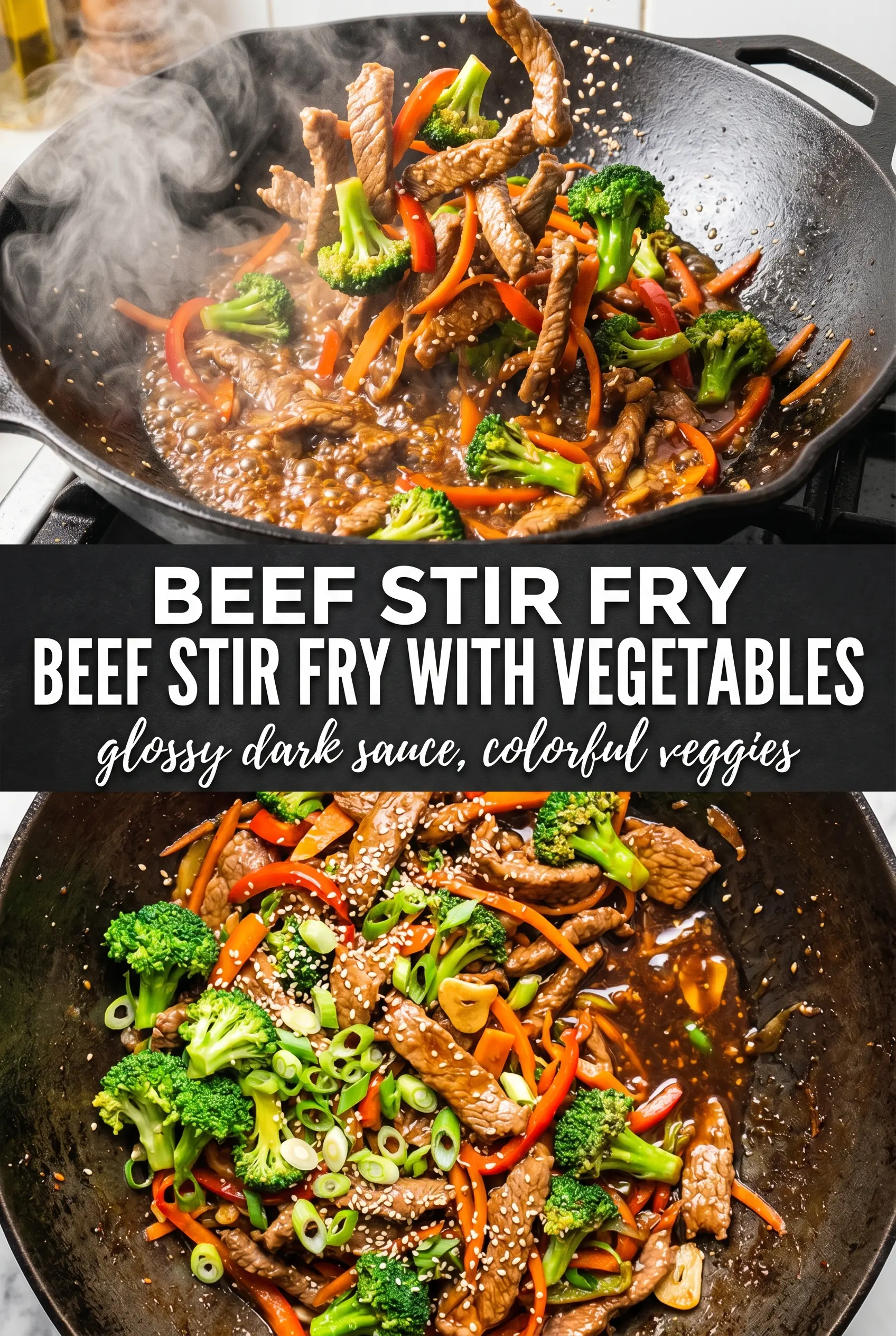
- Heat 2 tablespoons vegetable oil in a wok over high heat until smoking, then add the beef in a single layer and sear for 1–2 minutes without stirring until browned.
- Toss the beef briefly to coat with the searing oil and remove it from the wok.
- Add the remaining vegetable oil to the wok and stir-fry broccoli florets, red bell pepper, snap peas, and mushrooms for 3–4 minutes until tender-crisp.
- Add garlic and fresh ginger and cook for 30 seconds, stirring, until fragrant.
- Return the seared beef to the wok and stir to combine with the vegetables.
- Pour the sauce over everything and toss while stirring until the sauce thickens and turns glossy, about 1 minute.
- Serve immediately over cooked rice and top with sesame seeds.