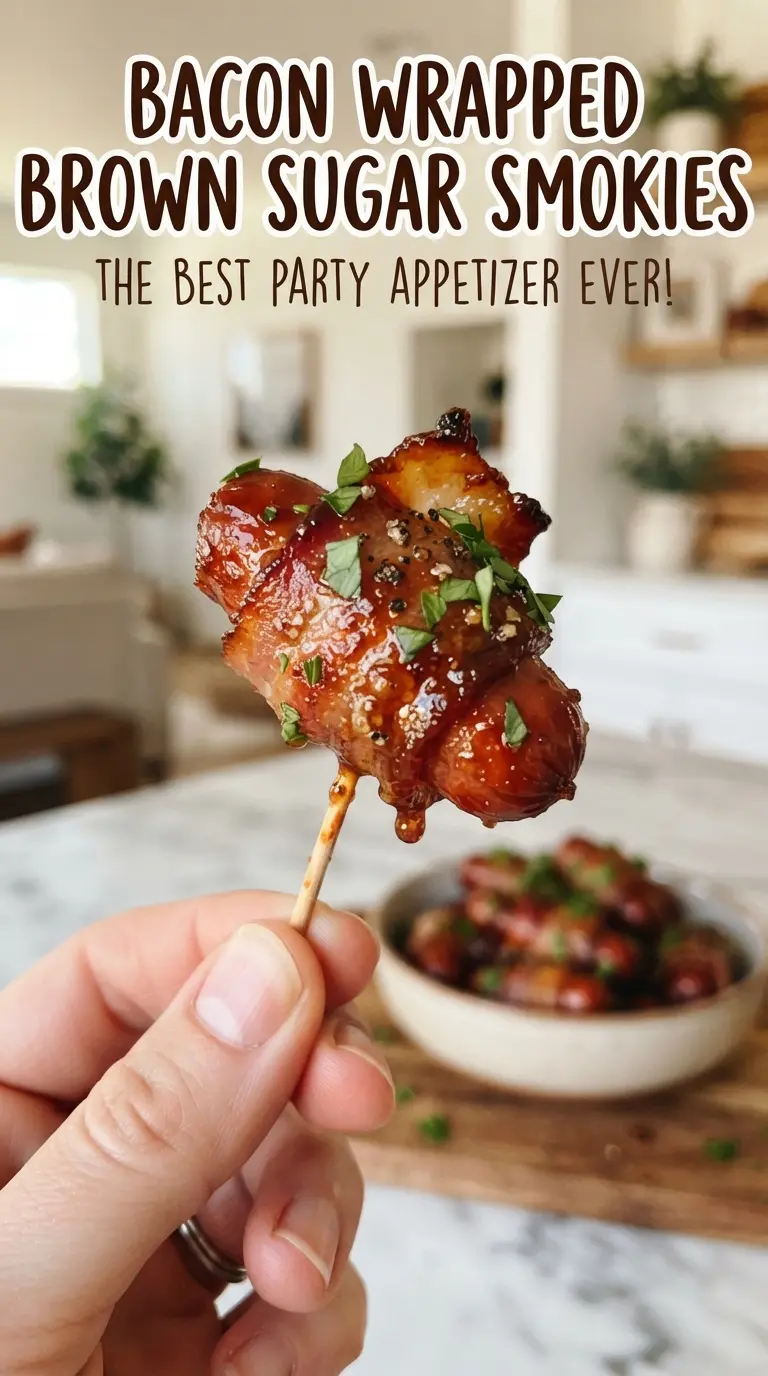
Bacon Wrapped Brown Sugar Smokies hit that sweet-salty-crisp sweet spot that disappears fast from any appetizer table. The bacon turns crackly at the edges, the brown sugar melts into a sticky glaze, and each bite lands with a little heat from the cayenne that keeps the sweetness from feeling one-note.
The trick is using thin-cut bacon and cutting each slice into thirds so it wraps tightly and cooks through at the same pace as the smokies. A quick roll in the brown sugar mixture before baking helps form that candied crust, while a little melted butter encourages the sugar to bubble and cling instead of drying out on the pan.
Below, I’ll walk through the small details that keep the bacon crisp and the coating glossy, plus a few smart swaps if you need to adjust the heat or make a bigger batch.
The bacon came out crisp, the sugar turned into a caramelized shell, and they held together perfectly on the toothpicks. I had people hovering by the pan before I even set them out.
Save these bacon-wrapped brown sugar smokies for the next appetizer spread when you want sticky, crisp, sweet-salty bites that vanish off the tray.
The bacon-to-sugar balance is what keeps these from turning soggy
Most versions of this appetizer run into one of two problems: the bacon stays limp, or the sugar burns before the bacon is done. Thin-cut bacon solves the first issue because it renders faster, and baking at 350°F gives the fat time to melt before the sugar goes too dark. The brown sugar also needs a little help from the butter. Without it, the coating can dry out and fall off instead of forming that lacquered crust people expect.
The cayenne matters more than it looks like it should. It doesn’t make these spicy-hot, but it keeps the glaze from tasting flat. If you skip it entirely, the bites still work, but they lose the little spark that makes people go back for another one.
- Thin-cut bacon — This is the right choice because it crisps before the sugar has a chance to burn. Thick-cut bacon stays chewy in a recipe like this unless you overbake the glaze.
- Little smokies — Their size gives you a clean bacon-to-sausage ratio in one bite. Larger sausages need longer bake time and throw off the whole texture balance.
- Brown sugar — Packed brown sugar melts into the sticky shell that defines the recipe. Light or dark both work; dark brown sugar gives a deeper molasses note.
- Butter — The melted butter helps the sugar melt evenly and cling to the bacon. If you leave it out, the coating tends to look sandy instead of glazed.
What Each Ingredient Is Actually Doing in This Recipe
- Primary ingredient (the star) — Quality matters most. Choose the best you can find.
- Cooking medium (oil, butter, or broth) — This carries flavors and prevents dryness.
- Seasonings (salt, pepper, spices, herbs) — Layer flavors so nothing overpowers. Build depth gradually.
- Aromatics (garlic, onion, herbs) — Cook with fat to bloom flavors. Become the foundation.
- Supporting ingredients — Complement the main ingredient without overpowering it.
- Sauce or liquid (if applicable) — Brings flavors together. Balance richness with acid.
- Acid (lemon, vinegar, wine, or other) — Brightens and prevents flat-tasting results.
- Final finish (garnish, glaze, or sauce) — Prevents one-dimensional taste and adds visual appeal.
Getting the bacon crisp before the sugar turns too dark
Wrapping and securing each smokie
Cut the bacon into thirds so each piece wraps snugly around a smokie without a lot of overlap. The bacon should sit flat and tight, then get pinned with a toothpick through the seam so it doesn’t unravel as the fat renders. If the strip is too long, it bunches up and the center stays soft while the ends overcook.
Coating in the sugar mixture
Mix the brown sugar and cayenne first, then roll each wrapped smokie until it’s evenly coated. A shallow bowl works better than a deep one because it lets the sugar stick without clumping into thick patches. If the sugar looks wet and pasty before baking, you used too much butter too early; the dry coating should be light and sandy going onto the pan.
Baking until the glaze bubbles
Arrange the smokies on a foil- and parchment-lined baking sheet with a little space around each one. That gap helps the bacon render instead of steaming. Bake until the bacon looks crisp at the edges and the sugar is bubbling into a caramel glaze, usually 30 to 35 minutes. If the sugar is getting too dark before the bacon firms up, your oven runs hot, so start checking a few minutes early.
Letting the coating set
Give them about 5 minutes on the pan before serving. The glaze tightens as it cools, which keeps it from sliding off the bacon the second someone grabs a toothpick. Serve them warm, while the edges are still crisp and the center is glossy.
How to tweak these for heat, sweetness, or a bigger crowd
Milder version for kids or heat-sensitive guests
Leave out the cayenne and use the same amount of brown sugar. You’ll get a sweeter, more classic candied bacon bite, but the flavor will lean richer and less balanced. If you want a tiny bit of contrast without heat, add a pinch of black pepper instead.
Extra smoky and savory
Use a little less brown sugar and add a light dusting of smoked paprika to the coating. That gives you a deeper, more barbecue-style finish without changing the structure of the recipe. Don’t add too much spice or the sugar won’t cling evenly.
Gluten-free appetizer tray
This recipe is naturally gluten-free as long as your little smokies are certified gluten-free. The rest is just bacon, sugar, butter, and spice, so the main thing is checking the sausage label before you start wrapping.
Make-ahead for a party
Wrap and skewer the smokies up to a day ahead, then cover and refrigerate them before coating and baking. Don’t coat them too early or the sugar pulls moisture from the bacon and turns grainy. For a bigger batch, use two pans so the smokies stay in a single layer.
Storage and Reheating
- Refrigerator: Store leftovers in an airtight container for up to 3 days. The bacon softens a little, but the flavor stays good.
- Freezer: They freeze better before baking than after. If you want to freeze them, assemble and freeze on a tray, then move to a bag and bake from frozen with a few extra minutes.
- Reheating: Warm leftovers on a foil-lined sheet pan in a 325°F oven until heated through and the bacon firms back up. The microwave makes the glaze watery and the bacon rubbery, which is the fastest way to lose the texture that makes these work.
Answers to the questions worth asking
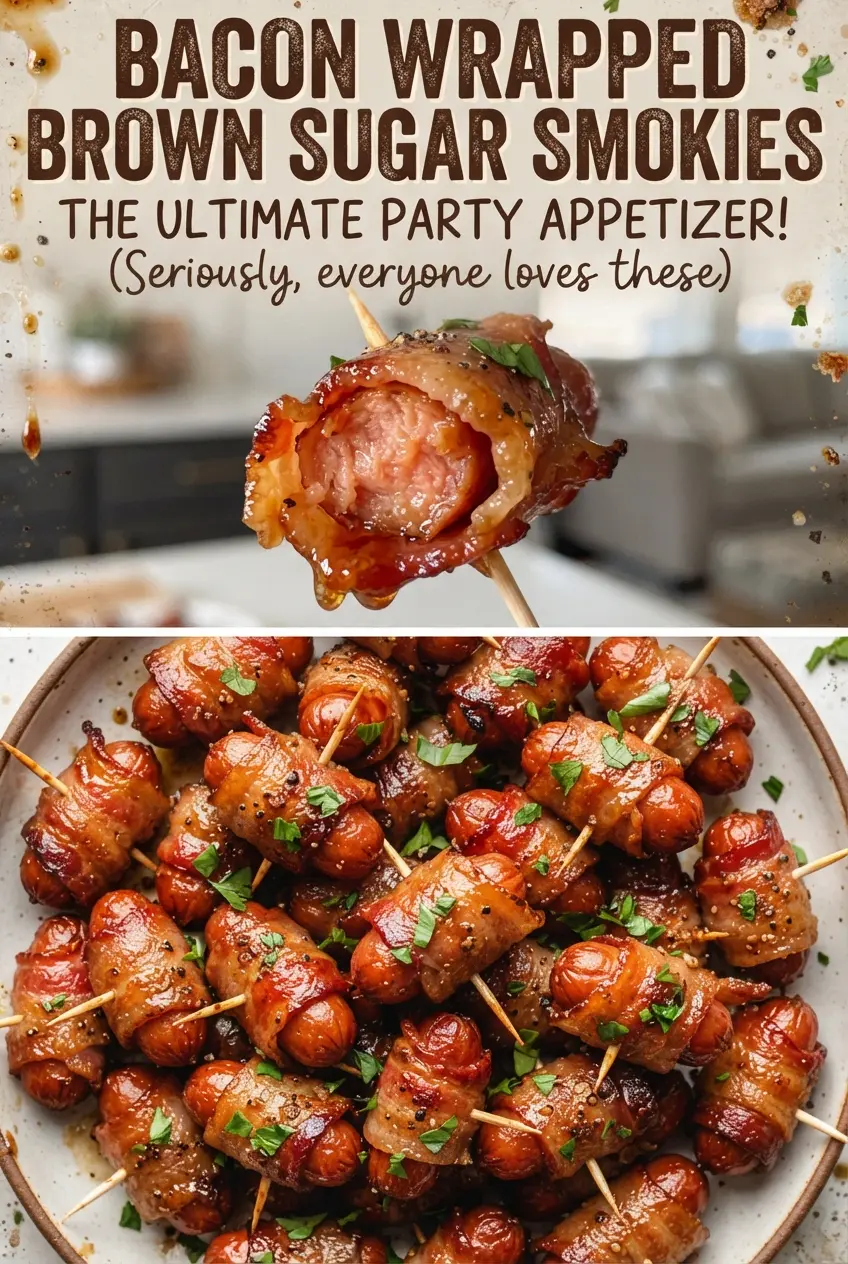
Bacon Wrapped Brown Sugar Smokies
Ingredients
Equipment
Method
- Preheat the oven to 350°F and line a baking sheet with foil and parchment. Set up the pan so the smokies can go straight in after coating.
- Wrap each little smokie with a piece of thin-cut bacon and secure it with a toothpick. Keep the bacon tight so it crisps evenly.
- Mix the brown sugar and cayenne pepper together. The mixture should be evenly speckled.
- Roll each bacon-wrapped smokie in the brown sugar mixture to coat. Press lightly so the crust clings all around.
- Arrange the coated smokies on the lined baking sheet, leaving space between them. Drizzle with the melted butter and sprinkle any remaining sugar over the tops.
- Bake at 350°F for 30–35 minutes until the bacon is crisp and the sugar is bubbly and caramelized. Look for browned, glassy edges on the glaze.
- Cool for 5 minutes so the glaze sets, then serve warm. The syrupy crust should thicken slightly as it rests.