Asian pasta salad brings the kind of crunch-and-sauce balance that makes people keep going back for one more forkful. The noodles soak up the sesame-ginger dressing without turning heavy, and the cabbage, carrots, and bell pepper stay crisp enough to keep every bite lively. It tastes bright after chilling, which is exactly why it works for lunches, cookouts, and any table that needs a side dish with some backbone.
The trick here is rinsing the pasta cold after cooking. That stops the noodles from carrying over and turning soft, and it also keeps them from drinking up all the dressing before the salad has time to chill. The dressing itself is built on soy sauce, rice vinegar, sesame oil, ginger, and garlic, which gives you salt, acid, richness, and bite without needing a long ingredient list. A little honey rounds off the sharp edges so the salad tastes balanced instead of harsh.
Below, I’ll walk through the one step that keeps the texture right, the ingredient swaps that still make sense, and the storage note you’ll want if you’re making this ahead for a crowd.
The dressing coated everything evenly and the noodles stayed springy after chilling overnight. I added a little extra sesame seed on top and it tasted even better the next day.
Save this Asian Pasta Salad for the kind of side dish that stays crunchy, tangy, and sesame-scented after chilling.
The Reason This Salad Stays Crisp After Chilling
Most pasta salads lose their appeal because the noodles soften too much or the dressing gets swallowed before serving. This version avoids both problems by using a cold rinse and a dressing with enough acid and salt to cling to the pasta instead of disappearing into it. The cabbage and carrots do more than add color; they keep their structure long after the bowl comes out of the fridge, which is the whole point of making a chilled salad in the first place.
The other detail that matters is the balance in the dressing. Sesame oil carries a lot of flavor, so you don’t need much, and rice vinegar keeps the salad sharp without making it sour. If the salad tastes flat after chilling, it usually means it needed a little more salt or a longer rest, not more oil.
- Rinsed pasta — This stops the noodles from turning sticky and gives the dressing a clean surface to coat. Use cold water until the pasta feels completely cool.
- Red cabbage — It stays crunchy better than softer greens and gives the salad structure. Green cabbage works in a pinch, but it’s a little less vibrant.
- Sesame oil — A small amount brings the toasted flavor that defines the dish. Don’t replace it with a neutral oil unless you’re willing to lose that nutty finish.
What Each Ingredient Is Actually Doing Here
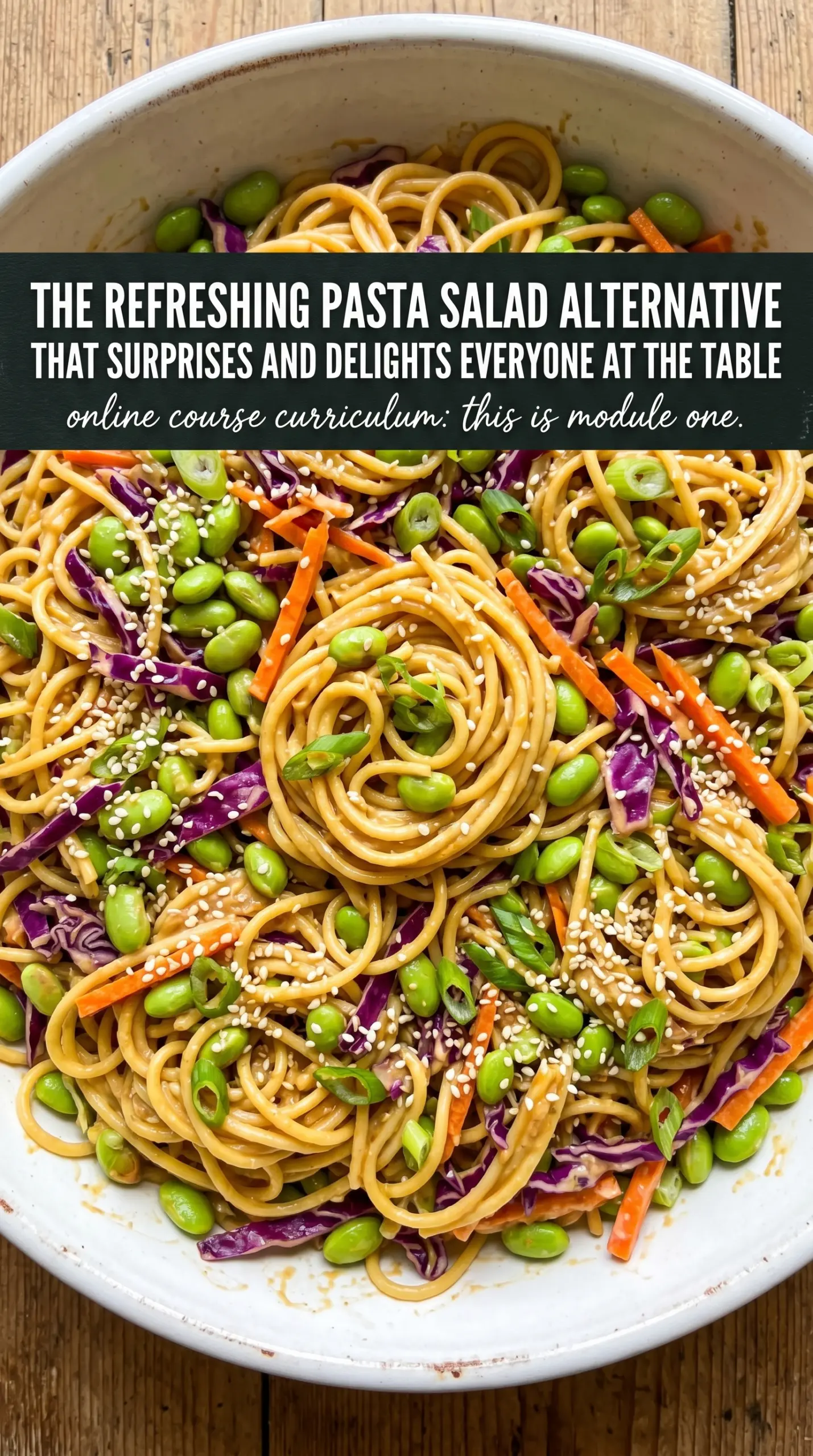
- Spaghetti or linguine — Long noodles hold onto the dressing and mix easily with the shredded vegetables. Short pasta works, but the texture feels less like a true noodle salad.
- Edamame — This adds body and a gentle, nutty bite that makes the salad more filling. Frozen shelled edamame is perfect here; just thaw it and drain well.
- Rice vinegar — It gives the dressing the clean tang that keeps the salad from tasting heavy. Apple cider vinegar can work, but it tastes sharper and less rounded.
- Fresh ginger and garlic — These are the backbone of the dressing. Powdered versions won’t give you the same bright, fresh edge, especially in a chilled dish.
- Honey — It softens the vinegar and helps the dressing cling. If you want a vegetarian or vegan version, swap in maple syrup or agave in the same amount.
- Green onions and sesame seeds — Add these at the end so they stay fresh and noticeable. If you stir them in too early, the onions lose their snap and the seeds vanish into the bowl.
How to Toss It So the Dressing Clings Instead of Pooling
Cooking the Pasta to the Right Point
Boil the pasta until it’s just tender, not soft. You want it fully cooked but still holding its shape, because it will absorb a little dressing while it chills. Drain it well, then rinse with cold water until the strands are cool to the touch. If the pasta goes into the bowl warm, it will wilt the vegetables and thin the dressing.
Whisking the Sesame-Ginger Dressing
Mix the soy sauce, rice vinegar, sesame oil, honey, ginger, garlic, salt, and pepper until the honey dissolves and the dressing looks smooth. The ginger and garlic should look evenly suspended, not sitting in little clumps. If the dressing tastes too sharp, let it sit for a few minutes before adjusting anything; the ginger settles into the mixture as it rests. Taste it before it hits the salad, because once it’s on the noodles, you’ll be chasing balance instead of building it.
Coating and Chilling the Salad
Combine the pasta, edamame, cabbage, carrots, and bell pepper in a large bowl, then pour the dressing over the top and toss until every strand is coated. Use a bowl bigger than you think you need so the vegetables don’t get crushed while you mix. Chill for at least an hour. That rest gives the pasta time to absorb the dressing and brings the whole salad into balance instead of leaving the flavor sitting on the surface.
Finishing Just Before Serving
Add the green onions and sesame seeds right before serving so they stay fresh and visible. If you add them too early, the onions soften and the sesame seeds lose their pop against the noodles. Give the salad one last toss after chilling, because the dressing tends to settle at the bottom of the bowl. A quick stir wakes everything back up.
Three Smart Ways to Adapt This Salad
Make it gluten-free without losing the texture
Use a gluten-free spaghetti that holds its shape after cooling. Cook it just to al dente and rinse gently, because gluten-free pasta can go from firm to fragile fast. Tamari is the cleanest swap for soy sauce, and it keeps the dressing savory without adding wheat.
Turn it into a vegan salad
Replace the honey with maple syrup or agave in the same amount. You’ll still get the gentle sweetness that rounds out the vinegar, but the finish will taste a little softer and less floral. Everything else in the salad already works well for a vegan table.
Add protein for a more complete lunch
Toss in chilled shredded chicken, baked tofu, or cooked shrimp after the salad has cooled. Add it after the first toss so the protein stays coated without breaking apart. This keeps the texture clean and stops the bowl from becoming muddy.
Storage and Reheating
- Refrigerator: Store covered for up to 4 days. The vegetables soften a little, but the salad still holds up well.
- Freezer: Don’t freeze this salad. The pasta and vegetables lose their texture once thawed, and the dressing separates.
- Reheating: This dish is meant to be served cold. If it has been in the fridge awhile, let it sit at room temperature for 10 to 15 minutes and toss again before serving so the dressing loosens up.
Questions I Get Asked About This Recipe
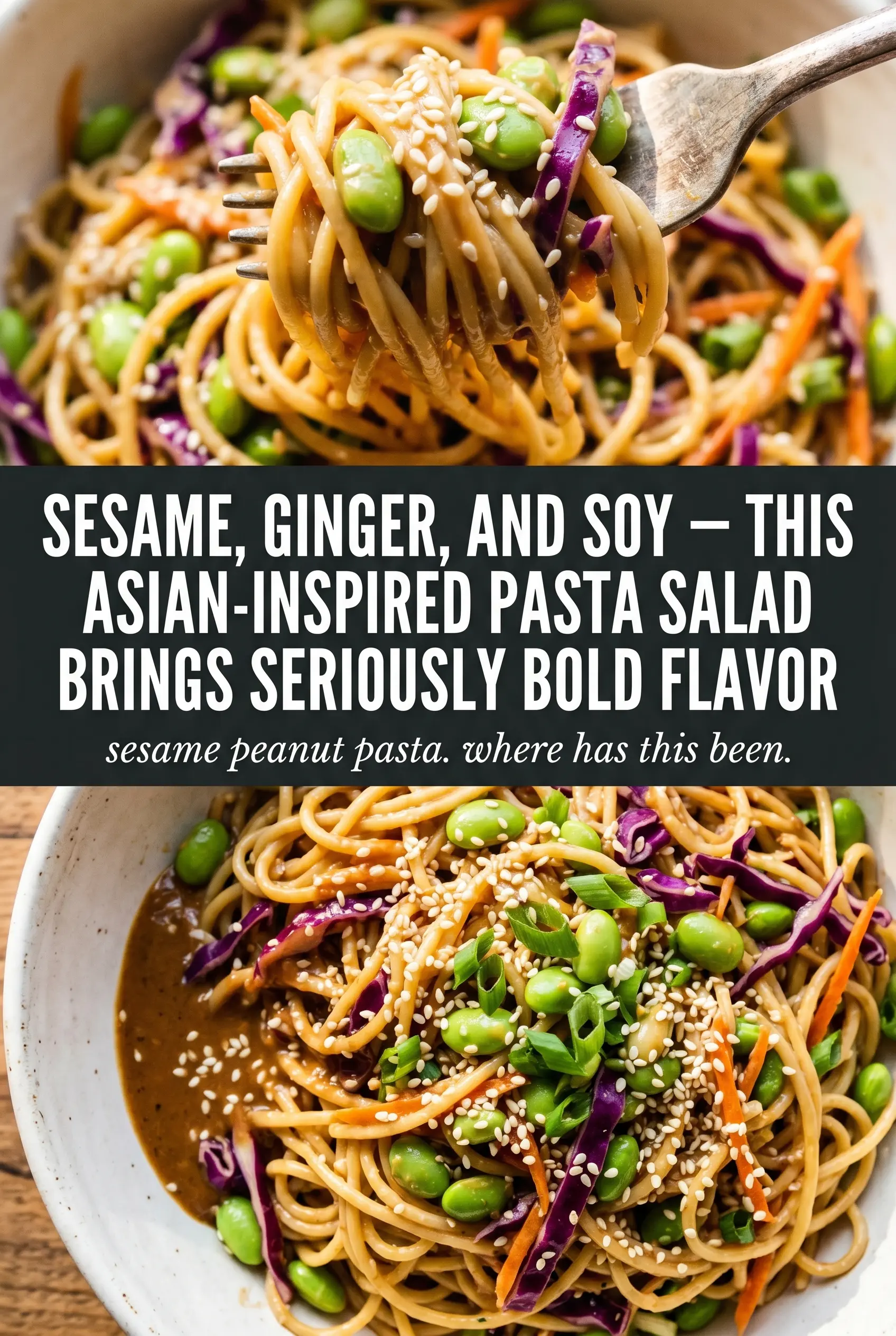
Asian Pasta Salad
Ingredients
Equipment
Method
- Cook the spaghetti or linguine according to package directions until tender, then drain. Rinse under cold water to stop cooking and keep it from clumping (visual cue: pasta looks cool and slippery).
- Drain the pasta again well after rinsing. Keep it at room temperature briefly while you make the dressing (visual cue: pasta holds together without excess water).
- Whisk together soy sauce, rice vinegar, sesame oil, honey, grated ginger, minced garlic, salt, and pepper until smooth. The dressing should look glossy and evenly tinted (visual cue: no honey streaks remain).
- Taste and adjust seasoning with a pinch more salt and pepper if needed. The flavor should balance salty, tangy, and lightly sweet (visual cue: honey taste is noticeable but not overpowering).
- Combine the cooled pasta, edamame, shredded red cabbage, shredded carrots, and thinly sliced red bell pepper in a large bowl. Toss until the vegetables are evenly distributed (visual cue: colors are visible throughout the pasta).
- Pour the dressing over the salad and toss thoroughly to coat all ingredients. The pasta should look lightly glazed (visual cue: sheen on noodles and vegetables).
- Refrigerate for at least 1 hour. This sets the flavor and keeps the salad crisp (visual cue: salad looks slightly more cohesive after chilling).
- Before serving, top with sliced green onions and sesame seeds. Keep them on top so they stay bright and crunchy (visual cue: sesame seeds are clearly visible).