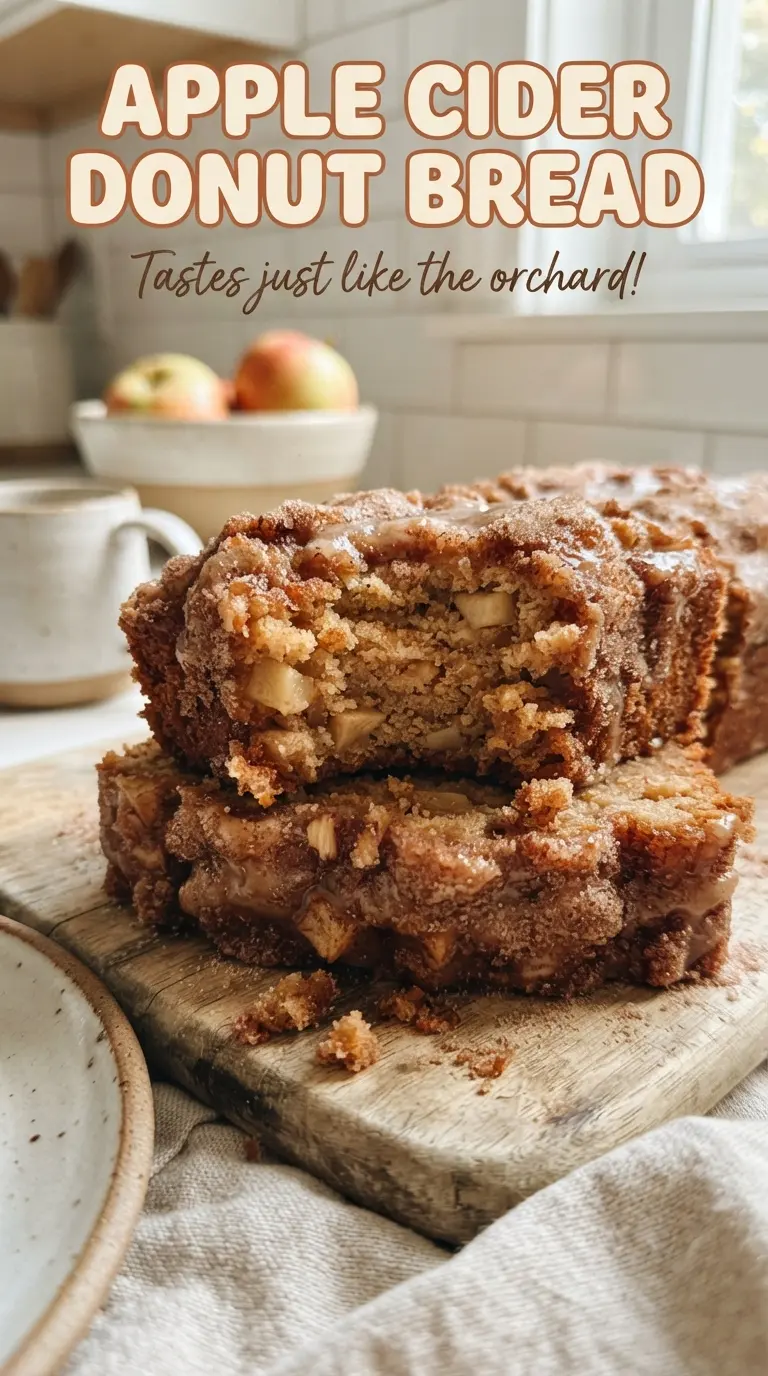
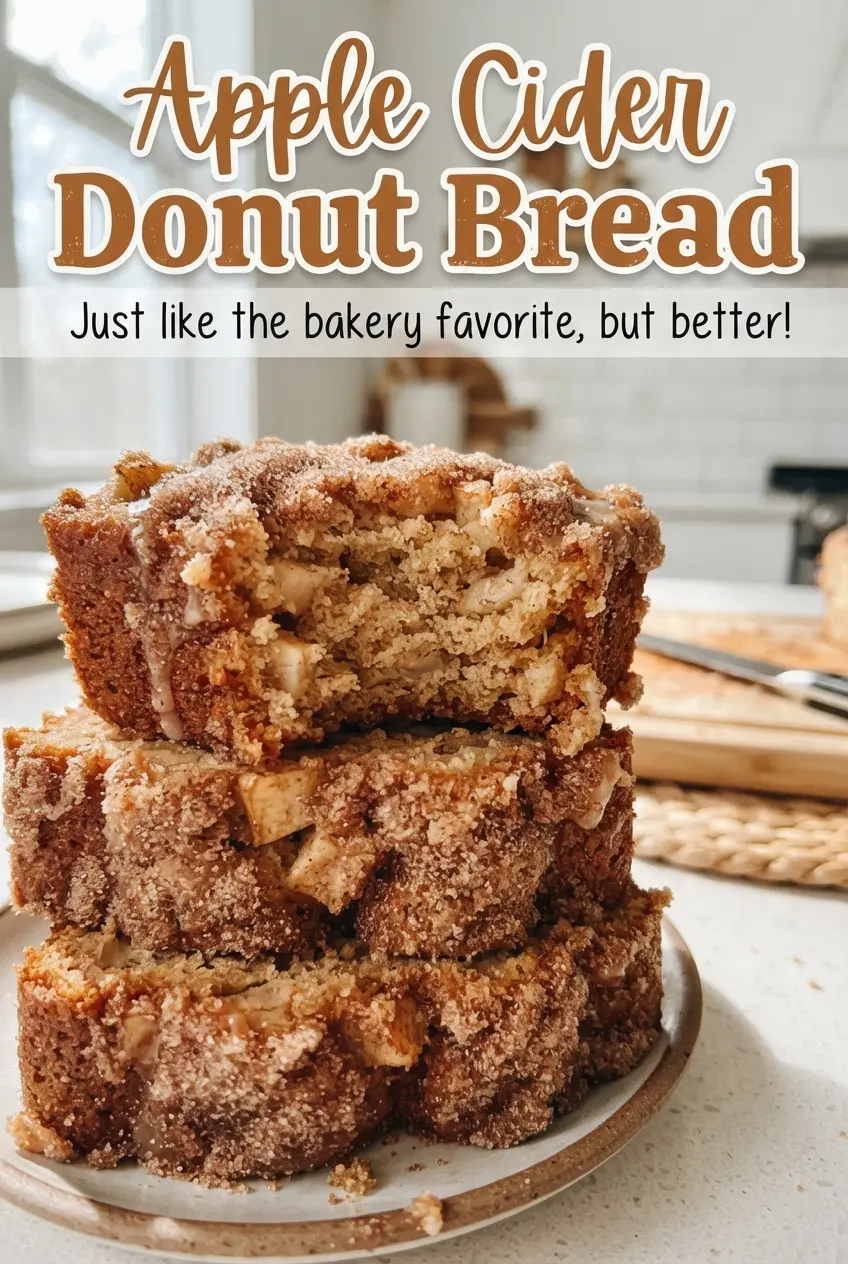
Apple cider donut bread lands in that sweet spot between a quick loaf and a bakery-style treat: tender, warmly spiced, and finished with a cinnamon sugar crust that crackles when you slice into it. The cider gets reduced first, which concentrates the apple flavor instead of watering down the batter, and that one extra step is what gives this loaf its deep, cider-donut personality.
The crumb stays soft because the batter leans on sour cream for moisture and a mix of butter, brown sugar, and reduced cider for richness. The topping goes on while the loaf is still warm, so the melted butter grabs the sugar mixture and forms that classic donut-like coating instead of sliding off.
Below, I’ve laid out the part that matters most: how to reduce the cider without guessing, how to keep the loaf from turning dense, and the little finishing move that gives you that thick, crunchy shell.
The cider flavor came through beautifully, and the sugar crust set up with that same little crunch you get from a good donut shop cake donut. I didn’t expect the loaf to stay this moist the next day, but it sliced cleanly and never felt heavy.
Apple Cider Donut Bread with that crunchy cinnamon sugar crust is the one to keep handy for breakfast, snacking, or dessert.
The cider reduction is what keeps this loaf from tasting flat
A lot of apple cider breads lean on cider for aroma alone, then bake into something that tastes sweet but indistinct. Reducing the cider down to 1/2 cup changes that completely. You end up with a concentrated apple note that survives the oven, and because some water cooks off first, the batter doesn’t turn loose or gummy.
The other place people get tripped up is the topping. If you brush it on once the loaf is fully cool, the butter won’t cling and the sugar will slide off in patches. Warm loaf, melted butter, immediate cinnamon sugar. That sequence is what gives you the thick, crunchy finish instead of a dusty sprinkle.
- Reduced apple cider — This is the backbone of the loaf’s flavor. Simmer it until it measures 1/2 cup, then cool it before adding it to the batter so it doesn’t melt the butter or scramble the eggs.
- Sour cream — It keeps the crumb plush and tender. Plain full-fat Greek yogurt works in a pinch, but the loaf will be a touch tangier and slightly less rich.
- Brown sugar — It gives the bread a deeper, caramel-like sweetness that fits the cider and spices better than white sugar would.
- Cinnamon sugar topping — Use fresh cinnamon if you can. Stale spice dulls the whole finish, and this loaf depends on that top crust for its donut-shop feel.
What Each Ingredient Is Actually Doing in This Recipe
- Primary ingredient (the star) — Quality matters most. Choose the best you can find.
- Cooking medium (oil, butter, or broth) — This carries flavors and prevents dryness.
- Seasonings (salt, pepper, spices, herbs) — Layer flavors so nothing overpowers. Build depth gradually.
- Aromatics (garlic, onion, herbs) — Cook with fat to bloom flavors. Become the foundation.
- Supporting ingredients — Complement the main ingredient without overpowering it.
- Sauce or liquid (if applicable) — Brings flavors together. Balance richness with acid.
- Acid (lemon, vinegar, wine, or other) — Brightens and prevents flat-tasting results.
- Final finish (garnish, glaze, or sauce) — Prevents one-dimensional taste and adds visual appeal.
Building the loaf so it stays tender, not dense
Reducing the cider first
Set the cider over medium heat and let it simmer until it drops to about 1/2 cup. It should smell sharper and taste more apple-forward, almost like cider syrup. Don’t rush this by cranking the heat high; that can scorch the sugars and leave you with a bitter note that shows up in the finished loaf. Cool it before mixing it into the batter.
Making the batter base
Beat the butter and brown sugar until it looks fluffy and a little lighter in color. That step traps air and gives the loaf a better lift. Add the eggs one at a time, then stir in the sour cream, vanilla, and reduced cider. If the mixture looks slightly curdled at this stage, that’s fine. The flour will pull it back together.
Keeping the crumb soft
Fold in the dry ingredients just until no pockets of flour remain. A few streaks are better than overmixing, which is the fastest way to turn quick bread tough. Spread the batter into the pan and smooth the top gently. It should look thick and scoopable, not pourable.
Baking and finishing with the crust
Bake until the top is set, the edges are pulling away from the pan a little, and a toothpick comes out clean or with a few dry crumbs. Let it sit for 10 minutes before turning on the topping. Brush the warm loaf all over with melted butter, then press the cinnamon sugar on with a light hand first and more firmly on the sides and top where it can cling best. That’s what builds the crackly shell.
How to adapt this loaf when you want a different finish
Dairy-free version
Use a good plant-based butter in both the batter and the topping, and swap the sour cream for a thick dairy-free yogurt. The loaf will still be tender, though the flavor is a little less rich and the crumb can be slightly softer at the edges.
Extra-spiced bakery style
Add another 1/4 teaspoon cinnamon and a pinch of cloves if you want a deeper spice profile. This pushes the loaf closer to a classic cider donut flavor, but don’t overdo the cloves or they’ll take over the apple.
Gluten-free adaptation
A 1:1 gluten-free baking blend can work here, but pick one that includes xanthan gum. The loaf will be a little more delicate when slicing, so let it cool fully before cutting if you want clean slices.
Muffin-style portioning
Bake the batter in a muffin tin lined with paper cups for a faster version that feels more like a true donut-shop snack. Start checking around 18 to 22 minutes, and brush the tops with butter while they’re still warm so the sugar sticks the same way it does on the loaf.
Storage and Reheating
- Refrigerator: Store covered for up to 4 days. The sugar crust softens a bit, but the loaf stays moist.
- Freezer: Wrap the cooled loaf tightly, then freeze for up to 2 months. Freeze without the topping for the best texture, then brush and sugar it after thawing.
- Reheating: Warm slices briefly in the microwave or a low oven. If you heat it too long, the crumb dries out and the sugar topping can melt into a sticky layer instead of staying crisp.
Answers to the questions worth asking
Apple Cider Donut Bread
Ingredients
Equipment
Method
- Simmer the apple cider for 15-20 minutes until reduced to 1/2 cup, then cool.
- Preheat the oven to 350F, then grease and line a 9x5-inch loaf pan.
- Whisk together all-purpose flour, baking powder, baking soda, salt, ground cinnamon, and nutmeg.
- Beat the butter and brown sugar until fluffy, then beat in the eggs, sour cream, vanilla extract, and the reduced cider.
- Fold the dry ingredients into the wet ingredients just until combined, then spread the batter into the pan.
- Bake at 350F for 50-55 minutes until a toothpick comes out clean, then cool for 10 minutes.
- Brush the warm loaf all over with melted butter, then press it into the cinnamon sugar mixture to coat.