Nothing gets a party moving faster than a giant American Flag Charcuterie Board laid out with crisp red, white, and blue stripes. It looks festive the second it hits the table, but the real win is how easy it is to serve: no oven, no last-minute plating, and plenty of mix-and-match bites for a crowd. The best versions look bold from across the yard and still hold together when people start grazing.
This board works because the ingredients are chosen for color first and texture second. Blueberries pack tightly into the canton so it reads like a solid field instead of a scattered pile, while rolled salami gives that upper-left corner enough shape to suggest stars without trying to force a perfect pattern. The stripes stay clean when you use sliced cheeses and pepperoni in deliberate rows, then use prosciutto and strawberries to fill gaps and sharpen the red bands.
Below, I’ve laid out the small details that keep the board neat, including how to build the flag shape without overthinking it and which substitutions still keep the colors strong.
The blueberries stayed packed in place and the salami rolls made the canton look polished without any extra fuss. I set it out 20 minutes before guests arrived and the board was gone before the burgers were even ready.
Save this American Flag Charcuterie Board for the next patriotic party when you need a bold centerpiece that comes together in 30 minutes.
The part that keeps the flag from looking messy
The difference between a board that looks intentional and one that reads as “mixed snacks on a tray” is the order you build it. Start by mapping the rectangle in your head, then pack the blue canton first so the rest of the pattern has a fixed anchor. If you add the stripes before the blue corner is set, you’ll keep nudging things around and the edges start to wobble.
The other mistake is spacing. This board should look full, not airy. Blueberries need to be snug enough that the canton reads as one block, and the red and white rows need to touch just enough to feel like stripes instead of separate ingredient piles. If a stripe looks thin, use folded prosciutto or an extra layer of cheese to widen it before you reach for more crackers.
What each ingredient is doing on the board
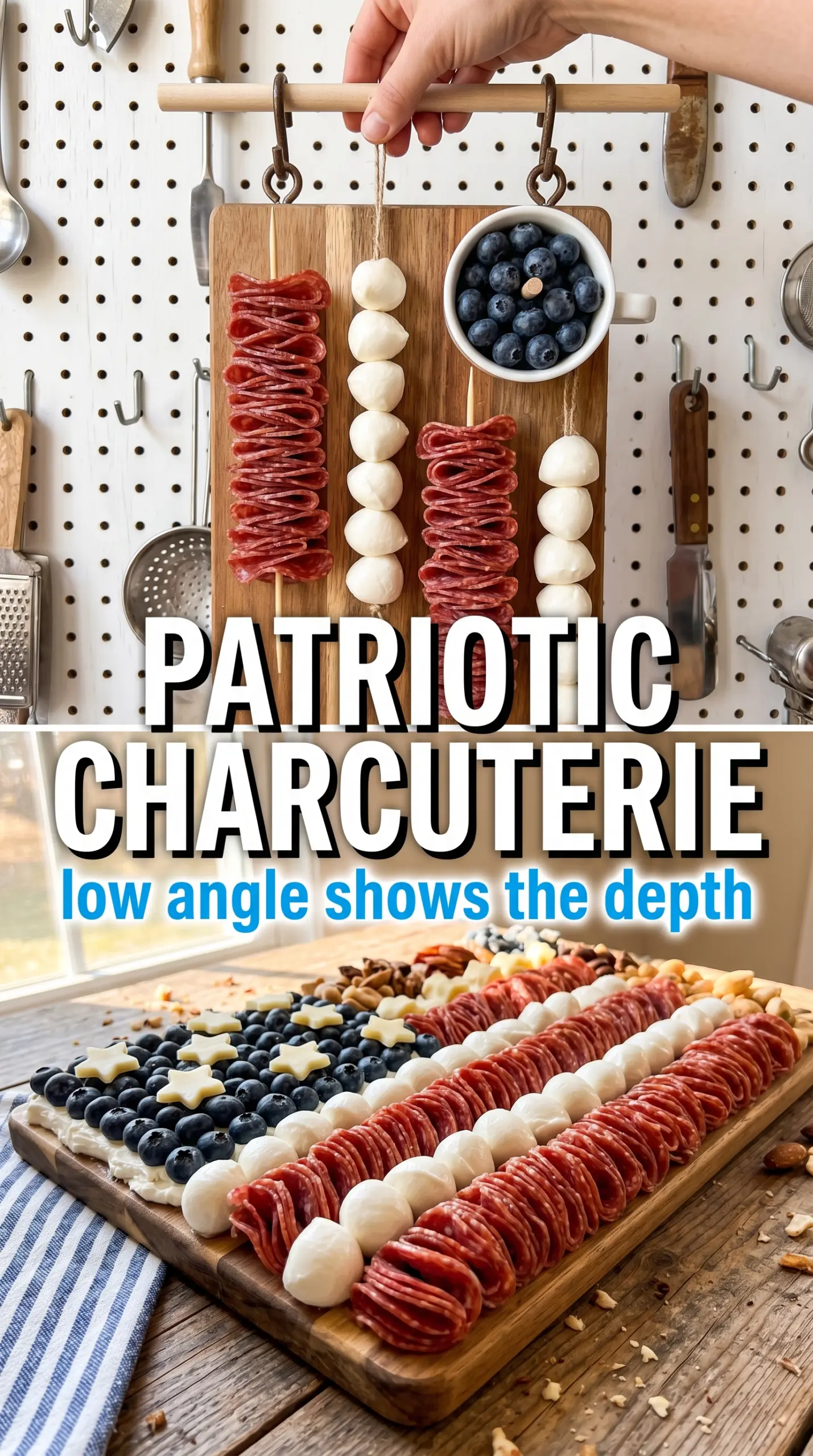
- Blueberries — These carry the canton. They need to be fresh, dry, and tight enough to sit in a clean block. Frozen berries won’t work here because they bleed and slump.
- Rolled salami — This gives the upper-left corner texture and height. Thin slices roll best; thick-cut salami tends to spring open and look bulky instead of star-like.
- Pepperoni — Pepperoni makes the strongest red stripe because the color is bold and the slices are small enough to overlap neatly. If yours are oily, blot them lightly so they don’t slick up the board.
- Prosciutto — This is the soft, draped red element that fills gaps without making the board heavy. It’s worth buying good prosciutto because the paper-thin slices fold into better shapes than bargain versions.
- Fresh mozzarella balls or white cheddar/provolone — These create the white stripes. Mozzarella gives a softer look, while sliced provolone or cheddar reads more cleanly when you want sharper rows.
- Strawberries — These reinforce the red stripes and brighten the board. Halves work better than whole berries because they sit flat and help fill odd spaces along the edges.
- Rosemary sprigs — They’re not just garnish; they soften the hard lines of the board and make the whole thing feel finished. A few sprigs at the corners is enough.
- Crackers — Keep these around the perimeter instead of building them into the flag. That way the pattern stays readable and guests still have an easy place to start.
Building the canton and stripes without losing the shape
Set the blue field first
Mentally divide the upper left corner before you place a single berry. Fill that section tightly with blueberries, pressing them close enough that the surface looks solid from overhead. Then tuck the rolled salami into the center of that blue block so it reads like stars instead of getting lost in the fruit. If the canton looks too small, widen it now; once the stripes are in, changing it gets messy fast.
Lay the stripes in clean runs
Start on the top right and work across the board in rows. Pepperoni makes the red stripes, white cheddar or mozzarella makes the white ones, and the rows should run the full width so the board reads like a flag at a glance. Keep the layers snug, not piled high, or the stripes will buckle and lose their shape. If one row looks uneven, slide in a few folded slices of prosciutto rather than tearing the whole section apart.
Use the fruit and herbs to finish the edges
Strawberry halves help reinforce the red bands and cover any awkward gaps near the bottom or along the sides. Rosemary sprigs belong at the corners and edges, where they soften the look and frame the board without stealing attention. Add crackers around the outside last so you don’t disturb the flag pattern while arranging them. The finished board should look full, balanced, and clear enough to read from across the table.
Three ways to adjust the board for different guests
Dairy-free version with the same flag effect
Swap the mozzarella and cheddar for more fruit, folded turkey slices, or dairy-free cheese slices that hold their shape. The board will taste a little less rich, but the red-white-blue pattern still reads clearly if you keep the white elements tightly arranged.
Make it gluten-free without changing the layout
Leave the board exactly as-is and serve it with gluten-free crackers or cucumber rounds around the edges. The flag itself is naturally gluten-free; the only place problems usually show up is in the crackers and any packaged meats with hidden fillers, so read labels if that matters for your crowd.
A kid-friendly board with milder flavors
Use turkey pepperoni or mild salami, and lean harder on mozzarella and strawberries for the red and white bands. The board still looks festive, but the flavor gets gentler and less salty, which helps when you’re serving a mixed-age crowd.
How to build it ahead of time
You can assemble the board up to 2 hours ahead if you keep it covered and chilled. Add crackers just before serving so they stay crisp, and wait to tuck in the rosemary until the end so it stays bright instead of drying out.
Storage and Reheating
- Refrigerator: Store leftovers covered for up to 2 days. The crackers will soften, so keep them separate whenever possible.
- Freezer: Don’t freeze the assembled board. The fruit turns mushy, the cheese texture changes, and the salami loses the clean look that makes the flag work.
- Reheating: There’s nothing to reheat. Let the board sit at room temperature for 15 to 20 minutes before serving again so the cheese has some softness and the flavors aren’t dull from the fridge.
Answers to the questions worth asking
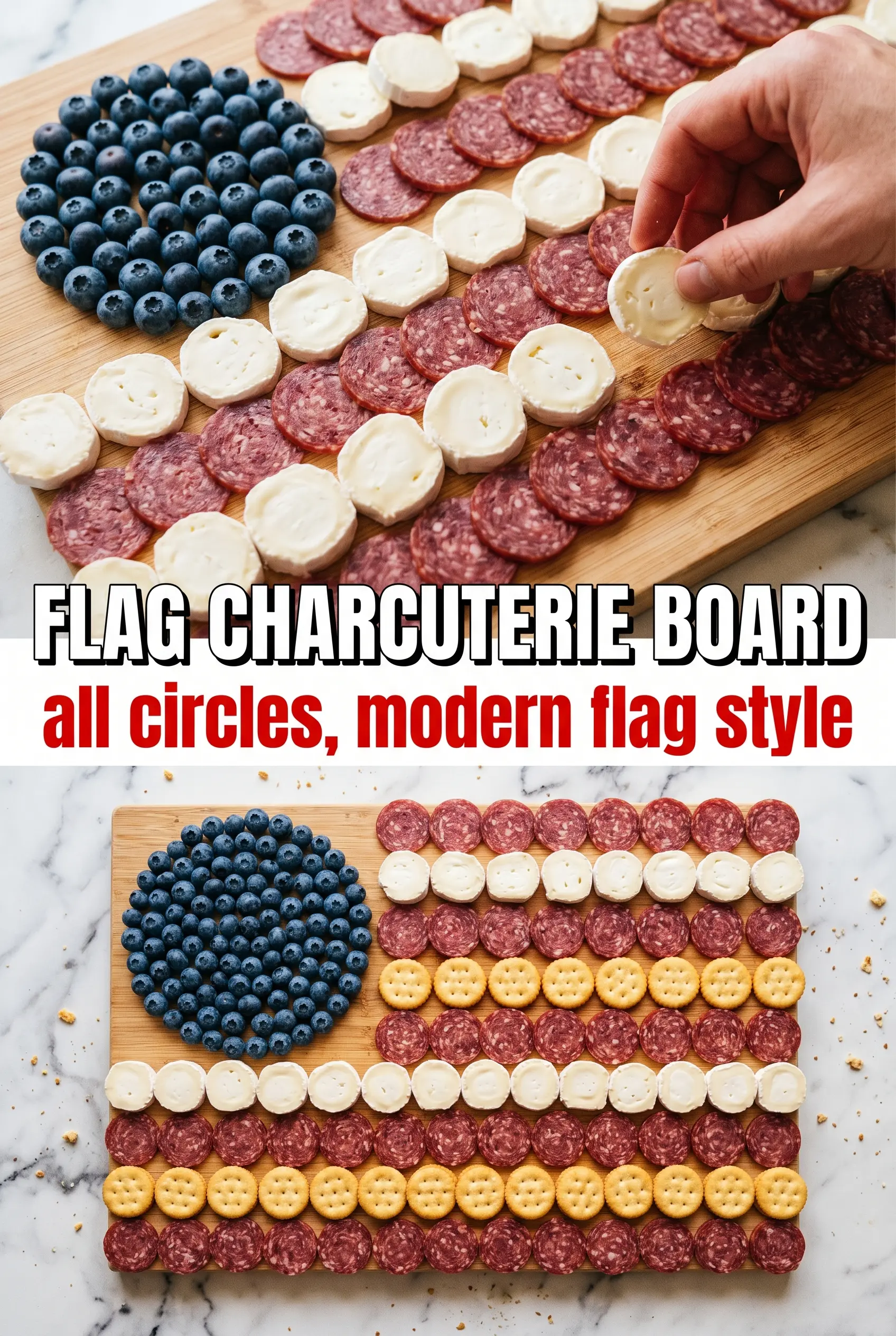
American Flag Charcuterie Board
Ingredients
Equipment
Method
- Use a large rectangular wooden board or serving tray and mentally divide the upper left into a canton rectangle.
- Fill the canton with blueberries packed tightly together, then tuck rolled salami pieces in the center to resemble stars.
- Starting from the top right of the board, layer pepperoni slices in a clean row across the full width of the board to form a red stripe.
- Create the white stripes using rows of sliced white cheddar or provolone, alternating with the red stripes down the full board.
- Add prosciutto folds or strawberry halves to reinforce the red stripes and fill any gaps.
- Tuck rosemary sprigs at the corners and edges, then arrange crackers around the perimeter and serve.