Pumpkin spinach and walnut spaghetti lands in that sweet spot between cozy and polished: silky sauce clinging to every strand, wilted greens folded through, and toasted walnuts bringing the kind of crunch that keeps each bite interesting. The pumpkin doesn’t taste heavy here. It turns the cream into something round and savory, with just enough body to coat the pasta without sinking into a bowl of orange glue.
The trick is treating the sauce like a proper pan sauce, not a dump-and-stir situation. Garlic gets a quick turn in the sage oil, then pumpkin, cream, nutmeg, and chili flakes simmer long enough to lose that raw canned-puree edge. Parmesan goes in off the heat path of the strongest flame so it melts smoothly instead of turning grainy, and pasta water finishes the job by loosening the sauce only as much as it needs.
Below, I’ve added the small details that matter here: why the walnuts should be toasted separately, how to keep the spinach from going limp and muddy, and what to change if you want a lighter or dairy-free version.
The sauce turned glossy and coated the spaghetti instead of clumping, and the crispy sage on top made it taste like something from a restaurant. I was nervous about the pumpkin, but the walnut crunch and parmesan balanced it out perfectly.
Save this pumpkin spinach and walnut spaghetti for the night you want a creamy pasta with crisp sage and toasted walnut crunch.
The Part That Keeps the Sauce Silky Instead of Heavy
Pumpkin puree can go wrong fast if it’s rushed over high heat. It starts out thick, then tightens into a paste before the cream has a chance to smooth it out. The answer is a gentle simmer after the pumpkin goes in, giving the puree time to relax into the cream and garlic instead of sitting there tasting flat and starchy.
The other trap is the cheese. Parmesan wants low heat and a little patience. If the pan is boiling when it goes in, it can clump and turn the sauce grainy. Pulling the pan back before stirring in the cheese keeps the sauce glossy and lets the pasta water do its real job: helping the sauce cling without becoming greasy or stiff.
What Each Ingredient Is Actually Doing in This Bowl
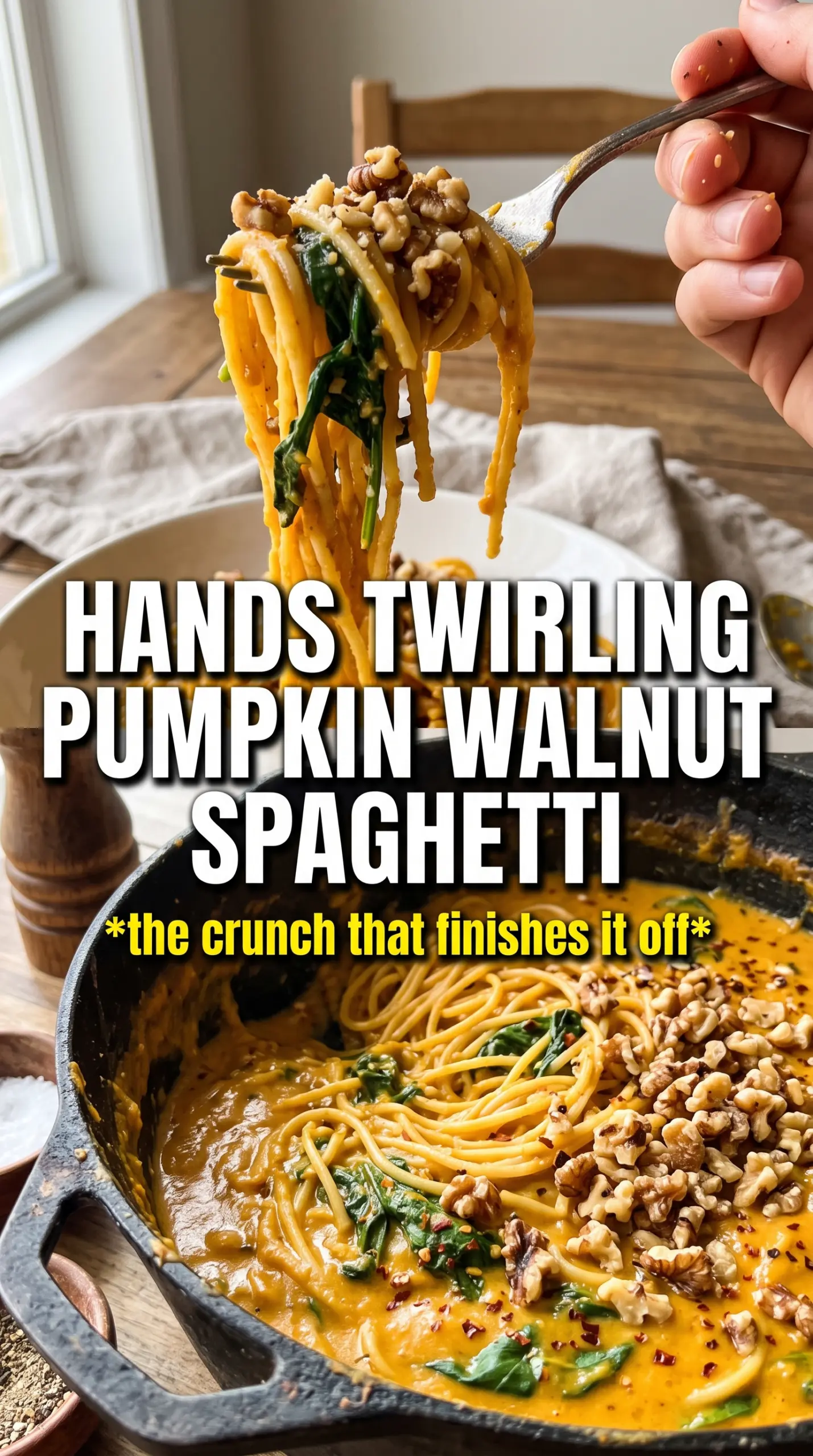
- Pumpkin puree — This is the base of the sauce, so use plain puree, not pumpkin pie filling. The canned version works well here because the cream, garlic, and cheese are doing the seasoning work.
- Heavy cream — This gives the sauce its plush texture and keeps the pumpkin from tasting thin. Half-and-half will work in a pinch, but the sauce will be lighter and needs a little more pasta water to stay loose.
- Parmesan — Use the good grating kind if you can. Pre-shredded cheese often has anti-caking starch that can make the sauce less smooth, especially in a cream-based pasta.
- Walnuts — Toast them until they smell nutty before chopping. Raw walnuts read flat here; toasted walnuts bring the contrast that makes the whole dish feel finished.
- Sage leaves — Frying the sage in the olive oil seasons the oil and gives you a crisp garnish at the same time. If you skip this, the pasta loses one of its best layers of flavor.
- Baby spinach — It wilts fast and disappears into the sauce without turning stringy. Regular spinach works too, but strip out the tough stems and give it a little more time in the pan.
The 20 Minutes That Build This Pasta Correctly
Frying the Sage First
Start with the sage in the olive oil and watch it closely. The leaves should bubble, darken slightly, and turn crisp in under a minute. If they go from green to black in a heartbeat, the oil is too hot and the leaves will taste bitter, so pull the pan off the heat as soon as they crisp. Set them aside immediately; they keep cooking in the hot oil for a few seconds after you remove them.
Building the Pumpkin Base
Add the garlic to the sage oil and let it cook just until fragrant, not browned. Then stir in the pumpkin, cream, nutmeg, and red pepper flakes and let the mixture simmer gently for about five minutes. You want the sauce to look smooth and slightly thickened, with small lazy bubbles at the edge. If it starts spitting hard, the heat is too high and the dairy can separate.
Finishing with Cheese and Spinach
Stir in the parmesan and then add the spinach in handfuls so it collapses evenly. The sauce should turn glossy and slightly thicker as the cheese melts. If it looks too tight, add a splash of the pasta water before the spinach fully wilts. That starch-filled water is what helps the sauce coat the noodles instead of sitting in the bottom of the bowl.
Tossing the Pasta to the Right Texture
Add the drained spaghetti and toss until every strand is coated. Use pasta water a little at a time until the sauce looks silky and moves with the noodles instead of clinging in clumps. The best finish is creamy, not soupy, and not stiff. Taste at the end and salt it properly; pumpkin needs more seasoning than most people expect.
How to Adapt It Without Losing What Makes It Good
Dairy-Free Version
Use full-fat coconut milk or an unsweetened dairy-free cream instead of heavy cream, and finish with a dairy-free parmesan-style topping if you like. The sauce will be a little softer and less rich, but the pumpkin, garlic, sage, and walnuts still carry the dish well.
Gluten-Free Pasta Swap
Use a sturdy gluten-free spaghetti that holds up to tossing. The main thing to watch is the pasta water; gluten-free pasta water can be thinner, so you may need a little less of it to keep the sauce from getting loose.
Make It Lighter
Swap half the cream for pasta water or unsalted stock. You’ll lose some richness, but the sauce stays smooth if you keep the heat low and finish with enough parmesan to bring it back into balance.
Storage and Reheating
- Refrigerator: Store leftovers in an airtight container for up to 3 days. The sauce thickens as it chills, so expect the pasta to drink up some of the cream.
- Freezer: This isn’t a great freezer pasta. Cream sauces and spinach both lose their best texture after thawing, and the noodles can turn soft.
- Reheating: Warm it gently in a skillet over low heat with a splash of water, milk, or cream. High heat is the mistake here; it can break the sauce and make the pasta dry before the center is hot.
Questions I Get Asked About This Recipe
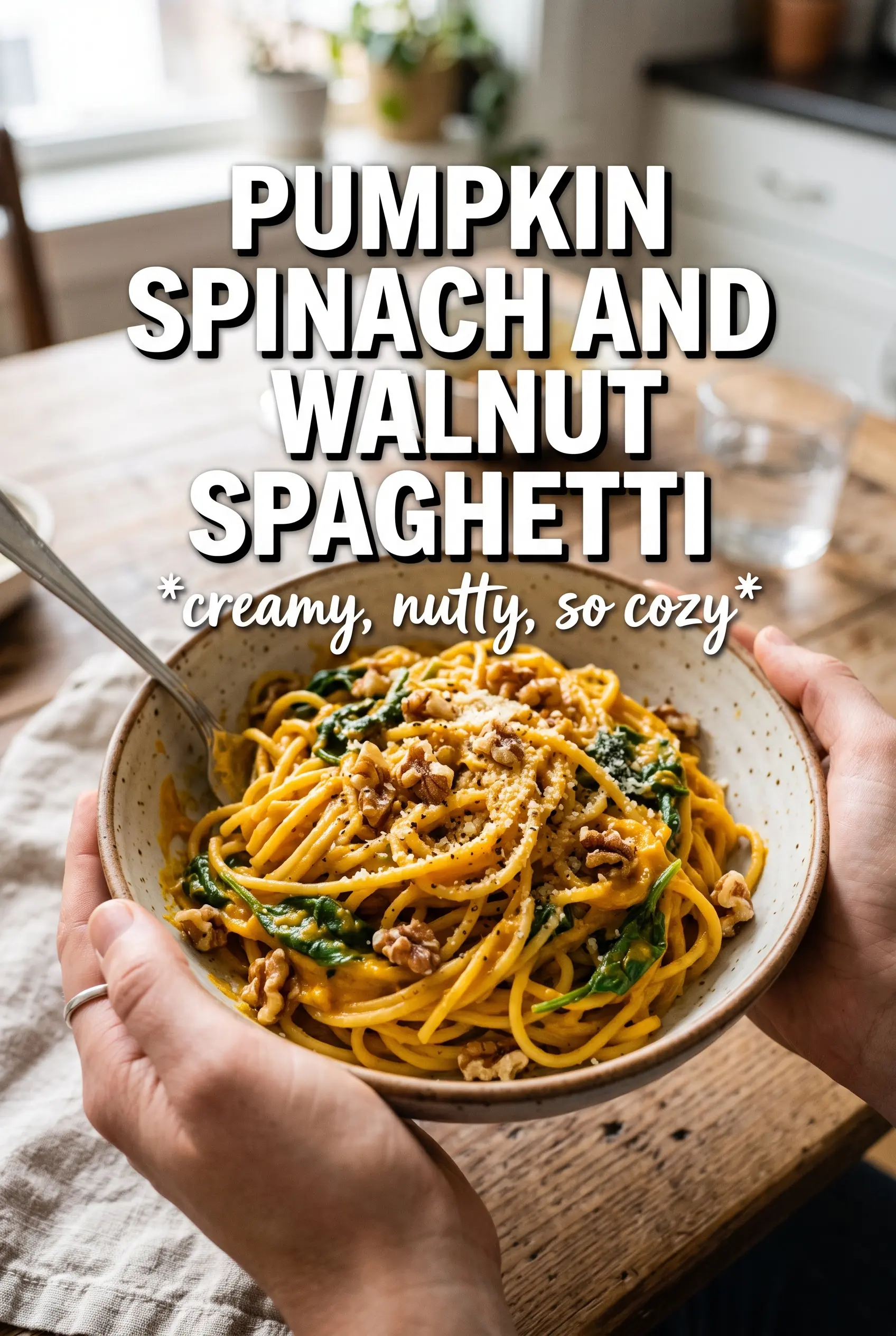
Pumpkin Spinach and Walnut Spaghetti
Ingredients
Equipment
Method
- Bring a large pot of salted water to a boil and cook spaghetti until al dente, then reserve 1 cup pasta water before draining. Visual cue: the noodles should be tender but still slightly firm in the center.
- Heat olive oil in a Dutch oven over medium-high heat and fry sage leaves until crisp, then remove to a paper towel. Visual cue: the sage should bubble and turn crisp and lightly golden.
- Add minced garlic to the hot oil and cook for 1 minute, stirring, until fragrant. Visual cue: garlic should sizzle but not brown.
- Stir in pumpkin puree, heavy cream, nutmeg, and red pepper flakes, then simmer for 5 minutes. Visual cue: the sauce thickens slightly and looks smooth and orange.
- Stir in Parmesan until melted and the sauce turns glossy. Visual cue: no visible cheese clumps remain.
- Add baby spinach and toss until wilted, about 1 minute. Visual cue: the spinach turns dark green and collapses into the sauce.
- Add drained spaghetti to the sauce and toss, adding reserved pasta water as needed to loosen into a silky coating. Visual cue: sauce should cling to the noodles and look lightly emulsified.
- Season with salt and pepper to taste. Visual cue: taste for balance—creaminess should be accented by spice.
- Top with toasted chopped walnuts and crispy fried sage leaves, then serve immediately. Visual cue: walnuts add crunch and sage stays crisp on top.