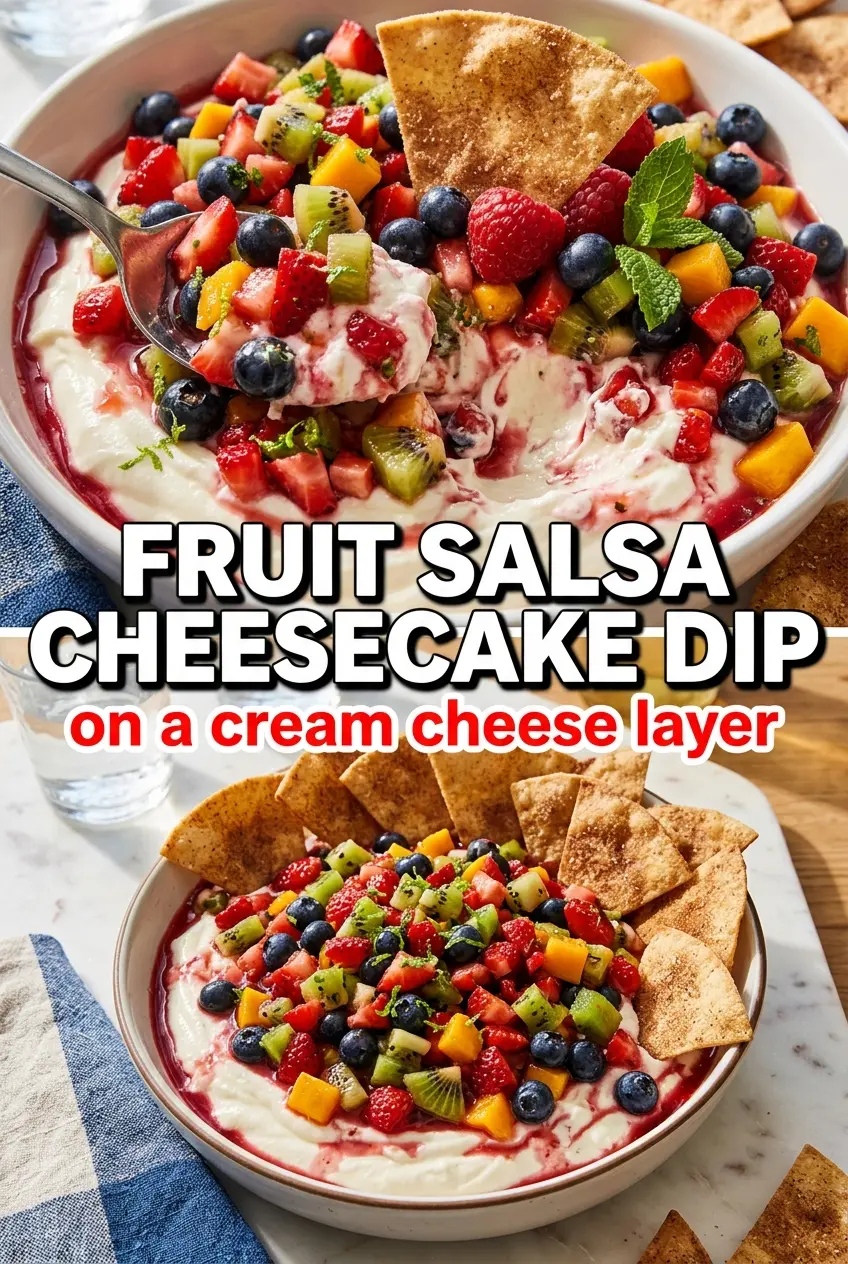
Bright, juicy fruit salsa has a way of disappearing fast once it hits the table, and this red, white, and blue bowl earns that reaction every time. The strawberries stay soft at the edges, the blueberries hold their shape, and the peaches bring just enough sweetness to keep each bite balanced. Served with cinnamon sugar chips, it lands somewhere between snack and dessert in the best possible way.
The trick is keeping the fruit diced small and even so the salsa eats like a scoopable mixture instead of a bowl of chopped fruit. A little honey and lime juice pull out the juices, while mint adds a fresh note that keeps the whole thing from tasting flat. The 30-minute chill matters here. It gives the fruit time to macerate just enough for the flavors to blend without turning mushy.
Below, I’ve included the small details that make this version work: which fruit swaps hold up, how far ahead you can make it, and what to do if your salsa gets a little too juicy before serving.
The lime and honey brought out the berries without making the peaches soggy, and after 30 minutes in the fridge it had the perfect spoonable texture. I served it with cinnamon pita chips and it was gone before the burgers were even ready.
Love the sweet-tart crunch of this 4th of July Fruit Salsa? Save it to Pinterest for an easy red, white, and blue appetizer with cinnamon chips.
The Trick to Fruit Salsa That Stays Scoopable, Not Watery
Fruit salsa falls apart when the pieces are too large or when the fruit sits long enough to dump all its juice into the bowl. Small, even dice help the honey-lime coating cling to every bite, and they keep the mixture balanced on a chip instead of sliding off. The goal is glossy and juicy, not soupy.
Blueberries need a light hand. If you stir too hard, they burst and tint the whole bowl purple. That still tastes fine, but you lose the clean red, white, and blue look that makes this recipe feel festive. A gentle fold after the honey and lime go in keeps the fruit intact and the final texture crisp.
What the Honey, Lime, and Mint Are Doing in This Bowl
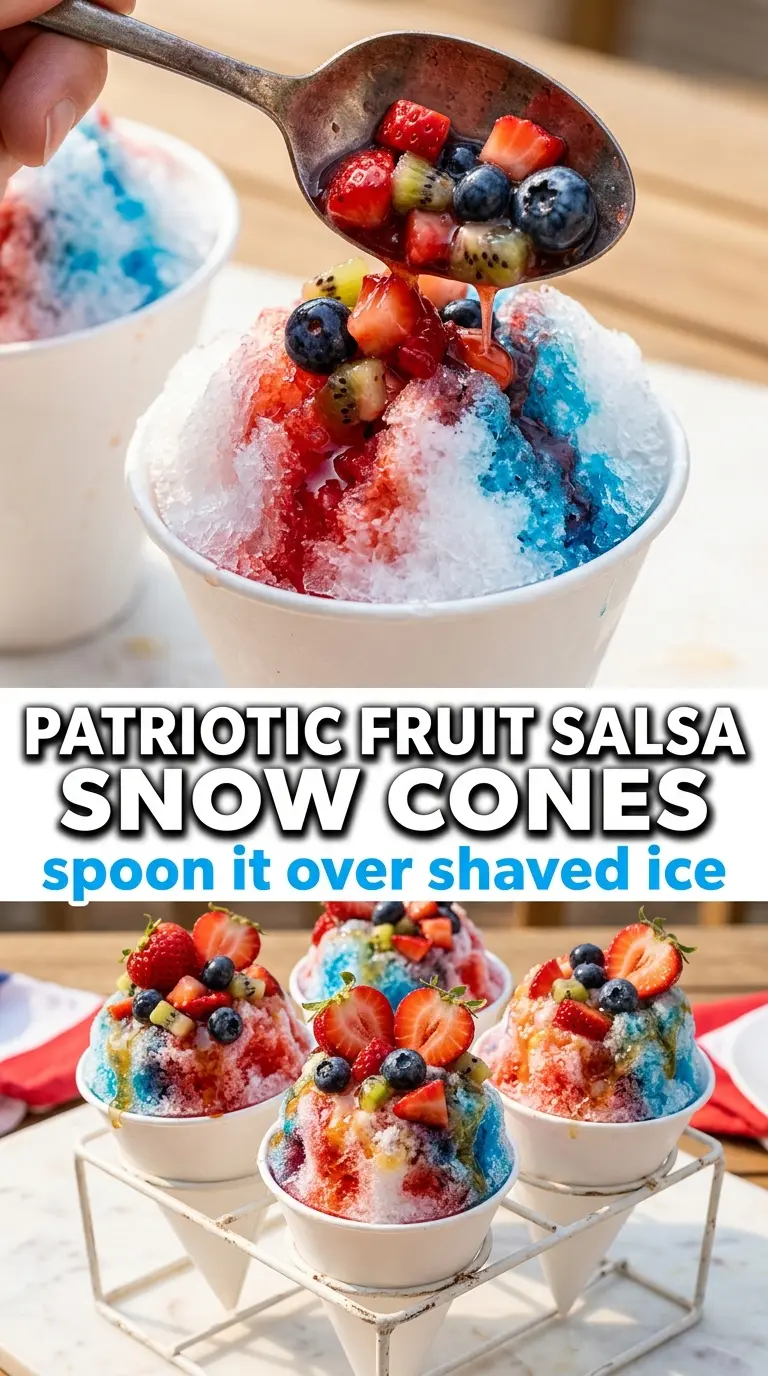
- Strawberries — These bring the softest texture and the strongest red color. Dice them small so they blend with the other fruit instead of turning the salsa into strawberry salad.
- White peaches or nectarines — This is the sweet, fragrant piece that rounds out the berries. Use fruit that’s ripe but not collapsing; if it’s too soft, the salsa turns mushy after chilling.
- Blueberries — They add a pop of shape and a little tartness. Fresh berries work best here because frozen blueberries bleed too much liquid.
- Honey — It lightly coats the fruit and helps pull out the juices that make the salsa spoonable. Maple syrup can work in a pinch, but it changes the flavor and reads heavier.
- Lime juice and zest — The juice sharpens the sweetness, and the zest gives you that bright citrus aroma in every bite. Don’t skip the zest; it’s what keeps the salsa from tasting flat.
- Fresh mint — A small amount is enough. It adds a clean finish and makes the fruit taste fresher after chilling.
Building the Bowl So the Fruit Keeps Its Shape
Cutting the Fruit Small and Even
Dice the strawberries and peaches into small, uniform pieces so every spoonful has the same mix of fruit. Larger chunks look pretty for about five minutes, then they make the salsa harder to scoop and more likely to break down unevenly. A sharp knife matters here because crushed fruit leaks juice before you even add the honey.
Coating Without Crushing
Add the honey, lime juice, lime zest, and mint, then stir with a soft folding motion. You want the fruit coated, not beaten. If the blueberries start splitting or the peaches look smashed, you’ve gone too far, and the bowl will go soft faster in the fridge.
Chilling for the Right Texture
Thirty minutes in the refrigerator is enough time for the flavors to mingle and the fruit to release a little liquid. That rest is what turns chopped fruit into salsa. If you chill it much longer, drain off a little excess juice before serving so the chips stay crisp.
How to Adapt This for Different Crowds and Pantry Situations
Swap the Peaches for Mango
Mango gives the salsa a softer, tropical sweetness and holds up well if it’s cut into small cubes. It won’t give you the same red-white-blue look, but it’s a solid backup when peaches aren’t in season.
Make It Vegan
Swap the honey for maple syrup or agave. The salsa will still be glossy and lightly sweet, though maple adds a deeper note that tastes less bright than honey.
Use Whatever Stone Fruit Looks Best
White peaches, nectarines, and even ripe apricots can all work here. Stick with fruit that yields slightly to pressure but still slices cleanly, or the salsa will soften too much once the honey goes in.
Storage and Reheating
- Refrigerator: Best within 1 day. After that, the fruit softens and the bowl gets noticeably juicier.
- Freezer: Don’t freeze fruit salsa. The texture turns watery and the berries lose their fresh bite once thawed.
- Reheating: Not needed. Stir before serving and spoon off a little excess juice if the salsa has sat in the fridge longer than 30 minutes.