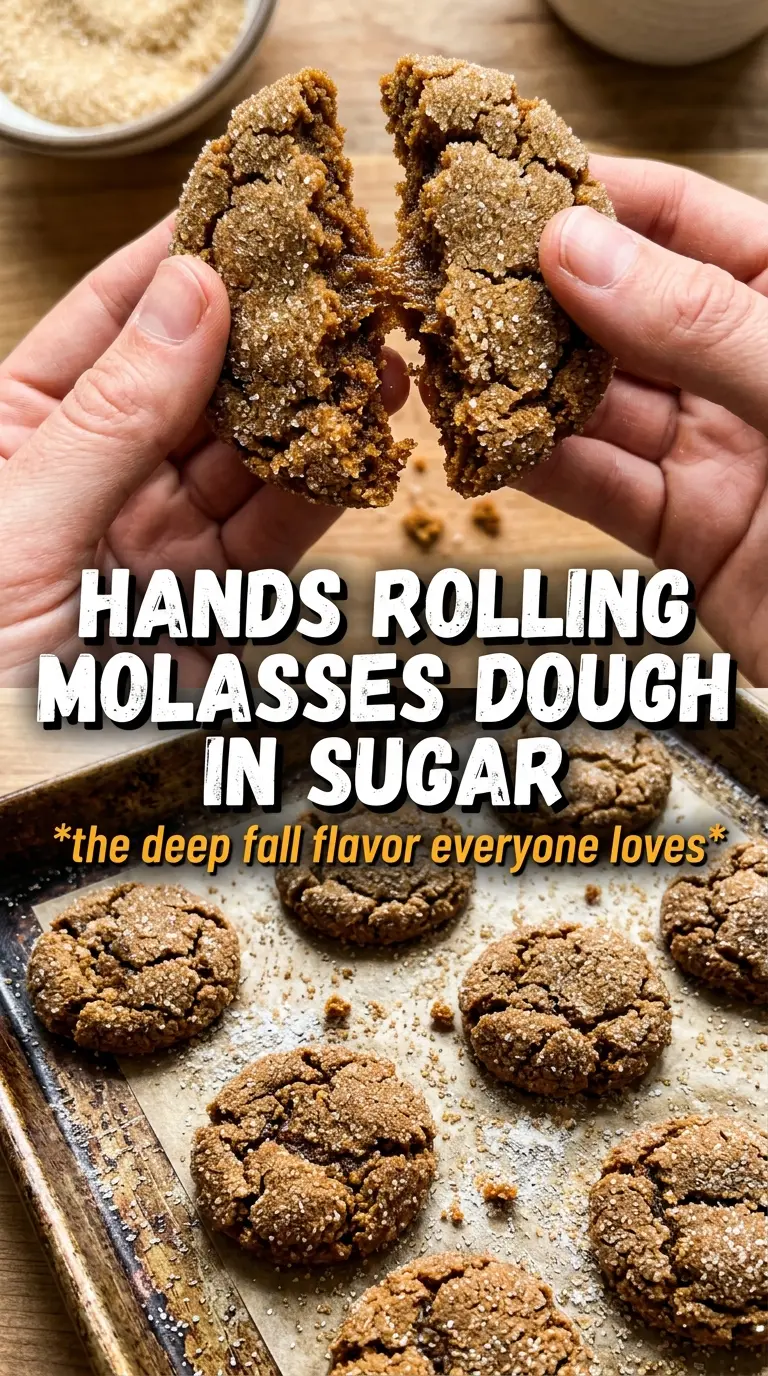
Pumpkin molasses cookies bake up with crisp, sugar-dusted edges and a soft, chewy middle that stays tender for days. The molasses brings that deep, dark warmth, while the pumpkin keeps the crumb plush instead of dry or crumbly. They smell like cinnamon, ginger, and clove the second they hit the oven, and the crinkled tops make them look as good as they taste.
What makes this version work is the balance. Pumpkin can make cookies cakey if you use too much, so the puree is kept low and blotted dry before it goes in. That tiny step matters. It gives you the flavor and moisture without turning the dough heavy. The extra black pepper looks unusual, but it sharpens the spice blend and keeps the cookies from tasting flat.
Below, I’ll walk through the one ingredient that has the biggest effect on texture, the chilling step that keeps the cookies from spreading too much, and a few ways to adapt the batch if you want to tweak the spice level or make them ahead.
The cookies came out with those perfect crackly tops and stayed chewy in the center even the next day. Blotting the pumpkin made a huge difference — mine spread just enough without going cakey.
Save these pumpkin molasses cookies for the batch with crinkled sugar tops and a chewy center that stays soft for days.
The Pumpkin That Makes or Breaks the Texture
The biggest mistake with pumpkin cookies is treating pumpkin puree like a flavoring instead of a moisture source. Pumpkin holds a lot of water, and if it goes into the dough straight from the can, the cookies can spread too much and bake up soft in the wrong way — more muffin-like than chewy. Blotting it dry changes that completely. You still get the earthy pumpkin note, but the dough stays sturdy enough to crinkle and set properly in the oven.
Molasses is the other piece that matters more than people expect. It adds color, deep flavor, and enough chew to keep these from tasting like plain spice cookies. The brown sugar helps with softness, but the molasses is what gives the cookies their backbone. The black pepper may seem small, yet it lifts the spice blend and keeps the sweetness from settling into one note.
- Pumpkin puree — Use canned puree, not pumpkin pie filling. Pie filling has sugar and spices already mixed in, which throws off both the flavor and the moisture level.
- Molasses — Use regular unsulphured molasses for the best balance. Blackstrap is harsher and more bitter, and it can overpower the cookie.
- Brown sugar — Packed brown sugar brings moisture and chew. Light or dark both work, though dark brown sugar makes the flavor deeper.
- Butter — Softened butter creams smoothly with the sugar and helps create that crackled top. If it’s too warm, the dough gets greasy and spreads too fast.
What Each Ingredient Is Actually Doing in This Recipe
- Primary ingredient (the star) — Quality matters most. Choose the best you can find.
- Cooking medium (oil, butter, or broth) — This carries flavors and prevents dryness.
- Seasonings (salt, pepper, spices, herbs) — Layer flavors so nothing overpowers. Build depth gradually.
- Aromatics (garlic, onion, herbs) — Cook with fat to bloom flavors. Become the foundation.
- Supporting ingredients — Complement the main ingredient without overpowering it.
- Sauce or liquid (if applicable) — Brings flavors together. Balance richness with acid.
- Acid (lemon, vinegar, wine, or other) — Brightens and prevents flat-tasting results.
- Final finish (garnish, glaze, or sauce) — Prevents one-dimensional taste and adds visual appeal.
Why the Dough Needs a Chill Before It Hits the Oven
The dough is soft after mixing, and that’s exactly why the rest in the fridge matters. Chilling gives the flour time to absorb the moisture from the pumpkin and molasses, which helps the cookies hold their shape and develop those wrinkled tops instead of melting into flat rounds. It also makes the dough easier to scoop and roll in sugar without sticking to everything.
Whisking the Dry Spices First
Mix the flour, baking soda, cinnamon, ginger, cloves, allspice, black pepper, and salt until the color looks even. That keeps the spice from clumping in one bite and helps the baking soda distribute evenly, which matters for the rise and crackle. If you see streaks of spice after adding the flour, the dough won’t bake evenly.
Building the Butter Base
Beat the butter and brown sugar until the mixture looks lighter and a little fluffy, not just blended. Then add the egg, molasses, blotted pumpkin, and vanilla and mix until smooth. If the mixture looks slightly curdled after the pumpkin goes in, that’s normal — it will smooth out once the dry ingredients are added.
Finishing the Dough and Chilling It
Fold in the flour mixture just until the last dry streak disappears. Overmixing tightens the dough and makes the cookies tougher. Chill the dough for at least 30 minutes, and longer if your kitchen is warm. When it’s ready, the dough should scoop cleanly and hold a mound instead of slumping flat in the bowl.
Baking for Crinkles, Not Dry Edges
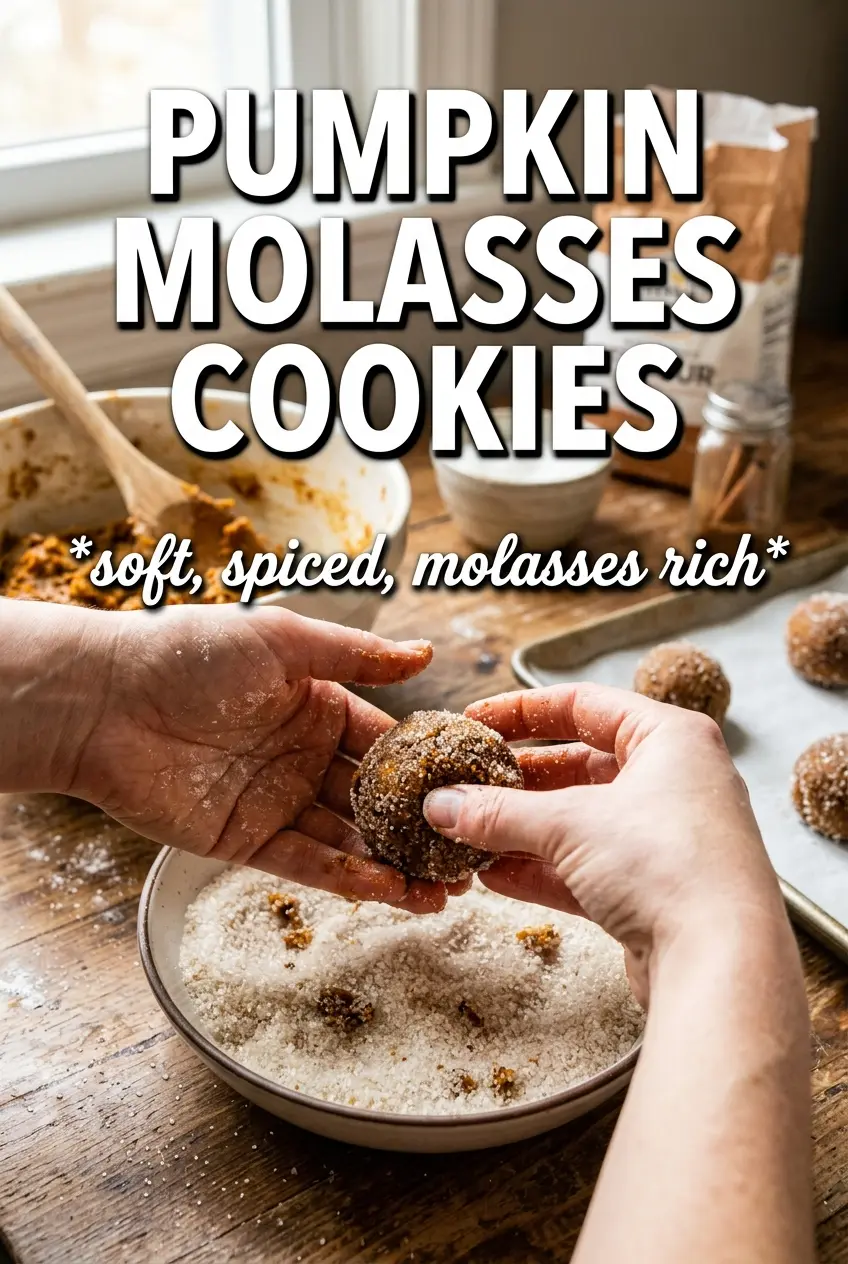
Scoop 1 1/2-tablespoon portions, roll them in granulated sugar, and space them apart on lined baking sheets. Bake just until the tops are crinkled and the edges look set, usually 9 to 11 minutes. Pull them before the centers look fully baked. If you wait until they look firm in the oven, they’ll dry out as they cool.
Make Them More Spiced
Add another 1/4 teaspoon of ginger or a pinch more cloves if you like a sharper spice profile. The cookies will taste warmer and a little bolder, but too much clove can take over fast, so add it carefully.
Dairy-Free Version
Swap the butter for a good plant-based stick butter. Use one that behaves like real butter in baking, not a soft tub spread, or the dough can turn greasy and spread too much.
Gluten-Free Adaptation
Use a 1:1 gluten-free baking flour with xanthan gum already included. The texture will be a touch more delicate, but chilling the dough still gives you good shape and the same crackled top.
Make-Ahead Dough
The dough can be chilled overnight before baking. If it firms up too much, let it sit at room temperature for 10 to 15 minutes so the scoops roll cleanly in sugar and bake evenly.
Storage and Reheating
- Refrigerator: Store baked cookies in an airtight container for up to 5 days. They stay chewy, though the sugar coating softens slightly.
- Freezer: Freeze baked cookies for up to 2 months, or freeze scooped dough balls after rolling them in sugar. Bake straight from frozen with 1 to 2 extra minutes.
- Reheating: Warm cookies for 5 to 8 seconds in the microwave or a few minutes in a low oven. Don’t overheat them or the centers will dry out and the sugar crust will melt away.
Questions I Get Asked About This Recipe
Pumpkin Molasses Cookies
Ingredients
Equipment
Method
- Preheat oven to 375F and line baking sheets.
- Blot pumpkin puree very dry.
- Whisk together all-purpose flour, baking soda, cinnamon, ginger, cloves, allspice, black pepper, and salt.
- Beat softened unsalted butter and packed brown sugar until combined.
- Add the egg, then mix in molasses.
- Mix in the blotted pumpkin puree.
- Mix in vanilla.
- Fold the flour mixture into the wet ingredients until no dry streaks remain.
- Refrigerate the dough for 30 minutes.
- Scoop 1-1/2 tablespoon balls of dough.
- Roll each dough ball in granulated sugar.
- Place cookies on the lined baking sheets and bake at 375F for 9-11 minutes, until crinkled, without overbaking.