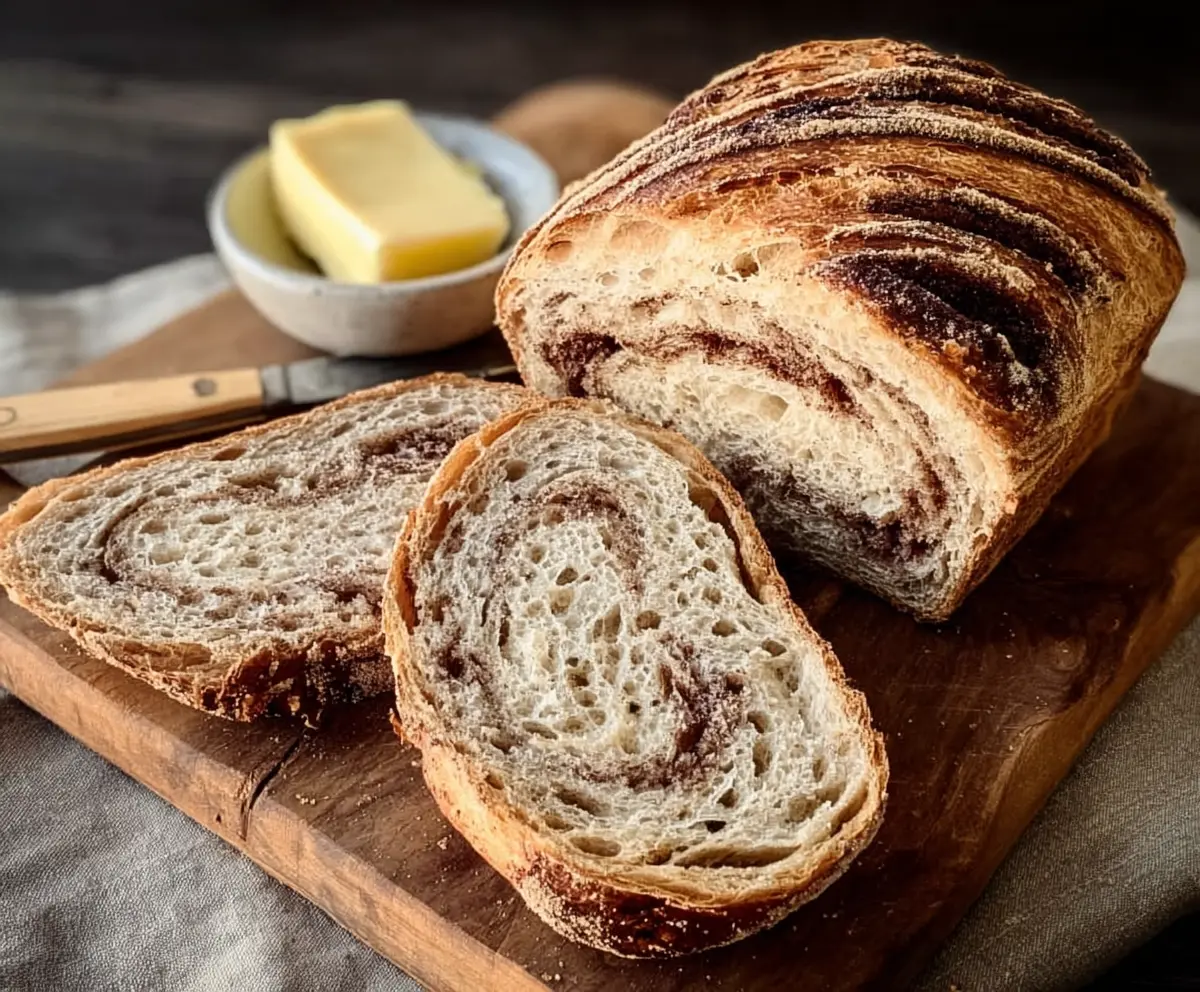
This Cinnamon Sugar Swirl Sourdough Bread is a cozy treat that combines warm, sweet cinnamon with tangy sourdough. It’s perfect for breakfast or a snack!
Just wait until you slice into it and see that beautiful swirl! I can never resist toasting a piece and slathering on some butter. It’s like a hug in every bite! 😊
Key Ingredients & Substitutions
Bread Flour: This is essential for structure. Bread flour has higher protein, giving the loaf a chewier texture. If you don’t have it, you can use all-purpose flour but the bread may be softer.
Sourdough Starter: The heart of sourdough! A 100% hydration starter is perfect. If you’re in a pinch, you could use active dry yeast – about 2 teaspoons mixed with some water and flour, but it will change the flavor profile.
Granulated Sugar & Ground Cinnamon: This duo gives the signature swirl! If you’re avoiding sugar, try coconut sugar or a sugar substitute. For cinnamon lovers, adding a pinch of nutmeg can deepen the flavor too.
Unsalted Butter: Used for brushing, it adds richness. You can substitute it with a neutral oil like vegetable oil or melted coconut oil if you want a dairy-free version.
How Do You Properly Shape a Swirl Loaf?
Shaping the bread can be a bit tricky but is important for that beautiful swirl. After rolling out your dough into a rectangle, go slow and steady. Brush melted butter across the surface but don’t overdo it, or the filling will spill out.
- When rolling the dough, start from one of the long edges for a tighter swirl.
- Pinch the seam tightly after rolling to create a good seal and prevent it from unrolling during proofing.
- Align the log seam-side down in the loaf pan to keep it secure while it rises.
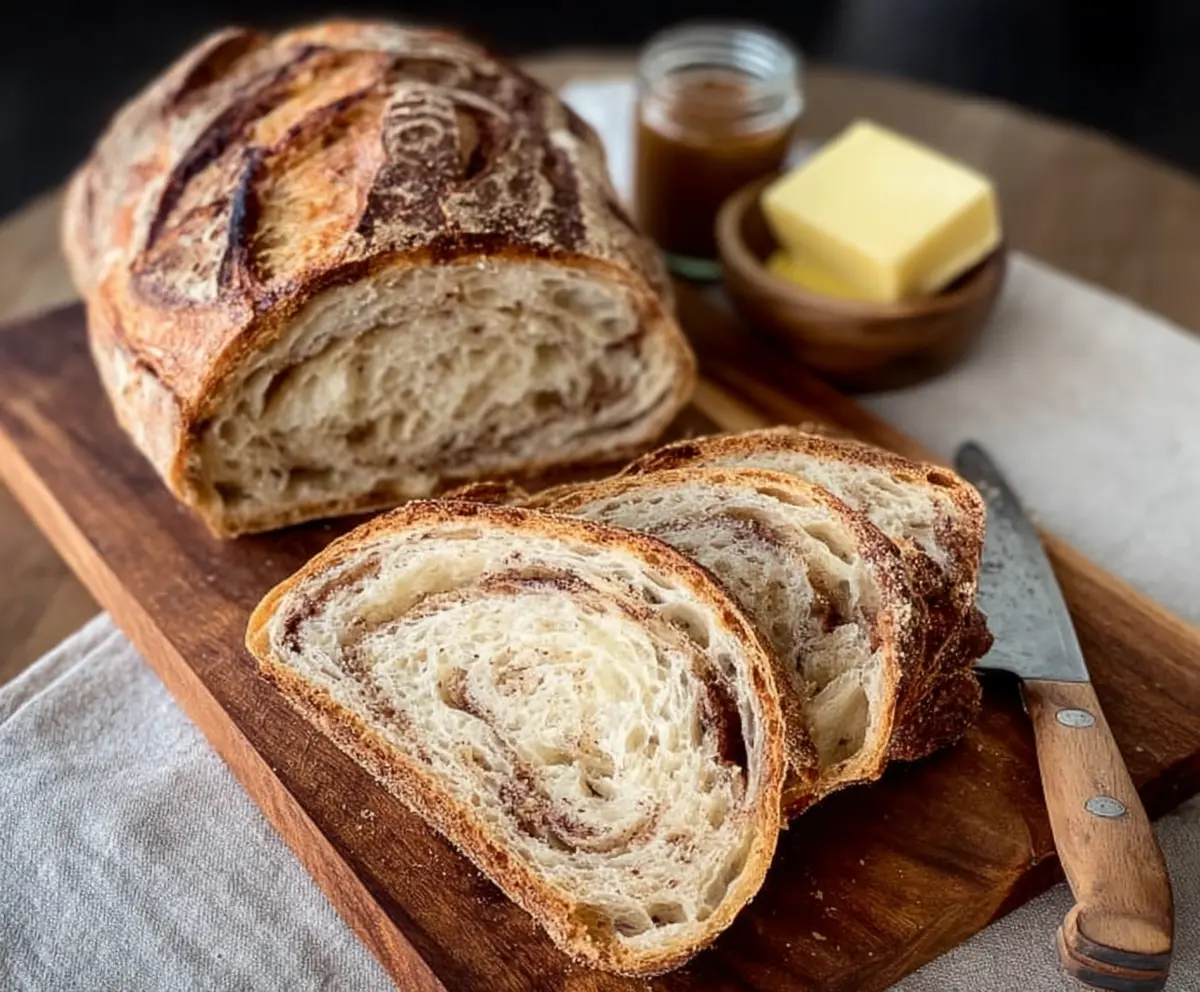
How to Make Cinnamon Sugar Swirl Sourdough Bread?
Ingredients You’ll Need:
For the Bread:
- 500g bread flour
- 350g water (at room temperature)
- 100g active sourdough starter (100% hydration)
- 10g salt
For the Cinnamon Sugar Filling:
- 100g granulated sugar
- 2 tbsp ground cinnamon
- 2 tbsp unsalted butter, melted (for brushing)
For Dusting:
- Extra flour for dusting
How Much Time Will You Need?
This cinnamon sugar swirl sourdough bread will take about 6-8 hours total. You’ll spend about 30 minutes prepping and mixing, and then let the dough ferment for 4-6 hours. After shaping, you’ll give it another 2-3 hours to proof before baking. Make sure to set aside enough time for cooling before you slice into it!
Step-by-Step Instructions:
1. Mixing the Dough:
In a large mixing bowl, combine the bread flour and room-temperature water. Stir well until no dry flour is visible. Cover the bowl with a cloth or plastic wrap and let it rest for about 30 minutes. This process is called autolyse and helps to develop the dough.
2. Adding Starter and Salt:
After the autolyse, add your active sourdough starter and salt to the dough. Mix well until everything is fully incorporated. If you like, you can knead the dough gently in the bowl or on a lightly floured surface until it becomes smooth.
3. Bulk Fermentation:
Cover the bowl with the dough and leave it at room temperature to ferment for approximately 4-6 hours. During the first 2 hours, perform stretch and folds every 30 minutes to develop the gluten. To do this, grab one side of the dough, stretch it up, and fold it back down over itself. Repeat this around the bowl.
4. Preparing the Cinnamon Sugar:
While your dough is fermenting, prepare the cinnamon sugar filling by mixing granulated sugar and ground cinnamon together in a small bowl. Set this aside for later.
5. Shaping and Filling:
Once the dough has fermented, lightly flour your work surface. Carefully turn the dough out onto it and roll it into a large rectangle, approximately 12×16 inches. Brush the surface of the dough with the melted butter, then sprinkle the cinnamon sugar mixture evenly over the top.
6. Creating the Swirl:
Beginning from one of the long edges, roll the dough tightly into a log shape. Make sure to pinch the seam closed at the end to keep it secure.
7. Proofing:
Place the rolled dough seam-side down in a greased or parchment-lined loaf pan. Cover it and let it proof at room temperature for 2-3 hours, or until it’s noticeably risen.
8. Preheating the Oven:
About 30 minutes before you’re ready to bake, preheat your oven to 230°C (450°F). If you have one, place a Dutch oven or baking stone inside to heat up, as this will help create an excellent crust.
9. Scoring and Baking:
Once the bread is proofed, lightly dust the top with flour and make shallow cuts (scoring) on top if you like. This allows for expansion during baking. Place the dough in the oven (removing it from the Dutch oven if using) and bake for 20 minutes. Then turn the heat down to 200°C (390°F) and continue baking for another 20-25 minutes until the crust is a deep golden brown, and it sounds hollow when tapped.
10. Cooling:
Once it’s baked, remove the bread from the oven and allow it to cool completely on a wire rack. This is crucial as it helps develop the texture.
11. Serving:
Slice and enjoy this delightful bread with a spread of butter or just on its own. You’ll love the crispy crust and sweet, fragrant cinnamon sugar swirl inside!
Can I Use Any Type of Flour for This Recipe?
It’s best to stick with bread flour for the best texture and rise. If you only have all-purpose flour, it will work, but the bread might be softer and less chewy. You could also blend all-purpose and bread flour for a balanced result!
How Do I Know When the Dough has Fermented Enough?
The dough should approximately double in size and feel airy to the touch. You can also do a ‘poke test’—gently poke the dough, and if the indentation holds but slowly springs back, it’s ready!
Can I Store Leftover Bread?
Absolutely! Store any leftover bread at room temperature in an airtight container for up to 3 days. For longer storage, slice the bread and freeze it in a bag, where it can last for up to 3 months. Just toast it straight from the freezer when you’re ready to enjoy!
What If My Dough Doesn’t Rise Properly?
If your dough isn’t rising as expected, it could be due to inactive starter or environmental temperatures. Ensure your starter is bubbly and active before use. Try placing the dough in a warmer area to encourage fermentation if it’s too cool.