Cold pasta salad lives or dies on the dressing, and this one holds onto every bite. The pasta gets coated in a sharp, garlicky vinaigrette, then tucked around juicy tomatoes, crisp cucumber, briny olives, and salty feta so the whole bowl tastes bright instead of heavy. After an hour in the fridge, the flavors settle in and the pasta takes on just enough seasoning to taste complete.
The trick is rinsing the pasta after cooking. For a salad like this, that step matters because it cools the noodles fast and keeps them from soaking up too much dressing before the vegetables get a chance to shine. I also like to hold back some feta for the end. It gives the salad a fresher look and keeps a few creamy, crumbly bites on top instead of burying all the cheese in the bowl.
Below, you’ll find the small details that make this salad taste like it came from someone who knows what Greek pasta salad should be: balanced, crisp, and never watery. I’ve also included a few easy swaps for making it your own without losing that classic feta-and-oregano character.
The dressing soaked in beautifully after chilling, and the pasta still had a nice bite instead of turning mushy. I added extra feta on top right before serving, and that salty finish made the whole bowl taste even better.
Saving this Greek Pasta Salad with Feta Cheese keeps that crisp cucumber, briny olive, and tangy feta combo close for easy lunches and potlucks.
The Dressing Needs Time to Soak In, Not Just Coat the Noodles
Most pasta salads fall flat because the dressing sits on the surface while the pasta stays bland underneath. This version avoids that by chilling for at least an hour, which gives the vinegar, lemon juice, garlic, and oregano time to settle into the noodles. The result is a salad that tastes seasoned all the way through, not like a bowl of plain pasta with vegetables tossed on top.
The other thing that matters is balance. Kalamata olives and feta bring salt, so the dressing doesn’t need to be aggressive. If your salad tastes sharp right after mixing, don’t panic. Cold pasta dulls flavor at first, then opens back up after chilling, which is why this dish should be judged after it’s had time to rest.
What Each Ingredient Is Actually Doing in This Salad
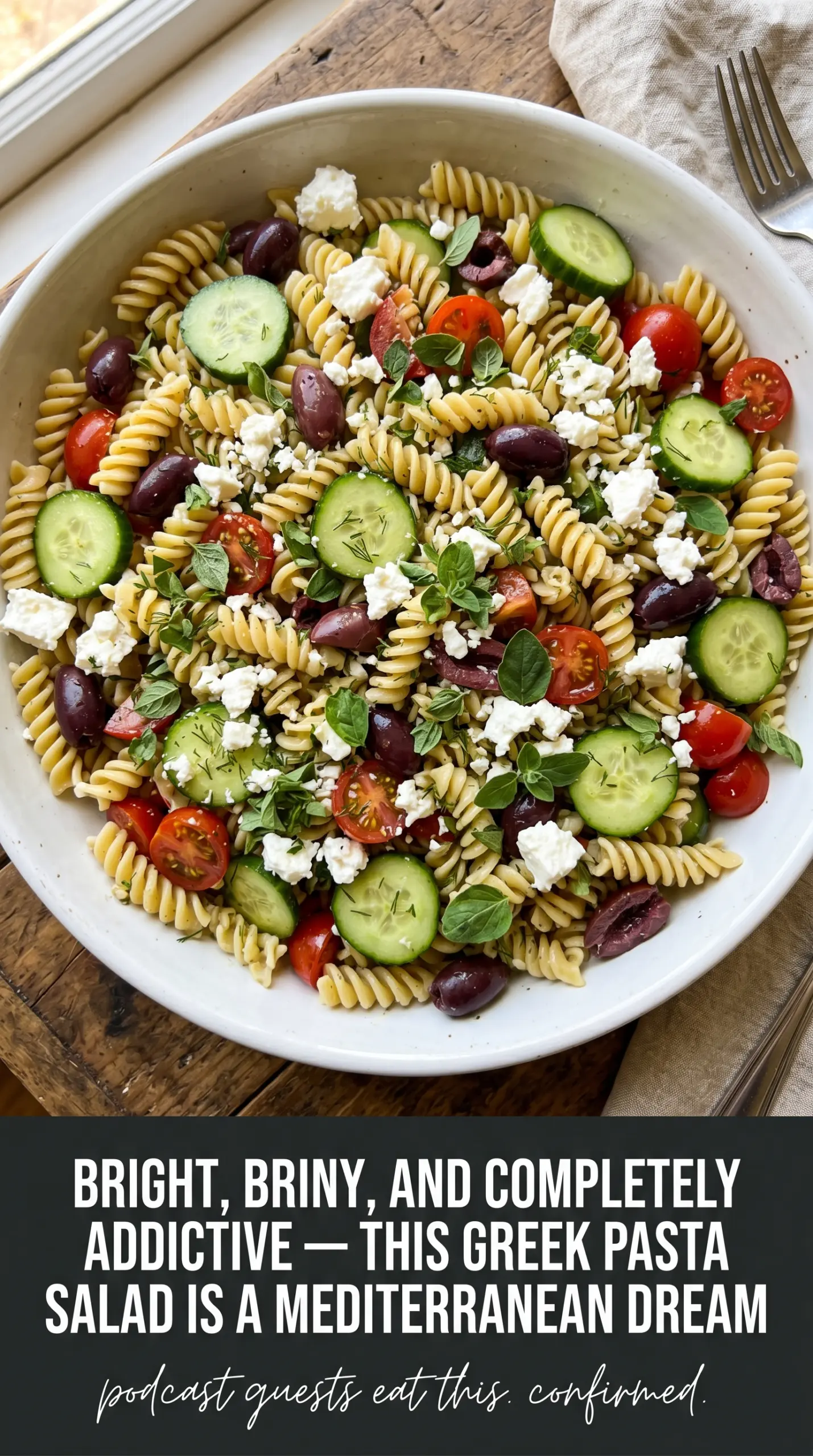
- Penne or rotini — These shapes catch the dressing in their ridges and curves better than smooth pasta. Rotini gives you a little more cling, while penne feels sturdier if the salad will sit for a while.
- Kalamata olives — They bring the salty, winey bite that makes this taste distinctly Greek. Black olives work in a pinch, but they taste flatter and less briny.
- Feta cheese — Use block feta if you can and crumble it yourself. Pre-crumbled feta is drier and usually less creamy, which matters here because the cheese is part of the texture, not just the seasoning.
- Red wine vinegar and lemon juice — The vinegar gives depth while the lemon keeps the dressing bright. You need both, or the salad can taste one-note and heavy.
- Oregano — Dried oregano works best here because it blooms in the dressing and tastes more integrated than fresh. Fresh oregano reads greener and can pull the salad away from the classic Greek profile.
Building the Salad So It Stays Crisp, Not Watery
Cooking the Pasta the Right Way
Cook the pasta until just al dente, then drain it and rinse under cold water right away. That stops the cooking and keeps the noodles from turning soft once the dressing goes in. If the pasta is hot when you add the vegetables, the tomatoes soften too fast and the feta starts to smear instead of staying crumbly.
Whisking the Dressing Until It Tastes Sharp and Clean
Whisk the olive oil, vinegar, lemon juice, garlic, oregano, salt, and pepper until the dressing looks evenly blended. You don’t want a greasy slick on top of the bowl. Taste it now, not after it’s on the pasta. It should taste a little more assertive than you want in the finished salad because the noodles and vegetables will pull some of that intensity down.
Combining Without Crushing the Vegetables
Add the pasta, tomatoes, cucumber, olives, red onion, and most of the feta to a large bowl, then pour the dressing over it and toss gently. Use a wide spoon or spatula, not a vigorous stir, or the tomatoes will burst and the feta will disappear into the dressing. The bowl should look glossy and evenly coated, with a few crumbles of cheese still visible.
Chilling Before Serving
Refrigerate the salad for at least 1 hour. That rest is where the flavor comes together. If you serve it too soon, the dressing tastes separate and the onion can seem sharp. Right before serving, add the remaining feta on top so the salad looks fresh and the cheese stays distinct.
Three Useful Ways to Adjust the Bowl Without Losing Its Greek Backbone
Make it gluten-free with a sturdy pasta shape
Use your favorite gluten-free pasta, but pick one that holds its shape after chilling. Rice- or corn-based rotini works better than delicate shapes, and you may want to dress it a little generously because gluten-free pasta can absorb moisture faster as it sits.
Turn it dairy-free by swapping the feta
Use a dairy-free feta-style cheese if you have one you trust. It won’t have the same salty crumble or tang, so the salad benefits from an extra pinch of salt and a little more lemon juice to keep the dressing lively.
Add chickpeas for a heartier side or a light lunch
A can of drained, rinsed chickpeas fits right in and makes the salad more filling without changing the flavor story. They also hold the dressing well, which helps if the salad needs to sit at a picnic table for a while.
Swap the cucumber if yours is seedy or soft
English cucumber or Persian cucumber gives the cleanest crunch. If you’re using a standard cucumber with large seeds, scoop some of the center out first so the salad doesn’t turn watery after chilling.
Storage and Reheating
- Refrigerator: Keeps for 3 to 4 days. The vegetables soften a little, but the flavor stays good.
- Freezer: This one doesn’t freeze well. The cucumber and tomatoes lose their texture, and the feta turns crumbly in a dry way.
- Reheating: No reheating needed. Serve it cold straight from the fridge, and if it has tightened up, let it sit at room temperature for 10 to 15 minutes before serving.
Questions I Get Asked About This Recipe
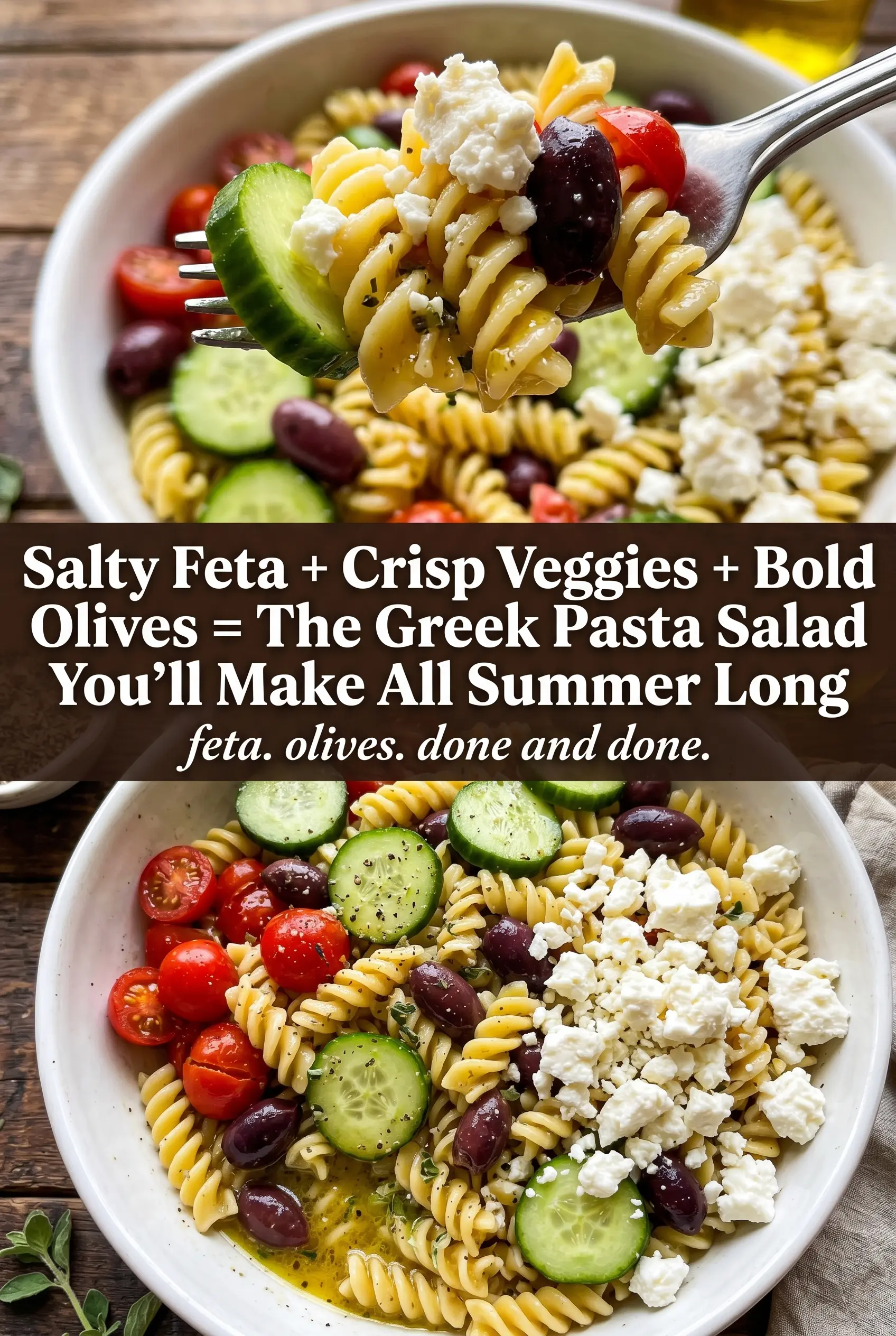
Greek Pasta Salad with Feta Cheese
Ingredients
Equipment
Method
- Bring a large pot of water to a boil and cook the penne or rotini pasta according to package directions, until al dente. Drain and immediately rinse with cold water to stop the cooking and cool the pasta quickly.
- In a bowl, whisk together olive oil, red wine vinegar, lemon juice, garlic, dried oregano, salt, and pepper until the mixture looks evenly combined and aromatic. Taste and adjust salt and pepper if needed.
- In a large bowl, combine the pasta with cherry tomatoes, cucumber, Kalamata olives, and red onion. Add most of the feta (save some for the top) and toss gently so the pasta is coated.
- Pour the dressing over the pasta salad and toss gently until the ingredients are glossy. Cover and refrigerate for at least 1 hour so the flavors meld.
- Before serving, top the chilled salad with the remaining feta. Serve cold for the best texture contrast between cool vegetables and tender pasta.