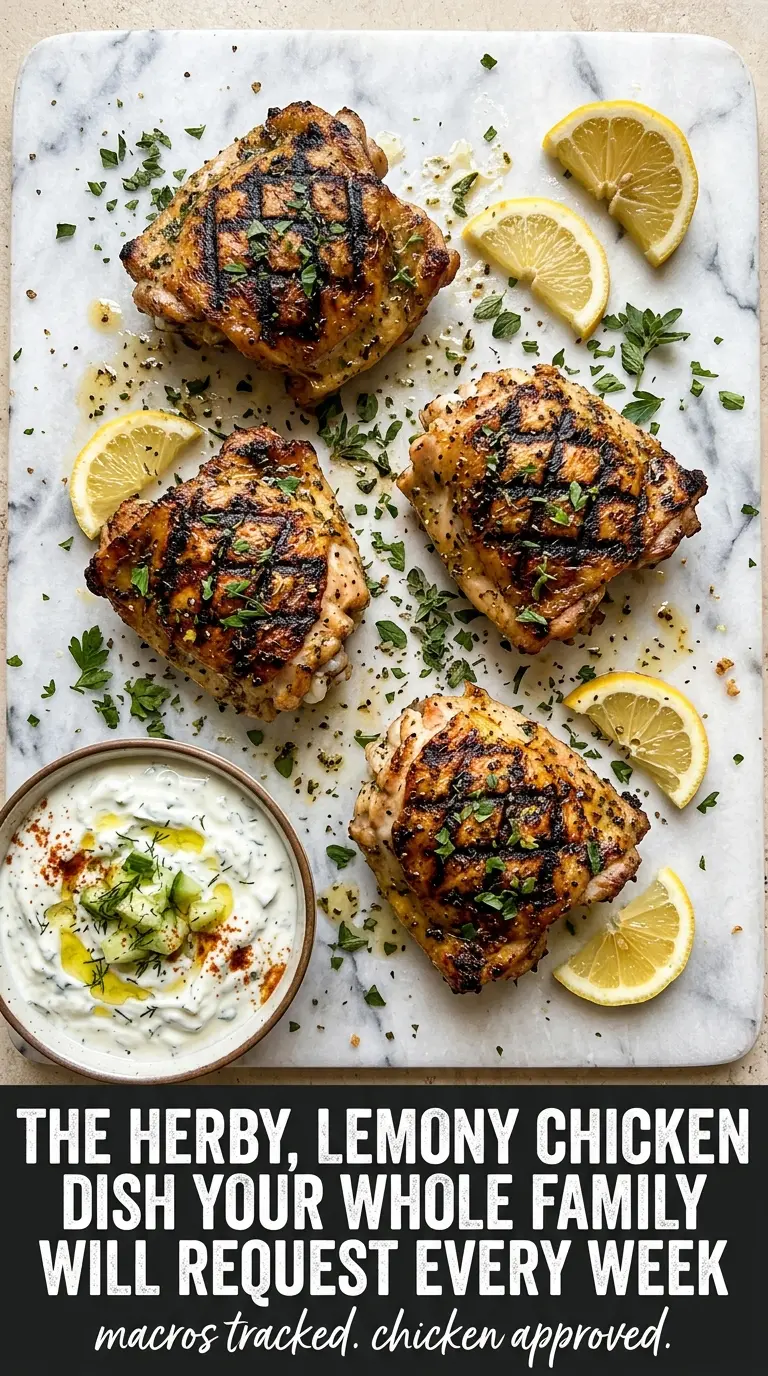
Tender, lemony Greek chicken earns its place in the regular dinner rotation because the marinade does more than season the meat — it changes the texture. The chicken comes off the grill with browned edges, a juicy center, and that bright oregano-garlic finish that makes plain grilled chicken taste like a meal worth sitting down for.
The key here is balance. Lemon brings the sharp, clean flavor, but olive oil cushions it so the chicken doesn’t dry out while it marinates. Fresh oregano gives the strongest Greek aroma, though dried oregano still works if that’s what you have. The garlic stays in the marinade long enough to perfume the meat without overpowering it, and the rest time after grilling keeps the juices where they belong.
Below you’ll find the one marinating detail that matters most, plus a few practical swaps for when you’re cooking with what’s already in the kitchen.
The lemon and oregano came through so clearly, and the chicken stayed juicy even on the grill. I marinated it overnight and it sliced up perfectly for pitas the next day.
Save this juicy Greek chicken for grilled dinners with lemon, garlic, and oregano that stay tender all the way through.
The Marinade Window That Keeps Greek Chicken Juicy Instead of Chalky
Greek chicken lives or dies by the marinade. Too little time and the flavor sits on the surface; too much time and the acid starts tightening the meat instead of helping it. Four to 24 hours is the useful range here, with the sweet spot landing somewhere in the middle for pieces that taste seasoned all the way through without turning soft or stringy.
The other mistake is grilling straight from the fridge without letting the excess marinade drip off. Wet chicken steams before it browns, and steamed chicken misses the whole point of cooking over heat. Give it a minute over the bowl, then lay it on a clean, hot grill so the first contact sets the crust.
- Lemon juice — This is what gives the chicken its Greek brightness, but it needs olive oil beside it. By itself, lemon can push the meat in a tougher direction if you leave it too long.
- Olive oil — Don’t swap this for a neutral oil unless you have to. Olive oil carries the oregano and garlic and helps the surface of the chicken brown instead of drying out.
- Fresh oregano — Fresh oregano gives the most vivid herbal flavor. Dried oregano still works well, but use less because it reads louder once it sits in the marinade.
- Chicken pieces — Bone-in pieces stay juicier on the grill, while boneless cuts cook faster and need closer attention. Either works, but boneless chicken is less forgiving if the grill runs hot.
What Each Ingredient Is Actually Doing in Greek Marinade
- Lemon juice (the main acid) — Lemon is the heart of Greek marinade. It tenderizes gently and adds bright flavor.
- Olive oil (generous amount) — Quality olive oil is essential to Greek marinades. It carries the Mediterranean flavors and protects the chicken.
- Garlic (minced or sliced) — Raw garlic becomes mellow and integrated after a few hours. Overnight would make it too strong.
- Oregano (dried works best for long marinades) — Dried oregano holds up better than fresh during marinating. It infuses the oil deeply.
- Optional: thyme or rosemary — These Mediterranean herbs add depth. Like oregano, dried herbs work well for marinades.
- Salt and pepper (bold seasoning) — Greek marinades should taste assertive. Don’t hold back on seasoning.
- The right window (2-6 hours, not overnight) — Lemon acid is gentle enough for this timeframe. Less than 2 hours won’t fully penetrate; more than 6 and the chicken becomes mushy or overly “cooked” by acid.
- Pat dry before grilling — The marinade should flavor the chicken deeply without making it watery on the surface. Dry thoroughly for a good crust.
The Part of the Grill That Makes or Breaks the Finish
Whisking the Marinade Until It Looks Coated, Not Separated
Whisk the olive oil, lemon juice, zest, garlic, oregano, thyme, salt, and pepper until the mixture looks cloudy and unified. You’re not trying to dissolve anything completely; you just want the oil and acid dispersed enough to cling to the chicken. If the garlic sits in a puddle at the bottom, give it another good whisk before the chicken goes in.
Letting the Chicken Sit Long Enough to Take On Flavor
Coat the chicken pieces fully, cover them, and refrigerate for at least 4 hours. Less time gives you seasoned chicken, not Greek chicken. If you go past 24 hours, the lemon can start to dominate the texture, especially on smaller or thinner pieces.
Grilling to the Point of Juicy, Not Dry
Set the grill over medium-high heat and cook until the internal temperature reaches 165°F. If the grill is screaming hot, the outside will char before the inside catches up. Let each side develop color before turning it; if the chicken sticks, it usually needs another minute to release cleanly.
Resting Before the First Slice
Move the chicken to a plate and rest it for 5 minutes before serving. That short pause keeps the juices from running onto the cutting board the moment you slice in. If you skip it, even perfectly cooked chicken can seem dry because the juices end up lost instead of staying in the meat.
How to Adjust Greek Chicken for the Grill You Have, the Diet You Need, or the Meal You’re Planning
Dairy-Free and Naturally Gluten-Free
This recipe already fits both diets as written, which is one reason it’s such an easy weeknight anchor. Serve it with rice, potatoes, salad, or grilled vegetables and you’ve got a meal that doesn’t need any special substitutions to work.
Boneless Chicken for Faster Cooking
Boneless thighs or breasts cook faster and are easier to slice for pita or bowls. The tradeoff is less forgiveness on the grill, so watch the temperature closely and pull them as soon as they hit 165°F. Thighs stay juicier; breasts are leaner and can dry out if they go even a little too far.
No Fresh Oregano on Hand
Use 1 tablespoon dried oregano instead of the fresh herbs. Dried oregano tastes more concentrated, so it gives you a stronger, slightly earthier note. Crush it between your fingers before adding it to wake up the aroma.
Making It Ahead for a Crowd
Marinate the chicken the night before, then grill it close to serving time so it stays juicy. You can also cook it earlier in the day and serve it at room temperature, but don’t slice it until you’re ready to eat or the juices will run out.
Storage and Reheating
- Refrigerator: Store leftovers in an airtight container for up to 4 days. The flavor stays strong, but the texture is best within the first two days.
- Freezer: Freeze cooked chicken for up to 2 months. Slice it first and wrap it well so it thaws evenly.
- Reheating: Warm it gently in a covered skillet with a splash of water or broth over low heat. High heat dries out grilled chicken fast, so avoid the microwave blast if you want to keep the meat tender.
Answers to the Questions Worth Asking

Juicy Greek Chicken
Ingredients
Equipment
Method
- Whisk olive oil, lemon juice, lemon zest, minced garlic, fresh oregano, dried thyme, salt, and pepper until evenly combined.
- Taste the marinade and adjust with more salt and pepper if needed.
- Add the chicken pieces to a bowl or bag and coat thoroughly with the marinade.
- Cover and refrigerate for 4-24 hours to marinate.
- Preheat your grill to medium-high heat and lightly oil the grates.
- Grill chicken over medium-high heat until the thickest pieces reach 165°F internal temperature, turning as needed.
- Transfer chicken to a plate and let rest for 5 minutes before serving.