Cold pasta salad only works when every bite still tastes lively after it chills, and this Mediterranean Chicken Pasta Salad does that with ease. The pasta gets coated in a lemon-herb dressing that cuts through the richness of the feta and chicken, while cucumbers, tomatoes, and olives keep each forkful crisp, briny, and bright. It eats like a full meal, not a side dish pretending to be lunch.
The trick is in the balance. Rinsing the pasta after cooking stops it from overcooking and keeps the salad from turning sticky, and the dressing gets whisked separately so the garlic and oregano can wake up in the oil before everything meets the bowl. I also like adding the feta at the end so it stays in crumbles instead of disappearing into the dressing.
Below, you’ll find the little details that keep this salad from going flat in the fridge, plus a few ways to adapt it for meal prep, dairy-free needs, or whatever’s already in your kitchen.
The pasta stayed perfectly separate after chilling, and the lemon dressing actually got better overnight. I added extra cucumber the second time because the crunch against the feta was my favorite part.
Save this Mediterranean Chicken Pasta Salad for meal prep days when you want a chilled, lemony lunch that still tastes fresh after an hour in the fridge.
The Difference Between a Bright Salad and a Bland One After Chilling
Most pasta salads go flat because the dressing gets absorbed before the vegetables have a chance to speak up. This one avoids that by leaning on lemon juice, olive oil, and garlic instead of a heavy mayo-based dressing, so the flavors stay clean even after an hour in the fridge. The pasta holds onto the dressing without turning slick, and the chicken gives it enough substance to serve as dinner.
The other thing that matters here is texture. Cherry tomatoes, cucumber, and red onion all bring different kinds of crunch and juiciness, which keeps the salad from eating like a bowl of cold starch. If your pasta salad ever feels dull, it’s usually missing either acidity, salt, or a crisp element. This recipe covers all three.
What Each Ingredient Is Actually Doing in the Bowl
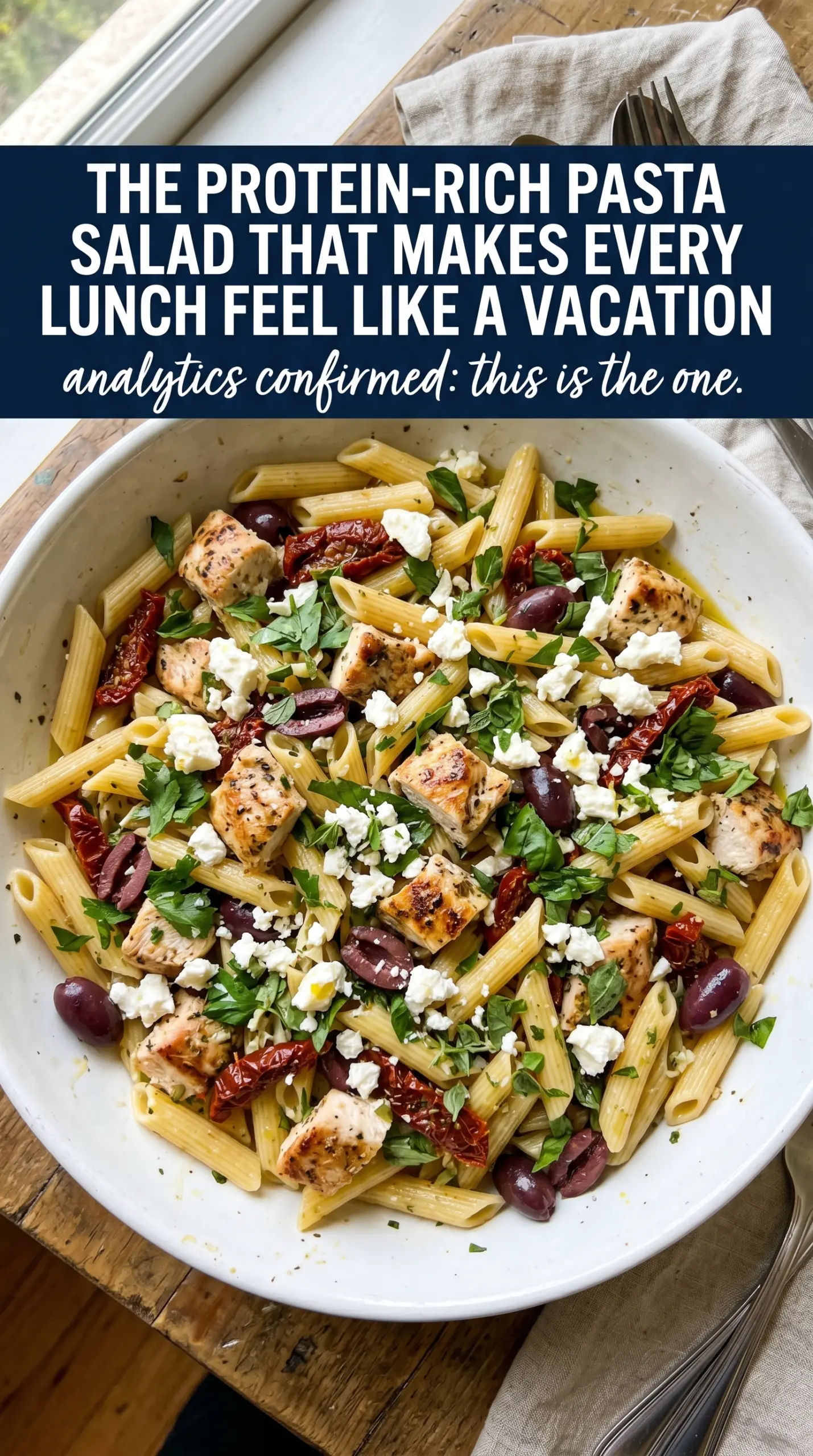
- Penne pasta — The shape matters because the ridges catch the dressing and little bits of feta. Any short pasta with grooves or curves works well, but very small shapes can disappear once the salad chills and gets tossed.
- Grilled chicken breast — This gives the salad its protein and a smoky edge that plays nicely with the lemon and olives. Rotisserie chicken works in a pinch, but grilled chicken keeps the flavor cleaner and gives you better texture in a cold salad.
- Feta cheese — Salty, creamy feta is what makes the bowl taste complete. Buy a block and crumble it yourself if you can; pre-crumbled feta is drier and doesn’t melt into the dressing as nicely.
- Olive oil and lemon juice — These are the backbone of the dressing. Use a good olive oil here because there isn’t any cream or mayo to hide behind, and fresh lemon juice matters more than bottled because the dressing depends on that sharp, clean finish.
- Garlic and oregano — Garlic gives the dressing bite, and oregano anchors the whole dish in Mediterranean territory. If you use dried oregano, let it sit in the dressing for a few minutes before tossing so it has time to bloom.
- Cucumber, tomatoes, red onion, and Kalamata olives — These are the contrast ingredients. The cucumber stays cool and crisp, the tomatoes bring juice, the onion adds sharpness, and the olives bring brine; together they keep the salad from feeling one-note.
How to Keep the Pasta Salad Fresh Instead of Watery
Cooling the Pasta the Right Way
Cook the pasta until just tender, then drain it and rinse it under cold water right away. That stops the cooking and washes off enough surface starch to keep the salad from clumping. If the pasta stays warm when you add the dressing, it drinks up too much oil and the final salad turns uneven. Drain it well so you’re not dragging extra water into the bowl.
Whisking the Dressing Before Anything Else
Mix the olive oil, lemon juice, garlic, oregano, salt, and pepper in a separate bowl until the dressing looks glossy and unified. This gives the garlic a head start and keeps the seasoning distributed instead of sitting in one corner of the salad. If the dressing tastes sharp on its own, that’s a good sign; once it coats the pasta and vegetables, it settles into balance.
Tossing in the Right Order
Combine the pasta, chicken, tomatoes, cucumber, olives, and red onion first, then pour over the dressing and toss thoroughly. Folding in the feta last keeps the crumbles intact and prevents the salad from turning pasty. The final chill is important here because the flavors need time to merge, but don’t skip tossing once after 15 to 20 minutes in the fridge if any dressing settles at the bottom.
Three Ways to Adapt This Pasta Salad Without Losing the Point
Make It Dairy-Free
Skip the feta and add a handful of chopped artichokes or extra olives for salt and interest. You’ll lose the creamy crumble that ties the bowl together, so lean a little harder on lemon and good olive oil to keep the salad bright.
Use Rotisserie Chicken for Faster Prep
Shred or chop the chicken and add it cold or at room temperature. The salad will be a little softer and less smoky than with grilled chicken, but it still tastes full and balanced, especially once it chills.
Turn It Into a Gluten-Free Meal
Swap in your favorite gluten-free short pasta and cook it just until tender, since some gluten-free pastas soften faster after chilling. Rinse it well and toss it with the dressing while it’s fully cooled so it doesn’t break apart in the bowl.
Pack It for Meal Prep
For the best texture, keep the feta separate and add it right before eating if you’re packing lunches for several days. The salad holds well, but the cucumber and tomatoes stay crisper when the cheese isn’t sitting on top of them all week.
Storage and Reheating
- Refrigerator: Store covered for up to 4 days. The vegetables soften a little, but the flavor stays good.
- Freezer: Don’t freeze it. The cucumber, tomatoes, and feta won’t thaw with good texture, and the pasta turns mushy.
- Reheating: Serve this cold or let it sit at room temperature for 15 to 20 minutes. If it tastes a little flat after chilling, add a squeeze of lemon and a pinch of salt instead of trying to warm it up.
Answers to the Questions Worth Asking
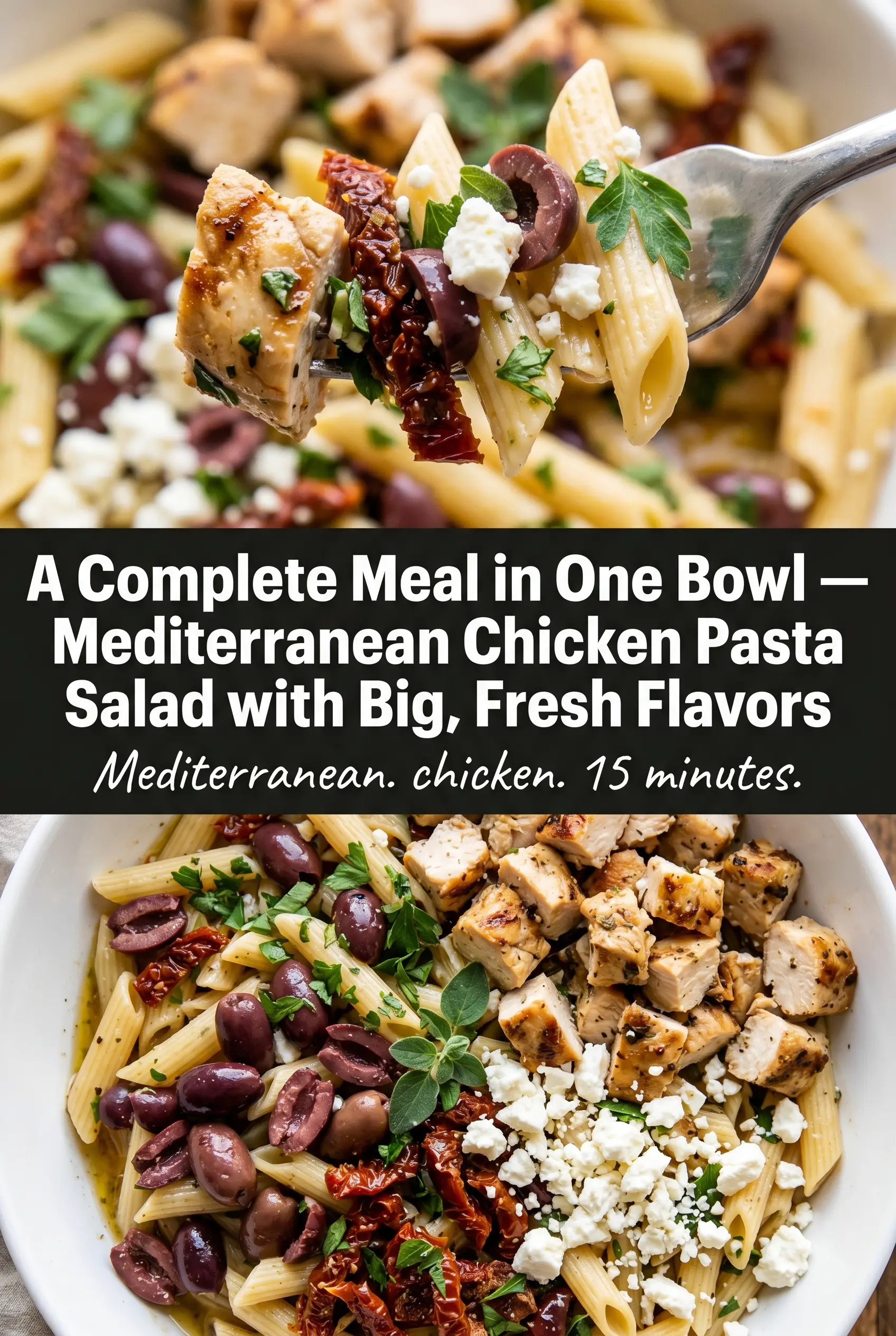
Mediterranean Chicken Pasta Salad
Ingredients
Equipment
Method
- Cook the penne pasta according to package directions until tender, then drain and rinse with cold water to stop the cooking. The pasta should look springy and cool to the touch.
- Whisk olive oil, lemon juice, minced garlic, oregano, salt, and pepper until the dressing looks evenly combined. The color should be pale yellow with visible oregano flecks.
- Combine the cooked penne, sliced grilled chicken, halved cherry tomatoes, diced cucumber, sliced Kalamata olives, and diced red onion in a large bowl. The mixture should look colorful and evenly distributed.
- Pour the dressing over the salad and toss to combine until every piece of pasta is lightly coated. The pasta should look glossy rather than dry.
- Gently fold in the crumbled feta cheese just until incorporated. Stop when you still see soft white crumbles throughout the salad.
- Refrigerate the salad for at least 1 hour before serving to let the flavors meld. Cover it so the top stays fresh and does not dry out.