Cold pasta salad lives or dies by the dressing, and this version gets the balance right: enough Italian dressing to coat every spiral, enough crunch from the vegetables to keep each bite lively, and enough chill time for the pasta to drink in the seasoning without turning soggy. It’s the kind of side dish that disappears from the bowl first because it stays bright, tangy, and sturdy on the table.
The little details matter here. Rinsing the pasta under cold water stops the cooking fast and washes away excess starch so the dressing can cling instead of sliding off. The vegetables are cut small enough to mingle with the rotini, and the Parmesan plus Italian seasoning add a salty, savory edge that bottled dressing alone doesn’t quite have. After a good rest in the fridge, the whole salad tastes more unified and less like separate ingredients tossed together at the last minute.
Below, I’ve included the one timing note that makes a big difference, plus a few easy swaps if you want to adjust the mix based on what’s in your fridge.
The pasta stayed firm after chilling and the dressing soaked in just enough overnight. I added a splash more Italian dressing before serving and the whole bowl tasted fresh, not heavy.
Save this pasta salad with Italian dressing for cookouts, lunches, and any side dish that needs to taste better after a long chill.
The Trick to Pasta Salad That Stays Flavored, Not Soggy
The biggest mistake with pasta salad is treating the dressing like an afterthought. Dry pasta drinks up flavor fast, which means the bowl tastes flat unless you give it time to absorb the seasoning and then refresh it before serving. That’s why this salad needs a chill. It’s not just for serving cold; it’s what turns bottled dressing into something that tastes woven through the pasta instead of pooled at the bottom.
Rotini works especially well because all those ridges and spirals grab onto the dressing. If you swap in a smooth pasta like penne or shells, the salad still works, but you’ll lose a little of that cling. The cold rinse matters here too. It stops the cooking and keeps the pasta from softening further while it sits in the fridge.
What Each Ingredient Is Doing in the Bowl
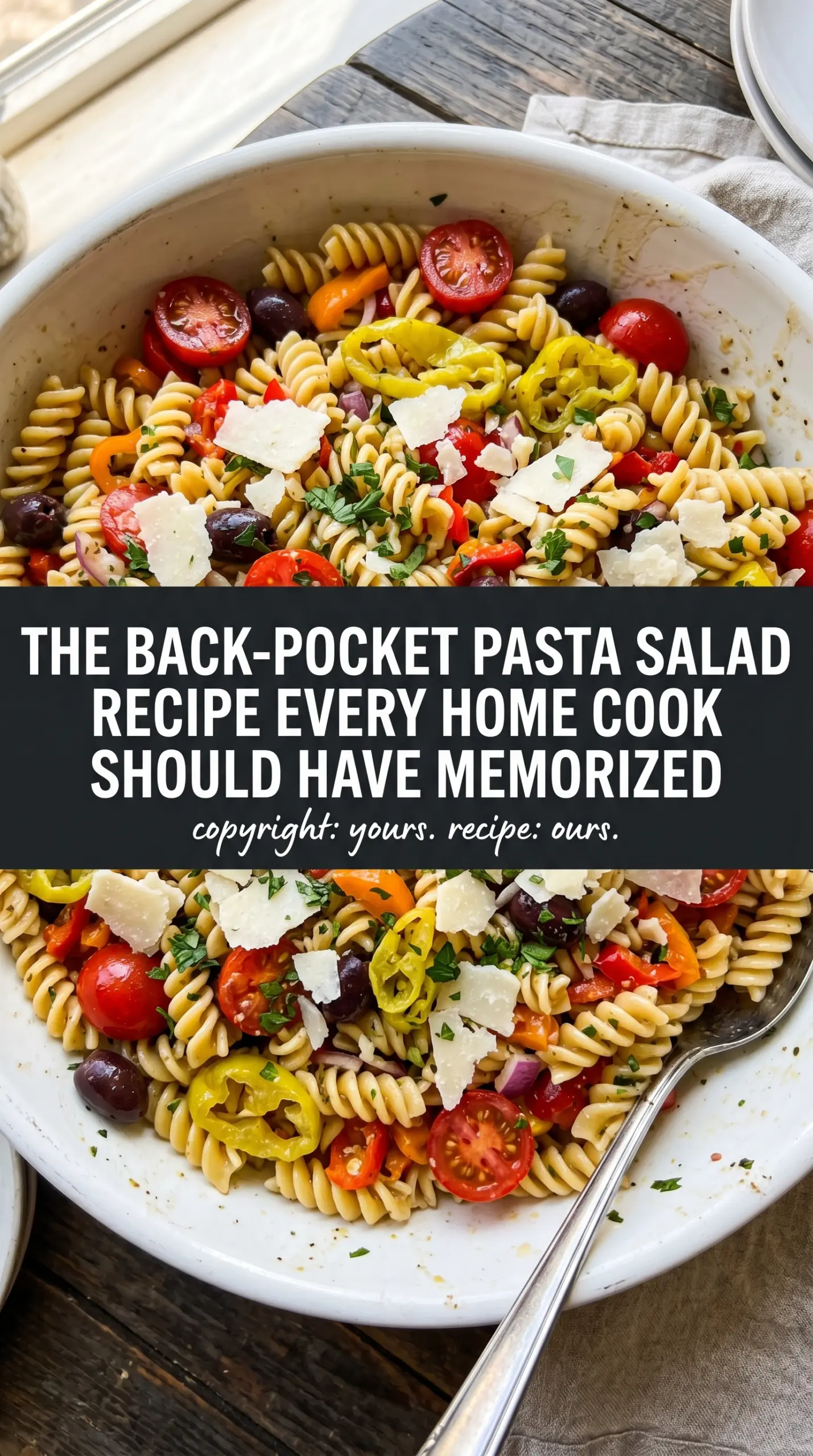
- Rotini pasta — The shape matters more than people think. Rotini traps dressing in the twists, so every bite tastes seasoned instead of slick.
- Italian dressing — Bottled dressing brings the acid, oil, and herbs in one shot, which is why this recipe is fast. A good one tastes balanced straight from the bottle; if yours is very sharp, add a little extra Parmesan to round it out.
- Cherry tomatoes, cucumber, bell pepper, red onion, and olives — This mix gives you juicy, crisp, briny, and sharp in the same bowl. Cut everything small enough to match the pasta so the salad eats evenly.
- Parmesan and Italian seasoning — Parmesan adds salt and depth, while the extra seasoning reinforces the herbs that get a little diluted once the salad chills. Freshly grated Parmesan melts into the dressing better than the shelf-stable stuff, but either works.
Building the Salad So the Dressing Clings
Cooking the Pasta to the Right Bite
Boil the rotini until it’s just tender, not soft, because it will pick up a little more texture as it chills. Drain it well, then rinse with cold water until the steam is gone and the pasta feels cool to the touch. If you leave it warm, it keeps cooking and the dressing won’t settle into the pasta as cleanly.
Mixing the Vegetables Before the Dressing Goes In
Toss the pasta with the tomatoes, cucumber, bell pepper, red onion, and olives first so the bowl is evenly distributed before the dressing comes in. That keeps the heavier ingredients from sinking and the vegetables from clumping in one section. If your onion is strong, dice it finely so it sharpens the salad without taking over.
Letting the Salad Rest and Finish It Fresh
Once the dressing, Parmesan, and Italian seasoning go in, refrigerate the salad for at least 2 hours. That rest time is when the flavor settles and the pasta absorbs the seasoning. Right before serving, toss again and add a splash more dressing if it looks dry; pasta salad often needs that last little refresh after chilling.
How to Adapt This Pasta Salad Without Losing What Makes It Work
Make It Dairy-Free
Skip the Parmesan and add a little extra salt or a spoonful of nutritional yeast if you want a more savory edge. The salad still holds together because the dressing does the heavy lifting; you just lose a touch of nutty depth from the cheese.
Use What You Have for the Vegetables
Swap in chopped celery, diced zucchini, pepperoncini, or broccoli florets if that’s what’s in the fridge. The key is keeping the pieces small and crisp; soft vegetables can make the salad feel muddy after it chills.
Make It More Filling
Add diced salami, mozzarella pearls, or chickpeas if you want this to work as a fuller lunch salad. Just remember that extra add-ins will soak up more dressing, so hold back a few spoonfuls of the bottle and add them after the chill.
Storage and Reheating
- Refrigerator: Store covered for up to 4 days. The pasta will soften a little and the vegetables will release some moisture, so toss before serving.
- Freezer: This one doesn’t freeze well. The dressing separates and the vegetables lose their crunch, so freezing turns it watery and dull.
- Reheating: Don’t reheat it. Pasta salad is meant to be served cold or cool; if it’s been in the fridge awhile, let it sit 10 to 15 minutes on the counter and add a small splash of dressing to wake it up.
Answers to the Questions Worth Asking
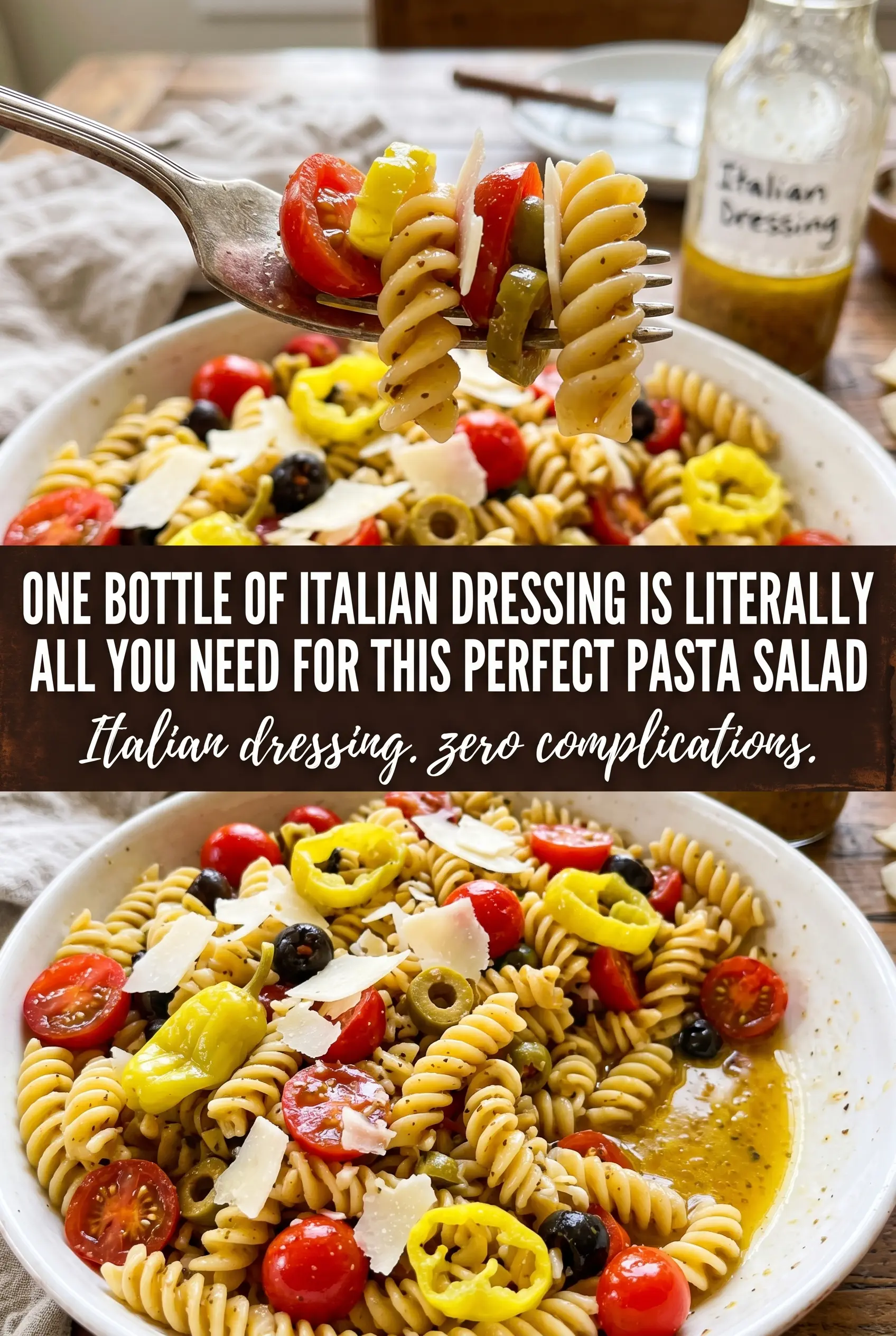
Pasta Salad With Italian Dressing
Ingredients
Equipment
Method
- Bring a pot of water to a boil, then cook rotini pasta according to package directions until tender, about 10 minutes. Visual cue: the pasta should be cooked through but still hold its shape.
- Drain the rotini pasta and rinse with cold water to stop the cooking. Visual cue: the pasta looks cool and slippery, not steaming.
- In a large bowl, combine the rotini pasta, cherry tomatoes, cucumber, green bell pepper, red onion, and black olives. Visual cue: vegetables are evenly distributed throughout the pasta.
- Add Italian dressing, Parmesan cheese, and Italian seasoning, then toss until everything is coated. Visual cue: the pasta strands and vegetable pieces look glossy from the dressing.
- Refrigerate the pasta salad for at least 2 hours to allow flavors to develop. Visual cue: the salad thickens slightly and the vegetables look crisp.
- Toss again before serving and add more Italian dressing if needed. Visual cue: coating looks fresh and consistent on every bite.