Pasta salad gets a lot better when the dressing actually tastes like something before it ever hits the bowl. This basil lemon pasta salad is bright, sharp, and herb-forward, with just enough Parmesan to round out the edges and keep the lemon from tasting thin. The pasta soaks up the dressing as it chills, so by the time it’s served the whole bowl tastes cohesive instead of like separate ingredients tossed together at the last minute.
The small details matter here. Rinsing the pasta under cold water stops the cooking and keeps the salad from turning soft while it chills. The basil goes in torn, not chopped, so it stays fragrant and doesn’t disappear into the dressing. And the garlic gets whisked straight into the lemon and olive oil, where it softens enough to season the whole salad without hitting you in raw, sharp bites.
Below, I’ll show you why this version stays fresh instead of soggy, which ingredient swaps work without flattening the flavor, and how to keep the basil tasting bright all the way to the last serving.
I chilled it for an hour like you said and the pasta absorbed the dressing without getting mushy. The basil stayed fresh, and the lemon-Parmesan combo was even better the next day.
Save this basil lemon pasta salad for a chilled side dish that stays bright, herby, and tangy after resting.
The Trick to Pasta Salad That Tastes Bright After Chilling
The biggest mistake in pasta salad is under-seasoning the dressing before it goes on the pasta. Cold food mutes flavor, and once the noodles chill, they pull in salt, acid, and oil unevenly if the dressing starts out weak. This version leans hard enough on lemon zest, garlic, and Parmesan that it still tastes alive after an hour in the fridge.
Rinsing the pasta is a deliberate move here. For hot pasta dishes, you want the starch. For this salad, you want the pasta cool, clean, and ready to absorb the dressing without clumping. Farfalle and rotini both hold the dressing well because all those folds and ridges trap bits of basil and cheese instead of letting them slide off.
- Lemon zest — This does more than the juice alone can. The zest carries the perfume of the lemon, while the juice brings the sharpness, and the two together keep the dressing from tasting flat.
- Parmesan — Grated Parmesan adds salt and a little body to the dressing as it clings to the pasta. Pre-grated works in a pinch, but freshly grated melts into the salad more smoothly and tastes cleaner.
- Fresh basil — Torn basil stays more fragrant than chopped basil, which bruises faster. Add it after the pasta has cooled so the leaves don’t wilt into a dull green tangle.
- Cherry tomatoes — They bring moisture and sweetness, which matters because lemon and Parmesan can lean sharp. If your tomatoes are bland, salt them lightly before adding them so they taste like part of the dish instead of a watery add-in.
What Each Ingredient Is Actually Doing to Stay Bright When Cold
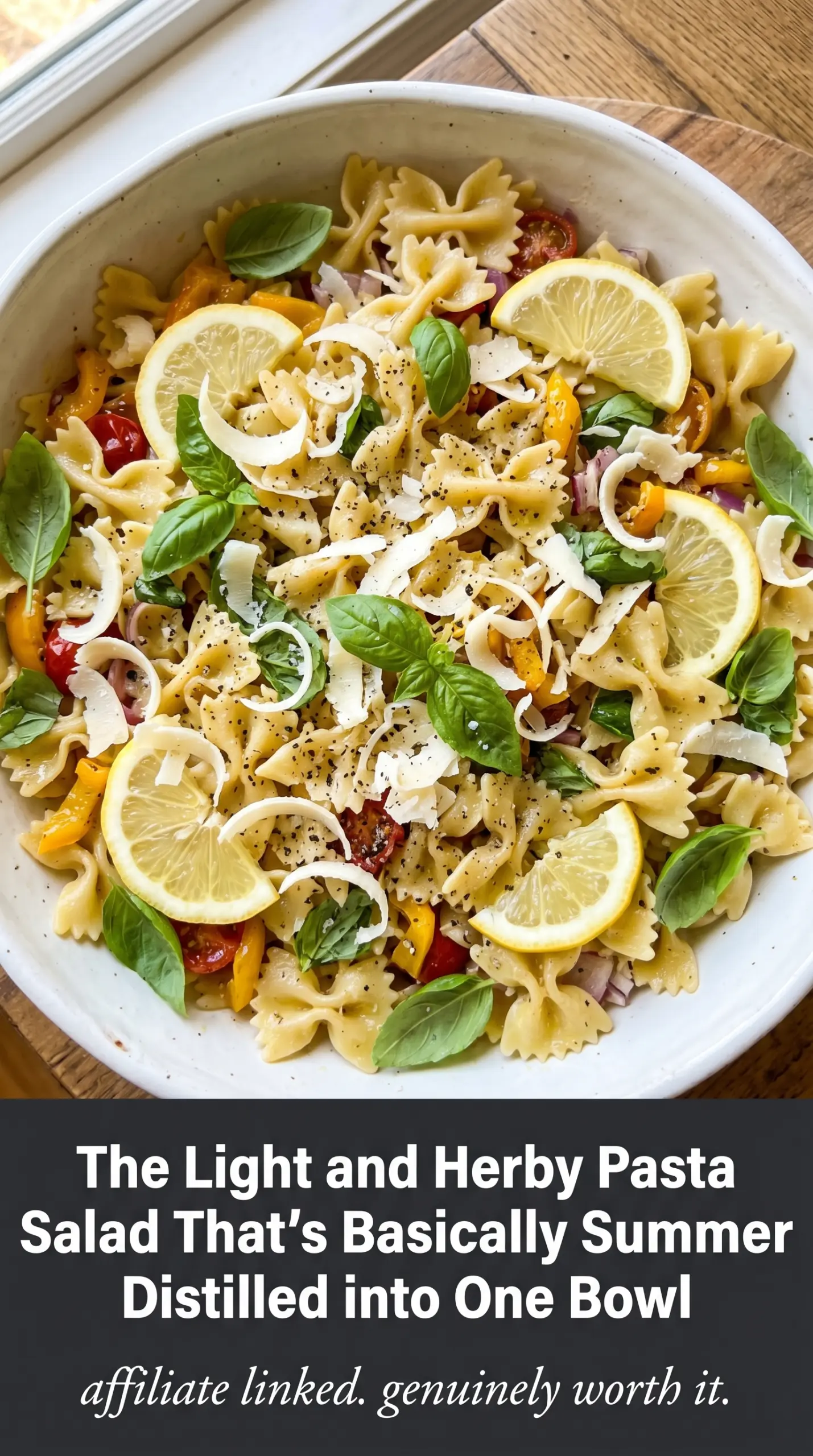
- Oil-based dressing (preserves brightness) — Oil coats the pasta and vegetables, protecting them from oxidizing. Creamy dressing makes everything look dull.
- Acid (vinegar, lemon, or lime juice) — The acid preserves the color of vegetables. It also prevents the salad from tasting flat after chilling.
- Fresh herbs (especially tender ones added at the end) — Fresh herbs stay bright green. Hardy herbs infuse flavor over time, tender herbs added fresh provide brightness.
- Bright vegetables (red pepper, tomato, fresh peas) — These maintain their color better than pale vegetables. They also add visual appeal.
- Bold seasoning that’s distributed evenly — Bold flavors taste balanced after chilling. Shy seasoning disappears when cold.
- Minimal time in heavy dressing — Dressing should coat, not drench. Heavy dressing makes everything look tired and dull.
- Citrus zest for brightness — A light zest of lemon or lime adds visual brightness and flavor. Sprinkle it on just before serving.
- Final toss right before serving — Redistributing the dressing brings everything back to life and restores brightness.
Building the Dressing So It Clings Instead of Pooling
Whisk the Lemon First
Start with the lemon juice, zest, garlic, salt, and pepper, then whisk in the olive oil. That gives the garlic a chance to soften in the acid and keeps the dressing from tasting greasy. If you dump everything together at once, the oil can coat the garlic and mute the sharpness you want.
Cool the Pasta All the Way Down
Drain the pasta and rinse it under cold water until it’s no longer warm to the touch. Warm pasta keeps cooking and can turn soft under the dressing, which is how you end up with a tired salad by serving time. Shake off as much water as you can so the dressing coats the noodles instead of thinning out on contact.
Toss, Then Rest
Combine the pasta, basil, Parmesan, and tomatoes in a large bowl, then pour the dressing over and toss until every piece looks glossy. The salad needs that hour in the fridge because the pasta absorbs the lemon and garlic as it sits. If it tastes punchy right after mixing, that’s a good sign; it should mellow into balance after chilling.
How to Adapt This for a Picnic, a Meatless Main, or a Different Pantry
Make It Dairy-Free
Skip the Parmesan and add a little extra salt plus a tablespoon of nutritional yeast if you want some of that savory depth back. The salad will taste a little lighter and more citrus-forward, which works well if you’re serving it alongside grilled food.
Turn It Into a Fuller Lunch
Add chickpeas, white beans, or diced mozzarella to make the salad more filling. Chickpeas keep it vegan if you’ve already swapped out the cheese, while mozzarella gives you a softer, creamier bite that plays well with the basil.
Use What You Have for the Pasta Shape
Farfalle and rotini are ideal, but penne or fusilli work too. Avoid long, slippery noodles like spaghetti, which don’t hold the basil and dressing as well and tend to clump once chilled.
Storage and Reheating
- Refrigerator: Keeps for 3 days. The basil will darken a little, and the pasta will absorb more dressing each day.
- Freezer: Don’t freeze this one. The basil bruises, the tomatoes lose their texture, and the dressing separates when thawed.
- Reheating: Serve it cold or let it sit at room temperature for 15 minutes before serving. If it seems dry after chilling, stir in a splash of lemon juice and a drizzle of olive oil instead of trying to warm it.
Questions I Get Asked About This Recipe
Basil Lemon Pasta Salad
Ingredients
Equipment
Method
- Cook farfalle or rotini pasta according to package directions until al dente. Drain, then rinse with cold water to cool quickly and stop cooking.
- Whisk olive oil, lemon juice, lemon zest, minced garlic, salt, and pepper until the dressing looks smooth and slightly glossy. Taste and adjust seasoning if needed.
- Combine the cooled pasta, torn fresh basil leaves, grated Parmesan, and halved cherry tomatoes in a large bowl. Gently toss to distribute the herbs and cheese.
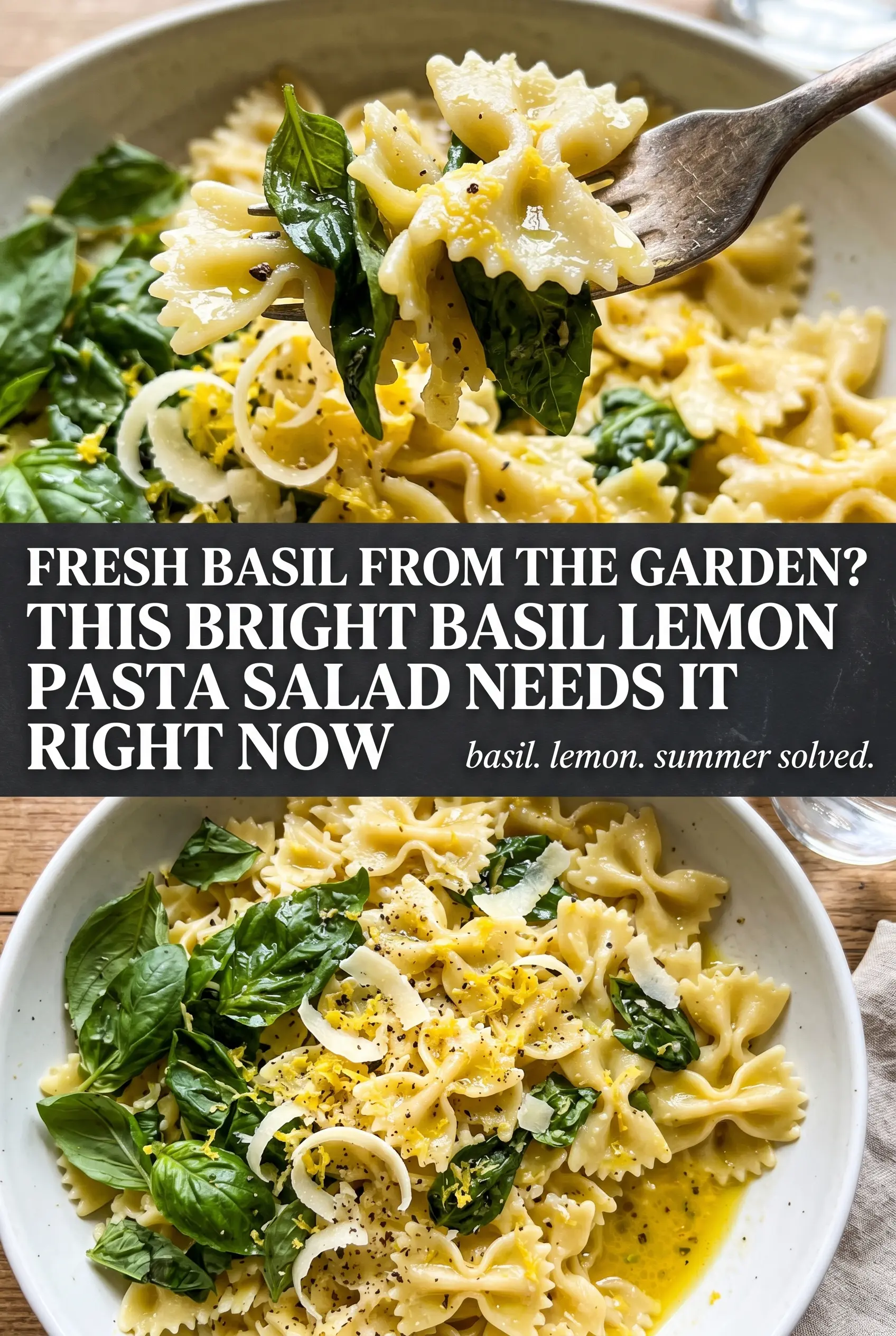
- Pour the dressing over the pasta salad and toss until everything is evenly coated. The pasta should look shiny with specks of lemon and basil throughout.
- Refrigerate the basil lemon pasta salad for at least 1 hour. Cover it so the basil stays bright green and the flavors meld.
- Just before serving, top with pine nuts if desired and serve chilled. Add a few extra basil leaves on top for a fresh look.