Cold pasta salad lives or dies by the pasta, and gluten-free pasta needs a little more respect than the boxed directions usually suggest. When it’s cooked just past the point of firmness, rinsed cold, and left to chill with the dressing long enough to soak in, it turns out bright, chewy, and sturdy instead of gummy or dry. The salami, mozzarella, and vegetables do the rest, giving each bite enough salt, creaminess, and crunch to keep the bowl moving at the table.
The trick here is to stop treating gluten-free pasta like an afterthought. Different brands soften at different speeds, and once it goes from al dente to overdone, there’s no bringing back the texture. Rinsing under cold water helps halt the cooking and keeps the salad from turning sticky, while a good Italian dressing clings better after the pasta has fully cooled.
Below, I’ve added the small details that matter most: how to keep the pasta from getting mushy, which ingredient swaps still hold up after chilling, and what to do if the salad tightens up in the fridge before serving.
The pasta held up after chilling and didn’t get gummy at all. I added a little extra dressing before serving and it tasted even better the next day.
Save this gluten-free Italian pasta salad for potlucks, make-ahead lunches, and any table that needs a cold side with real bite.
The Pasta Trick That Keeps This Salad From Going Mushy
Gluten-free pasta can be excellent in cold salads, but only if you treat the cooking window like it matters. Pull it as soon as it’s tender and still has a little chew, because it keeps softening as it sits in the bowl and again while it chills. If it goes fully soft on the stove, the dressing won’t save it.
Rinsing the pasta under cold water does two jobs here: it stops the cooking fast and washes off the surface starch that can make the salad clingy. That’s the difference between a bowl that stays loose and one that turns into a heavy block after an hour in the fridge.
- Gluten-free rotini or penne — Use a shape with ridges or grooves so the dressing has somewhere to settle. Smooth shapes work, but they don’t hold the Italian dressing as well after chilling.
- Salami — Salty, firm salami gives the salad its backbone. Use a good deli-style version if you can; pre-cubed versions are fine, but they’re usually drier and a little less flavorful.
- Mozzarella — Cubed mozzarella adds softness and keeps the salad from leaning too sharp. Fresh mozzarella can work, but it releases more moisture, so low-moisture mozzarella holds up better for make-ahead serving.
- Italian dressing — This is where a decent bottled dressing matters. Homemade is great if you already have one you love, but the dressing needs enough acid and oil to stay lively after chilling without tasting flat.
- Parmesan — The grated cheese adds a salty finish and helps the dressing coat the pasta. Freshly grated is best here because it melts into the salad better than the shelf-stable stuff.
What Each Ingredient Is Actually Doing in This Pasta Salad
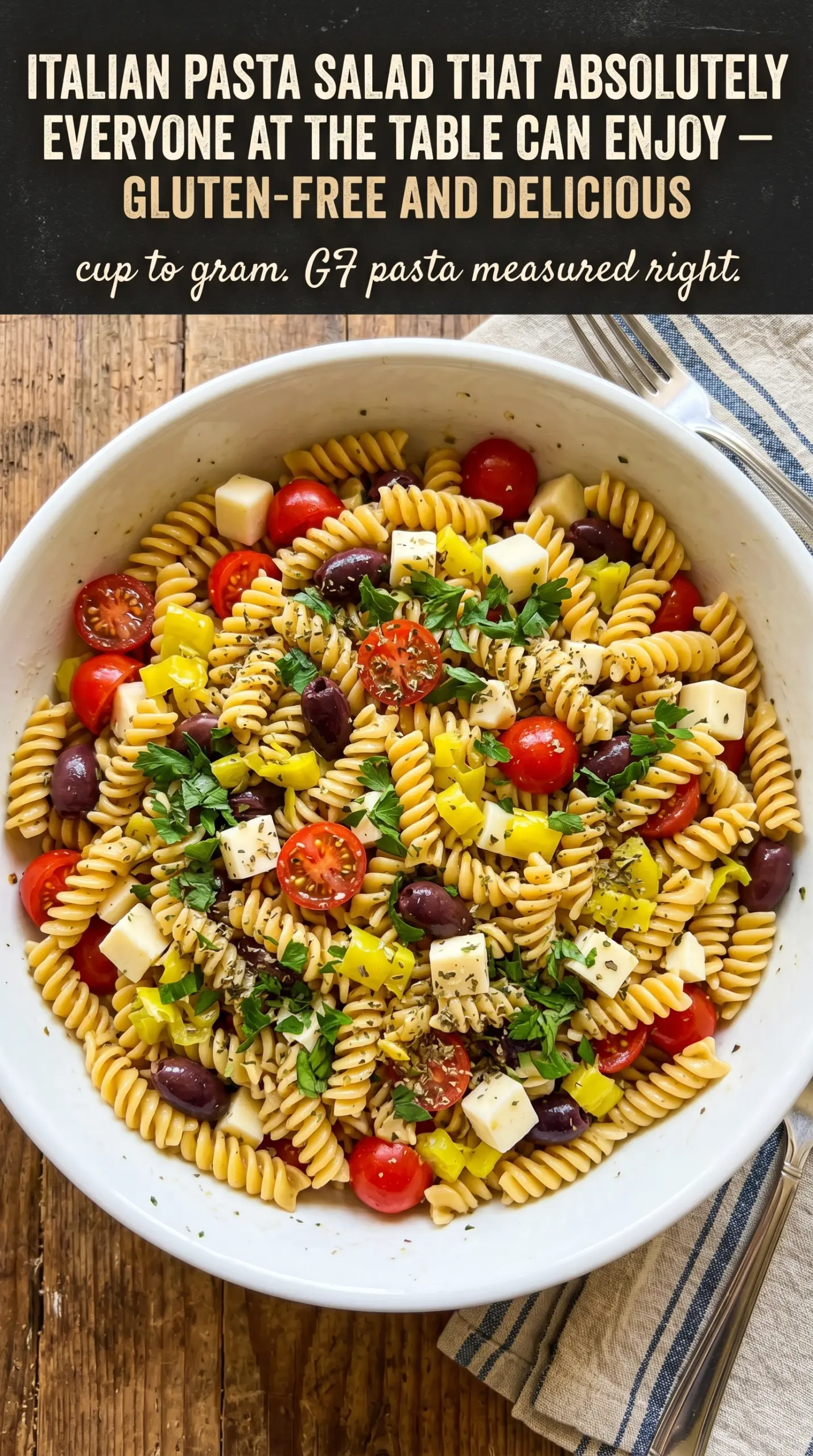
- Gluten-free rotini or penne — The shape with ridges or tube structure gives the dressing places to cling, which makes the salad taste more integrated instead of just tossed together. Gluten-free pasta softens faster than wheat pasta, so cooking time is critical—pull it a minute or two early so it still has chew after chilling.
- Salami, diced — This is your main salt and savory element. Deli-style salami, cut into cubes, stays firm and flavorful in the cold dressing. Pre-cubed salami from the deli counter can work, but freshly cubed has a brighter taste and holds its texture better.
- Low-moisture mozzarella — Fresh mozzarella releases water and can turn the salad sloppy after chilling. Low-moisture is the move here because it adds creamy texture without making the dressing thin. The cubes stay distinct instead of melting and disappearing.
- Cherry tomatoes, quartered — These bring brightness and a little acid that echoes the dressing. Cutting them in quarters instead of halves keeps them from tasting too loud or overwhelming the other flavors.
- Cucumber, diced — Fresh cucumber adds crunch and helps keep the salad from feeling heavy. Dice it small enough that you get a little piece in every spoonful, but not so small that it disappears into the dressing.
- Kalamata olives — These bring a salty, briny depth and a little richness. Their flavor is strong, so a generous handful is all you need. Don’t skip them—they’re what make the salad taste Mediterranean instead of generic.
- Red onion, minced — Just a small amount adds sharpness and helps wake up the dressing. Too much overpowers; too little and the salad tastes one-dimensional. Mince it fine so it distributes throughout instead of lingering as onion chunks.
- Italian dressing — A good bottled Italian dressing works better here than homemade most of the time, because it’s got the right balance of acid and oil to stay lively after chilling. Homemade tends to separate or taste flat once cold. Check the ingredients list and pick one without added sugar if possible.
- Parmesan cheese, freshly grated — The salty finish and umami depth comes from Parmesan. Freshly grated melts into the dressing and coats the pasta; pre-grated shelf-stable stuff stays grainy and doesn’t integrate the same way.
Building the Salad So Every Bite Stays Bright
Cooking the Pasta Past Just-Tender
Cook the pasta according to the package, but start checking it a minute or two before the lowest time listed. Gluten-free pasta can go from pleasantly chewy to soft in a hurry, and for a cold salad you want to stop on the firmer side. Drain it well, then rinse until the noodles are cool to the touch so the residual heat doesn’t keep working against you.
Mixing the Hearty Ingredients First
Combine the cooled pasta with the salami, mozzarella, tomatoes, cucumber, olives, and red onion in a large bowl before adding the dressing. That gives you a chance to see the balance of the salad and adjust the amount of vegetables if your pasta shape is smaller or larger than expected. If the bowl looks overloaded before the dressing goes in, it’s a sign you need a bigger bowl, not less dressing.
Letting the Dressing Sink In
Add the Italian dressing, Parmesan, and seasoning, then toss until everything looks evenly coated and glossy. The first toss never tells the full story, because gluten-free pasta drinks in some of that dressing as it sits. Chill it for at least 2 hours, then toss again right before serving; if it seems dry, add a splash more dressing instead of stirring in water, which only dulls the flavor.
How to Adapt This Salad for Different Tables and Tastes
Dairy-Free Version
Skip the mozzarella and Parmesan, then add a few extra olives or a handful of chopped roasted red peppers for more savory depth. The salad will taste a little sharper and less creamy, but the dressing and salami still carry the whole bowl.
Vegetarian Version
Leave out the salami and add chickpeas or chopped marinated artichokes for more substance. You’ll lose the cured-meat saltiness, so taste the salad after chilling and add another pinch of salt or a little extra Parmesan if you’re keeping it vegetarian but not dairy-free.
Gluten-Free Beyond the Pasta
Use a dressing and salami that are both labeled gluten-free, since hidden gluten can show up in either one. This doesn’t change the texture of the salad, but it matters if you’re cooking for someone with celiac disease or a serious sensitivity.
Making It Ahead for a Crowd
If you’re serving this later in the day, hold back a few tablespoons of dressing and stir them in right before serving. Gluten-free pasta tends to absorb dressing faster than wheat pasta, so this keeps the salad looking fresh instead of dry on the edges.
Storage and Reheating
- Refrigerator: Keeps well for 3 to 4 days. The pasta will absorb some dressing as it sits, so expect the salad to get a little tighter after the first day.
- Freezer: Don’t freeze it. The pasta turns soft and the vegetables lose their crunch once thawed.
- Reheating: This salad is meant to be served cold. If it feels dry after chilling, stir in a small splash of Italian dressing and let it sit for 10 minutes before serving instead of warming it.
Questions I Get Asked About This Recipe
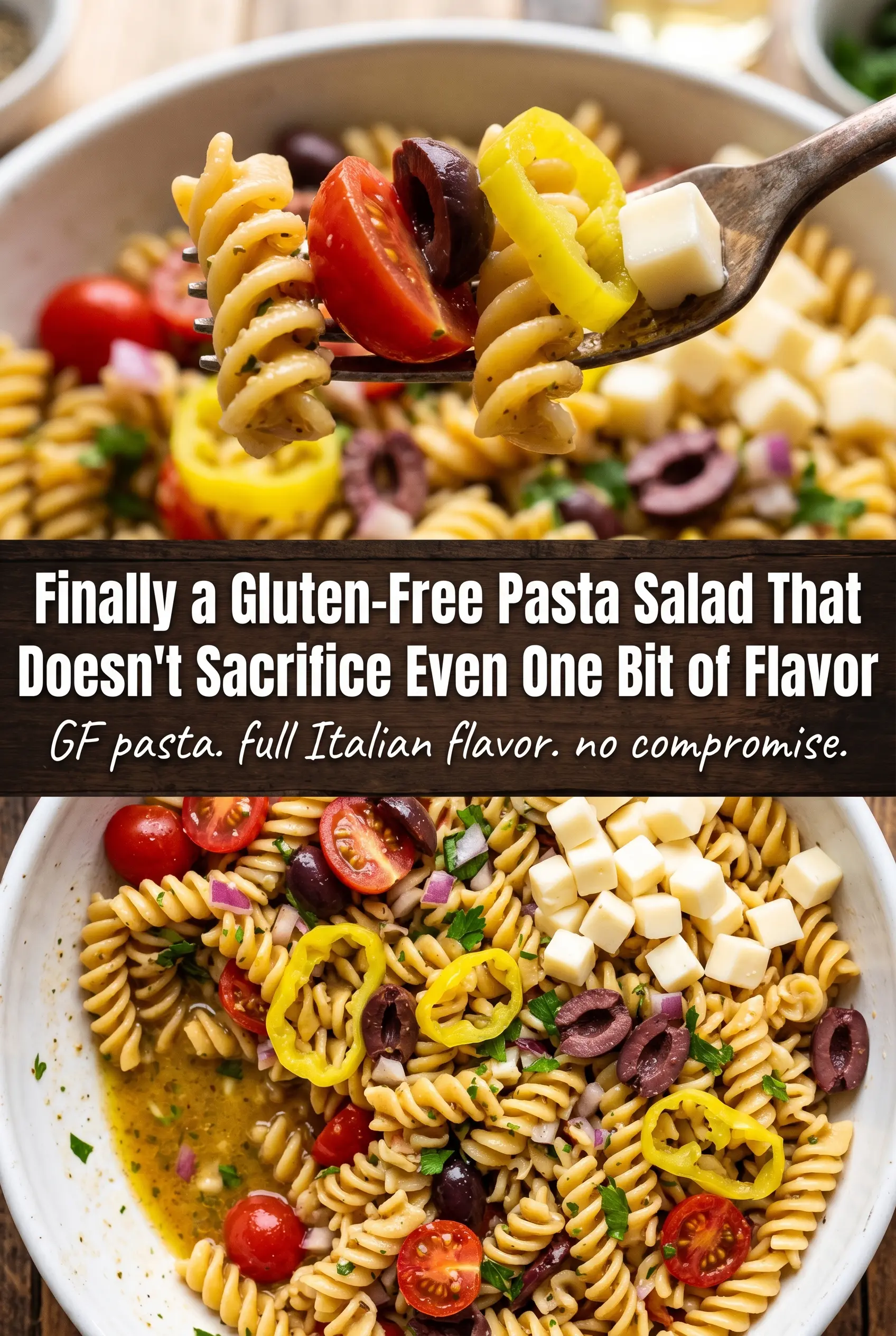
Gluten-free Italian Pasta Salad
Ingredients
Equipment
Method
- Cook the gluten-free pasta according to package directions, drain it, and rinse with cold water to stop cooking. Spread it on a sheet pan so it cools faster and stays from sticking.
- Combine pasta, salami, mozzarella, cherry tomatoes, cucumber, black olives, and red onion in a large bowl.
- Add gluten-free Italian dressing, Parmesan cheese, and Italian seasoning, then toss to coat until the pasta looks evenly dressed.
- Season with salt and pepper to taste, tossing once more so the seasoning is distributed.
- Refrigerate the pasta salad for at least 2 hours before serving so the flavors meld and the vegetables stay crisp.
- Toss again right before serving and adjust dressing if needed so it tastes balanced throughout.