Pasta salad gets a lot better when it stops tasting like cold noodles with a few vegetables scattered through it. This bruschetta pasta salad has the punch of a good tomato topping, the richness of olive oil and mozzarella, and just enough balsamic to keep every bite bright. After an hour in the fridge, the pasta takes on the tomato juices and garlic, so the whole bowl tastes seasoned instead of assembled.
The trick is treating the tomato mixture like bruschetta first, not a last-minute stir-in. Letting the tomatoes, basil, garlic, oil, and vinegar sit together gives the salt time to pull out their juices and build a light dressing right in the bowl. Rinsing the pasta after cooking matters here too, since you want it cool and ready to absorb flavor instead of steaming the tomatoes or turning the cheese greasy.
Below, I’ve included the timing that matters most, the ingredient swaps that still keep the salad fresh, and the one storage detail that helps it taste as good on day two as it does at the table.
I let the tomato mix sit while the pasta cooled, and it made such a difference. The garlic mellowed out, the basil stayed fresh, and the salad had way more flavor after chilling than I expected.
Save this bruschetta pasta salad for the days when you want fresh tomato, basil, and garlic flavor without turning on the oven.
The Part That Keeps This Pasta Salad from Going Watery
The biggest mistake with bruschetta pasta salad is treating the tomatoes like a garnish instead of the base of the dressing. Tomatoes release juice fast, and that’s a good thing here as long as you give them time to do it before the pasta goes in. Once the tomatoes, basil, garlic, olive oil, balsamic, salt, and pepper sit together, the bowl turns glossy and spoonable instead of sitting in separate layers.
Rinsing the pasta is another detail that matters. Warm pasta keeps cooking and can dull the basil, while hot pasta tosses off steam that loosens the whole salad into a puddle. Cool noodles hold their shape, soak up the dressing better, and let the mozzarella stay clean and creamy instead of softening into the background.
What Each Ingredient Is Actually Doing In This Dish
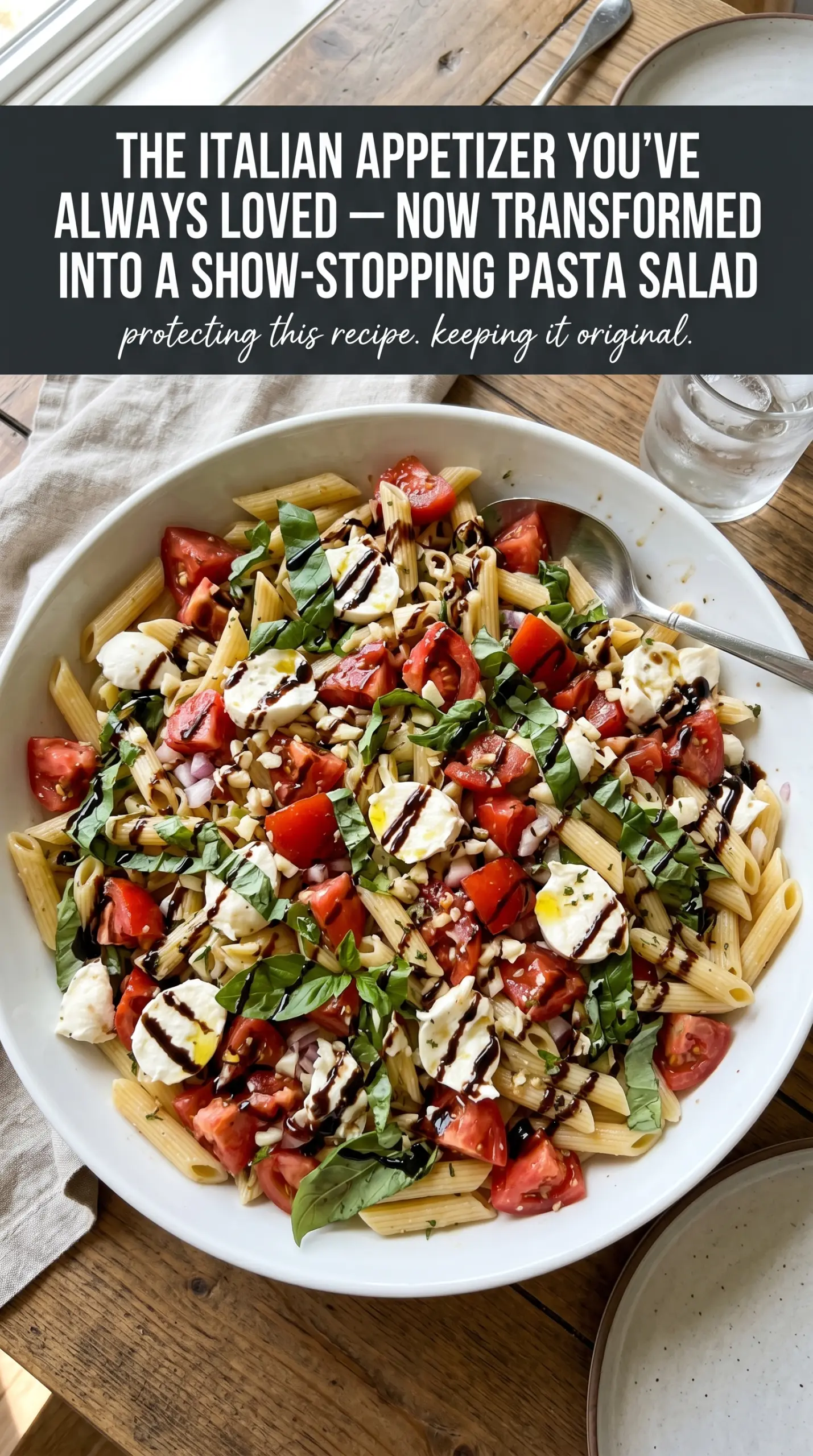
- Tomatoes — Use ripe, full-flavored tomatoes here. They’re the backbone of the dressing and the main source of moisture, so bland tomatoes will make the whole salad taste flat. If your tomatoes are extra juicy, scoop out some of the seeds before dicing so the salad doesn’t get soggy.
- Fresh basil — This is the ingredient that makes the salad read as bruschetta instead of ordinary pasta salad. Chop it just before mixing so it stays fragrant and doesn’t darken. Dried basil won’t give the same clean, sweet finish.
- Garlic — Raw garlic gives the sharp bite that bruschetta needs, but it mellows as it sits in the tomato mixture. Mince it finely so it disperses evenly; big pieces can overpower a bite. If you want a softer garlic note, grate it on a microplane instead.
- Balsamic vinegar — The vinegar pulls everything together and gives the tomatoes a little sweetness and depth. Use a decent balsamic if you can, since thin, harsh vinegar can make the salad taste sharp instead of balanced. Don’t add much more than the recipe calls for or it will take over the fresh tomato flavor.
- Fresh mozzarella — The soft cheese adds creaminess and makes the salad feel complete. Dice it into pieces that are close in size to the pasta so it stays distributed through the bowl. Pre-shredded mozzarella won’t give the same fresh, milky texture.
- Parmesan — Parmesan adds salt and a nutty edge that keeps the salad from tasting one-note. Grated Parmesan works best because it clings to the pasta and tomato juices. If you need a swap, a good Pecorino works, but it will be saltier and a little sharper.
Building the Salad So the Flavor Settles In
Marinate the Tomatoes First
Combine the diced tomatoes, basil, garlic, olive oil, balsamic vinegar, salt, and pepper before the pasta goes in. That short rest gives the tomatoes time to soften and release juice, which turns into the dressing for the salad. If you skip this step, the pasta gets coated on the outside but the flavor never gets into the bowl.
Cook the Pasta with Some Bite Left
Boil the pasta until just al dente, then drain and rinse it under cold water until it’s no longer warm. The pasta needs structure so it can sit in the dressing without turning soft after chilling. Overcooked pasta is the fastest route to a mushy salad, especially once it spends an hour in the fridge.
Fold Everything Together Gently
Add the cooled pasta and mozzarella to the tomato mixture and toss until the pieces are evenly coated. Use a large bowl so the tomatoes don’t get crushed while you mix. Finish with Parmesan, then chill the salad for at least an hour so the pasta can absorb the juices and the seasoning settles into place.
Three Ways to Make This Bruschetta Pasta Salad Work for Different Tables
Gluten-Free Version
Use your favorite gluten-free short pasta and cook it just to tender, not soft. Gluten-free noodles can tighten up after chilling, so toss the salad with a little extra olive oil before serving if the pasta absorbs more of the dressing than expected.
Dairy-Free Bruschetta Pasta Salad
Leave out the mozzarella and Parmesan, then add a handful of chopped olives or toasted pine nuts for body and salt. You’ll lose the creamy, milky contrast from the cheese, but the tomato-basil mixture still carries the salad if the seasoning is strong enough.
Make It Heartier
Add chopped grilled chicken, chickpeas, or salami if you want the salad to stand in as a main dish. Chickpeas keep the Italian feel and add a firmer bite, while salami brings salt and richness. Add the extra protein after the pasta chills so the texture stays clean.
Storage and Reheating
- Refrigerator: Store covered for up to 3 days. The tomatoes will keep releasing juice, so the salad gets a little looser over time.
- Freezer: Don’t freeze this one. The tomatoes and mozzarella turn watery and grainy after thawing, and the basil loses its fresh flavor.
- Reheating: This salad is meant to be served cold or cool. If it has been sitting in the fridge, let it stand at room temperature for 10 to 15 minutes and toss in a splash of olive oil before serving to wake the flavors back up.
Answers to the Questions Worth Asking
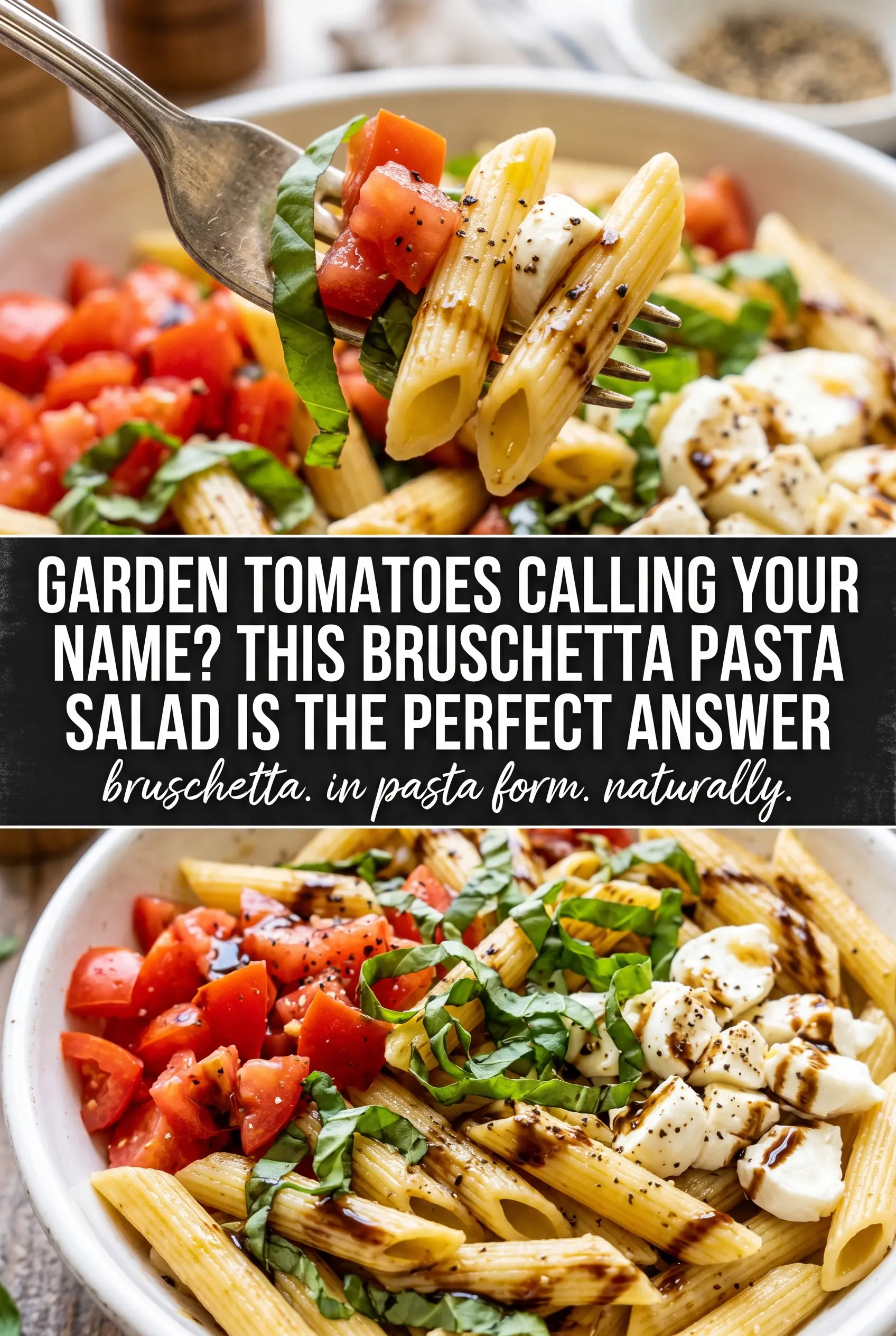
Bruschetta Pasta Salad
Ingredients
Equipment
Method
- Bring a Dutch oven of salted water to a boil, then cook penne or bowtie pasta according to package directions until al dente, about 10 minutes. Visual cue: pasta should be tender but still slightly firm in the center.
- Drain the pasta and rinse with cold water until chilled. Visual cue: steam stops immediately and pasta looks dry on the surface.
- Spread the rinsed pasta on a sheet pan in an even layer to help it cool quickly. Visual cue: pasta sits flat without clumping.
- Combine tomatoes, basil, garlic, olive oil, balsamic vinegar, salt, and pepper in a bowl and stir until the tomatoes look glossy. Visual cue: basil speckles the tomato mixture evenly.
- Let the tomato mixture marinate for 15 minutes at room temperature. Visual cue: juices thicken slightly and garlic aromas become more noticeable.
- Add the cooled pasta and diced fresh mozzarella to the tomato mixture and toss to combine thoroughly. Visual cue: pasta is evenly coated with red-speckled tomato and mozzarella stays in small cubes.
- Sprinkle Parmesan cheese over the salad and toss again until lightly coated. Visual cue: Parmesan forms a faintly speckled layer on the pasta.
- Refrigerate for at least 1 hour to allow flavors to develop. Visual cue: the salad looks firmer and more cohesive after chilling.
- Toss again before serving and adjust seasoning with additional salt and pepper if needed. Visual cue: tomatoes look freshly distributed and flavor tastes balanced after the second toss.