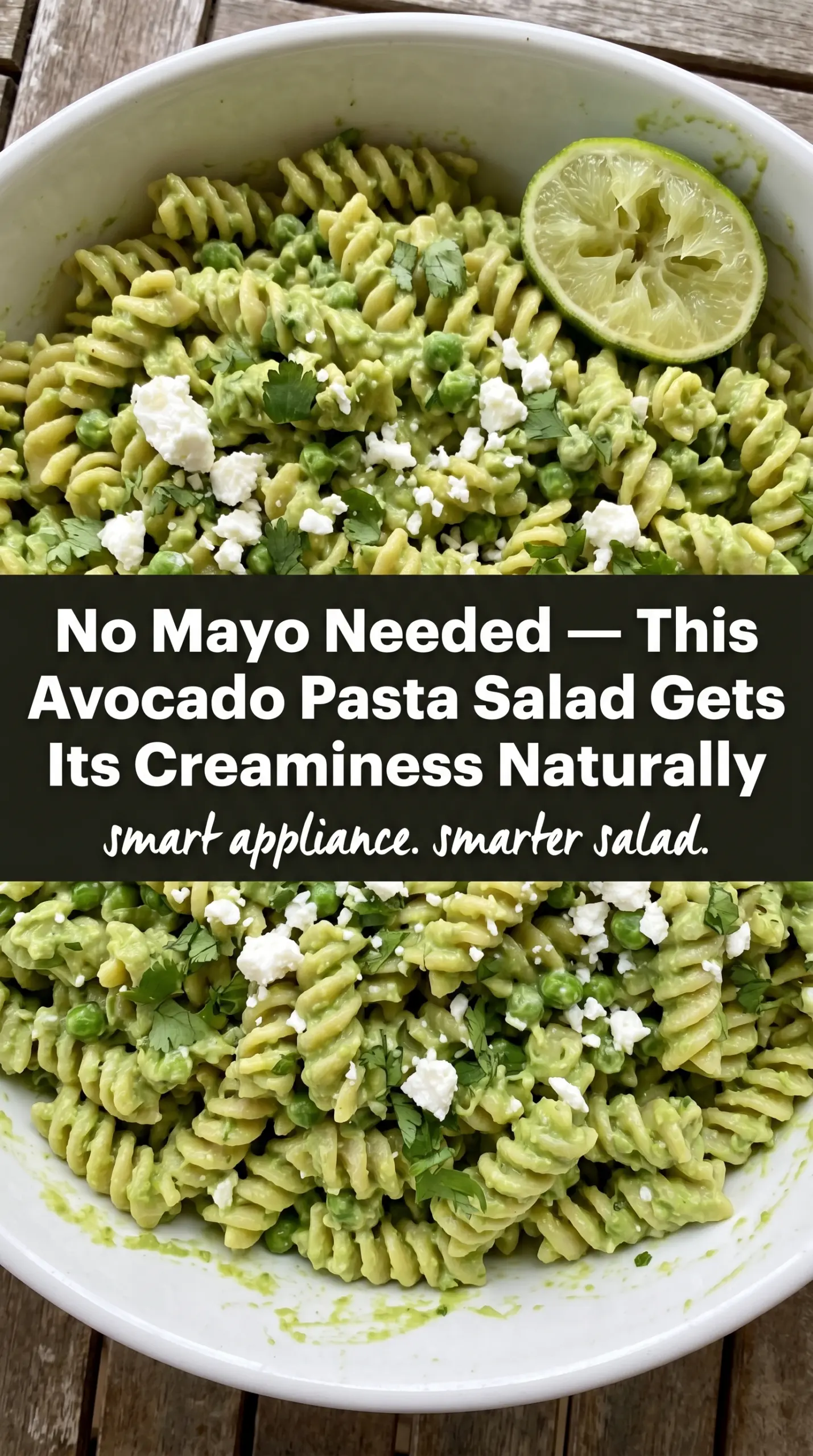
Pasta salad gets a lot better when the dressing clings to every ridge instead of pooling at the bottom of the bowl. This avocado pasta salad stays fresh, creamy, and bright, with enough lime and garlic to keep the avocado from tasting flat. The tomatoes and corn bring sweetness, the red onion gives it bite, and the cilantro keeps the whole bowl tasting clean instead of heavy.
The trick is blending the dressing until it’s fully smooth, then tossing it with pasta that’s been rinsed cold and drained well. Avocado thickens fast, but it also darkens fast, which is why the salad tastes best after a short chill, not an overnight rest. A little olive oil helps the dressing stay supple, and the lime juice does double duty by sharpening the flavor and slowing browning.
Below, you’ll find the small timing details that keep the pasta from soaking up too much dressing, plus a few smart swaps if you need to work around what’s in your kitchen.
The dressing turned out silky and coated the pasta instead of turning watery after chilling. I made it about an hour ahead, and the lime kept the avocado bright all the way to dinner.
Creamy avocado pasta salad stays bright and fresh when you chill it just long enough for the flavors to settle.
The Reason This Dressing Needs Lime, Not Just Avocado
Avocado gives you body, but it doesn’t give you enough acidity on its own. Without lime juice, the dressing tastes heavy and turns dull fast. The lime keeps the color greener for longer and gives the salad the lift it needs after it chills, which matters because cold pasta always mutes flavor a little.
The other common mistake is under-seasoning the dressing before it hits the bowl. Avocado needs more salt than people expect, and garlic tastes sharper when it’s blended raw, so start with a little less and taste after the pasta is coated. If the dressing seems thick, it should loosen when it meets the warm-cold pasta mix; if it still feels paste-like, add a teaspoon of water or extra lime juice.
What Each Ingredient Is Doing in the Bowl
- Avocados — Use ripe ones that yield gently when pressed. Under-ripe avocado turns grainy instead of silky, and that texture shows up immediately in the dressing.
- Lime juice — This is the sharp edge that keeps the salad from tasting flat. Bottled lime juice works in a pinch, but fresh juice gives the cleanest finish and helps the dressing taste brighter after chilling.
- Olive oil — It softens the avocado and keeps the dressing from setting up too firmly in the fridge. Use a decent oil here, since its flavor comes through in a raw dressing.
- Pasta — Rotini and penne hold onto the avocado coating best because the sauce gets caught in the curves and ridges. Long, slick pasta won’t grab the dressing nearly as well.
- Corn, tomatoes, and red onion — These aren’t just add-ins; they keep every bite from feeling one-note. The sweet corn and juicy tomatoes balance the rich avocado, while the onion gives the salad a little crunch and bite.
- Cilantro — Add it at the end so it stays fresh and fragrant. If you’re not a cilantro person, flat-leaf parsley gives you the same fresh finish without the herb flavor taking over.
Building the Salad So the Avocado Stays Creamy
Cook the Pasta Past the Al Dente Stage by a Hair
Cook the pasta until it’s just tender, not firm in the center. Pasta salad needs a little more softness than hot pasta because it firms up as it cools, and if you stop too early, the salad eats dry once the dressing goes on. Rinse it under cold water after draining so it stops cooking and doesn’t gum together in the bowl. Drain it well, because extra water is the fastest way to thin out the avocado dressing.
Blend the Dressing Until It Looks Like Green Cream
Put the avocados, lime juice, olive oil, garlic, salt, and pepper in a blender or food processor and blend until the mixture looks completely smooth. If you see little avocado flecks, keep going; those small bits make the dressing seem lumpy instead of creamy. Stop and scrape down the sides once if needed, especially if the avocados are less ripe. The dressing should look thick but pourable, like a loose hummus.
Toss Before the Pasta Has a Chance to Dry Out
Combine the pasta with the tomatoes, corn, and red onion, then add the dressing right away. Pasta that sits uncovered after rinsing gets tacky on the outside, and then the avocado won’t coat it evenly. Toss gently but thoroughly until every piece is glossy. If the bowl looks dry in spots, add a spoonful more lime juice or a drizzle of olive oil rather than over-blending the avocado.
Chill Briefly, Then Finish with Cilantro
Refrigerate the salad for up to an hour so the flavors settle and the dressing clings better. Longer than that, and the avocado can start to dull and brown around the edges even with lime in the mix. Stir once before serving, then scatter the cilantro on top so it stays bright. If the salad thickens too much in the fridge, loosen it with a small squeeze of lime and a splash of olive oil.
Three Ways to Work This Salad Into Your Week
Add Chicken for a Main-Dish Version
Fold in chopped grilled or rotisserie chicken after the dressing goes on. It turns the salad into a fuller meal without changing the flavor balance, and the avocado still coats the meat nicely. Keep the chicken cold or just barely warm so it doesn’t thin the dressing.
Make It Dairy-Free and Naturally Vegetarian
This recipe already fits both categories as written, which is part of why it works so well for cookouts and potlucks. You get creaminess from the avocado instead of mayo or sour cream, so the salad stays light but still feels rich. If you want to keep it fully plant-based, just use your favorite egg-free pasta.
Swap the Corn for Black Beans
Black beans make the salad more filling and add a softer, earthier bite. Drain and rinse them well so they don’t muddy the avocado dressing, and keep the rest of the mix-ins the same. The result tastes a little heartier and moves closer to a chilled pasta-meets-salad bowl.
Use Gluten-Free Pasta Without Changing the Method
A sturdy gluten-free rotini works best because it holds the dressing better than delicate shapes. Cook it just until tender and rinse it promptly, since gluten-free pasta can turn mushy faster than wheat pasta. Once it’s dressed, serve it the same day for the best texture.
Storage and Reheating
- Refrigerator: Best within 1 day. The avocado will start to darken and the pasta will absorb more dressing as it sits.
- Freezer: Don’t freeze this salad. Avocado turns grainy and watery after thawing, and the pasta loses its texture.
- Reheating: This salad is meant to be served cold. If it thickens in the fridge, stir in a little lime juice and olive oil rather than warming it, which will dull the avocado and break the fresh texture.
Answers to the Questions Worth Asking
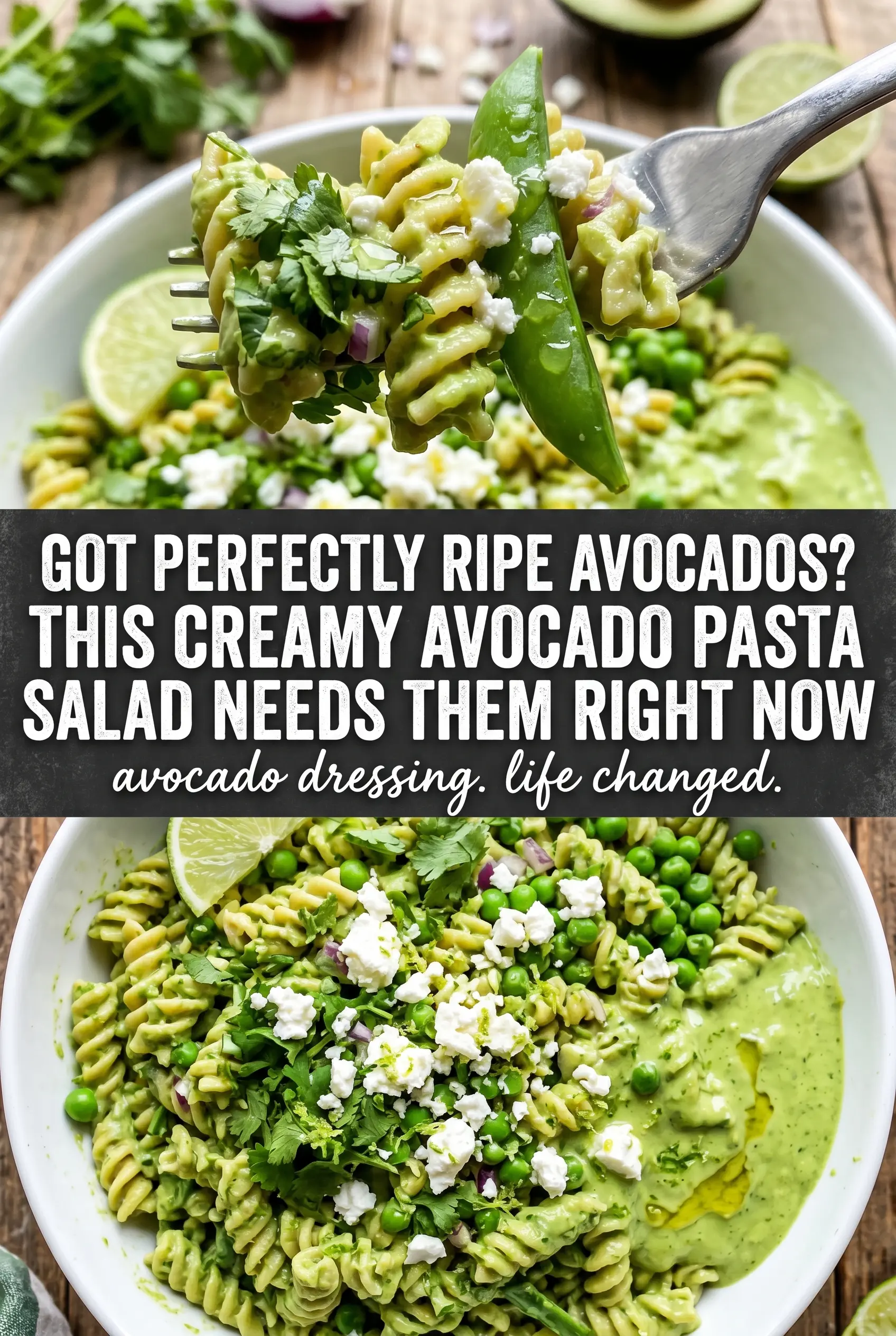
Avocado Pasta Salad
Ingredients
Equipment
Method
- Cook the penne or rotini pasta according to package directions until tender, then drain and rinse with cold water to stop the cooking. Keep it cool so the salad stays fresh and not sticky.
- Blend the ripe avocados, lime juice, olive oil, minced garlic, salt, and pepper until smooth and creamy. Stop once the dressing looks uniformly green and glossy.
- Combine the cooked pasta, cherry tomatoes, corn kernels, and red onion in a large bowl. Toss gently just to distribute the vegetables.
- Add the avocado dressing and toss to coat evenly so the pasta is lightly green throughout. Scrape the sides to include all the creamy dressing.
- Refrigerate the avocado pasta salad for up to 1 hour, then top with fresh cilantro before serving. If it’s stored longer, the avocado may brown.