Pasta salad gets a lot more interesting when it’s tossed with taco-seasoned beef, cheddar, crisp vegetables, and a creamy dressing that clings to every shell. This version eats like a full meal, with enough crunch, tang, and richness to keep it from feeling like a side dish dressed up for dinner.
The key is balancing temperature and texture. The pasta needs to be rinsed cold so it doesn’t keep cooking and turn gummy, and the beef needs to cool before it goes into the bowl or it will melt the cheese and wilt the vegetables. The ranch-and-salsa dressing brings the taco flavor without making the salad heavy, and the chill time gives everything a chance to settle together.
Below, I’ve included the little details that matter most: when to add the chips so they stay crunchy, how to keep the dressing from getting lost, and what changes well if you need to stretch it for a crowd or adjust it for what’s already in your kitchen.
The dressing coated everything evenly and the taco beef stayed flavorful even after chilling. I added the chips right before serving and they stayed crunchy, which made the whole bowl taste fresh.
Taco Pasta Salad with creamy ranch-salsa dressing and crunchy chips is perfect for make-ahead lunches or a potluck side that eats like dinner.
The Trick to Keeping Taco Pasta Salad From Going Flat
The mistake with taco pasta salad is treating it like a regular pasta salad and adding everything while it’s still warm. Warm pasta soaks up dressing fast, softens the cheese, and blurs the sharp little contrasts that make this dish worth making. Cooling the pasta and beef before they hit the bowl keeps the vegetables crisp and the dressing on the surface where it belongs.
The other thing that matters is timing the chips. They belong on top right before serving, not hours ahead. Once crushed chips sit in dressing, they lose their crunch and turn the whole salad pasty, which is exactly what you’re trying to avoid.
- Cold pasta — Rinsing under cold water stops the cooking and washes off some starch, which keeps the salad from turning sticky.
- Cooked and cooled beef — The beef brings the taco flavor, but it needs to cool first so it doesn’t melt the cheese or warm the dressing.
- Ranch and salsa — Ranch gives body; salsa brings the taco brightness. Together they coat the pasta better than salsa alone.
- Crushed tortilla chips — Add these at the end. They give the salad its best texture, and they’re the first thing to soften if you rush it.
What Each Ingredient Is Actually Doing in This Bowl
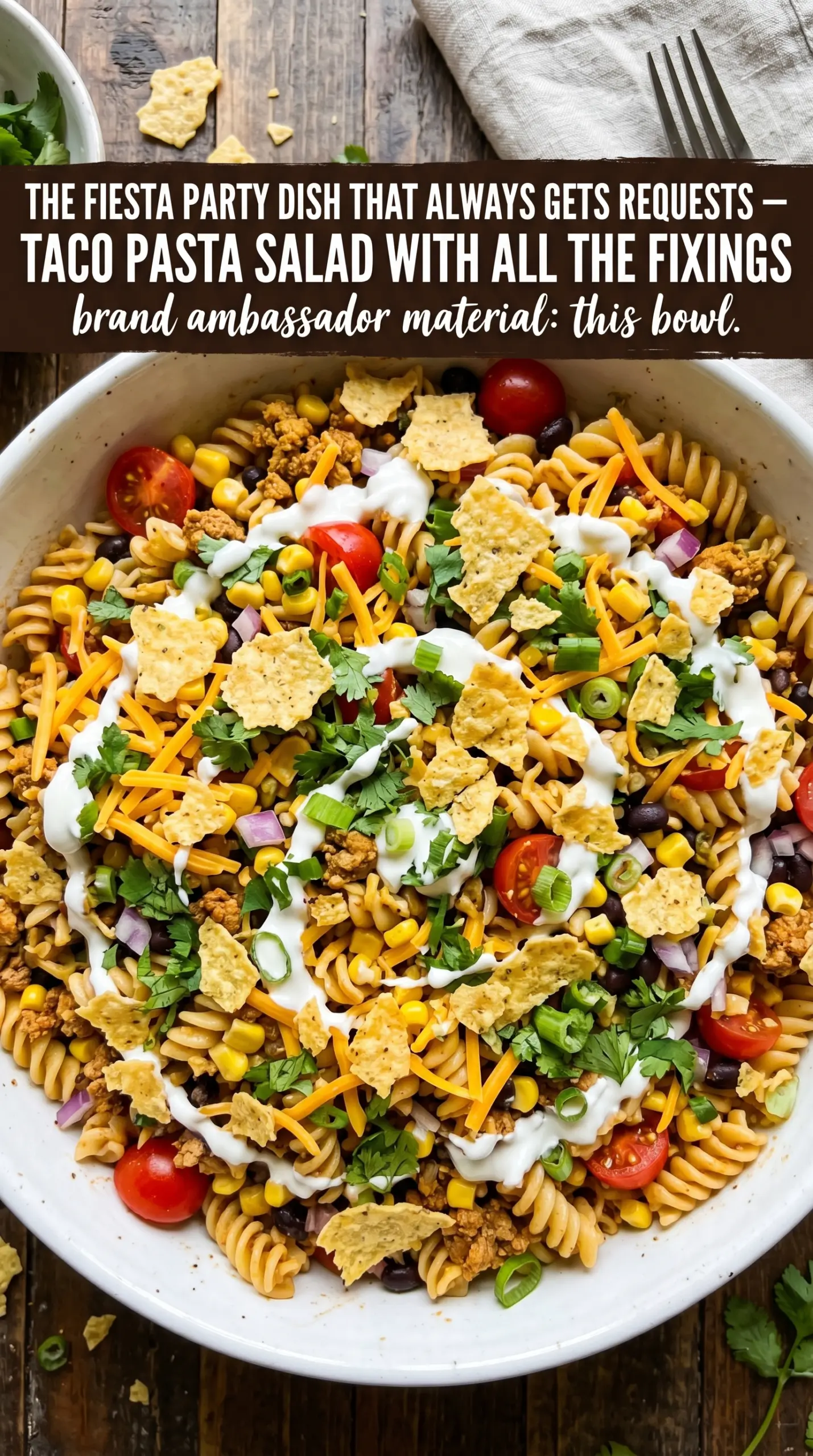
- Pasta shells or rotini — Both hold dressing well, but rotini catches more bits of beef and onion in its twists. Shells give a little scoop of everything in one bite. Use either, but cook it just to al dente so it stays pleasant after chilling.
- Ground beef — This is the main savory backbone. Lean beef is easiest because there’s less fat to drain off, but any ground beef works if you drain it well after browning. The seasoning packet does the heavy lifting here, so don’t underbrowns the meat before adding it.
- Ranch dressing and salsa — Ranch gives creaminess and salt; salsa adds acidity, tomato, and a little heat. A thicker salsa works better than a watery one because it won’t thin the whole bowl. If you want more kick, use a hotter salsa instead of adding extra dressing.
- Cheddar cheese — Sharp cheddar stands up to the taco seasoning better than mild cheddar. Pre-shredded works fine, though freshly shredded melts a little less into the salad and gives cleaner little bites.
- Corn, tomatoes, and red onion — These are the fresh breaks in the bowl. Corn adds sweetness, tomatoes bring juiciness, and red onion gives bite. Dice the onion finely so it doesn’t dominate every forkful.
How to Build the Salad So the Texture Stays Right
Cooking the Pasta to a Firm Bite
Boil the pasta in well-salted water until just al dente, then drain it and rinse it under cold water right away. You want the noodles cool and separate, not hot and clumped. If they sit steaming in the colander, they’ll keep softening and the salad turns heavy by the time it chills.
Seasoning the Beef the Way Taco Filling Needs
Brown the beef until you get some color on the bottom of the pan, then drain off the excess fat before adding the taco seasoning. That browning step matters because it gives the meat more depth than gray, steamed crumbles ever will. Let it cool before mixing; if it’s warm, it starts working against the cold salad texture.
Making the Dressing Coat Instead of Pool
Stir the ranch and salsa together before it ever hits the bowl. That gives you a dressing that spreads evenly instead of pockets of straight ranch or straight salsa at the bottom. If the salsa is especially loose, start with a little less and add more after tossing so the pasta doesn’t drown.
Chilling and Finishing Without Losing Crunch
Once everything is combined, chill the salad for at least 2 hours so the flavors settle in. Just before serving, fold in the crushed tortilla chips and top with lettuce, sour cream, and cilantro. If you add the chips too early, they’ll disappear into the dressing and the whole bowl loses its best contrast.
Three Ways to Adjust Taco Pasta Salad Without Ruining It
Make It Lighter and Still Keep the Taco Flavor
Use ground turkey instead of beef and choose a lighter ranch if that’s what you keep on hand. You’ll lose a little richness, so add a touch more salsa and a pinch of extra taco seasoning to bring the flavor back up. The texture stays the same, but the bowl feels less heavy.
How to Make It Gluten-Free
Swap in a gluten-free pasta that holds its shape after chilling, and check that your taco seasoning is certified gluten-free. Corn-based tortilla chips usually work well too, but some brands add hidden wheat starch, so read the bag before serving. The salad still tastes the same, but the pasta needs to stay just firm enough to avoid crumbling.
Turn It Into a Meatless Main
Skip the beef and add black beans, extra corn, or diced bell pepper for more body. You’ll lose the savory depth from the browned meat, so add a little smoked paprika or an extra spoonful of salsa to fill that gap. It becomes a fresh, vegetarian taco pasta salad that still eats like a full lunch.
Storage and Reheating
- Refrigerator: Keeps for 3 days in a sealed container. The chips will soften, so store them separately if you want any crunch left.
- Freezer: This one doesn’t freeze well. The pasta turns soft and the creamy dressing separates after thawing.
- Reheating: Don’t reheat the full salad. If you want to serve it warm, warm the beef separately and mix it with freshly cooked pasta, then add the cold toppings after the heat is off.
Answers to the Questions Worth Asking
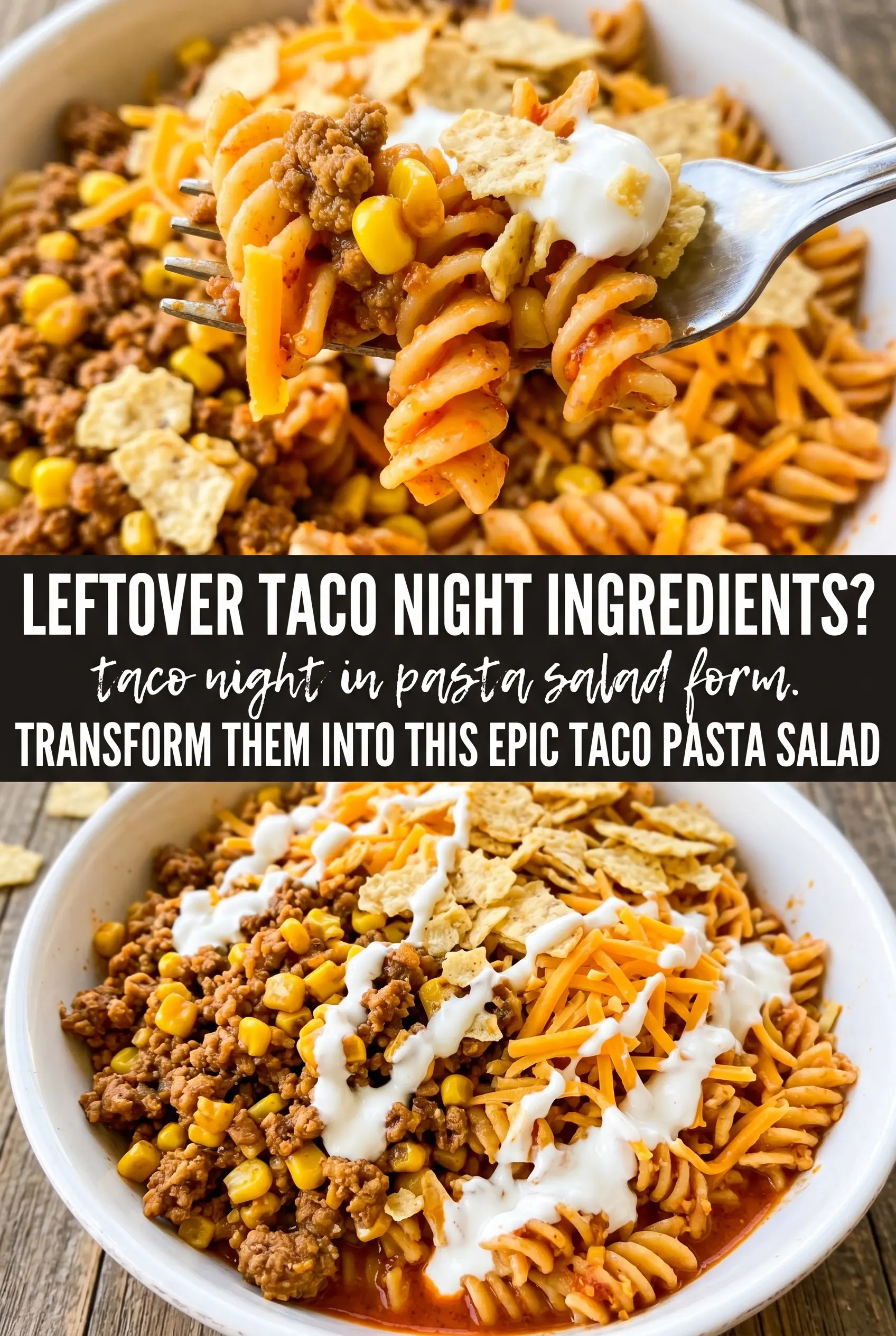
Taco Pasta Salad
Ingredients
Equipment
Method
- Cook the pasta according to package directions until al dente, then drain and rinse with cold water to stop the cooking.
- Brown the ground beef in a Dutch oven over medium-high heat, then stir in taco seasoning according to package directions and cool completely before mixing.
- Mix ranch dressing with salsa until smooth and evenly combined.
- In a large bowl, combine pasta, ground beef, cheddar cheese, cherry tomatoes, corn, and red onion.
- Pour the ranch-salsa dressing over the salad and toss to coat so every bite looks glossy.
- Refrigerate the salad for at least 2 hours so the pasta absorbs the dressing.
- Before serving, top with crushed tortilla chips, lettuce, sour cream, and cilantro for fresh crunch and color.