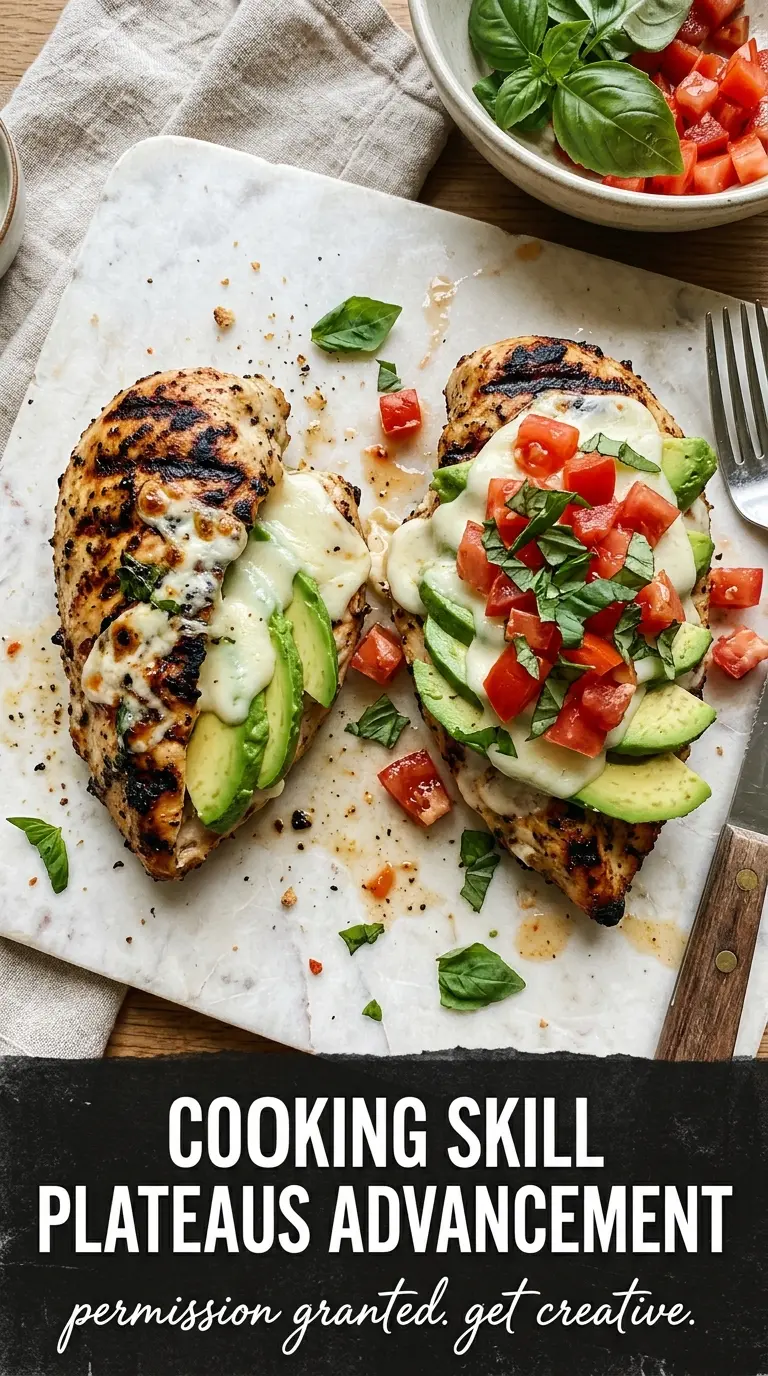
Grilled California avocado chicken lands on the plate with the kind of contrast that keeps people coming back: smoky char on the outside, juicy chicken in the middle, cool avocado on top, and just enough melted mozzarella to tie everything together. The balsamic glaze cuts through the richness so each bite stays bright instead of heavy.
The trick is treating the chicken and topping like two separate jobs. The chicken needs a short marinade for flavor and moisture, then a hot grill to build color before the cheese goes on. The avocado and tomato are added at the end so they stay fresh and don’t turn mushy under the lid.
Below you’ll find the exact timing that keeps the chicken juicy, plus a few smart swaps if you want to change up the cheese or make it work on a weeknight without losing that California-style finish.
The chicken stayed juicy and the mozzarella melted just enough under the lid. I loved that the avocado went on at the end and didn’t turn warm and mushy.
Save this grilled California avocado chicken for nights when you want smoky chicken, fresh avocado, and melted mozzarella in one plate.
The Marinade Is Short on Purpose, and That’s What Keeps the Chicken Juicy
Thirty minutes is enough here because the marinade is doing two jobs at once: seasoning the surface and helping the chicken hold onto moisture on the grill. Any longer and the acid-free oil-based marinade doesn’t add much more flavor, but the chicken can start to feel overly salty if you were heavy-handed with the seasoning.
The other thing that matters is heat. A medium-high grill gives you those browned grill marks and a little char before the breast meat dries out. If the chicken sticks, it usually means the grill wasn’t hot enough when the meat went down or the grate wasn’t clean and lightly oiled.
- Olive oil — Carries the garlic and herbs across the chicken and helps the surface brown instead of drying out. Use a decent olive oil here; you’ll taste it. There’s no good substitute that gives the same silky coating, though avocado oil works if that’s what you have.
- Italian seasoning — Gives the chicken its herbal backbone without making you measure five separate spices. If yours is old and dusty, replace it; stale dried herbs taste flat on a simple grilled dish like this.
- Mozzarella — The mild melt matters because it softens over the chicken without overpowering the avocado and tomato. Pre-shredded works, but freshly shredded melts smoother. Skip fresh mozzarella if you want a stretchier top; it releases more moisture and can slide around.
- Balsamic glaze — This is the finishing touch that keeps the whole plate from tasting one-note. A bottled glaze is fine, or you can simmer balsamic vinegar until syrupy if you want more control over sweetness.
What Each Ingredient Is Actually Doing in Short Marinade
- Acid in the marinade (vinegar, lemon, yogurt) — The acid tenderizes the chicken without over-marinating. A short soak is enough to penetrate the surface.
- Oil to carry flavor — Oil coats the chicken and helps the marinade adhere. It also protects the meat from drying out on high heat.
- Salt to season and help retain moisture — Salt draws the moisture deeper into the meat. A short time in salt doesn’t dry out the chicken.
- Spices that are flavorful at low doses — Strong spices work in short marinades because they penetrate quickly. Subtle seasonings need longer times to develop.
- Minimal time (30 minutes to 2 hours) — Short marinades flavor the surface without over-tenderizing. Over-marinating breaks down the muscle fibers and makes the chicken mushy.
- Cold storage during marinating — The chicken stays fresher and the marinade penetrates better when cold. Room temperature marinades are less effective and less safe.
- Pat dry before cooking — Excess marinade on the surface burns and makes the chicken tough. Pat the chicken dry so it can develop a good crust.
- High heat for quick cooking — Quick cooking over high heat keeps the chicken juicy inside while developing crust outside. Slow cooking dries it out.
Grill the Chicken First, Then Add the Fresh Toppings at the Very End
Season and Rest the Chicken
Coat the chicken breasts with olive oil, garlic, Italian seasoning, salt, and pepper, then let them sit for 30 minutes. That short rest gives the seasoning time to settle into the surface and takes the chill off the meat so it cooks more evenly. If your breasts are thick on one end, pound them gently to an even thickness before marinating so one side doesn’t dry out while the other finishes.
Build Color on the Grill
Cook over medium-high heat for 6 to 7 minutes per side, depending on thickness. You want the chicken to release from the grates with a little nudge; if you have to pry it up, it’s not ready to turn yet. Pull it before it turns dry and chalky in the center, because the cheese and lid time at the end will finish the job.
Finish Under the Lid
Top each breast with tomato slices, avocado slices, and mozzarella once the chicken is cooked through. Close the grill lid for about 2 minutes, just until the cheese softens and starts to melt. Don’t leave it long enough for the avocado to warm through too much or the tomatoes to slump into the chicken; you want them fresh, not cooked down.
Drizzle and Serve Right Away
Finish with balsamic glaze while the cheese is still soft so it settles into the toppings instead of sitting on top in streaks. Serve immediately for the best texture contrast. This dish loses its best quality if it sits too long, because the avocado warms and the tomato juices start to run.
How to Change the Toppings Without Losing the California Feel
Dairy-Free Version
Leave off the mozzarella and add an extra drizzle of balsamic glaze at the end, or use a good dairy-free melting cheese if you know one that behaves well on a grill. Without the cheese, the dish tastes lighter and the avocado stands out more, so don’t skip the glaze.
Low-Carb or Keto-Friendly
This recipe already fits low-carb eating as written. Keep an eye on the balsamic glaze, since some bottled versions are sweeter than others; use just enough to accent the chicken instead of soaking the toppings.
Chicken Thigh Swap
Boneless, skinless thighs work well if you want a richer, juicier result. They usually need a few extra minutes on the grill, and they’re more forgiving than breasts, but they won’t give you the same clean slice when serving.
Make It Ahead for Easier Dinner
Mix the marinade and coat the chicken earlier in the day, then keep it covered in the fridge until grilling time. Slice the avocado right before serving, because it browns fast and loses that fresh, clean finish that makes this dish work.
Storage and Reheating
- Refrigerator: Store leftover chicken for up to 3 days, but the avocado will soften and darken. Keep the toppings separate if you can.
- Freezer: Freeze the grilled chicken without the avocado, tomato, or glaze for up to 2 months. The toppings don’t freeze well and turn watery after thawing.
- Reheating: Warm the chicken gently in a covered skillet over low heat or in the oven at 300°F until just hot. High heat dries out the breast meat fast, and that’s the easiest way to lose the texture you worked for.
Answers to the Questions Worth Asking
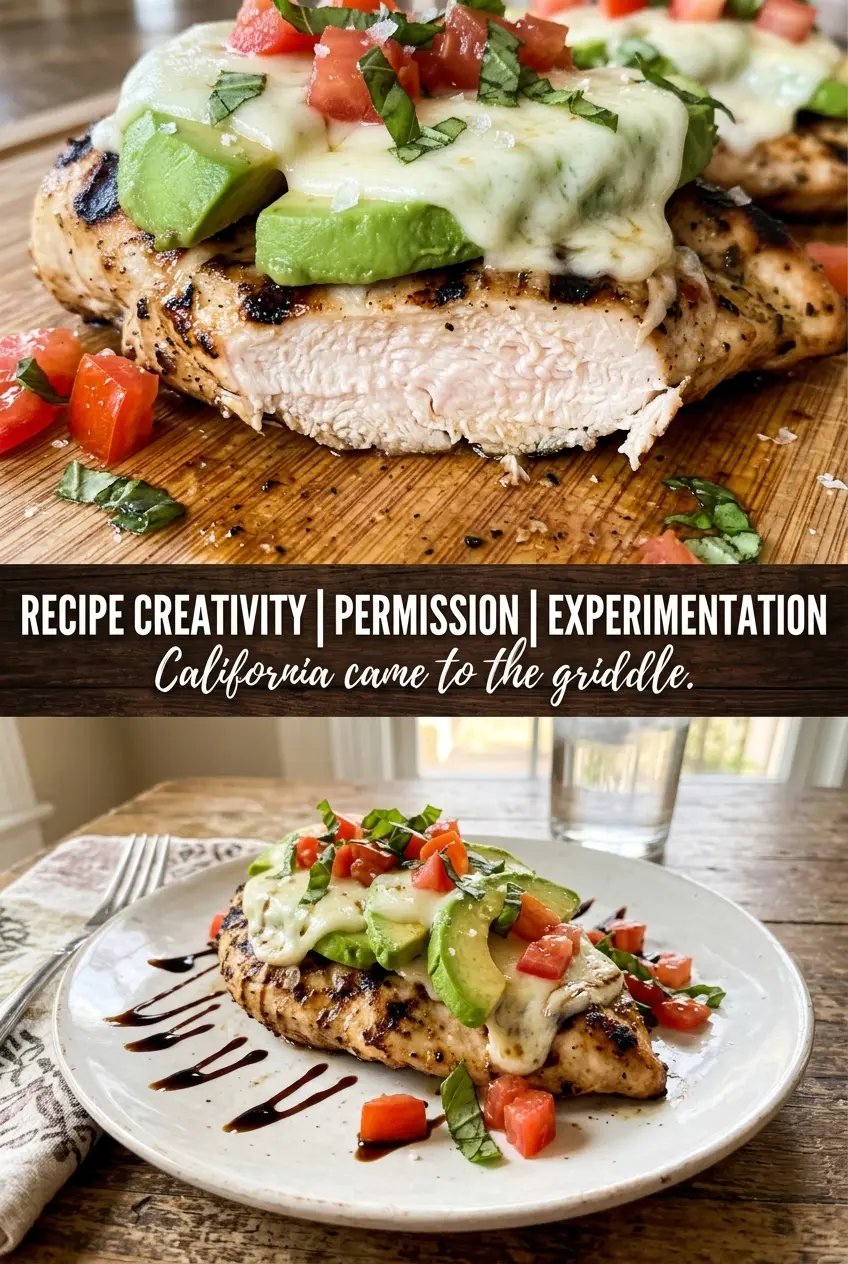
Grilled California Avocado Chicken
Ingredients
Equipment
Method
- Combine olive oil, minced garlic, Italian seasoning, salt, and pepper, then rub over the chicken breasts. Marinate for 30 minutes to flavor the meat.
- Preheat the grill over medium-high heat, then place chicken on the grates. Grill for 6-7 minutes until you see strong grill marks and the surface looks set.
- Flip the chicken and continue grilling over medium-high heat. Grill for another 6-7 minutes until cooked through.
- Top each breast with tomato slices, then add avocado slices and shredded mozzarella. The toppings should cover the surface for even melting.
- Close the grill lid and cook for 2 minutes. Wait until the mozzarella is melted and glossy.
- Drizzle with balsamic glaze and serve immediately. Add a little extra glaze right before eating for the best tangy finish.