Charred romaine changes Caesar salad from crisp and familiar into something with a little more edge. The grill gives the lettuce a smoky, lightly bitter bite that plays against the creamy dressing, and the cold crunch at the center keeps each forkful balanced. It still eats like a salad, but it feels much more intentional than the usual bowl tossed together at the last minute.
The key is high heat and short contact time. Romaine needs just enough time on the grill to pick up color and soften at the edges without collapsing, and the cut side gets the best char because it sits flat against the grates. The dressing stays classic and punchy with Parmesan, lemon, garlic, and Dijon, which gives the smoky lettuce something rich to cling to instead of sliding off.
Below, I’ve included the small details that make this work reliably, plus a few smart ways to adapt it depending on what you have on hand.
The romaine charred fast and stayed crisp in the middle, and the dressing was tangy enough to stand up to the grill flavor. I served it with grilled chicken and there wasn’t a leaf left.
Like this grilled Caesar salad? Save it to Pinterest for a smoky side with crisp romaine, creamy dressing, and fast grill marks.
The Trick Is Grilling the Lettuce, Not Cooking It Through
Grilled Caesar salad works because the romaine gets exposed to heat for just long enough to pick up smoke and char without losing its backbone. The biggest mistake is treating it like a vegetable that needs to be softened. It doesn’t. The center should stay cool and crisp while the outer leaves pick up a little blistering on the cut side.
That short grill time matters even more than the dressing here. If the lettuce sits too long, it starts to wilt under its own steam and the salad turns limp before it ever hits the plate. Medium-high heat and a clean, well-oiled grate give you the quick sear you want, and plating it immediately keeps the texture where it should be.
What Each Ingredient Is Actually Doing in This Salad
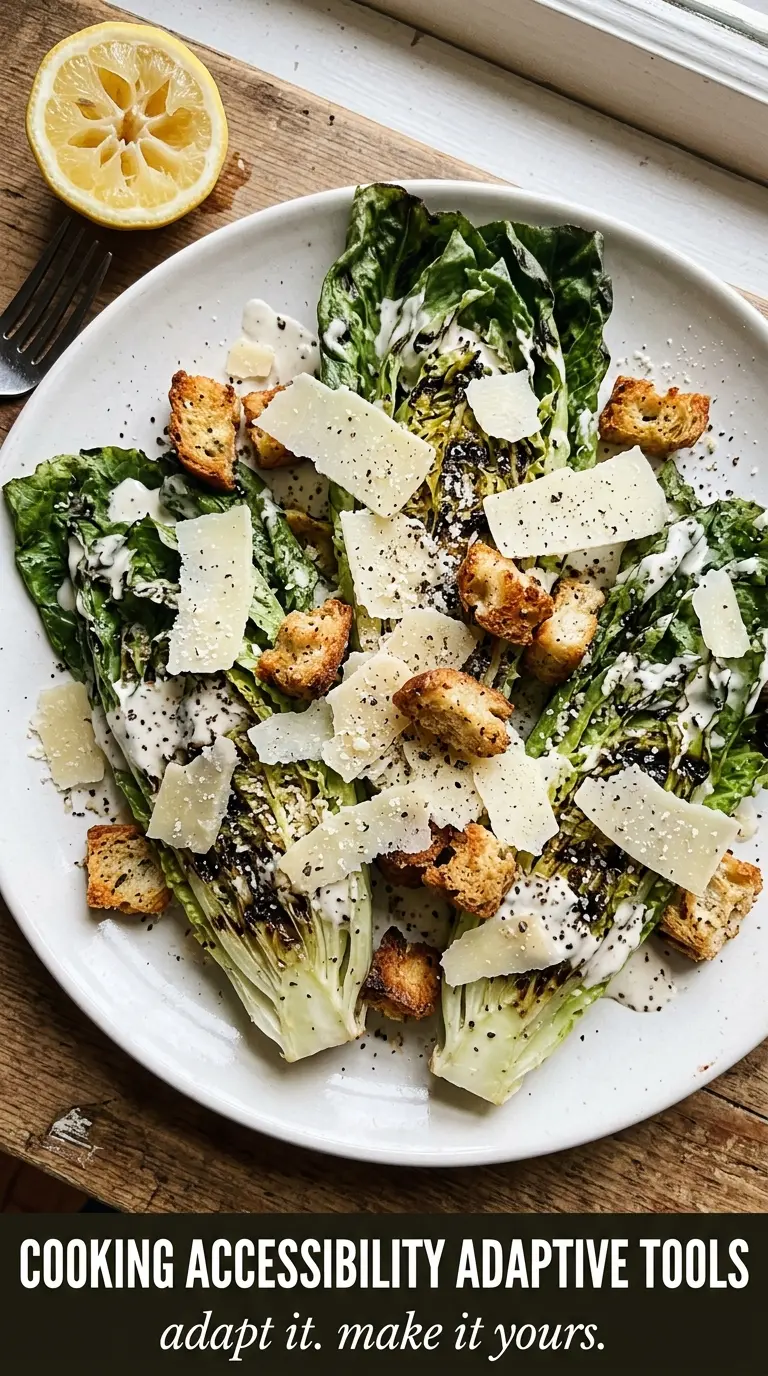
- Romaine hearts — These are sturdy enough to hold up to direct heat and still stay crisp in the middle. Full heads can work in a pinch, but hearts give you the best shape and the most reliable char.
- Olive oil — This helps the lettuce make contact with the grill instead of sticking and tearing. A light coating is enough; too much oil just makes the leaves greasy instead of blistered.
- Mayonnaise — It gives the dressing its body and cling, which matters once the romaine is warm from the grill. Sour cream or yogurt can thin it out and pull the dressing away from the leaves.
- Parmesan — Use the real grated cheese here if you can. It adds salt, umami, and a little thickness to the dressing, and the shaved Parmesan on top brings a different texture that keeps the salad from feeling flat.
- Lemon juice and Dijon — These keep the dressing sharp enough to cut through the richness of the mayo and cheese. If the dressing tastes heavy, it usually needs more lemon before it needs more salt.
- Worcestershire sauce — This gives the Caesar its savory backbone. If you skip it, the dressing still works, but it loses the depth that makes Caesar taste like Caesar.
- Croutons — Add them at the end so they stay crisp against the warm lettuce. If you toss them into the dressing too early, they soften fast and you lose the contrast that makes the salad worth serving.
The 5 Minutes That Build the Whole Salad
Brushing and Seasoning the Romaine
Pat the romaine dry before you oil it. Wet leaves steam, and steam fights the char you’re trying to build. Brush the cut sides lightly with olive oil and season with salt and pepper right before grilling so the salt doesn’t draw out too much moisture while the lettuce sits.
Getting the Grill Marks Fast
Lay the romaine cut-side down over medium-high heat and leave it alone for 2 to 3 minutes. You want visible dark grill marks and just a little wilting at the edges, not a collapse. If the leaves start sticking, the grate wasn’t hot enough or the lettuce was moved too soon.
Whisking a Caesar That Clings
Mix the dressing until it looks glossy and thick enough to coat the back of a spoon. If it tastes flat, it usually needs more lemon, not more salt. The garlic should be present but not sharp enough to bite back; let the dressing sit for a minute if the raw garlic seems aggressive.
Plating Before the Heat Works Against You
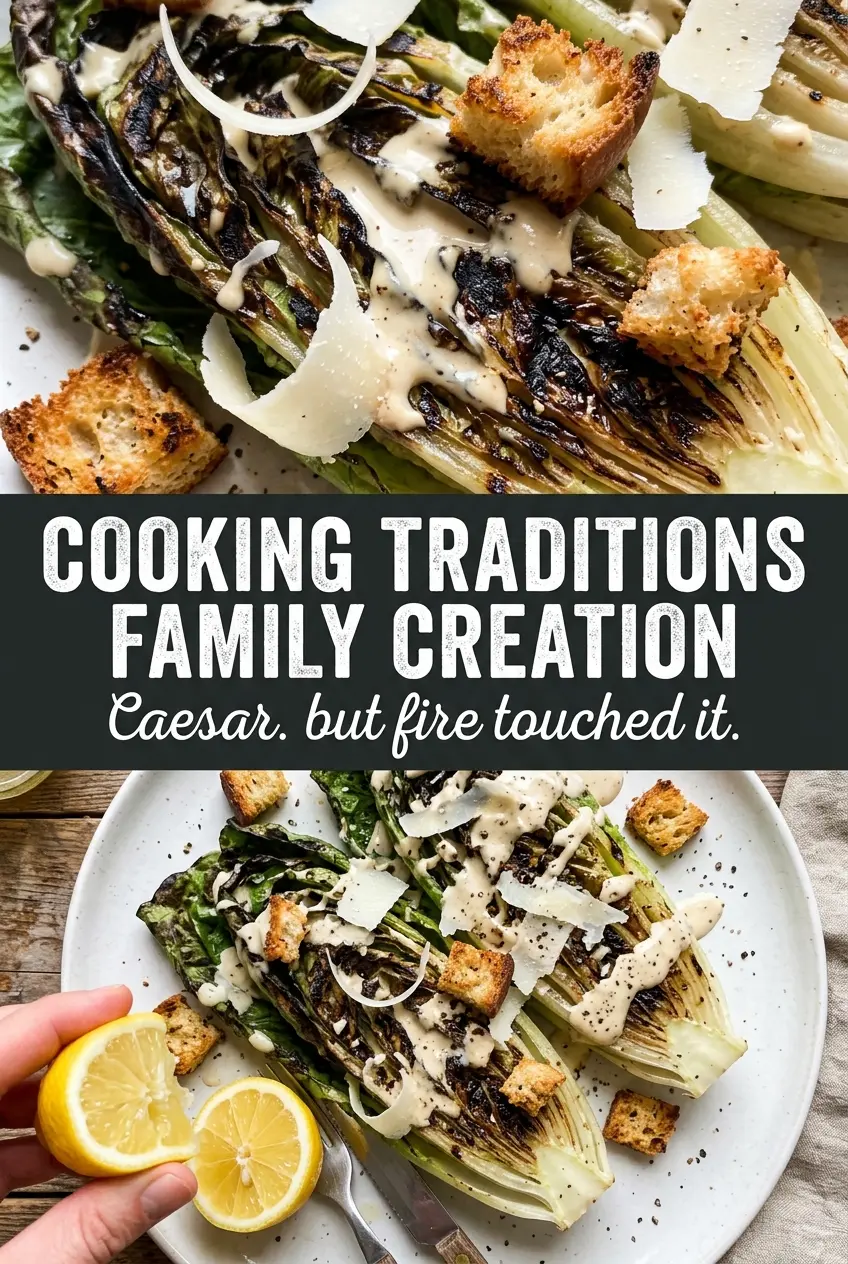
Move the romaine to plates as soon as it comes off the grill. Spoon or drizzle the dressing over the warm cut sides, then finish with croutons, shaved Parmesan, and a squeeze of lemon. Waiting too long makes the lettuce soft and the dressing sink instead of sitting on top where it belongs.
How to Adjust This Grilled Caesar Salad Without Losing the Point
Make It a Main Dish
Top each grilled romaine half with sliced grilled chicken, shrimp, or salmon. The smoky lettuce can handle a richer protein, and the salad turns into a full meal without needing extra sides. Keep the dressing amount the same or add a little more lemon to balance the added richness.
Dairy-Free Caesar
Use a dairy-free mayonnaise and swap the Parmesan for a dairy-free Parmesan-style substitute or a spoonful of nutritional yeast. You’ll lose some of the sharp aged-cheese flavor, but the dressing still gets that creamy, savory bite that makes the salad work.
Gluten-Free Version
The salad itself is already close to gluten-free; the part that needs attention is the croutons and Worcestershire sauce. Use gluten-free croutons and check the label on the Worcestershire, since some brands include wheat. That keeps the texture and the Caesar flavor intact.
Char It Indoors on a Grill Pan
A heavy grill pan gives you the same basic result if outdoor grilling isn’t an option. Heat it until it’s smoking hot, then press the romaine cut-side down without moving it. You won’t get the same open-flame smokiness, but you’ll still get the dark edges and warm, crisp contrast that define the dish.
Storage and Reheating
- Refrigerator: Store the dressing separately for up to 3 days. Grilled romaine doesn’t keep well once dressed, and the leaves soften fast.
- Freezer: Don’t freeze the assembled salad or the dressing. The lettuce turns watery and the mayo-based dressing breaks after thawing.
- Reheating: If you want to rewarm the romaine, give it 10 to 15 seconds on a hot grill or in a dry skillet, just enough to take the chill off. Longer heat will collapse the leaves and erase the crisp center.
Answers to the Questions Worth Asking
Grilled Caesar Salad
Ingredients
Equipment
Method
- Brush the cut sides of the romaine hearts with olive oil and season with salt and pepper, coating the surfaces that will touch the grill. Aim for an even layer so the char marks develop cleanly.
- Grill the romaine cut-side down over medium-high heat for 2-3 minutes until charred, keeping the cut surfaces in direct contact with the grates. Look for dark grill marks and slight wilting at the edges.
- Whisk together the mayonnaise, grated Parmesan cheese, lemon juice, minced garlic, Dijon mustard, and Worcestershire sauce, then season with salt and pepper to taste. Whisk until smooth and thick enough to cling to the lettuce.
- Place the grilled romaine on plates and drizzle with Caesar dressing. Finish by topping with croutons, shaved Parmesan, and lemon wedges for brightness and crunch.