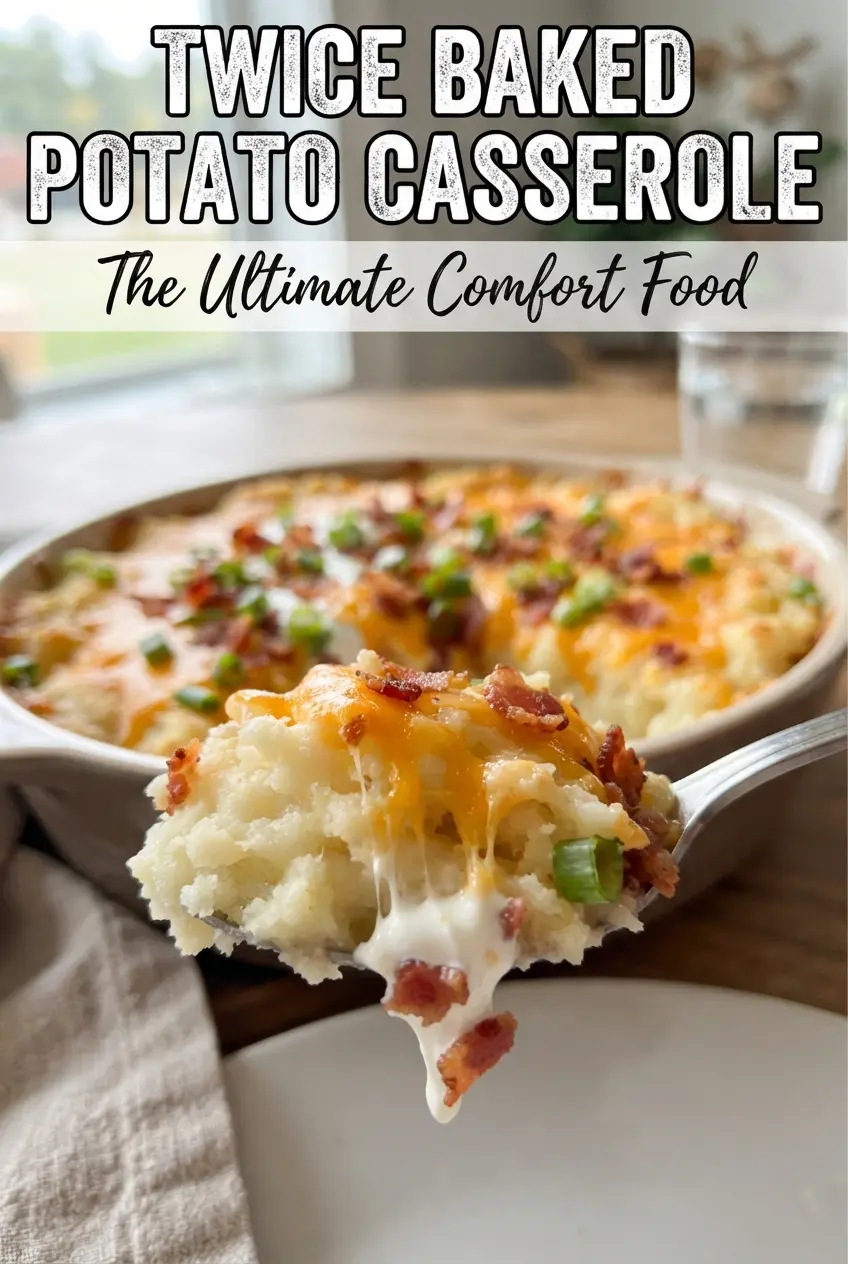
Twice baked potato casserole lands on the table with the same comfort as a classic stuffed potato, but without all the fussy scooping and refilling. The potatoes turn fluffy and rich in the middle, then bake again under a layer of sharp cheddar until the top is bubbling and the edges pick up just enough color. Every spoonful gets bacon, green onion, and that creamy, buttery base.
The key is starting with properly baked russets and mashing them while they’re still warm enough to absorb the butter and dairy. If the potatoes are underbaked, the casserole turns heavy and a little grainy. If they’re dry and overworked, it can go gluey. The balance here is in the mixing: enough to combine everything, not so much that you lose the fluffy texture.
Below, I’ve included the little details that make this dish work every time, plus a few smart swaps if you’re cooking for a different table than usual.
The potatoes stayed fluffy, not gummy, and the cheddar on top melted into the bacon just the way I hoped. I made it ahead, baked it before dinner, and it came out hot and creamy all the way through.
Save this twice baked potato casserole for the nights when you want creamy potatoes, sharp cheddar, bacon, and a bubbling golden top in one pan.
The part that keeps this casserole fluffy instead of dense
The biggest mistake with twice baked potato casserole is treating the potatoes like mashed potatoes from a side dish. Russets need to be baked until fully tender first, because that dry, fluffy interior is what gives the casserole lift. If the potatoes still have resistance in the center, they won’t mash smoothly and the final texture turns pasty under the cheese.
Warm potatoes are easier to blend with the butter, sour cream, and milk, and that matters here. The dairy coats the starch before it has a chance to turn stiff. Stop mixing as soon as the ingredients are combined and the texture looks light and scoopable. Overmixing is the fastest way to lose the fluffy texture that makes this casserole worth making.
What each ingredient is actually doing in this dish

- Russet potatoes — These are the right potatoes because they bake up dry and fluffy, which gives the casserole its light texture. Yukon Golds will work in a pinch, but they’re naturally waxier, so the finished dish will be a little denser.
- Butter, sour cream, and whole milk — This trio gives the casserole its rich, smooth body. Full-fat dairy matters here because low-fat versions can make the mixture taste thin and less satisfying.
- Sharp cheddar — Sharp cheddar brings the flavor that keeps this from tasting flat. Pre-shredded cheese melts less smoothly because of the anti-caking coating, so shred your own if you want the top to melt in a clean, creamy layer.
- Bacon — The bacon adds salt, crunch, and a smoky note that cuts through the richness. Cook it until crisp enough to crumble; chewy bacon disappears into the casserole instead of giving you those good little salty bites.
- Green onions — These brighten the whole dish and keep it from feeling heavy. Add half into the casserole and save the rest for the finish so you get both mellow onion flavor and a fresh pop on top.
Building the casserole so the top stays golden and the middle stays creamy
Baking the potatoes all the way through
Set the russets directly on the oven rack and bake until a fork slides in without resistance. That 50 to 60 minute window is there for a reason: underbaked potatoes mash badly, while fully baked ones break down into a light, dry texture that absorbs the butter and dairy. Let them cool just enough to handle, but don’t wait so long that they go cold and stiff.
Mashing without making glue
Scoop the flesh into a large bowl and mash it with the butter, sour cream, and milk while the potatoes are still warm. A potato masher gives you the best texture; a mixer can overwork the starch fast and make the casserole gummy. Once the potatoes look mostly smooth with a few soft lumps, stop and move on.
Layering in the bacon and cheese
Stir in one cup of cheddar, half the bacon, and half the green onions with the salt and pepper. This distributes the savory bits through the casserole instead of leaving everything on top. Spread the mixture into a buttered 9×13-inch dish in an even layer so it heats through at the same rate and doesn’t dry out at the edges.
Finishing under the second bake
Top with the remaining cheddar and bacon, then bake at the lower temperature until the cheese is bubbling and the center is hot. That second bake doesn’t just melt the topping; it lets the flavors settle together without pushing moisture out too fast. Finish with the remaining green onions after it comes out of the oven so they stay fresh and sharp.
How to adapt it when you need a different version of the same comfort food
Make it ahead for a busy dinner
Assemble the casserole up to a day in advance, cover it tightly, and refrigerate it before the final bake. Add 10 to 15 minutes in the oven if it goes in cold from the fridge. This is the best move for holidays or potlucks because the texture actually improves a little as the flavors settle.
Dairy-free version
Use plant-based butter, unsweetened dairy-free sour cream, and an unflavored unsweetened milk alternative. The casserole will still be creamy, but it won’t have quite the same tang as the original, so season it carefully and use a cheese alternative that melts well if you want the topping to hold together.
Gluten-free by default
This recipe is naturally gluten-free as written, which makes it an easy side for mixed-diet tables. Just check the bacon and shredded cheese labels if you’re cooking for someone with a strict sensitivity, since some brands add hidden fillers or starches.
Turn it into a vegetarian casserole
Skip the bacon and add extra green onions, roasted mushrooms, or a pinch of smoked paprika for depth. You lose the salty crunch of bacon, so the seasoning needs a little more attention, but the casserole still bakes up rich and satisfying.
Storage and Reheating
- Refrigerator: Store leftovers covered for up to 4 days. The texture firms up as it chills, but it reheats well.
- Freezer: This freezes well if you wrap it tightly after baking and cooling. Freeze in portions for the easiest reheating, and expect the texture to be a little softer after thawing.
- Reheating: Reheat covered in a 350F oven until hot in the center, or warm single servings in the microwave at medium power. High heat can make the dairy separate and dry out the potatoes before the middle is hot.
Questions I get asked about twice baked potato casserole
Twice Baked Potato Casserole
Ingredients
Equipment
Method
- Preheat oven to 400F, then bake the russet potatoes for 50-60 minutes until fork-tender.
- Cool slightly, then scoop out the potato flesh and mash it with softened butter, sour cream, and whole milk.
- Stir in 1 cup cheddar, half the bacon, half the green onions, salt, and black pepper until evenly combined.
- Spread the mixture into a buttered 9x13-inch baking dish, then top with remaining cheddar and bacon.
- Reduce oven to 350F, then bake 20-25 minutes until hot and the cheese is bubbly.
- Sprinkle with remaining green onions, then serve.