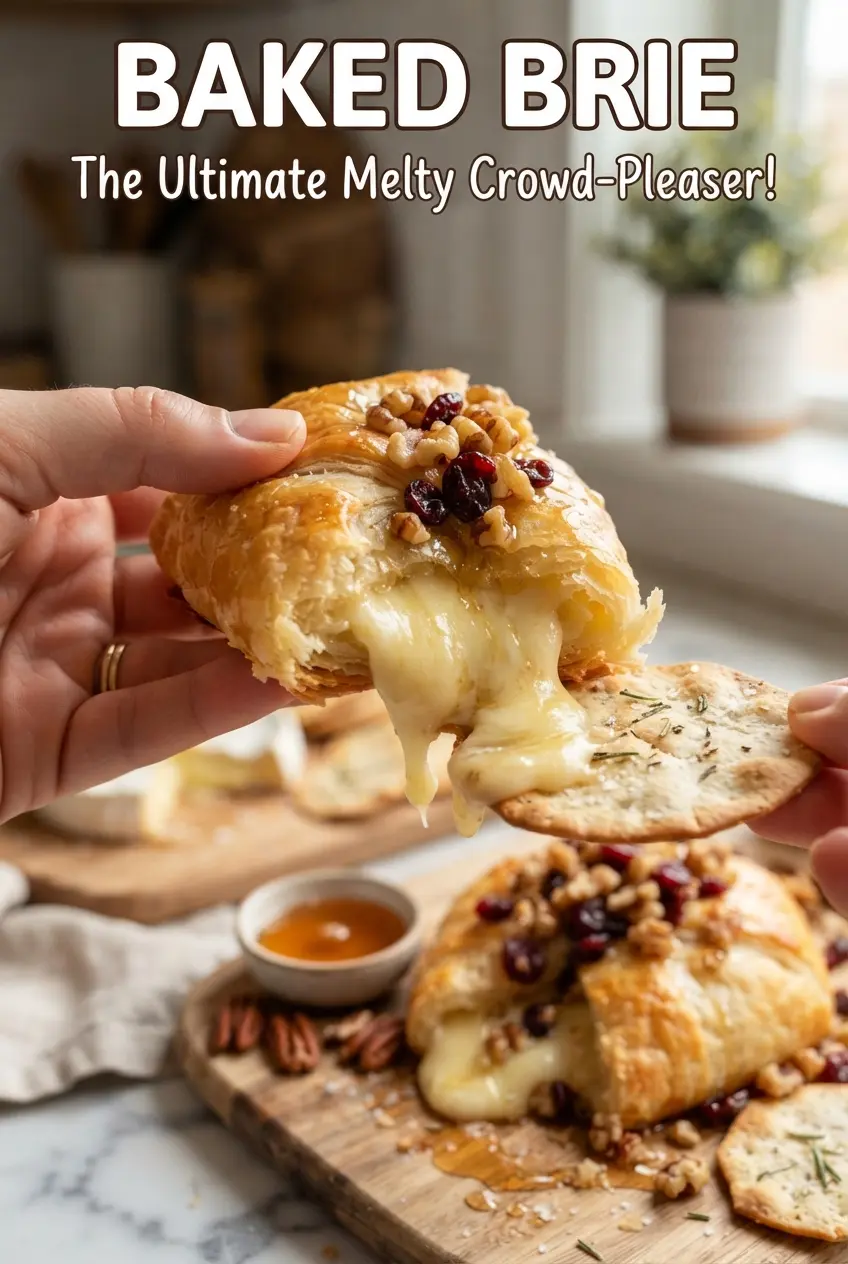
Golden baked brie wrapped in puff pastry is the kind of appetizer that disappears before the plates even hit the table. The pastry bakes up crisp and shattery, the cheese turns molten, and the jam melts into the brie just enough to keep every bite rich instead of runny. When it comes out of the oven with that deep golden shell, it looks like you worked a lot harder than you did.
The little details matter here. Brushing off excess flour before wrapping helps the pastry seal, and letting the baked brie rest for a full 10 minutes keeps the cheese from flooding out the second you cut into it. The jam, pecans, and brown sugar bring sweetness, crunch, and a little caramel note that balances the brie’s creamy center without burying it.
Below, I’ve included the part that trips people up most often: how to keep the pastry from splitting and the cheese from escaping too soon. There are also a few smart swaps if you want to change the filling or make it work with what you already have.
The pastry came out crisp all the way around, and the brie stayed perfectly molten after that 10-minute rest. The raspberry jam and pecans made it taste like something from a nice wine bar.
Save this puff pastry baked brie for the next time you need a crisp, gooey appetizer with a jammy center and almost no fuss.
The Part That Keeps the Cheese Inside the Pastry
The biggest mistake with baked brie is treating the pastry like decorative wrapping instead of a seal. If the seams are loose, the cheese finds the gaps as soon as it gets hot. Trim any bulky corners, press the edges firmly, and turn the bundle seam-side down so the weight of the brie helps hold everything in place while it bakes.
The other place people lose the filling is by cutting too soon. Brie needs a short rest after baking so the center thickens from liquid to lush, spreadable cheese. Cut it immediately and the jam-heavy filling pours out fast; wait 10 minutes and you get a clean slice with a molten middle that stays on the cracker instead of the pan.
What the Jam, Nuts, and Puff Pastry Are Doing Here

- Puff pastry — This is what gives you the shattery crust. Store-bought works beautifully here, and I’d actually use the good frozen version instead of trying to improvise with pie dough, which bakes up denser and doesn’t puff the same way. Thaw it until pliable but still cold so it folds without tearing.
- Brie — Buy a wheel that feels soft but not oozing at the rind. Double-cream brie melts a little faster and gives you a looser center; a firmer brie holds shape slightly better. There’s no real substitute for the flavor and texture, though camembert works with the same method if that’s what you have.
- Raspberry or fig jam — This adds sweetness and acidity, which keeps the brie from tasting flat. Raspberry is brighter; fig is deeper and a little more elegant. Use a jam that’s thick enough to stay put, because a very loose preserve will leak into the pastry and soften the bottom.
- Pecans and brown sugar — The pecans bring crunch, and the brown sugar nudges the filling toward caramelized and nutty. You can swap walnuts if that’s what’s in the pantry, but keep the pieces small so they don’t punch holes in the pastry.
- Egg wash — This is what gives the crust that lacquered, bakery-style finish. Don’t skip it unless you want a pale pastry with dull patches. Beat the egg with water until smooth so it brushes on evenly without streaking.
How to Wrap and Bake It So It Turns Deep Golden, Not Leaky
Rolling the Pastry Just Enough
Roll the puff pastry only enough to smooth the folds and give yourself a little more surface area. If you stretch it too thin, it can split while it bakes and the filling escapes. Keep the dough cold and work quickly so the butter layers stay intact and puff properly in the oven.
Filling and Sealing the Wheel
Set the brie in the center, spread the jam on top, then sprinkle the nuts and brown sugar over it. Bring the pastry up around the wheel in neat folds and pinch any open seams closed. If the dough feels sticky, chill it for 5 minutes before sealing; warm pastry is harder to handle and more likely to tear.
Baking to the Right Color
Bake at 400F until the pastry is a deep golden brown, not just lightly colored. Pale pastry usually means the dough is still underbaked and the bottom can turn soft once the cheese is hot. If the top browns too fast, cover it loosely with foil for the last few minutes and keep going until the whole surface looks crisp.
Resting Before Serving
Let it sit for 10 minutes on the baking sheet before moving it to a platter. That short rest is what gives the brie enough body to slice instead of spill. Garnish with rosemary right before serving so the herbs stay fresh and fragrant.
Three Smart Ways to Adjust This Baked Brie
Fig and Walnut Version
Swap the raspberry jam for fig jam and use chopped walnuts instead of pecans. The result is a deeper, earthier filling that tastes a little more savory and a little less bright. It’s the version I’d serve with red wine or on a holiday board.
Gluten-Free Serving Option
Use certified gluten-free puff pastry if you can find it, or bake the brie without pastry and serve it with crackers and apple slices on the side. You’ll lose the crisp shell, but the cheese still melts beautifully and the topping still carries the whole appetizer.
No-Nut Version
Skip the pecans and add a little extra brown sugar for the same sweet contrast, or tuck in a few dried cranberries for texture. The filling will be smoother and a little less crunchy, but the brie still bakes up rich and balanced.
Make-Ahead Timing
Assemble the wrapped brie up to 8 hours ahead and keep it covered in the refrigerator. Brush on the egg wash right before baking so the pastry doesn’t get soggy. Cold pastry actually helps it puff, so this is a good one to prep early for guests.
Storage and Reheating
- Refrigerator: Store leftovers covered for up to 3 days. The pastry softens, but the flavor stays good.
- Freezer: Freezing baked brie isn’t ideal because the cheese texture turns grainy after thawing. If you want to freeze it, freeze the unbaked wrapped wheel instead and bake from cold, adding a few extra minutes.
- Reheating: Warm leftovers in a 325F oven until the center loosens and the pastry crisps again. The microwave makes the pastry soggy and can cause the cheese to separate, so skip it.
Answers to the Questions Worth Asking
Baked Brie
Ingredients
Equipment
Method
- Preheat oven to 400F and line a baking sheet with parchment for easy release and even browning.
- Roll the puff pastry slightly and place the brie in the center to create enough pastry to wrap over the cheese.
- Spread the jam over the brie, then sprinkle with the chopped pecans and brown sugar to build a sweet, crunchy topping.
- Fold the pastry up over the brie, trimming excess and pressing the seams to seal so the filling stays contained.
- Flip the pastry seam-side down onto the baking sheet, then brush with egg wash for a glossy, golden crust.
- Bake at 400F for 22-25 minutes until deep golden brown for a crisp exterior and melted center.
- Rest 10 minutes so the cheese sets slightly, then garnish with rosemary and serve with crackers and apple slices.