Sticky, glossy smoked sausage bites with tart cranberry glaze disappear fast, and that’s exactly why this sheet pan version earns a permanent spot on the appetizer list. The sausage roasts first so the edges brown before the glaze goes on, which gives you little caramelized pieces instead of soft, steamed rounds. Once the cranberry mixture hits the hot pan, it clings and bubbles into a shiny coating that tastes sweet, tangy, and just a little sharp from the mustard and vinegar.
The trick is keeping the first roast separate from the glaze. Smoked sausage already has plenty of fat and seasoning, so it doesn’t need much help; what it needs is heat contact. Giving it those 12 minutes on its own lets the cut sides deepen in color before the cranberry sauce is added, and that’s what keeps the final bites from tasting one-note. Orange zest at the end lifts the whole pan and cuts through the richness without turning it into dessert.
Below you’ll find the exact timing that keeps the glaze sticky instead of watery, plus a couple of easy ways to adjust the heat and sweetness depending on who’s eating.
The glaze turned sticky and caramelized instead of runny, and the orange zest at the end kept it from tasting too sweet. I set out toothpicks and the whole tray was gone in minutes.
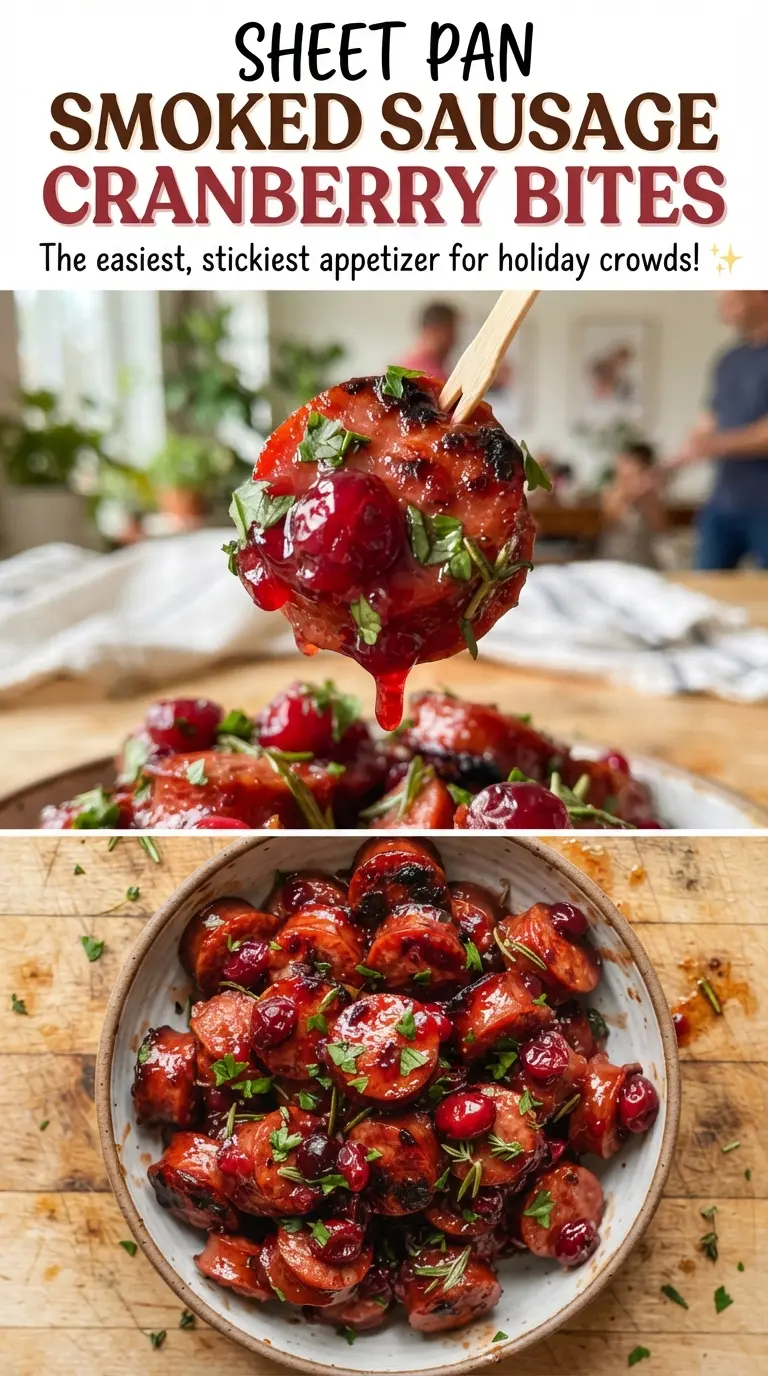
Sticky sheet pan smoked sausage cranberry bites with caramelized edges and a glossy orange-thyme finish
The Trick to Keeping the Cranberry Glaze Sticky Instead of Watery
The most common mistake with a glaze like this is adding it too early and expecting the whole tray to brown at the same pace. Cranberry sauce carries a lot of moisture, and once it goes onto the sausage, the surface temperature drops fast. That’s why the sausage needs its solo roast first. You want browned edges and a little rendered fat in the pan before the glaze goes in, because that hot surface is what helps the sauce tighten up instead of sliding around.
The other thing that matters is the balance between sweet and sharp. Brown sugar gives the cranberry sauce shine and body, but Dijon and apple cider vinegar keep it from turning cloying. If your glaze tastes flat before it goes on the pan, it’s usually because it needs that bite from the mustard or vinegar, not more sugar.
- Smoked sausage — Use a fully cooked sausage with enough fat to brown cleanly, like kielbasa or andouille. Turkey sausage works, but it won’t caramelize quite as deeply and the bites will taste a little leaner.
- Whole berry cranberry sauce — Whole berry holds its shape better than the jellied kind, so the glaze stays textured instead of turning smooth and thin. If you only have jellied, whisk it a little longer and expect a silkier finish.
- Dijon mustard — This adds edge and keeps the glaze from tasting like candy. Yellow mustard works in a pinch, but the flavor is sharper and less rounded.
- Orange zest — Add it at the end, not before roasting, or the citrus turns dull. Fresh zest gives the finished pan that bright, lifted smell that makes people reach for seconds.
What Each Ingredient Is Actually Doing in This Recipe
- Primary ingredient (the star) — Quality matters most. Choose the best you can find.
- Cooking medium (oil, butter, or broth) — This carries flavors and prevents dryness.
- Seasonings (salt, pepper, spices, herbs) — Layer flavors so nothing overpowers. Build depth gradually.
- Aromatics (garlic, onion, herbs) — Cook with fat to bloom flavors. Become the foundation.
- Supporting ingredients — Complement the main ingredient without overpowering it.
- Sauce or liquid (if applicable) — Brings flavors together. Balance richness with acid.
- Acid (lemon, vinegar, wine, or other) — Brightens and prevents flat-tasting results.
- Final finish (garnish, glaze, or sauce) — Prevents one-dimensional taste and adds visual appeal.
Getting the Sausage Browned Before the Glaze Goes On
Roast the sausage in one layer first
Spread the sliced sausage out with space between the coins and roast until the cut sides are browned and starting to crisp. If the pieces are piled up, they steam and the glaze won’t have anything to cling to later. The pan should look a little glossy from rendered fat, and the sausage should have some deep color at the edges.
Whisk the glaze until the cranberry breaks down
Stir the cranberry sauce, brown sugar, Dijon, vinegar, garlic powder, and red pepper flakes until the mixture looks thick and mostly smooth. You don’t need to completely dissolve every berry, but the sugar should disappear and the mustard should be evenly distributed. If the glaze looks grainy, keep whisking; undissolved sugar can leave rough spots instead of a clean sticky finish.
Roast again until the sauce bubbles thickly
Once the glaze is on, toss everything until the sausage is coated, then return the pan to the oven. The sauce should bubble around the edges and cling to the sausage in a shiny layer, not pool on the pan. Pull it as soon as the glaze looks thick and tacky, because overbaking is what turns the sauce dark and sticky in a burnt way instead of a glossy one.
Finish with zest and herbs
Orange zest and thyme go on after baking so they stay bright. The heat from the pan wakes up the aroma without cooking it off. Serve the bites warm with toothpicks while the glaze is still soft enough to pick up cleanly.
How to Adapt These Cranberry Sausage Bites for Different Crowds
Make them spicier for game day
Increase the red pepper flakes to 1/2 teaspoon or add a small spoonful of hot sauce to the glaze. The extra heat cuts the sweetness and makes the bites taste more savory, which works well if you’re serving them alongside other rich appetizers.
Use turkey sausage for a lighter version
Turkey sausage works, but it needs the full initial roast so the outside can brown before the glaze goes on. The result is a little less rich and a touch firmer, which is good if you want a lighter appetizer without changing the sauce.
Turn them into a gluten-free appetizer
Use a gluten-free smoked sausage and check the mustard label, since some brands add thickeners that aren’t gluten-free. The method stays the same, and the glaze works just as well because the thickening comes from reducing the sauce in the oven.
Storage and Reheating
- Refrigerator: Store leftovers in an airtight container for up to 4 days. The glaze will thicken and set as it chills.
- Freezer: These freeze well, though the glaze gets a little softer after thawing. Freeze in a single layer, then transfer to a container, and thaw overnight in the fridge.
- Reheating: Warm in a 350F oven until hot, or use a skillet over medium-low heat. Don’t blast them in the microwave for too long or the glaze can split and the sausage turns rubbery.
Questions I Get Asked About This Recipe

Sheet Pan Smoked Sausage Cranberry Bites
Ingredients
Equipment
Method
- Preheat the oven to 400F, and line a rimmed sheet pan with foil. Set up the pan so the sausage can roast right away.
- Spread the sausage coins in a single layer on the sheet pan. Roast for 12 minutes until browned at the edges.
- Whisk the whole berry cranberry sauce, brown sugar, Dijon mustard, apple cider vinegar, garlic powder, and red pepper flakes until smooth. Stir well so the sugar dissolves and the glaze looks evenly blended.
- Pour the glaze over the roasted sausage and toss to coat. Make sure each coin gets a glossy layer.
- Roast for 10-13 minutes more at 400F until the glaze is sticky and bubbling. Watch for bubbling at the edges of the sausage coins.
- Toss with orange zest and fresh thyme leaves, then serve warm with toothpicks. Finish with visible thyme and orange for a bright top note.