Caramelized butternut squash and crisp-edged Brussels sprouts are one of those side dishes that disappears fast, even when it’s sitting next to the main event. The combination of sweet squash, earthy sprouts, tart cranberries, and toasted pecans gives you a little bit of everything in each bite, and the maple balsamic drizzle ties it together without turning the vegetables soggy.
The trick is giving the vegetables enough space and enough heat. A crowded pan steams the sprouts before they can brown, and that’s where most versions fall flat. Here, the high oven temperature pulls out the natural sweetness in the squash and helps the Brussels sprouts get those deep golden edges that taste almost nutty.
Below, I’ve added the details that matter most: how to keep the vegetables caramelizing instead of softening, when to add the cranberries and pecans, and a few easy ways to adjust this for different menus.
The squash got those caramelized edges I was hoping for, and the maple balsamic kept everything bright instead of heavy. I served it warm and the pecans stayed crunchy even after tossing.
Save these roasted butternut squash and Brussels sprouts for a side dish with caramelized edges, maple balsamic shine, and just enough crunch.
The Difference Between Caramelized and Merely Soft
Roasting vegetables sounds simple, but the difference between a tray of caramelized edges and a tray of pale, soft vegetables comes down to moisture management. Butternut squash and Brussels sprouts both release water as they cook, and if the pan is packed too tightly, that steam lingers long enough to block browning. The result is tender vegetables, but not the deep flavor you want here.
High heat does the heavy lifting, but the pan setup matters just as much. Use a large sheet pan, keep the vegetables in a single layer, and toss them once halfway through so the cut sides can touch the hot metal again. If your sprouts are shrinking before they brown, the oven isn’t the problem; the crowding is.
- Butternut squash — Cube it into even pieces so it finishes at the same time as the sprouts. Smaller cubes brown faster and can go from caramelized to dry, so keep them generous and consistent.
- Brussels sprouts — Halving them exposes the cut side to the pan, which is where you get the best color. If some outer leaves fall off, leave them on the tray; they crisp up beautifully.
- Maple syrup — This adds gloss and rounds out the balsamic without making the vegetables taste sweet-sauced. Honey works in a pinch, but maple has a softer finish that fits the squash better.
- Pecans — Toasted pecans bring the crunch that keeps the dish from feeling one-note. Buy them raw if you can and toast them yourself; pre-toasted nuts can taste stale faster.
What the Maple Balsamic Is Doing Here
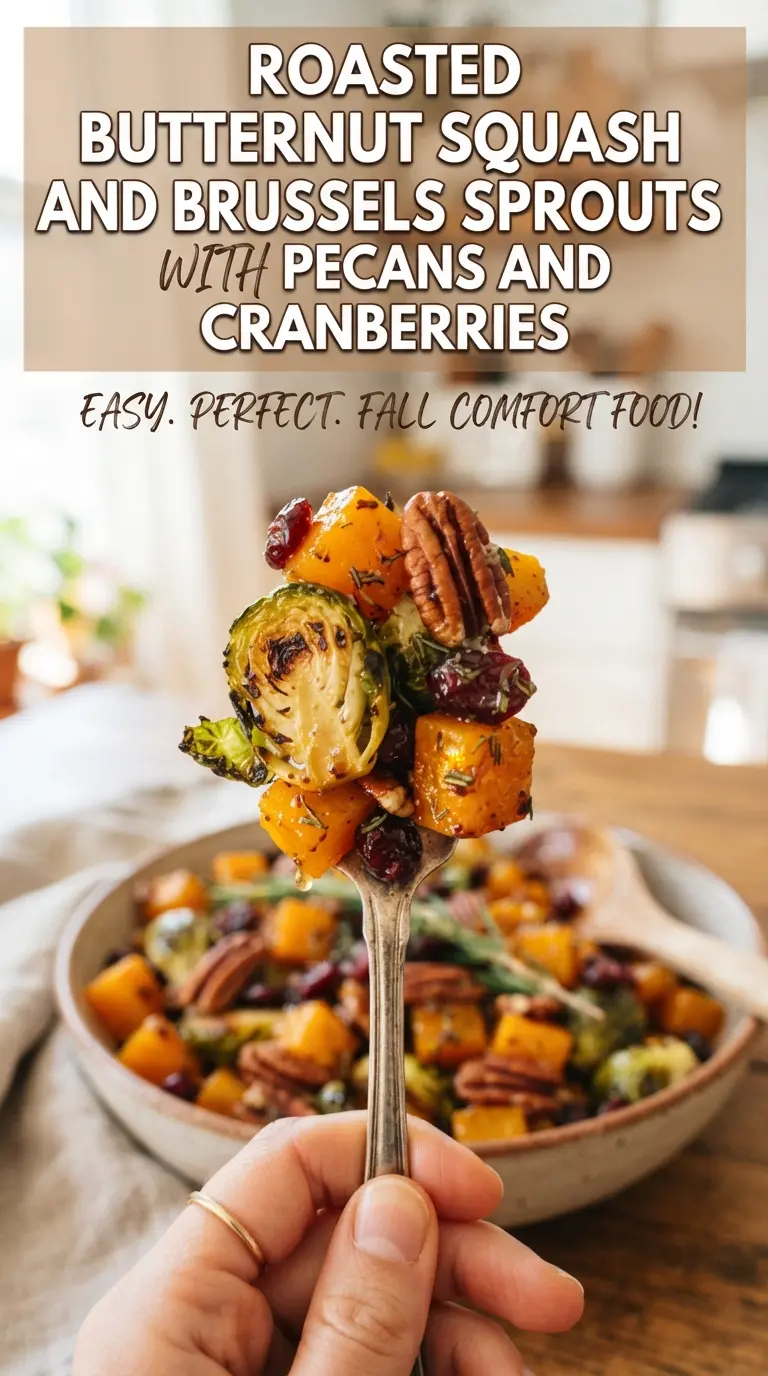
The maple balsamic is less of a sauce and more of a finishing glaze. It should coat the vegetables lightly and give you a bright sweet-tart note without pooling in the bowl. If you add it before roasting, the sugars can scorch before the vegetables are fully tender, which leaves you with bitter edges instead of balanced sweetness.
The cranberries belong at the end for the same reason. They soften slightly from the warmth of the vegetables but stay pleasantly chewy, and the pecans keep their crunch instead of turning greasy. That final toss is what makes the whole dish taste composed instead of just roasted and dumped together.
- Olive oil — This helps the vegetables brown and keeps the seasoning clinging to every cut surface. A mild extra-virgin oil works well, but don’t use a strongly flavored oil here because it can fight the maple and balsamic.
- Balsamic vinegar — Use one you’d actually enjoy tasting on its own if you can. A sharp, thin vinegar will make the glaze taste harsh; a balanced balsamic gives the dish depth and a little acidity to cut through the sweetness.
- Dried cranberries — These add chew and a tart pop. If yours are very dry, stir them into the warm vegetables right away so they soften slightly from the residual heat.
- Pecans — Add them after roasting so they stay crisp. If they go into the oven with the vegetables for the full bake, they can taste bitter before the squash is even done.
The 30 Minutes That Matter Most
Preheating the Pan
Set the oven to 425°F before anything else. That heat helps the squash and Brussels sprouts start browning as soon as they hit the pan instead of sitting around and softening first. If your oven runs cool, give it a full preheat so the vegetables don’t stew in the first ten minutes.
Tossing for Even Browning
Mix the squash and Brussels sprouts with olive oil, salt, and pepper on the sheet pan or in a bowl, then spread them out in one layer. The cut sides should face down as much as possible because that’s where the strongest browning happens. Halfway through roasting, toss them once so the second side gets its turn on the hot metal.
Finishing With the Glaze and Crunch
Whisk the maple syrup and balsamic together while the vegetables finish roasting, then toss it with the hot tray right before serving. The glaze should cling in a light sheen, not soak in like dressing. Add the cranberries and toasted pecans at the end so the nuts stay crisp and the fruit keeps its chew.
Make it dairy-free and naturally gluten-free
This recipe already fits both of those needs as written, which is part of why it shows up so often at holiday tables. The flavor comes from roasting, not butter or flour, so nothing gets lost when you keep it simple.
Swap walnuts or almonds for the pecans
Walnuts give a slightly earthier finish, while sliced almonds add a lighter crunch. Toast whichever nut you use first, and add it at the end so it keeps its texture instead of turning soft against the warm vegetables.
Use sweet potatoes instead of butternut squash
Sweet potatoes roast a little faster and come out denser, but they work well if that’s what you have. Cut them into similar-sized cubes and watch for browning early, because they can soften before they pick up as much color as squash.
Storage and Reheating
- Refrigerator: Store leftovers in an airtight container for up to 4 days. The pecans will soften a bit, but the flavor holds up well.
- Freezer: The roasted vegetables freeze, but the texture turns softer after thawing. Freeze without the pecans if you can, then add fresh toasted nuts after reheating.
- Reheating: Warm on a sheet pan in a 400°F oven for 8 to 10 minutes so the vegetables re-crisp at the edges. The microwave will heat them, but it also makes the sprouts limp and the squash watery.
Answers to the Questions Worth Asking
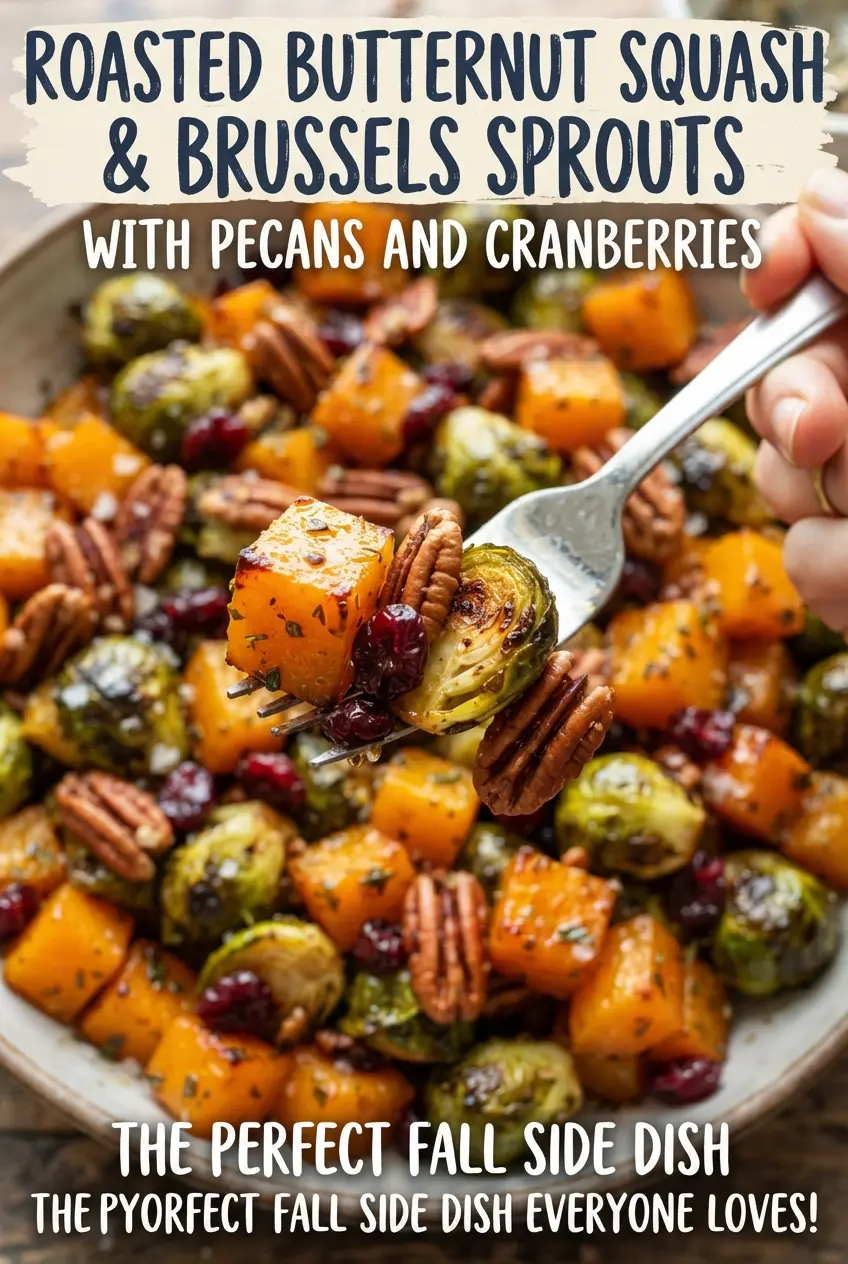
Roasted Butternut Squash and Brussels Sprouts with Pecans and Cranberries
Ingredients
Equipment
Method
- Preheat the oven to 425F.
- Toss butternut squash, Brussels sprouts, olive oil, salt, and black pepper on a large sheet pan until evenly coated, spreading into a single layer.
- Roast for 25-30 minutes, tossing halfway through, until the vegetables are tender and caramelized with browned edges.
- Whisk maple syrup and balsamic vinegar until smooth.
- Toss the roasted vegetables with the maple balsamic mixture, dried cranberries, and pecans, then serve warm.