Slow cooker brown sugar pineapple ham comes out lacquered and glossy, with sweet, sticky edges and slices that pull apart cleanly without drying out. The slow cooker does the gentle heating work, so the ham stays tender while the glaze melts into the cuts and clings to every spiral ridge. Pineapple, brown sugar, and Dijon give you that classic sweet-savory balance that tastes like holiday ham, but with much less babysitting.
What makes this version work is the reserved pineapple juice. It gives the glaze enough body to coat the ham without turning watery, and the Dijon keeps the sweetness from flattening out. I also like brushing some glaze between the slices before the pineapple goes on, because that’s where the flavor gets deep instead of sitting only on the outside.
Below, I’ve included the small details that keep the ham juicy and the glaze shiny, plus a few smart swaps if you need to adjust for what’s in your pantry.
The glaze thickened up beautifully in the slow cooker, and the pineapple rings stayed in place on top without sliding off. I served it for Sunday dinner and there wasn’t a dry slice anywhere.
Like this slow cooker brown sugar pineapple ham? Save it for the next holiday dinner when you want a glossy glaze and almost no oven time.
The Part That Keeps the Ham Juicy Instead of Watery
Most slow cooker ham recipes go wrong in one of two ways: they drown the ham in liquid, or they glaze it so heavily at the start that the sugar turns thin and forgettable by the time dinner is ready. This version avoids both problems by using just enough reserved pineapple juice to loosen the glaze, then letting the ham baste in its own juices as it heats. You want the sugar to melt into a shiny coating, not dissolve into the bottom of the crock.
Because the ham is already fully cooked, the goal isn’t to cook it through from raw. It’s to warm it gently until the slices are hot and the fat has started to soften. Low heat protects the texture and keeps the edges from tightening up. If your ham is dry by the end, it usually means it went too long, not that it needed more liquid.
What the Brown Sugar, Pineapple, and Dijon Are Each Doing
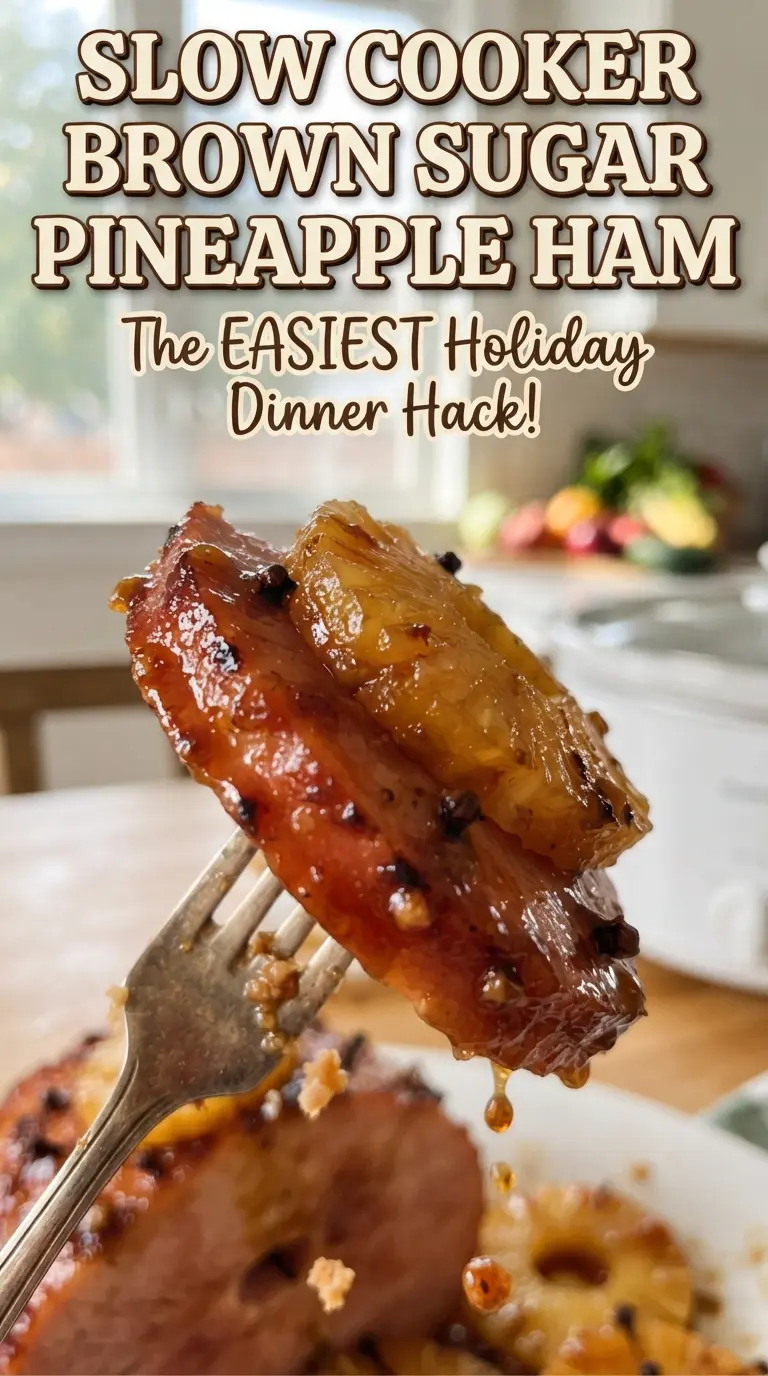
- Brown sugar — This is what gives you that sticky, caramel-like finish. Packed brown sugar melts into the pineapple juice and turns glossy as it warms; white sugar won’t give the same depth or color.
- Pineapple juice — Use the reserved juice from the can, not water. It carries the fruit flavor into the glaze and gives the ham a bright edge that cuts through the richness.
- Dijon mustard — Don’t skip this. It doesn’t make the ham taste mustardy; it sharpens the sweetness and keeps the glaze from tasting flat. Yellow mustard can work in a pinch, but it tastes softer and less balanced.
- Honey — Honey helps the glaze cling to the spiral cuts and gives it a smoother finish. If you’re out, maple syrup works, but the flavor shifts darker and less classic.
- Spices — Cloves and cinnamon are small additions, but they give the glaze that warm holiday-ham aroma. Keep the cloves measured; too much and they take over fast.
How to Glaze the Ham So It Stays Lacquered, Not Souped
Getting the Ham into the Slow Cooker
Set the ham flat-side down and trim it only if the lid won’t close. A spiral ham already has plenty of surface area, so it doesn’t need to be submerged. If you force the lid or cram the ham in at an angle, the top dries out while the bottom steams unevenly. A snug fit is fine; a mashed fit is not.
Building the Glaze
Whisk half the reserved pineapple juice with the brown sugar, honey, Dijon, cloves, and cinnamon until the sugar starts to dissolve. It doesn’t need to be perfectly smooth before it goes on the ham. What matters is that the sugar is distributed so it melts evenly instead of settling in one sticky clump at the bottom.
Layering the Flavor Between the Slices
Pour half the glaze over the ham and use a spoon to work it between the slices. This is the step that makes the inside taste seasoned, not just the outside. If you skip this and only glaze the top, the first slice looks great but the rest taste plain. Then arrange the pineapple rings on top and secure them with toothpicks so they stay put while the ham softens underneath.
Heating Until the Ham Is Ready
Cover and cook on LOW until the center reaches 140°F. That temperature is enough to serve a fully cooked ham without squeezing out the juices. If you push it much farther, the slices start to look curled and dry at the edges. Spoon the juices from the slow cooker over the ham right before serving, then drizzle on the remaining glaze for the best shine.
Three Ways to Adjust This Ham Without Losing the Good Parts
Dairy-Free and Naturally Gluten-Free
This recipe is already dairy-free and gluten-free as written, which makes it an easy fit for a mixed-diet table. Just check the Dijon label if you’re serving someone highly sensitive, since some brands add thickeners or flavoring agents. The texture and glaze stay the same.
Maple-Forward Version
Swap the honey for pure maple syrup if you want a deeper, woodsy sweetness. The glaze will taste a little darker and less bright than the original, but it still clings nicely and works well with the cloves and cinnamon. Use the same amount.
Less Sweet, More Savory
Cut the brown sugar back to 3/4 cup and add an extra teaspoon of Dijon if you want the pineapple to stay in the background instead of taking over. You’ll lose a little of the sticky candy-like finish, but the ham tastes a little cleaner and pairs better with salty sides.
Storage and Reheating
- Refrigerator: Store leftovers in an airtight container for 4 to 5 days. The glaze will thicken and the ham will firm up as it chills.
- Freezer: Slice the ham and freeze it with a little of the sauce for up to 2 months. Wrap it well so it doesn’t pick up freezer burn and lose that glossy coating.
- Reheating: Warm slices covered in a skillet with a spoonful of glaze or in a baking dish at low heat until just heated through. The big mistake is blasting it in the microwave until the edges go tough before the center is warm.
Answers to the Questions Worth Asking
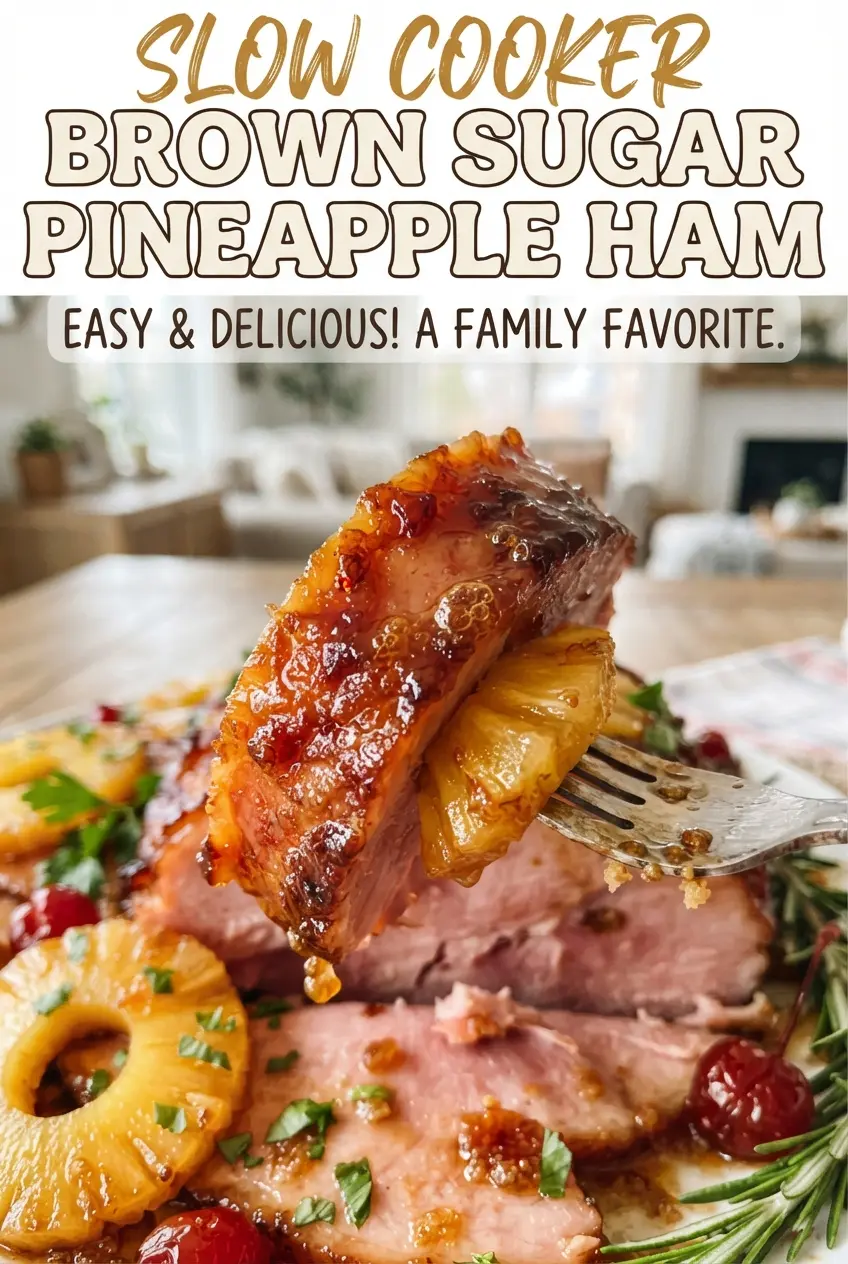
Slow Cooker Brown Sugar Pineapple Ham
Ingredients
Equipment
Method
- Place ham flat-side down in a large slow cooker and trim it if needed for the lid to close. Visual cue: the ham should sit stable with the spiral slices facing upward.
- Whisk 1/2 cup reserved pineapple juice, brown sugar, honey, Dijon, cloves, and cinnamon. Visual cue: the glaze should look smooth and thick enough to coat a spoon.
- Pour half the glaze over the ham, working it between the slices. Visual cue: streaks of glaze should fill the gaps where the slices meet.
- Arrange pineapple rings over the ham and secure with toothpicks, adding a cherry in each center. Visual cue: the top should be covered with overlapping rings and a cherry center in each ring.
- Cover and cook on LOW for 4-5 hours until heated through to 140°F. Visual cue: the glaze will become glossy and the pineapple rings will look slightly translucent.
- Spoon the juices from the slow cooker over the ham with the remaining glaze. Visual cue: the ham should look shiny, with a sticky caramel-brown sheen.