Sticky honey mustard cocktail sausages disappear fast because they hit every note people reach for at a party: salty, sweet, tangy, and glossy enough to cling to the toothpick. The sauce cooks down into a shiny glaze that coats each sausage instead of pooling in the skillet, and that makes every bite taste concentrated and balanced.
The trick is giving the sausages a little color before the sauce goes in. That first browning step adds flavor and keeps the finished dish from tasting flat. Whole grain mustard brings texture and a deeper mustard bite, while Dijon smooths everything out so the glaze tastes layered instead of sharp. A splash of soy sauce keeps the sweetness in check and gives the sauce a savory backbone.
Below, I’ve included the small timing details that keep the glaze sticky instead of thin, plus a few smart swaps if you want to adapt these for a different crowd.
The glaze thickened up perfectly and coated every sausage instead of turning watery. I served them with toothpicks and there wasn’t a single one left after ten minutes.
Sticky honey mustard cocktail sausages with a glossy glaze and sesame seed finish belong on your game-day snack table.
The Browning Step That Keeps the Glaze from Turning Thin
If the sausages go straight from the package into the sauce, the glaze tends to slide right off and thin out before it has a chance to stick. Browning them first does two things: it renders a little surface fat so the glaze can grip, and it puts a savory edge on the sausage that keeps the finished dish from tasting one-note. You want actual color in the skillet, not just warm-through-and-done.
Once the honey and mustards go in, the simmer should stay gentle. A hard boil can reduce the sauce too fast and make the honey taste sharp instead of rounded. Stir often, scrape the bottom of the pan, and watch for the moment the sauce moves from loose and shiny to thick enough to coat a spoon.
What Each Ingredient Is Actually Doing in the Skillet
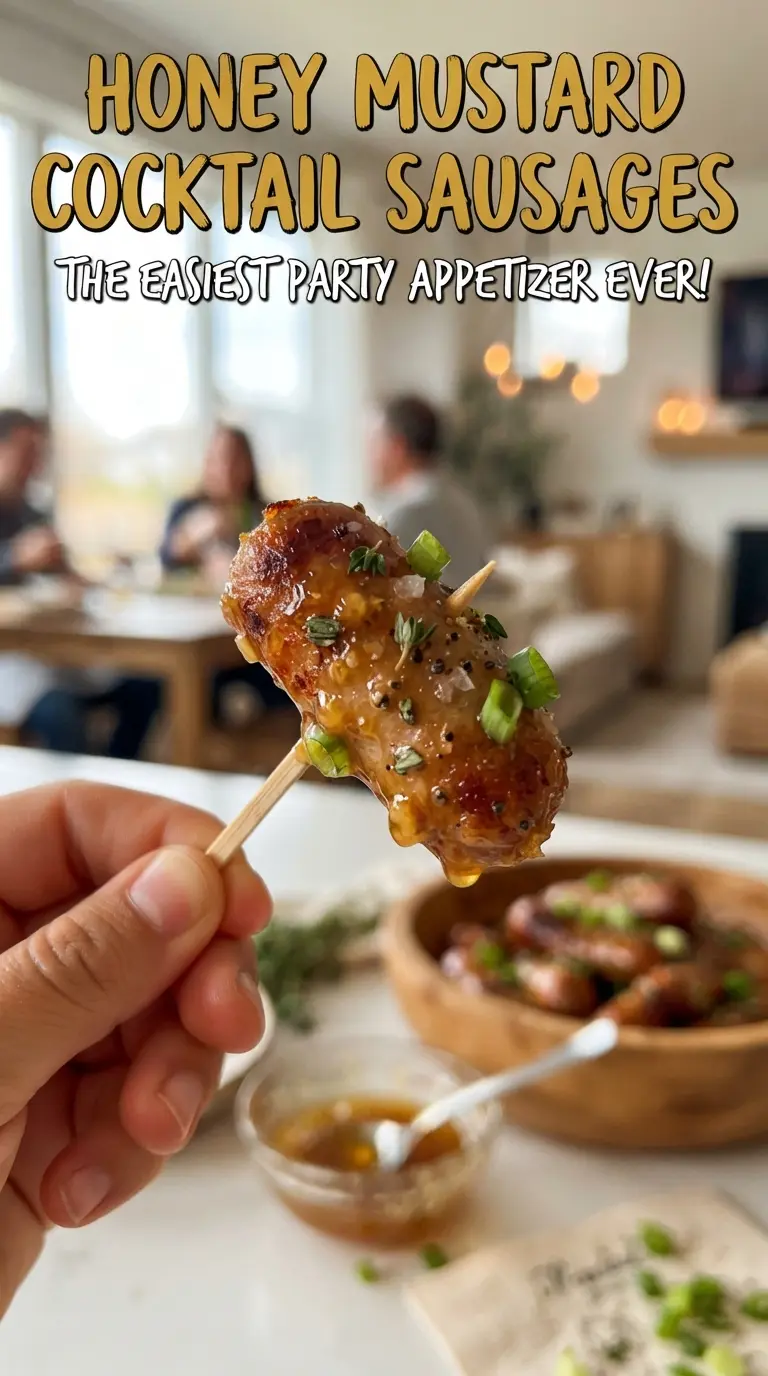
- Cocktail sausages — These carry the whole dish. The pre-cooked kind is best here because you’re not trying to cook them through, just brown them and coat them. If you use mini smoked sausages, they’ll add a little more snap and a deeper savory flavor.
- Honey — This is the gloss and the sweetness. It’s what turns the mustard mixture into a sticky glaze instead of a loose sauce. Use regular honey, not a strongly flavored one, unless you want that flavor to show up in the finished dish.
- Whole grain mustard — This brings texture and a sharper mustard bite that keeps the glaze interesting. You can’t fully replace it with smooth mustard because the little seeds add body and visual appeal. If you must substitute, add a spoonful of extra Dijon and accept a slightly smoother finish.
- Dijon mustard — Dijon rounds out the sharper grain mustard and helps the glaze emulsify a bit as it simmers. It gives the sauce that familiar tangy backbone without making it taste grainy or harsh.
- Soy sauce — Just a tablespoon deepens the flavor and cuts the sweetness. It doesn’t make the sausages taste Asian; it just adds salt and umami so the glaze tastes finished instead of candy-sweet.
- Butter, garlic, sesame seeds, and chives — Butter helps the garlic bloom and gives the sauce a smoother finish. Garlic should cook only until fragrant; if it browns, it turns bitter fast in this small amount of sauce. Sesame seeds and chives are garnish, but they also add a little toastiness and fresh bite right at the end.
The 20 Minutes That Build the Sticky Glaze
Browning the Sausages First
Melt the butter in a large skillet over medium heat, then add the sausages in a single layer if you can. Let them sit long enough to pick up color before stirring; constant movement keeps them pale. You’re looking for browned spots on the outside, not a deep sear all over. If the skillet looks dry before the sausages have colored, lower the heat a touch instead of adding more butter, which can make the glaze greasy later.
Waking Up the Garlic
Add the minced garlic and cook it for about 30 seconds, just until you smell it bloom in the pan. Garlic goes from fragrant to bitter fast once the pan is hot, so this is a quick stage. If it starts turning golden before the sauce goes in, move on immediately. The residual heat will finish the job.
Turning the Mustard Mixture into a Glaze
Whisk the honey, both mustards, and soy sauce together, then pour it over the sausages. Stir to coat every piece and bring the mixture to a gentle simmer. The sauce should bubble lazily, not roar. Give it 8 to 10 minutes, stirring often, until it looks thick, shiny, and sticky enough to cling to the spoon and the sausages.
Finishing with Sesame and Chives
Once the glaze has tightened up, take the skillet off the heat and sprinkle over the sesame seeds and chopped chives. Those last-minute toppings matter because they keep their texture and color instead of disappearing into the sauce. Serve the sausages warm with toothpicks while the glaze is still glossy. If they sit too long, the sauce will continue to thicken as it cools, which makes them harder to spear cleanly.
How to Adapt These Sausages for Different Crowds
Make Them Spicier for Game Day
Add a pinch of crushed red pepper or a little hot sauce to the glaze. That cuts through the sweetness and gives the sausages more bite without changing the texture. Start small, then taste after the sauce has simmered for a minute, because heat feels stronger once the honey reduces.
Make Them Gluten-Free
Use certified gluten-free cocktail sausages and swap in tamari or a gluten-free soy sauce. The glaze will still thicken the same way, and you won’t lose the savory balance the soy sauce provides. Check the sausage label carefully, because some brands use fillers that sneak in gluten.
Use Different Mustards Without Losing the Balance
If you only have Dijon, use it for both mustard amounts and add a teaspoon of whole mustard seeds if you have them. If you only have whole grain mustard, the sauce will be a little looser and sharper, so simmer it an extra minute or two. The goal is still the same: tangy, sticky, and balanced, not aggressively mustardy.
Storage and Reheating
- Refrigerator: Store leftovers in an airtight container for up to 4 days. The glaze will thicken as it chills, which is normal.
- Freezer: These freeze fairly well for up to 2 months, though the sauce won’t stay quite as glossy after thawing. Freeze in a flat, sealed container and thaw overnight in the fridge.
- Reheating: Warm gently in a skillet over low heat with a splash of water if the glaze looks too tight. High heat can make the honey scorch before the sausages are heated through, so keep it slow and stir often.
Answers to the Questions Worth Asking
Honey Mustard Cocktail Sausages
Ingredients
Equipment
Method
- Melt butter in a large skillet over medium heat, then add the cocktail sausages and brown for 5-6 minutes, turning as needed until they’re golden. Keep an eye on the skillet so the butter foams lightly, not browns too fast.
- Add minced garlic to the skillet and cook for 30 seconds until fragrant, stirring to coat the sausages. The garlic should smell aromatic without turning dark.
- Whisk honey, whole grain mustard, Dijon mustard, and soy sauce, then pour the mixture over the sausages. Stir immediately so the glaze spreads across the surface.
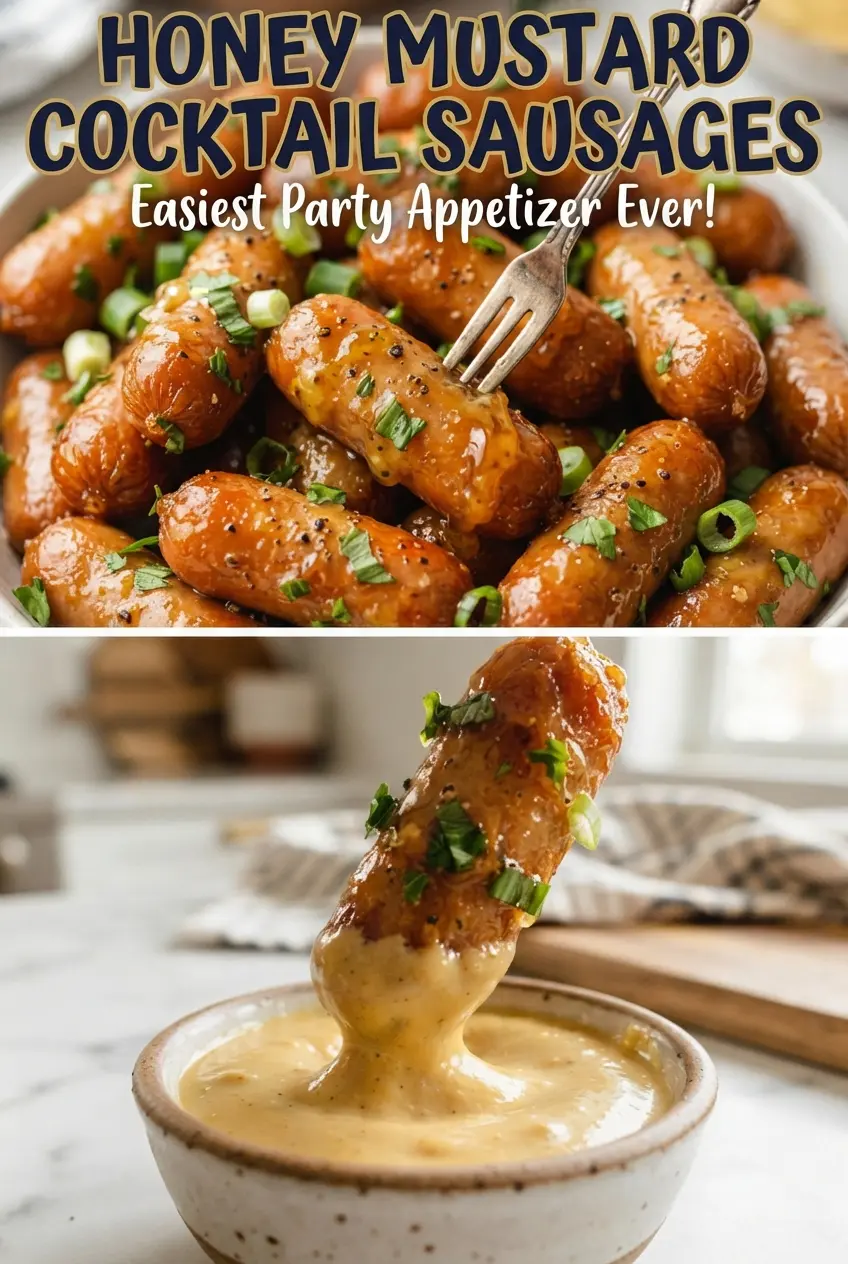
- Simmer for 8-10 minutes over medium heat, stirring often, until the glaze is thick and sticky. Visual cue: the coating should cling to the sausages and look glossy rather than runny.
- Sprinkle sesame seeds and chopped fresh chives over the sausages right before serving. Serve warm with toothpicks so the glaze drips slightly as each sausage is lifted.