Glossy whole berry cranberry sauce that seals up beautifully in half-pint jars has a way of making the whole kitchen feel a little more pulled together. It’s bright, tart, and just sweet enough to keep spooning straight from the jar. The texture lands right where it should for canning: thick enough to hold the berries in suspension, loose enough to pour hot and ladle cleanly without leaving a gummy mess behind.
What makes this version work is the balance of acid, sugar, and heat. Orange juice softens the sharp edge of the cranberries, bottled lemon juice keeps the acidity where it needs to be for safe water bath canning, and a little orange zest at the end keeps the flavor fresh instead of flat. The berries need a gentle boil, not a hard one, so they burst without turning into a dull puree.
Below, I’m walking through the part that matters most: how to get the sauce thick enough for jars without cooking it down past the point where it jars cleanly. You’ll also find storage notes and answers to the questions that usually come up the first time you can cranberry sauce at home.
The sauce thickened up exactly at the 12-minute mark and the orange zest kept it from tasting one-note. I opened a jar the next day and it was still bright, glossy, and perfect on toast.
Save this glossy whole berry cranberry sauce for the jars you’ll want to open all year long.
The Part That Keeps Cranberry Sauce Thick Enough to Can Cleanly
The mistake most people make is cooking cranberry sauce until it looks finished in the pot, then discovering it turns stiff or separates after canning. Cranberries keep thickening as they cool, and the sugar concentration matters just as much as the fruit itself. If you boil it too hard or too long, the sauce can become jammy in a way that makes ladling messy and leaves less clean headspace in the jars.
The better target is a gentle boil with steady bursting berries and a sauce that coats a spoon but still slides off without clinging like paste. That texture gives you enough body for the jars to settle well during processing, while still leaving the berries intact. The 5-minute rest in the canner after turning off the heat also helps keep the jars from jostling when the liquid is still very hot.
What Each Ingredient Is Doing in the Jar
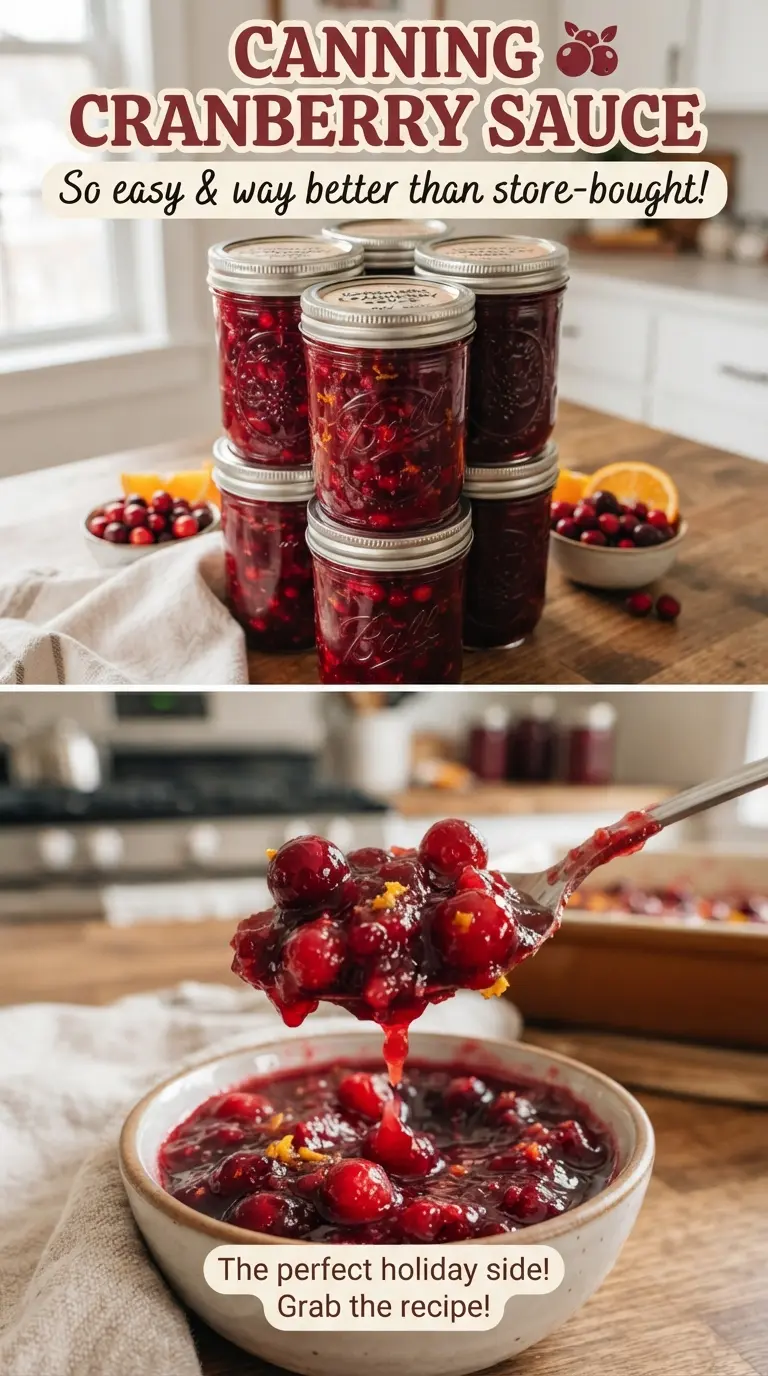
- Fresh cranberries — These are the backbone of the sauce. Frozen cranberries work too, and you don’t need to thaw them first, but the sauce may take a minute or two longer to come back to a boil.
- Sugar — This does more than sweeten. It helps the sauce thicken and keeps the finished flavor balanced, especially since cranberries are sharp on their own.
- Water and orange juice — This is the cooking liquid that prevents scorching and gives the fruit enough room to burst evenly. Fresh orange juice is fine, but bottled juice is also acceptable here because the cranberries and lemon juice do the important work.
- Bottled lemon juice — Don’t swap in fresh lemon juice if you’re canning and guessing at acidity. Bottled lemon juice is the safer, consistent choice for a water bath recipe.
- Orange zest — Add it at the end so the citrus stays bright. If it goes in too early, some of that fresh aroma cooks off.
From Boiling Pot to Sealed Jar Without Losing the Texture
Heating the Jars and Building the Syrup Base
Start with clean half-pint jars, lids, and bands, and keep the jars hot in simmering water so they don’t crack when the cranberry sauce goes in. In the pot, bring the sugar, water, and orange juice to a boil and stir until the sugar disappears. You’re looking for a clear syrup, not grainy liquid at the bottom of the pan. If the sugar isn’t fully dissolved before the berries go in, it can settle and scorch as the sauce thickens.
Cooking the Cranberries Until They Burst
Add the cranberries and bottled lemon juice, then boil gently for 10 to 12 minutes. The berries should pop open with a soft burst and the liquid should turn glossy and slightly thicker, not reduce down into a sticky paste. Stir often enough to keep the bottom from catching, but not so aggressively that you break every berry apart. The sauce should still look loose in the pan when you pull it off the heat; it tightens as it cools in the jars.
Finishing with Zest and Filling the Jars
Stir in the orange zest after the heat is off so the citrus stays fragrant. Ladle the hot sauce into hot jars, leaving 1/4-inch headspace, then wipe the rims carefully. A clean rim matters here because even a thin smear of sauce can keep a lid from sealing. Apply the lids and bands fingertip tight, not cranked down hard.
Processing and Cooling the Right Way
Process the jars in a boiling water bath canner for 15 minutes, adjusting for altitude if needed. When the time is up, turn off the heat and let the jars rest in the canner for 5 minutes before lifting them out. That pause reduces sudden temperature changes and helps the sauce settle without siphoning out of the jars. Leave the finished jars undisturbed for 24 hours before checking the seals.
How to Adapt This Cranberry Sauce for Different Kitchens and Uses
Lower-Sugar Cranberry Sauce
You can reduce the sugar a little, but don’t cut it aggressively if you want the same body and reliable set in the jar. Less sugar means a thinner sauce and a sharper tartness, so the tradeoff is a brighter flavor with less roundness and a looser texture.
No Orange Juice on Hand
Water can replace the orange juice, but the flavor will be flatter and a little less layered. If you go this route, keep the orange zest in the recipe because that’s what brings back the citrus note.
Freezer-Friendly Version
If you don’t want to can it, cool the sauce completely and freeze it in airtight containers, leaving room for expansion. The texture stays good, but the berries will soften a bit more after thawing, which is normal.
How to Store the Sealed Jars
Store sealed jars in a cool, dark place for up to 1 year. Once opened, refrigerate the jar and use it within about 2 weeks. If a lid didn’t seal, move that jar straight to the refrigerator and treat it like fresh sauce.
Questions I Get Asked About This Recipe
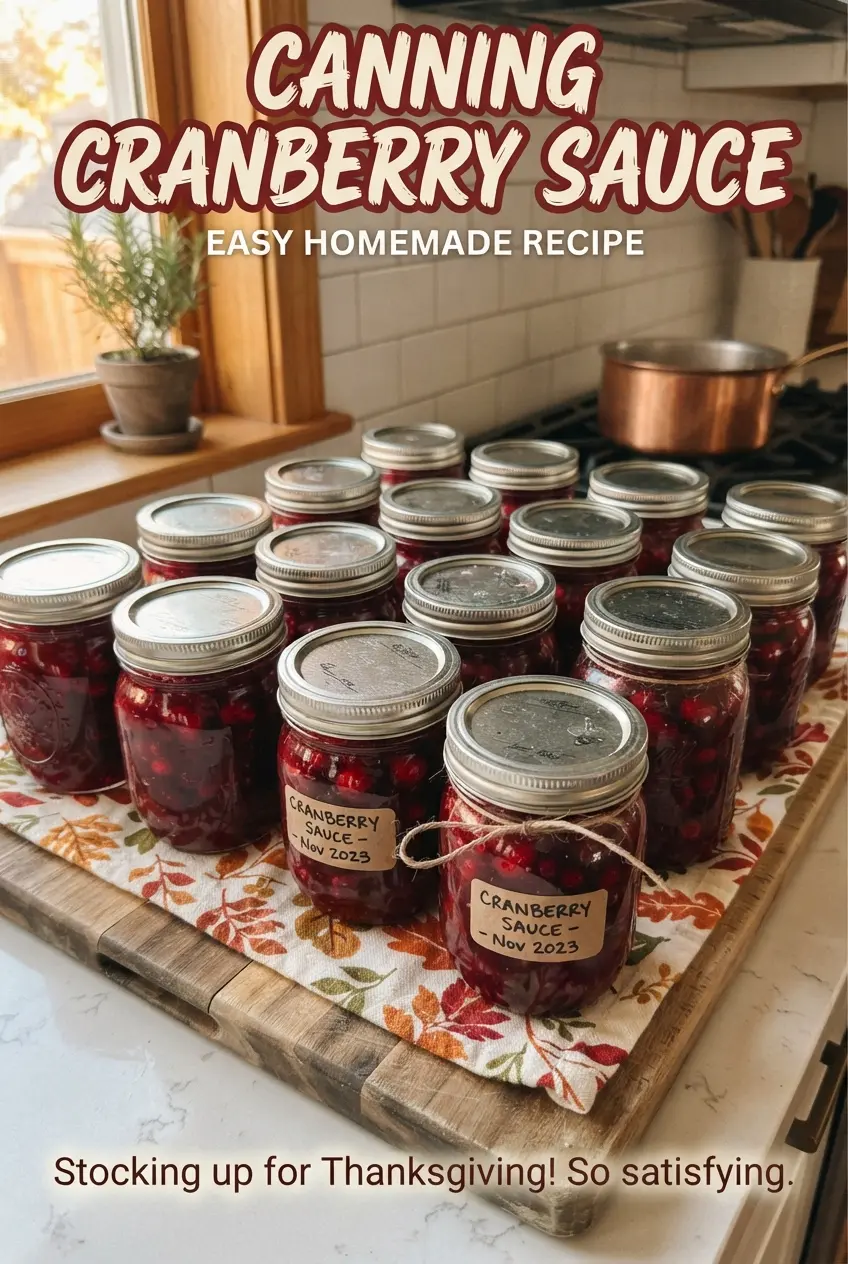
Canning Cranberry Sauce
Ingredients
Equipment
Method
- Wash 12 half-pint jars, lids, and bands, then keep the jars hot in simmering water so they don’t crack when filled.
- Bring a separate canner of water to a boil to prep for the boiling water bath canning step.
- In a large pot, bring sugar, water, and orange juice to a boil over medium-high heat, stirring until the sugar dissolves completely.
- Add the fresh cranberries and bottled lemon juice, then boil gently for 10-12 minutes until the berries burst and the sauce thickens.
- Stir in the orange zest and cook for 1 additional minute to evenly distribute the citrus flavor.
- Ladle the hot sauce into the hot jars, leaving 1/4-inch headspace to support proper sealing.
- Wipe the jar rims clean, then apply lids and bands fingertip tight to ensure consistent closure.
- Process the jars in a boiling water bath canner for 15 minutes, adjusting processing time for your altitude.
- Turn off the heat and rest the jars in the canner for 5 minutes before lifting them out.
- Cool the jars undisturbed at room temperature for 24 hours so the seals can set properly.
- Check that the lids have sealed after cooling, then store sealed jars in a cool dark place up to 1 year.