Parmesan herb roasted acorn squash turns tender in the oven with crisp, golden edges and a salty cheese crust that clings to every curve. The squash softens into a buttery texture while the Parmesan browns into little lacey patches, so each bite lands somewhere between savory and sweet without feeling heavy.
What makes this version work is the way the squash is cut into rings instead of left in halves. Those scalloped pieces give you more surface area for caramelization and more spots for the cheese to crisp. A short first roast softens the flesh, then the Parmesan goes on only after the squash has started to tenderize, which keeps it from burning before the inside is done.
The herb mixture is simple on purpose. Garlic, thyme, and rosemary bring enough fragrance to keep the squash from tasting flat, and a light hand with the oil helps the edges roast instead of steaming. Keep reading for the step that gives you the crispiest crust and the storage note that keeps leftovers from turning soft.
The squash caramelized beautifully and the Parmesan got crisp instead of melting into a puddle. I served it with roast chicken and everyone kept picking off the browned edges first.
Save this Parmesan herb roasted acorn squash for the nights when you want crispy edges, melted-tender centers, and a savory Parmesan crust.
The Cut That Gives You More Crisp, Not More Steam
Acorn squash can go limp in the oven if the pieces are too thick or crowded on the pan. Rings fix that. The cut exposes the flesh on both sides, which means more caramelization and less of that watery center that sometimes shows up when squash roasts in larger wedges.
The other thing that matters is space. If the slices overlap, they trap steam and the Parmesan turns sandy instead of crisp. A single layer on a parchment-lined sheet pan lets the heat reach the squash evenly, and flipping halfway through gives both sides enough contact with the hot pan to brown properly.
- Single layer — Crowding is the fastest way to lose browning.
- First roast before cheese — The squash needs a head start so the Parmesan can finish crisping without overcooking the center.
- Parchment — It keeps the cheese from welding itself to the pan while still allowing the edges to color.
What Each Ingredient Is Actually Doing Here

- Acorn squash — This is the base and the texture of the dish. Choose squash that feels heavy for its size and has firm skin. If you substitute another winter squash, use one that holds its shape well, like delicata, because softer squash can collapse before the cheese browns.
- Olive oil — It carries the herbs and helps the squash caramelize. Don’t skimp here, but don’t drown the slices either; too much oil softens the edges instead of crisping them.
- Garlic, thyme, and rosemary — These build the savory backbone. Fresh herbs matter most here because the squash is mild, and dried rosemary can taste woody if used too heavily. If you only have dried herbs, cut the amount in half and crush them between your fingers before tossing.
- Parmesan — This is the crust. Grated Parmesan melts and browns faster than shredded, which is exactly what you want for those crisp little edges. Use the real stuff if you can; pre-grated cheese often has anti-caking agents that keep it from forming the same lacy crust.
The Two-Round Roast That Keeps the Cheese Crisp
Seasoning the Squash First
Toss the sliced squash with olive oil, garlic, thyme, rosemary, salt, and pepper until every ring is lightly coated. The pieces should glisten, not look slick or pooled in oil. If the garlic looks clumped in one spot, break it up now, because raw garlic sitting in one mound can scorch before the squash is tender.
Roasting Until the Edges Start to Color
Roast the squash at 400F for about 20 minutes on a parchment-lined pan. You’re looking for the edges to soften and take on a little color, not full browning yet. If your pieces are cut thicker than 1/2-inch, they may need a few extra minutes before the next step.
Adding the Parmesan at the Right Moment
Flip the rings, then sprinkle the Parmesan over the top. This timing matters because cheese added too early can melt into the pan before it has a chance to brown. Return the pan to the oven and roast until the squash is tender and the Parmesan is golden and crisp at the edges, about 12 to 15 minutes more.
Serving While the Crust Is Still Snappy
Let the squash sit for a minute or two on the pan, then move it to a platter. The crust is at its best right after roasting, when the cheese still has a little snap. If you leave it on the hot pan too long, trapped steam from the squash can soften those crisp bits faster than you want.
How to Adapt This for Different Tables
Dairy-Free Roasted Acorn Squash
Leave off the Parmesan and finish with toasted breadcrumbs or chopped nuts for texture. You’ll lose the salty cheese crust, but the squash still roasts beautifully with the herbs and olive oil.
Delicata or Kabocha Swap
Delicata can be sliced the same way and usually roasts a little faster, while kabocha needs a bit more time and deeper browning before it turns silky. Use the same seasoning, then judge by tenderness rather than the clock.
Extra-Savory Finish
Add a pinch of red pepper flakes or a little lemon zest after roasting. The heat wakes up the richness of the cheese, and the lemon keeps the squash from tasting too mellow.
Storage and Reheating
- Refrigerator: Store leftovers in an airtight container for up to 4 days. The Parmesan will soften, but the flavor holds well.
- Freezer: I don’t recommend freezing this one. The squash turns watery when thawed, and the cheese loses its crispness.
- Reheating: Reheat on a sheet pan at 375F until warmed through and the edges perk back up. Skip the microwave if you can; it steams the squash and turns the crust rubbery.
Answers to the Questions Worth Asking
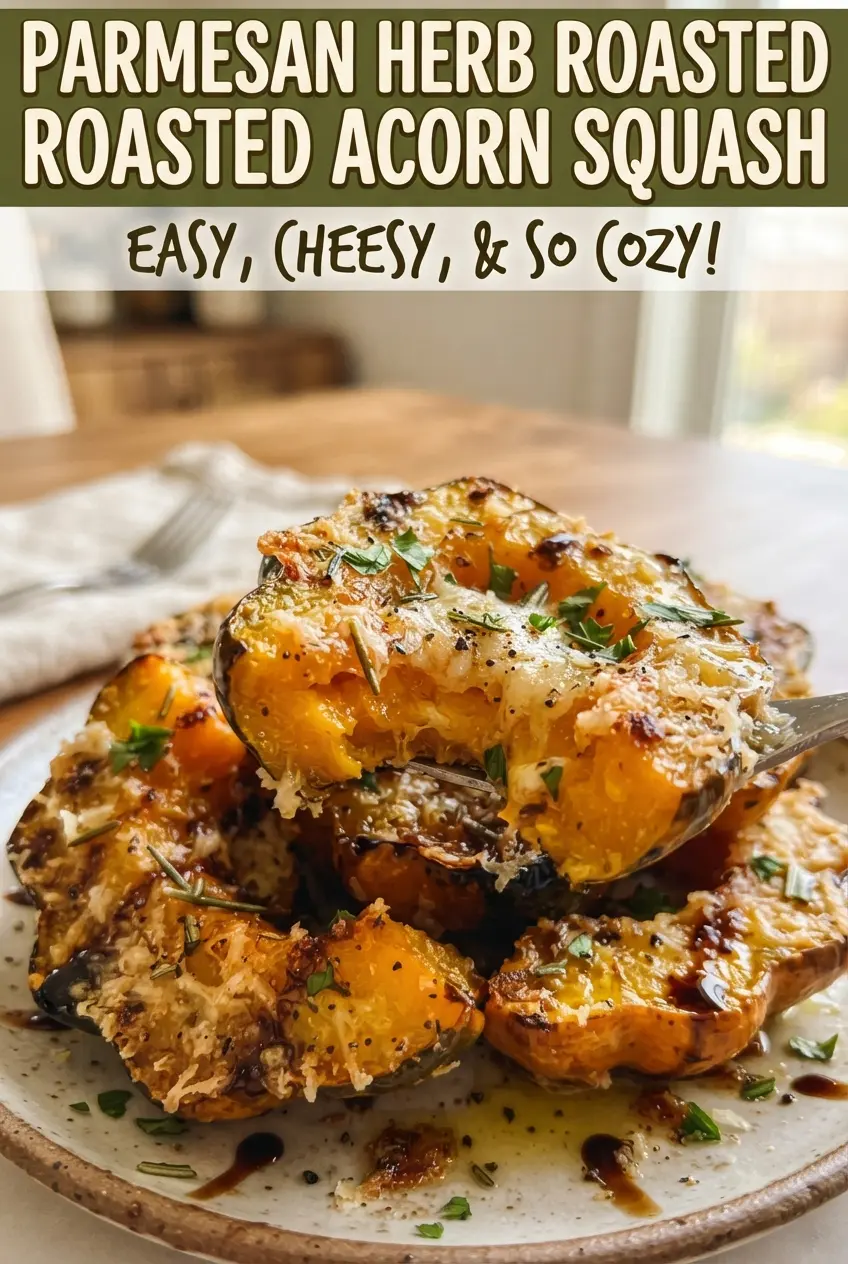
Parmesan Herb Roasted Acorn Squash
Ingredients
Equipment
Method
- Preheat the oven to 400°F and line a sheet pan with parchment.
- Arrange the acorn squash rings in a single layer on the lined sheet pan.
- Toss the squash slices with olive oil, garlic, thyme, rosemary, salt, and pepper so every ring is coated.
- Roast for 20 minutes at 400°F until the squash begins to soften and the edges look lightly starting to brown.
- Flip the slices and sprinkle generously with grated Parmesan.
- Roast 12-15 minutes more at 400°F until the squash is tender and the Parmesan is golden and crisp.