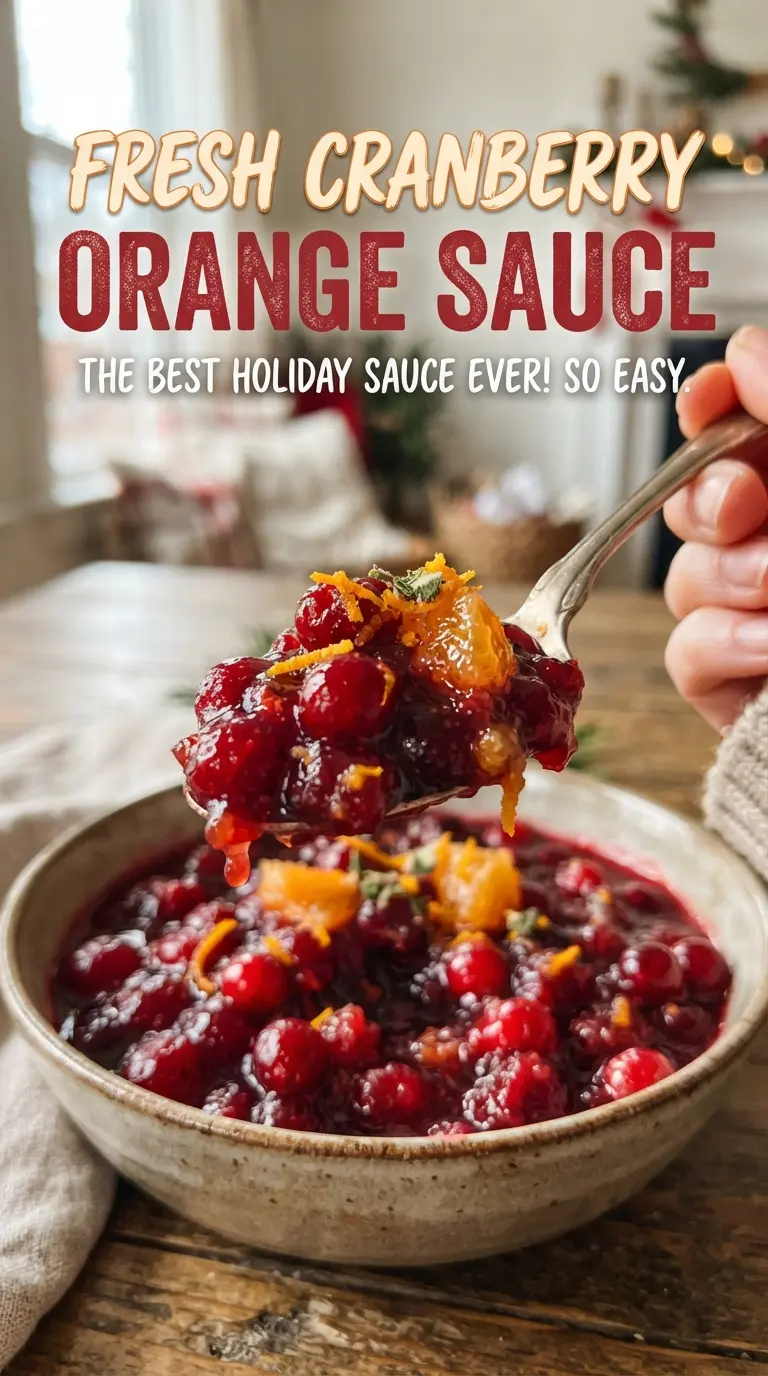
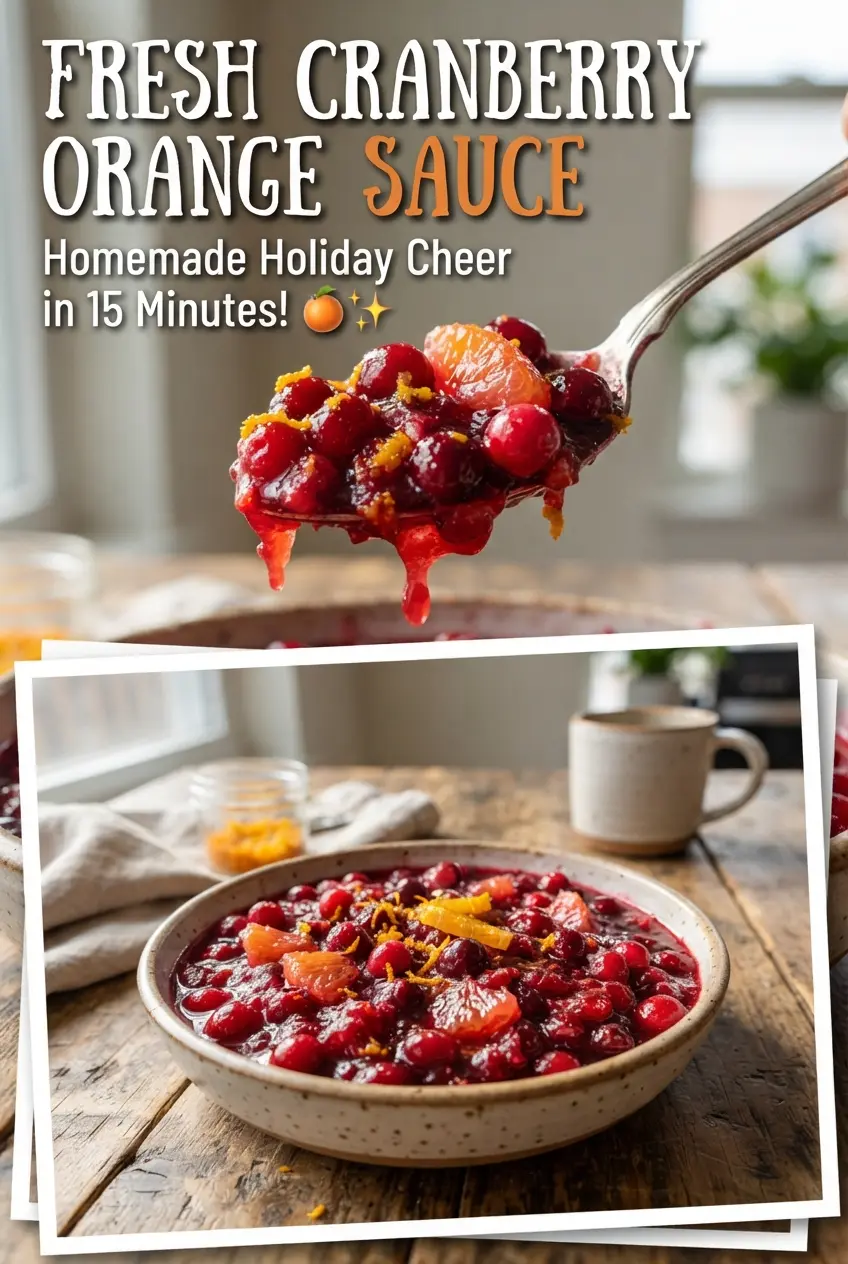
Cranberry orange sauce lands somewhere between bright and jammy, with tart berries that pop into a glossy spoonable sauce and orange segments that keep every bite lively. It’s the kind of side that wakes up roast turkey, chicken, pork, or even a simple pan of biscuits without asking for much work at all.
The trick is starting with orange juice and sugar together so the fruit has a sweet, citrusy base before the cranberries go in. Once the berries break down, the sauce thickens as it cools, and that’s when the orange zest and fresh segments go in. Add them too early and the citrus turns soft and flat; fold them in at the end and they stay bright.
Below, I’ve included the small timing details that keep the sauce from turning cloudy or too loose, plus a few ways to adapt it if you want it less sweet, a little spicier, or make-ahead friendly.
The sauce thickened up beautifully as it cooled, and the orange segments kept it from tasting one-note. I served it with pork and there wasn't a spoonful left.
Love that bright, jewel-toned cranberry orange sauce? Save it to Pinterest for holiday dinners, pork roasts, and make-ahead side dishes.
The Part That Keeps Cranberry Sauce Bright Instead of Muddy
Cranberry sauce goes dull when it cooks too hard or too long. You want a lively simmer, not a rolling boil once the berries are in the pan. That gentler heat lets the skins burst and the pectin do its work without smashing everything into a flat, sticky paste.
The other thing that matters is the order. Sugar and orange juice go in first so the liquid has a chance to dissolve cleanly before the cranberries hit the heat. Zest goes in after cooking because it brings the strongest orange aroma at the end, and the segmented orange gets folded in last so it stays juicy and distinct instead of melting away.
- Fresh cranberries — These are nonnegotiable here. Frozen cranberries will work in a pinch, but don't thaw them first or they can water down the sauce and cook unevenly.
- Fresh orange juice — Bottled juice tastes flatter and less fragrant. Fresh juice gives the sauce its lift and balances the tart berries without making the sauce taste candy-sweet.
- Orange zest — This is where the orange aroma really shows up. Use the fine side of a grater and only take the orange part of the peel; the white pith turns bitter fast.
- Orange segments — These add texture and fresh pops of citrus at the end. Peel them cleanly so you don't drag any bitter membrane or pith into the bowl.
- Sugar — It doesn't just sweeten the sauce. It helps the cranberries release their juices and balances the sharpness so the sauce tastes rounded instead of harsh.
What Each Ingredient Is Actually Doing in This Recipe
- Primary ingredient (the star) — Quality matters most. Choose the best you can find.
- Cooking medium (oil, butter, or broth) — This carries flavors and prevents dryness.
- Seasonings (salt, pepper, spices, herbs) — Layer flavors so nothing overpowers. Build depth gradually.
- Aromatics (garlic, onion, herbs) — Cook with fat to bloom flavors. Become the foundation.
- Supporting ingredients — Complement the main ingredient without overpowering it.
- Sauce or liquid (if applicable) — Brings flavors together. Balance richness with acid.
- Acid (lemon, vinegar, wine, or other) — Brightens and prevents flat-tasting results.
- Final finish (garnish, glaze, or sauce) — Prevents one-dimensional taste and adds visual appeal.
How to Cook It So the Sauce Sets in the Bowl, Not the Pan
Starting the Citrus Syrup
Bring the sugar and orange juice to a full boil in a saucepan, stirring just until the sugar disappears. At this point the mixture should look clear and lightly syrupy, not grainy. If the sugar hasn't dissolved before the cranberries go in, you can end up with uneven sweetness and a slightly sandy finish.
Breaking Down the Cranberries
Add the cranberries and pinch of salt, then lower the heat to a steady simmer. Within a few minutes, you'll hear the berries start to pop and split. Stir now and then so the bottom doesn't scorch; the sauce is ready when most of the berries have burst and the liquid looks thickened but still loose enough to pour.
Finishing for Freshness
Take the pan off the heat before you add the zest. Residual heat is enough to wake up the orange oil without cooking it flat. Let the sauce cool slightly, then gently fold in the orange segments so they stay intact. The sauce will continue to thicken as it cools, so don't judge the final texture while it's still hot.
How to Change This Sauce Without Losing What Makes It Work
Make it less sweet
Cut the sugar back by 2 to 3 tablespoons if you like a sharper cranberry bite. The sauce will taste more tart and less glossy, but the orange juice still keeps it balanced.
Add warm spice
A small pinch of cinnamon or a strip of fresh ginger simmered with the juice gives the sauce a warmer edge. Keep it subtle; too much spice covers up the clean cranberry-orange flavor that makes this version work.
Make it dairy-free and naturally gluten-free
This recipe already fits both without any changes. That's one reason it's such a handy side dish for a crowd with mixed dietary needs.
Storage and Reheating
- Refrigerator: Store in an airtight container for up to 1 week. It thickens as it chills, so don't panic if it looks loose right after cooking.
- Freezer: It freezes well for up to 2 months. Freeze in a sealed container with a little headspace, then thaw overnight in the fridge.
- Reheating: Serve it cold or let it sit at room temperature for a bit. If you want it warm, use low heat on the stovetop and stir gently; high heat can make the orange segments soften too much and push the sauce past its best texture.
Answers to the Questions Worth Asking
Fresh Cranberry Orange Sauce
Ingredients
Equipment
Method
- Bring the sugar and fresh orange juice to a boil in a saucepan over medium-high heat, stirring until the sugar dissolves and the liquid looks clear and glossy. Start a timer as soon as it reaches a rolling boil, and keep the boil steady for 1 minute.
- Add the fresh cranberries and the pinch of salt, then return the mixture to a simmer. Simmer for 10 minutes, stirring occasionally, until most of the berries burst and the sauce thickens slightly and looks red with softened skins.
- Remove the saucepan from the heat and stir in the orange zest until it disperses and you can see tiny flecks suspended throughout the sauce.
- Let the sauce cool slightly until it’s warm but not hot, about 5 minutes, so the orange segments don’t soften too much. The surface should look thicker as it cools.
- Gently fold in the peeled and segmented orange so the pieces stay intact and glossy, not mashed.
- Chill the sauce until serving, covered, so it sets to a spoonable texture. Serve cold for the brightest fruit flavor and a thicker consistency.