Pumpkin cookies with sweet cream glaze bake up soft, cakey, and gently spiced, with a tender crumb that stays plush instead of turning dry at the edges. The glaze is the part that makes people come back for a second cookie: it sets into a thin, milky shell that still melts on the tongue and plays nicely with the cinnamon and pumpkin pie spice underneath.
The trick here is keeping the cookie batter light and not overworking it once the dry ingredients go in. Pumpkin brings moisture, but it also makes cookies spread in a slightly unpredictable way if the butter is too warm or the flour gets stirred too much. The glaze matters just as much — heavy cream and melted butter give it a richer finish than a basic powdered sugar glaze, so it sits on top without disappearing into the cookie.
Below, I’ve included the little details that keep these cookies soft in the middle, the glaze thick enough to pour, and a few smart swaps if you need them.
The cookies stayed soft for days, and the sweet cream glaze set up beautifully instead of running off the sides. I used a small cookie scoop and they baked evenly with that cake-like middle everyone loved.
Pumpkin cookies with sweet cream glaze are worth pinning for the soft cakey texture and that rich pour-over glaze that sets just enough.
The Secret to Keeping These Pumpkin Cookies Soft Instead of Gritty
Most pumpkin cookies go wrong because the dough gets handled like a regular drop cookie. Pumpkin adds enough moisture that the batter can turn heavy fast, and once that happens, you lose the light, cakey bite these cookies should have. The goal is a thick batter that still drops cleanly from a spoon or scoop, not a stiff dough you have to wrestle.
Butter and sugar should be beaten until the mixture looks pale and fluffy. That step traps air, and it matters more here than in a dense cookie. When the pumpkin goes in, the batter may look slightly curdled for a second; that’s normal. Once the flour goes in, stop stirring as soon as the dry streaks disappear. Overmixing is what makes these bake up dense and tough instead of tender.
- Pumpkin puree — Use plain pumpkin puree, not pumpkin pie filling. Pie filling has sugar and spices already added, which throws off both the texture and the seasoning balance.
- Butter — Room-temperature butter creams properly with the sugar. If it’s too soft or oily, the cookies spread more and bake flatter.
- Flour — Spoon and level it if you can. Too much flour makes the cookies dry and bready, while too little gives you cakey puddles that never set quite right.
- Pumpkin pie spice and cinnamon — They’re doing different jobs here. The pie spice gives the warm, rounded pumpkin note, and the extra cinnamon sharpens it so the cookies don’t taste flat.
What the Sweet Cream Glaze Is Doing That Plain Icing Can’t
The glaze isn’t just decoration. Heavy cream gives it body and a soft dairy note that balances the spice, while melted butter adds a little richness so the finish tastes fuller than a basic powdered sugar icing. If you swap the cream for milk, the glaze still works, but it will be thinner and set more like a light drizzle than a true coating.
The cinnamon in the glaze should stay subtle. It’s there to echo the cookies, not overpower them. Whisk until smooth and glossy, then test it with a spoon — it should pour in a ribbon and slowly settle back into itself. If it runs off the cookies immediately, it’s too thin. Add powdered sugar a tablespoon at a time until it holds its shape.

- Heavy cream — This is what makes the glaze taste lush and set with a soft sheen. Milk works in a pinch, but the glaze won’t have the same richness.
- Powdered sugar — It’s the structure of the glaze. Sift it if yours is lumpy, or you’ll end up chasing tiny bits of sugar around the bowl.
- Butter in the glaze — It adds depth and keeps the glaze from tasting one-dimensional. Melt it fully before whisking it in so the texture stays smooth.
Getting the Batter and Glaze to Behave in the Oven
Creaming the Butter and Sugar
Beat the butter and sugar until the mixture is lighter in color and looks a little fluffy around the edges of the bowl. That air helps the cookies rise into a soft, cakey shape instead of baking up flat and dense. If the butter is greasy or melted, the mixture won’t hold air well and the cookies will spread more than they should.
Bringing in the Pumpkin
Add the pumpkin, egg, and vanilla after the butter mixture is ready. The batter may look loose or slightly broken for a moment, but it comes together once the dry ingredients are folded in. Don’t keep mixing to smooth out every streak; that’s how you overdevelop the flour and lose the tender crumb.
Folding and Portioning
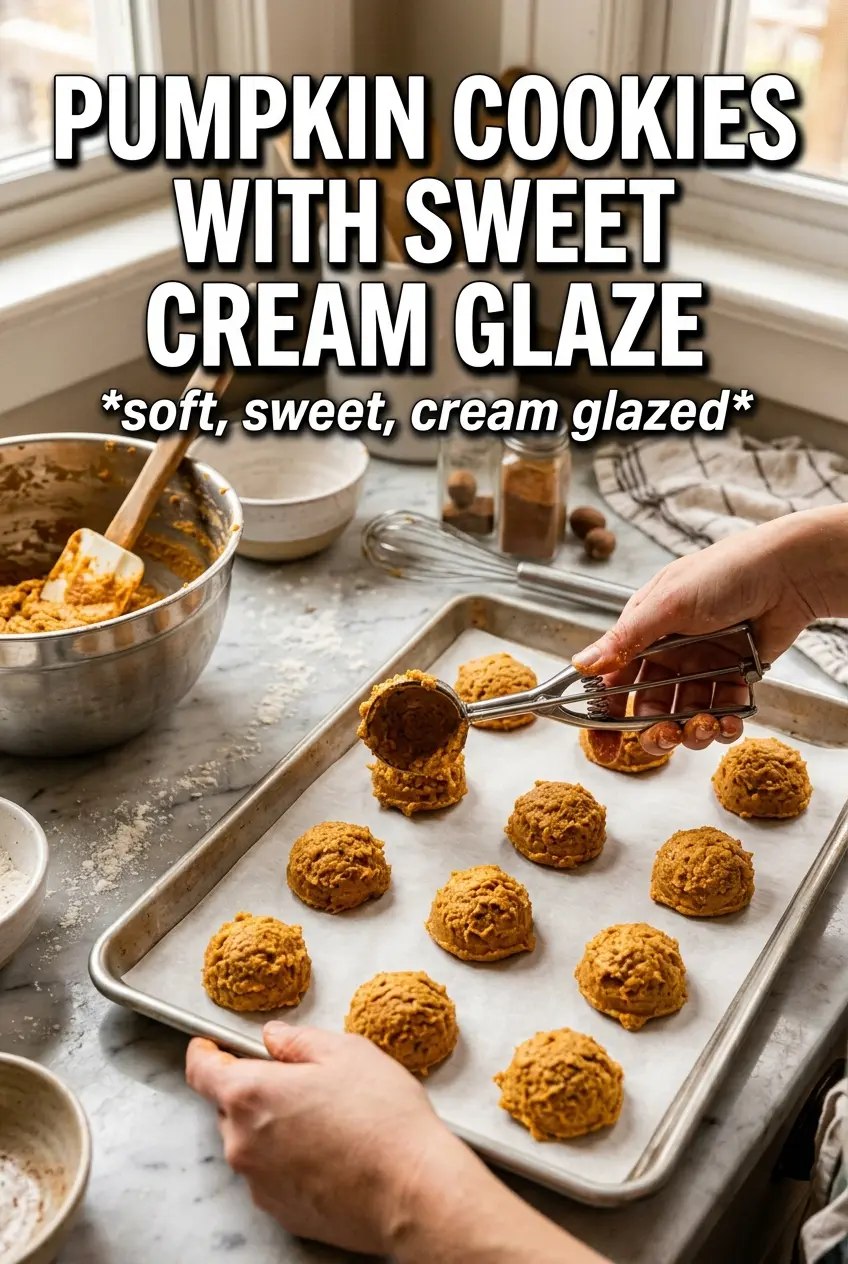
Fold in the dry ingredients just until no flour pockets remain, then drop rounded 2-tablespoon portions onto the baking sheet. A scoop gives you more even cookies, which matters because these bake quickly and can dry out at the edges if some are much smaller than others. If the dough seems sticky, chill it for 10 minutes rather than adding extra flour.
Baking and Cooling Before Glazing
Bake at 350°F until the edges are set and the tops spring back lightly when touched. They should still look soft in the center when they come out; that’s what keeps them plush after cooling. Let them cool completely before glazing, or the sweet cream glaze will slide right off and turn watery instead of setting on top.
How to Adjust These Pumpkin Cookies Without Losing the Texture
Gluten-Free Version
Use a 1:1 gluten-free baking blend that includes xanthan gum. The cookies will still be soft and cakey, but they may need an extra minute in the oven because gluten-free flour blends hold moisture differently.
Dairy-Free Glaze
Swap the butter for a plant-based butter and the heavy cream for full-fat coconut milk or another rich non-dairy cream. The glaze will still set nicely, though the flavor will shift slightly toward whatever dairy-free substitute you choose.
Extra-Spiced Cookies
Add another 1/4 teaspoon cinnamon or a pinch of ground ginger if you want the spice to come forward more. Keep the pumpkin pie spice in place, since it gives the cookie its rounded base note.
Storage and Reheating
- Refrigerator: Store glazed cookies in an airtight container for up to 4 days. The glaze will stay set, but the cookies soften a bit more as they sit.
- Freezer: Freeze the unglazed cookies for up to 2 months. Thaw at room temperature, then glaze after they’ve fully defrosted so the topping doesn’t weep.
- Reheating: These are best served at room temperature. If you want the cookie slightly warm, heat it before glazing; once glazed, reheating can make the topping melt and lose its finish.
Questions I Get Asked About This Recipe
Pumpkin Cookies With Sweet Cream Glaze
Ingredients
Equipment
Method
- Beat the butter and sugar until smooth, then mix in the pumpkin, egg, and vanilla until fully combined. The mixture should look creamy and evenly orange, not streaky.
- Fold in the dry ingredients until no flour pockets remain. The dough will be thick enough to scoop and hold shape when you portion it.
- Drop 2-tablespoon rounds onto a sheet pan with spacing between cookies. Flatten them slightly only if the tops look very mounded.
- Bake at 350F for 10-12 minutes, until the edges look set and lightly golden. Pull the sheet pan when the centers still look soft.
- Cool completely on the pan or a wire rack before glazing. The cookies must be room temperature so the glaze sets neatly rather than soaking in.
- Whisk the sweet cream glaze ingredients together until pourable but thick. It should ribbon off the whisk with a slow fall.
- Spoon the glaze generously over each cookie, letting it spread across the tops. After glazing, let the cookies set for 20 minutes before serving so the surface firms up.