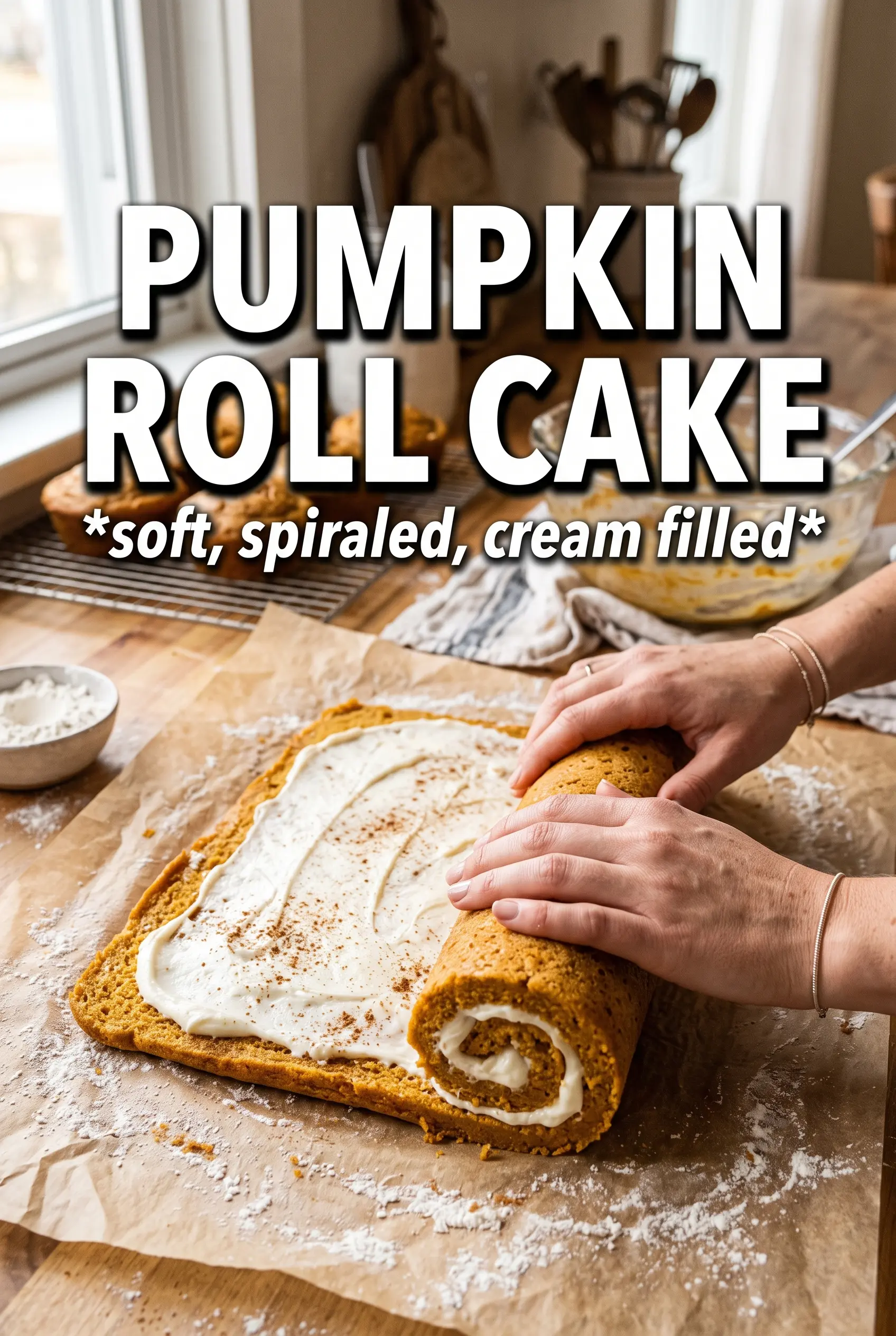
Pumpkin Roll Cake is the kind of dessert that looks bakery-fancy on the plate and still feels like something you can pull off in your own kitchen. The cake stays soft and flexible, the filling turns smooth and tangy, and every slice shows off that clean spiral that makes people reach for a second piece before they finish the first.
What makes this version work is the balance between a quick sponge and a filling that’s thick enough to stay put. The eggs are beaten with the sugar until the mixture gets light and foamy, which gives the cake enough structure to roll without cracking. The pumpkin puree adds moisture, but the batter still bakes fast so it stays tender instead of dry. The cream cheese filling is kept simple on purpose: enough powdered sugar for sweetness, enough butter for spreadability, and enough vanilla and cinnamon to echo the cake without overwhelming it.
Below you’ll find the part that matters most: how to roll it while it’s still warm, how to keep the cake from sticking to the towel, and what to do if the roll looks a little rough the first time. It’s easier than it looks once you know the rhythm.
The cake rolled up without a single crack, and the filling set up beautifully after chilling. I dusted it with extra powdered sugar and the spiral looked just like the photos.
Save this Pumpkin Roll Cake for the dessert table when you want a clean spiral, tangy cream cheese filling, and a cake that slices neatly after chilling.
The Roll Cake Trick That Keeps the Spiral Intact
The part that usually trips people up is timing. This cake needs to leave the pan warm enough to bend, but not so hot that the filling melts later or so cool that it sets into a brittle sheet. Rolling it in a powdered sugar-dusted towel right after baking trains the sponge into its shape before it has a chance to crack.
The other mistake is overbaking. Even one or two extra minutes can dry out the edges, and dry edges are what break when you unroll the cake for filling. The surface should spring back when touched, and the center should still feel soft and elastic, not firm.
- Beat the eggs and sugar well. That extra volume gives the cake its lift and helps it roll cleanly instead of tearing.
- Use parchment in a jelly roll pan. The thin layer of batter needs the pan shape to bake evenly and the parchment to release without tugging.
- Roll while warm. A warm sponge bends; a cool one fights back.
- Chill before slicing. The filling firms up, and the spiral cuts cleaner.
What Each Ingredient Is Actually Doing in This Pumpkin Roll

- Pumpkin puree — This is the moisture and the flavor base, but it also makes the batter heavier than a plain sponge. Use pure pumpkin puree, not pumpkin pie filling, or the cake will bake up too sweet and too soft.
- Eggs — They’re doing the structural work here. The beaten eggs trap air, which helps the thin cake rise enough to roll without breaking.
- Powdered sugar — A dusting on the towel keeps the cake from sticking during the first roll. Don’t skip it or the warm sponge will glue itself down.
- Cream cheese and butter — Cream cheese brings tang and body; butter makes the filling spreadable. Both should be softened, or you’ll end up with little lumps that won’t smooth out completely.
- Pumpkin pie spice, cinnamon, and vanilla — These round out the pumpkin flavor without making the cake taste muddy. The spices are subtle in the cake and a little stronger in the filling so each bite has a clear finish.
How to Roll, Fill, and Chill It Without Cracking the Cake
Prep the Pan Before the Batter Goes In
Grease a 15×10 jelly roll pan and line it with parchment so the cake releases in one clean sheet. Spread the batter all the way to the corners in an even layer; thin spots bake too fast and become brittle before the center is done. The cake is ready when it springs back lightly at the center and the top looks set, not wet. If it bakes much longer than 13 minutes, you’re already pushing it toward cracks.
Roll It While It Still Has Give
Turn the hot cake onto a powdered sugar-dusted kitchen towel, peel off the parchment, and roll it from the short end while it’s warm. The towel helps the cake hold the shape without sticking, and the warm sponge remembers the curl once it cools. If you wait until it’s cold, the first roll can split the surface. Let it cool completely in the rolled shape so it finishes setting in the curve.
Spread the Filling in a Thin, Even Layer
Beat the cream cheese filling until it’s smooth and fluffy, then unroll the cooled cake carefully. Spread the filling close to the edges but not all the way over them, or it will squeeze out the sides when you roll it back up. If the filling is too soft, chill it for a few minutes before spreading. You want it thick enough to stay in place without tearing the cake.
Chill Before the First Slice
Once the cake is re-rolled, wrap it and refrigerate it for at least an hour. That chill time firms the filling and helps the spiral hold its shape when you slice it. A sharp knife wiped clean between cuts gives the prettiest edges. Finish with powdered sugar right before serving so it stays snowy instead of melting into the surface.
How to Adapt This Pumpkin Roll for Different Kitchens
Dairy-Free Filling
Use dairy-free cream cheese and a plant-based butter that behaves like regular butter at room temperature. The filling will be a little softer and less tangy, but it still spreads well and slices cleanly after chilling.
Gluten-Free Version
Swap in a 1:1 gluten-free flour blend that includes xanthan gum. The cake will be slightly more delicate, so roll it with extra care while it’s warm and don’t overbake it by even a minute.
Make-Ahead Dessert
This cake is even easier to slice after it sits overnight. Roll and fill it, then keep it wrapped in the refrigerator and dust with powdered sugar right before serving so the top stays pretty.
Extra-Spiced Filling
Add a little more cinnamon or a pinch of pumpkin pie spice to the filling if you want the spice to carry through every bite. Keep the amount modest, though, or the filling starts to taste sharp instead of creamy.
Storage and Reheating
- Refrigerator: Store covered for up to 4 days. The cake stays moist, and the filling gets a little firmer as it chills.
- Freezer: It freezes well. Wrap the whole roll tightly in plastic wrap, then foil, and thaw overnight in the refrigerator before slicing.
- Reheating: No reheating needed. Serve it cold or let it sit at room temperature for 15 to 20 minutes so the filling softens slightly. Don’t microwave it or the filling can weep and the spiral will slump.