Pumpkin cookies with cinnamon frosting land somewhere between a soft cake cookie and a bakery-style frosted bar, which is exactly why they disappear fast. The cookies bake up pillowy and tender with a mellow pumpkin spice base, then get finished with a thick layer of cinnamon cream cheese frosting that gives each bite a cool, tangy contrast. A final dusting of cinnamon sugar adds just enough sparkle and crunch to keep the texture interesting.
What makes this version work is balance. Pumpkin brings moisture, but it can also make cookies heavy if the dough is overmixed or overloaded with flour. Here, the dry ingredients are folded in just until the dough comes together, and the cookies are baked only until the centers are set. That keeps them soft instead of gummy. The frosting leans on both cream cheese and butter, so it pipes smoothly without tasting overly sweet.
Below, I’ve included the small details that matter most: how to keep the cookies thick, how to avoid a loose frosting, and what to change if you want to make them ahead or swap ingredients without losing that soft, spiced finish.
The cookies stayed soft for days and the frosting set up just enough that I could stack them after an hour in the fridge. The cinnamon sugar on top made them taste like a bakery cookie.
Love soft pumpkin cookies with that thick cinnamon frosting? Save this one for the days when you want a bakery-style cookie with almost no fuss.
The Trick to Keeping Pumpkin Cookies Soft Instead of Cakey
Pumpkin cookies fail in one of two ways: they spread too much and turn flat, or they bake up like little muffins. This version sits in the middle because the dough is mixed just enough to combine and the cookies are pulled from the oven while the centers still look slightly underdone. They finish setting on the pan, which is what keeps the middle tender instead of dry.
The other thing that matters is the pumpkin itself. Use pure pumpkin puree, not pumpkin pie filling, or the sugar and spice balance gets thrown off. If your dough seems sticky, resist the urge to keep adding flour until it feels like a traditional drop cookie dough. Pumpkin dough is supposed to be softer. A chilled scoop-and-bake dough helps them hold their shape without sacrificing that pillowy texture.
- Butter and sugar — Creaming them creates the base structure. You want the mixture lightened and fluffy, not just blended, because that air helps the cookies rise without becoming dense.
- Pumpkin puree — This is the moisture source. Canned pumpkin works perfectly here and is more reliable than homemade, which can be watery and make the dough spread.
- Flour — This gives the cookies enough body to hold a thick frosting. Spoon and level it if you can; packed flour makes the cookies heavy.
- Egg — It binds the dough and helps the cookies set with a soft, cake-like crumb. Don’t skip it or the texture turns fragile and crumbly.
What Each Ingredient Is Doing in the Frosting and Why It Matters
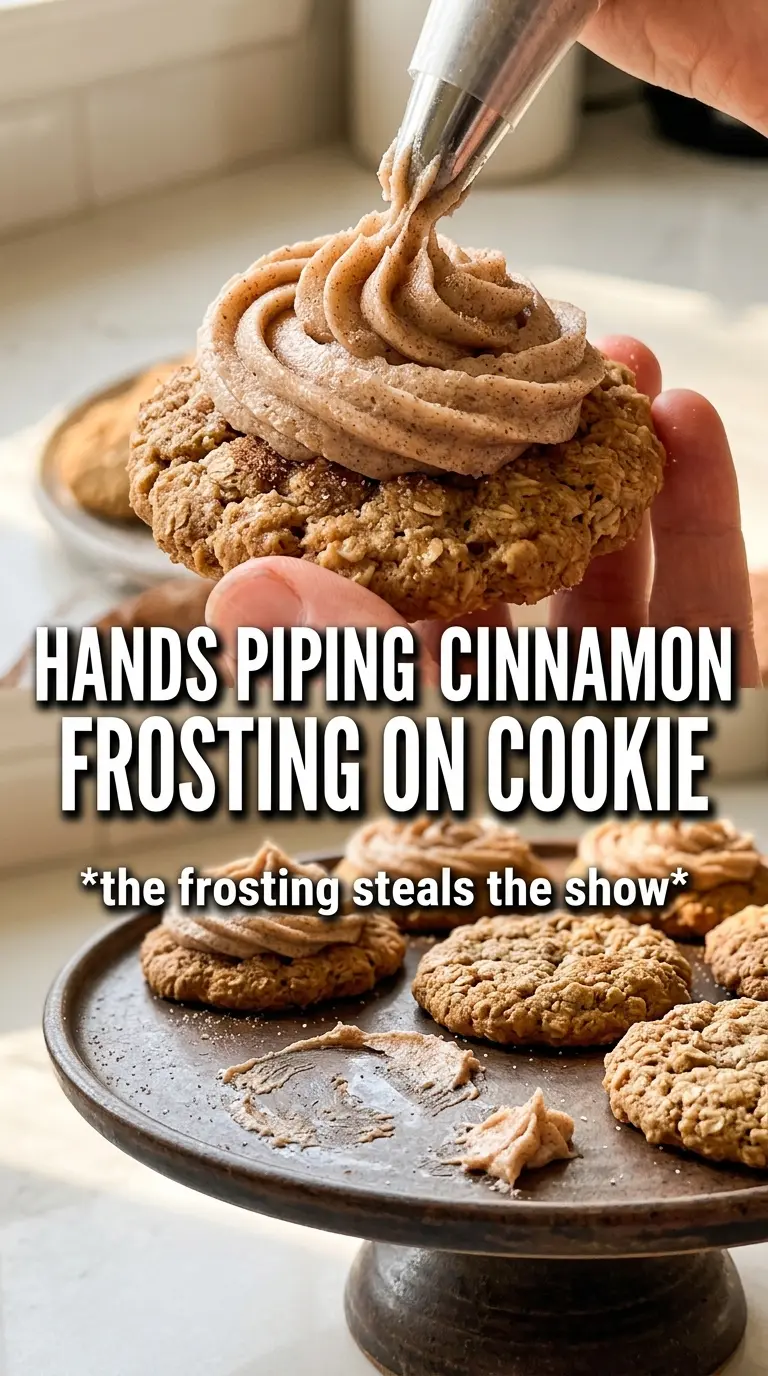
- Cream cheese — This gives the frosting its tang and keeps the sweetness in check. Use full-fat cream cheese for the best texture; low-fat versions tend to loosen and don’t pipe as cleanly.
- Butter — Butter makes the frosting smoother and more spreadable than cream cheese alone. It also helps the frosting hold its shape a little better once the cookies sit at room temperature.
- Powdered sugar — This is what gives the frosting body. If it seems too soft, add a little more, but add it gradually so the frosting doesn’t turn stiff and grainy.
- Cinnamon and pumpkin pie spice — These warm up the frosting so it tastes like part of the cookie, not just sweet dairy on top. If you want a sharper cinnamon finish, use a little more cinnamon and cut back on the pumpkin spice.
- Vanilla — Vanilla rounds out the frosting and keeps the spice from tasting flat. Pure vanilla matters more here than in the cookies because the frosting is a finished layer you taste first.
Mixing, Baking, and Frosting Without Losing the Soft Center
Building the Cookie Dough
Beat the butter and sugar until the mixture looks pale and slightly fluffy. That step gives the cookies lift, so don’t rush it. Once the pumpkin, egg, and vanilla go in, the batter may look a little loose, and that’s normal. Fold in the dry ingredients just until no streaks of flour remain. If you keep mixing after that point, the cookies get tougher and the pumpkin loses its tender texture.
Portioning for Thick, Even Cookies
Use a 2-tablespoon scoop or a rounded spoonful and leave space between the mounds because they do spread a little. If the dough seems sticky, chill it briefly rather than adding more flour. That short chill helps the cookies hold a neat round shape and bake up with a soft, domed center instead of running thin on the pan.
Watching for the Right Bake
Bake at 350°F until the edges look set and the tops no longer look wet, usually 10 to 12 minutes. The cookies should still feel soft in the middle when you touch them lightly. If they brown deeply, they’re already past the point of that plush, cake-like bite. Let them cool completely before frosting or the topping slides right off and turns soupy.
Whipping and Finishing the Frosting
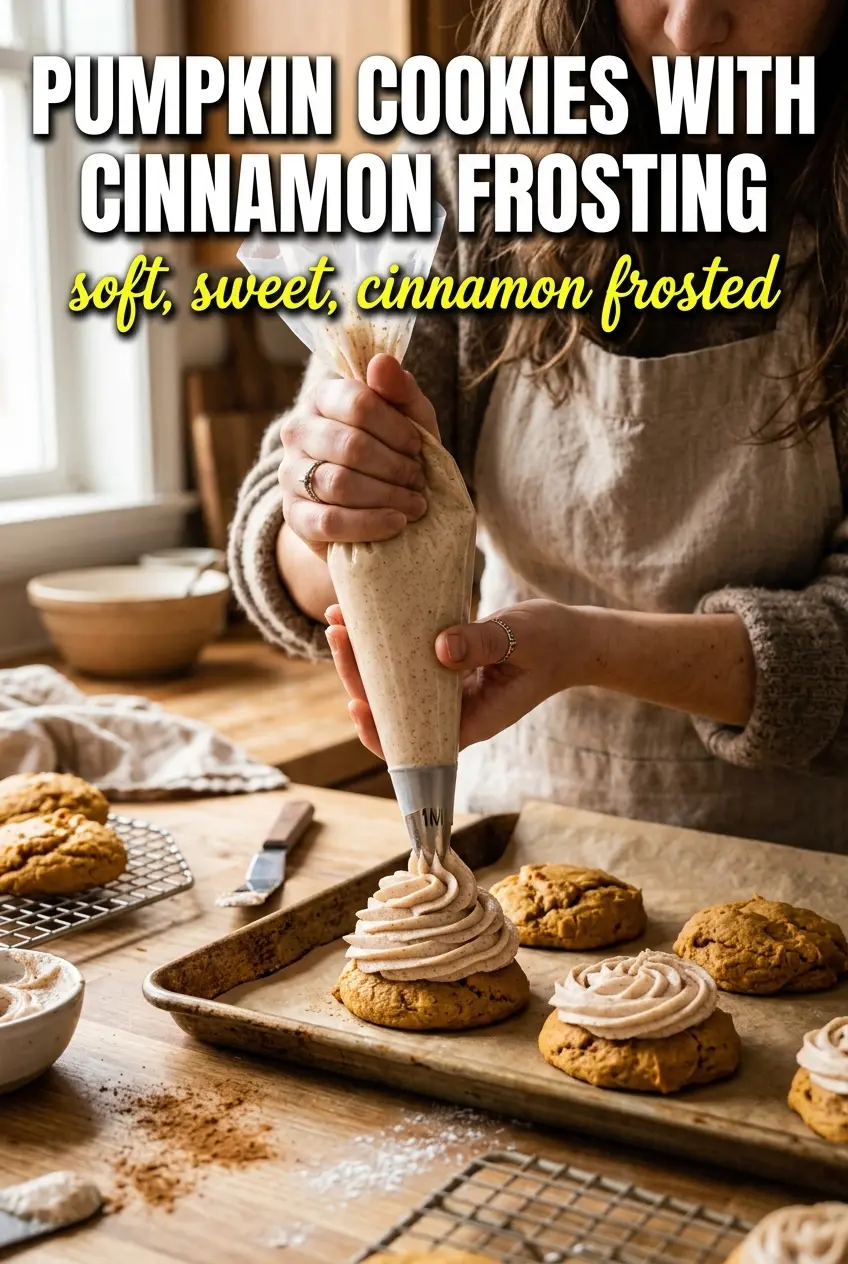
Beat the cream cheese and butter first until smooth, then add the sugar and spices. If the frosting looks loose, let it beat a minute longer rather than dumping in too much extra sugar at once. Pipe or spread it generously, then finish with cinnamon sugar while the frosting is still soft enough for the topping to cling. That last dusting gives the cookies their bakery look and a little sparkle on the finish.
How to Adapt These Pumpkin Cookies for Different Kitchens and Cravings
Make Them Dairy-Free
Use a plant-based butter in both the cookies and frosting, then swap in dairy-free cream cheese for the topping. The cookies stay soft, but the frosting will usually be a little less tangy and a touch softer, so chill it before piping.
Turn Them Into Gluten-Free Cookies
A good 1:1 gluten-free baking flour can work here, but the dough may need a short rest before baking so the flour hydrates. Expect a slightly more delicate cookie, and don’t overbake them or they’ll dry out fast.
Make Them Ahead for a Party Tray
Bake the cookies a day ahead and keep the frosting separate until the day you serve them. Frosted cookies stack poorly, but unfrosted cookies hold their softness nicely and let you finish the tray right before guests arrive.
Tone Down the Sweetness
Keep the cinnamon sugar on top, but spread a thinner layer of frosting and add an extra pinch of salt to the cookie dough. That makes the spices come forward and keeps the finished cookie from tasting too sugary.
Storage and Reheating
- Refrigerator: Store frosted cookies in a single layer or with parchment between layers for up to 4 days. The frosting firms up, which actually helps them keep their shape.
- Freezer: Freeze the unfrosted cookies for up to 2 months. Frosting doesn’t thaw as nicely once it has been piped, so add it after the cookies are fully thawed.
- Reheating: These cookies are best served at room temperature, not warmed. If they’ve been chilled, let them sit out for 20 to 30 minutes so the frosting softens and the pumpkin flavor comes through again.
Answers to the Questions Worth Asking
Pumpkin Cookies With Cinnamon Frosting
Ingredients
Equipment
Method
- Beat butter and sugar together until smooth and lighter in color. Visual cue: the mixture should look creamy and evenly combined.
- Beat in pumpkin, then mix in egg and vanilla just until incorporated. Visual cue: the batter should be orange-golden and glossy.
- Whisk flour, baking soda, baking powder, pumpkin pie spice, cinnamon, and salt in a separate bowl. Visual cue: the dry mixture should be evenly speckled.
- Fold the dry ingredients into the pumpkin mixture until no dry streaks remain. Visual cue: a thick dough should form.
- Drop 2-tablespoon rounds onto a sheet pan with space between them. Visual cue: each mound should hold its shape.
- Bake at 350°F for 10-12 minutes, until the edges look set. Visual cue: tops should be slightly puffed and no longer raw.
- Cool the cookies completely before frosting. Visual cue: cookies should feel firm and fully cool to the touch.
- Beat cream cheese and softened butter until smooth. Visual cue: the frosting base should look silky with no lumps.
- Beat in powdered sugar, cinnamon, pumpkin pie spice, and vanilla until light and fluffy. Visual cue: frosting should look airy and hold soft peaks.
- Pipe or spread frosting generously on each cookie. Visual cue: a thick swirl or smooth layer should cover the top.
- Dust the frosted cookies with cinnamon sugar right before serving. Visual cue: a fine, even sprinkle should sit on the frosting surface.