These small batch pumpkin biscuits bake up tall, flaky, and tender with just enough pumpkin to turn the crumb a warm orange and give each bite a soft, almost custardy middle. The edges go golden and crisp while the centers stay layered, which is exactly what you want when you split one open and let honey butter melt into the cracks.
What makes this version work is the balance: enough baking powder for lift, enough butter left in visible pieces for those flaky layers, and just enough pumpkin mixed with cold buttermilk to bring the dough together without turning it heavy. Pumpkin puree adds moisture, but it can also make biscuits dense if the dough is overworked, so the folding step matters more than most people think. Keep everything cold, stir only until the flour disappears, and these biscuits will reward you with height instead of spread.
Below, I’m walking through the part that matters most for biscuit texture, plus a couple of smart swaps and storage notes so you can make these again without guessing.
The biscuits rose beautifully and the layers pulled apart just like you said. I used the honey butter and it melted into every split. My batch was done right at 17 minutes.
Save these small batch pumpkin biscuits for a quick breakfast with flaky layers and cinnamon honey butter.
The Difference Between Flaky Layers and a Heavy Biscuit
The biggest mistake with pumpkin biscuits is treating the dough like a batter. Pumpkin adds moisture, but it also softens the structure, so if you stir until the dough looks smooth, the gluten tightens and the biscuits bake up dense instead of layered. The goal is a shaggy dough that barely holds together before the folding starts.
That folding step is what gives you the lift. Patting the dough out and folding it in thirds creates visible layers of butter and flour, and those layers turn into steam pockets in the oven. If the dough starts sticking, dust the counter lightly, not heavily. Too much flour on the outside can dry the biscuits before the centers have time to rise.
- Cold butter — This is nonnegotiable. The butter needs to stay in small pieces so it melts in the oven, not into the dough. Those little pockets are what make the biscuit flaky.
- Pumpkin puree — Use plain pumpkin puree, not pumpkin pie filling. Pie filling is already sweetened and spiced, which throws off both the texture and the seasoning.
- Buttermilk — The acidity helps the baking powder work and keeps the crumb tender. If you don’t have buttermilk, stir 1 teaspoon lemon juice or vinegar into 1/3 cup milk and let it sit for 5 minutes.
- Pastry cutter or fingertips — A pastry cutter gives you better control, but quick fingertip pinching works in a pinch. Stop when you still see pea-sized butter bits.
What Each Ingredient Is Doing in These Biscuits
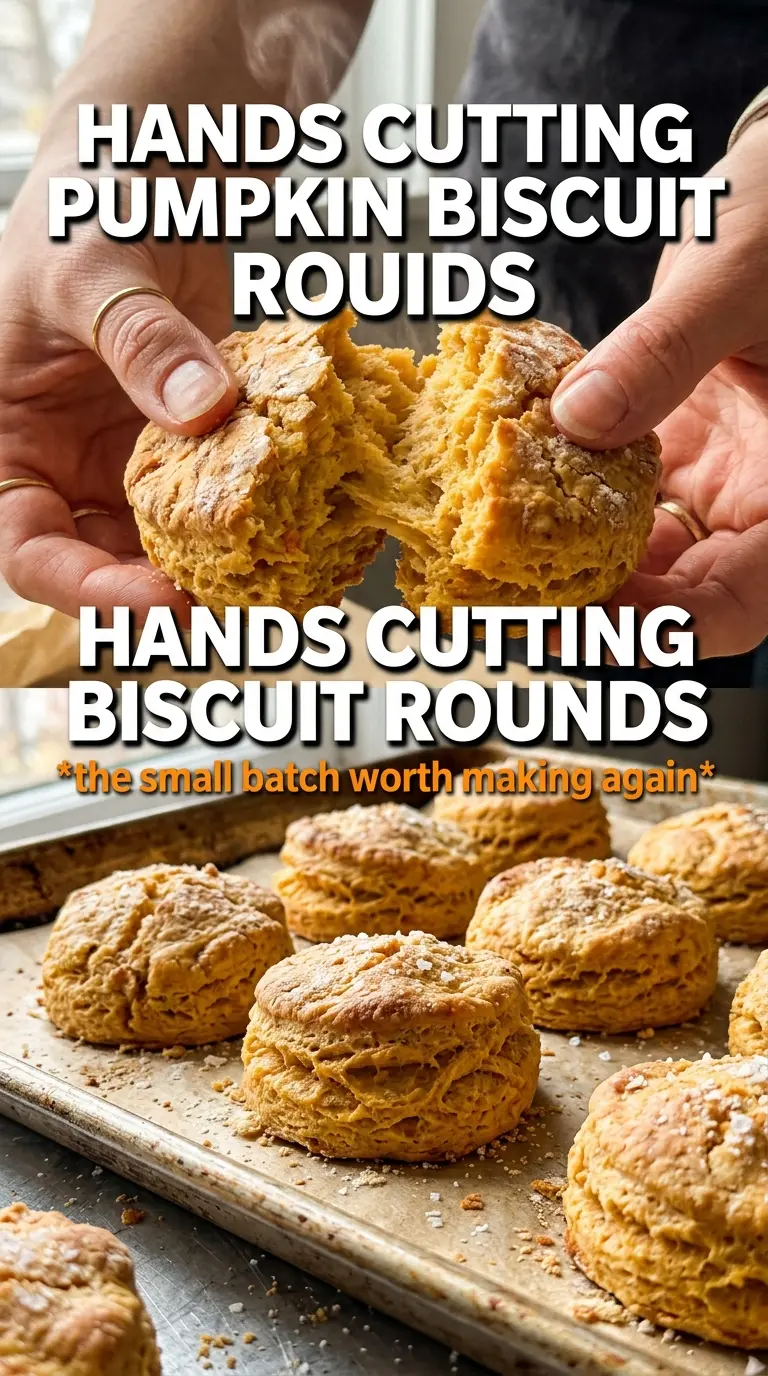
- All-purpose flour — This gives the biscuits enough structure to hold the pumpkin without turning cakey. Bread flour makes them tougher, and cake flour won’t hold the layers as well.
- Baking powder — The full tablespoon may look generous, but biscuits need that lift because pumpkin weighs the dough down. Old baking powder is a common failure here; if it’s been open for a long time, the biscuits will rise less.
- Butter — Use unsalted butter so you control the seasoning. The cubes should stay cold all the way into the oven. If they soften while you’re working, chill the cut biscuits for 10 minutes before baking.
- Pumpkin puree — This is the flavor and color source, but it also adds moisture. Measure it lightly and don’t pack it into the cup.
- Cinnamon, nutmeg, and sugar — These round out the pumpkin without making the biscuits taste like dessert. The sugar also helps the tops brown.
The Folding Step That Gives You Those Tall Centers
Cut the butter into visible pieces
Whisk the dry ingredients first, then cut in the cold butter until the mixture looks like rough crumbs with some pea-sized chunks still showing. That uneven texture is what you want. If the butter disappears completely, the biscuits lose their flaky lift and bake up more like a soft roll.
Bring the dough together without overworking it
Stir the pumpkin and buttermilk together, then add them to the flour mixture and mix only until you no longer see dry flour. The dough should look shaggy and a little uneven. If it looks smooth in the bowl, it’s already been mixed too much.
Fold, pat, and cut cleanly
Turn the dough out onto a floured surface and pat it to about 3/4-inch thickness. Fold it into thirds, pat again, and repeat once more if the dough cooperates. Cut straight down with a 2.5-inch cutter and don’t twist it. Twisting seals the edges and keeps the biscuits from rising evenly.
Bake until the tops are deep gold
Place the biscuits close together on the parchment-lined sheet for a softer edge or spaced apart for a little more crust. Bake at 425F until the tops are golden and the sides look set, usually 16 to 18 minutes. The centers should feel springy when pressed lightly, not wet or doughy.
How to Adapt These Pumpkin Biscuits Without Losing the Flaky Texture
Make Them Dairy-Free
Use a firm dairy-free butter substitute that behaves like stick butter and swap the buttermilk for unsweetened oat milk mixed with 1 teaspoon lemon juice. The biscuits will still rise, but they’ll be a touch less rich and the flavor will lean a little cleaner and less buttery.
Gluten-Free Version
Use a 1:1 gluten-free baking flour that includes xanthan gum. The dough will be softer and a little more fragile, so chill it for 15 minutes before cutting to help the biscuits hold their shape in the oven.
Turn Them Savory
Cut the sugar in half and leave the cinnamon and nutmeg in place for a gentler spice note, or replace them with a pinch of black pepper and chopped chives. The biscuits pair well with eggs, bacon, or sausage gravy when you want the pumpkin without the sweeter finish.
Make the Honey Butter Ahead
Stir the softened butter, honey, and cinnamon together and keep it covered in the fridge for up to a week. Let it soften at room temperature before serving so it melts into the warm biscuit instead of tearing the crumb.
Storage and Reheating
- Refrigerator: Store cooled biscuits in an airtight container for up to 3 days. They’ll soften a little as they sit.
- Freezer: Freeze baked biscuits for up to 2 months. Wrap them well so they don’t pick up freezer odor and dryness.
- Reheating: Warm in a 300F oven for 8 to 10 minutes or split and toast briefly. The mistake to avoid is microwaving too long, which turns the crumb rubbery and kills the flaky texture.
Answers to the Questions Worth Asking
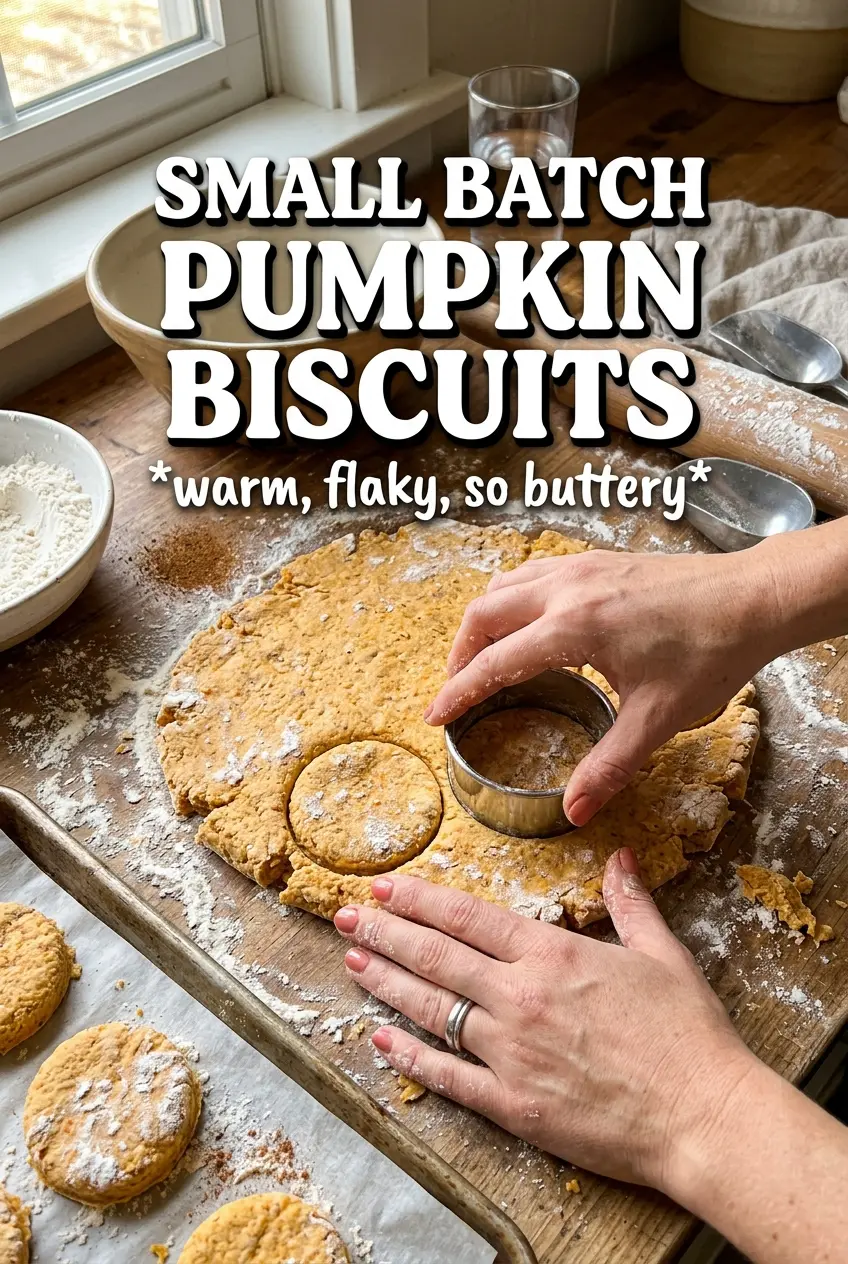
Small Batch Pumpkin Biscuits
Ingredients
Equipment
Method
- Preheat the oven to 425°F and line a baking sheet with parchment.
- Whisk all-purpose flour, baking powder, sugar, cinnamon, nutmeg, and salt until evenly combined.
- Cut cold unsalted butter into the dry ingredients with a pastry cutter until pea-sized crumbles form.
- Stir pumpkin puree and cold buttermilk together, then add to the flour mixture and stir until just combined.
- Turn the dough onto a floured surface and pat to a 3/4-inch thickness.
- Fold the dough in thirds, pat again to 3/4-inch thickness, then cut into 6 rounds with a 2.5-inch cutter.
- Place the rounds on the baking sheet, spacing them apart, then bake for 16–18 minutes until golden.
- Mix softened butter, honey, and cinnamon until smooth.
- Serve the warm biscuits with cinnamon honey butter.