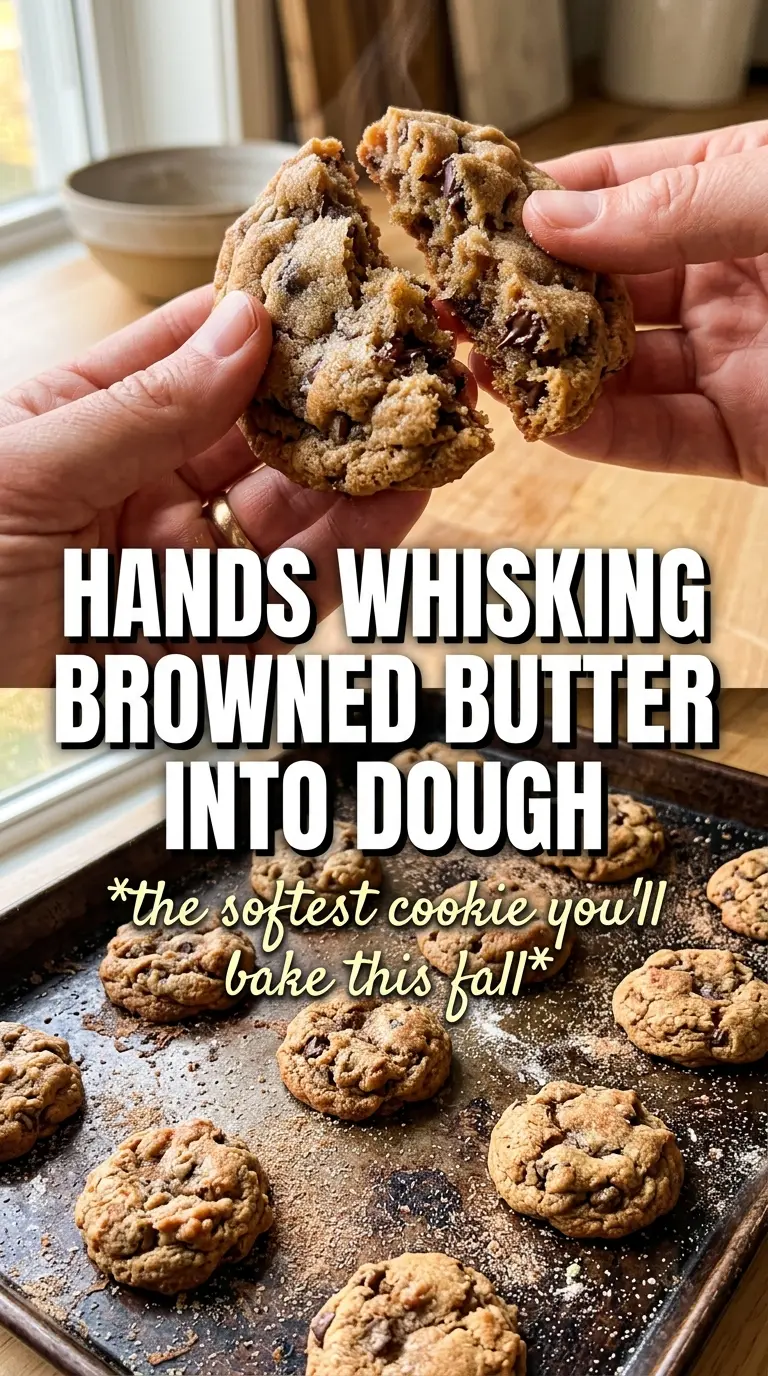
Browned butter pumpkin pudding cookies bake up thick, chewy, and loaded with that deep butterscotch note that makes people grab a second one before the tray is cool. The edges set into a soft little shell, the centers stay plush, and the flaky salt on top keeps every bite from tipping too sweet. These aren’t pumpkin cookies that bake up cakey and forgettable. They have heft, chew, and a warm caramel edge that hangs around after the last crumb is gone.
The trick is in the fat and the moisture. Browning the butter gives the dough a toasty, nutty base, but it has to be fully cooled and solid again before you beat it with the sugars or the cookies will spread too much. The pumpkin puree also gets blotted dry, which sounds fussy until you taste the difference. Too much moisture is what turns pumpkin cookies soft and puffy instead of dense and chewy. Instant pudding mix works here for more than flavor. It adds structure, softness, and that bakery-style texture without turning the dough heavy.
Below you’ll find the step that keeps the cookies thick, the ingredient swap that matters most, and a few variations if you want to change the spice, skip the dairy, or plan ahead for the week.
The browned butter flavor came through in every bite, and blotting the pumpkin made a huge difference. Mine stayed thick and chewy instead of puffing up cakey, and the flaky salt on top was perfect.
Love these thick browned butter pumpkin pudding cookies? Save them to Pinterest for the days when you want chewy pumpkin cookies with a butterscotch edge and flaky salt on top.
The Reason These Cookies Stay Thick Instead of Spreading
The biggest mistake with browned butter cookies is using the butter while it’s still warm or only half-set. Warm browned butter behaves like melted fat, and melted fat gives you cookies that spread too fast and bake thin. Once the butter is browned, it needs to chill until it’s solid again. That step isn’t optional if you want a tall, chewy cookie with defined edges.
The other place these cookies go wrong is excess moisture from the pumpkin. Even a small amount of loose puree can soften the dough enough to change the bake. Blotting the pumpkin dry tightens it back up, and that lets the pudding mix do its job: holding onto moisture inside the cookie instead of letting it wander into the dough. If your cookies ever come out puffy and cakey, this is the fix.
- Solidified browned butter — This gives the cookies their toasted, almost toffee-like flavor. If you skip the cooling step, the dough will be loose and the cookies will spread.
- Dry instant pudding mix — This adds softness and chew without making the dough greasy. Use instant, not cook-and-serve; the texture boost comes from the starches in the dry mix.
- Blotted pumpkin puree — Pumpkin adds flavor and color, but it also adds water. Press it between paper towels until it looks pasty and thick.
- Brown sugar — This helps the centers stay chewy and gives the cookies that deeper caramel note that pairs with the browned butter.
What Each Ingredient Is Doing in the Dough
- All-purpose flour — Enough to give the cookies structure without turning them dry. I wouldn’t swap in cake flour here; it would make them too soft and airy.
- Instant pudding mix — Vanilla or butterscotch both work, but butterscotch gives a deeper caramel note that matches the browned butter best. It’s doing more than flavoring the dough; it helps the cookies hold onto a tender, chewy bite.
- Pumpkin pie spice and cinnamon — The spice blend gives the cookie its classic pumpkin profile, while the extra cinnamon keeps the flavor from tasting flat. If your pumpkin pie spice is old and faded, the cookies will taste muted.
- Flaky sea salt — Add it right after baking so it sticks to the warm tops. That little hit of salt sharpens the butter and pumpkin flavors and keeps the cookies from reading as candy-sweet.
Mixing the Dough Without Losing the Chew
Bring the Butter Back to Solid
Brown the butter until the milk solids turn golden and smell nutty, then pour it into a shallow dish and refrigerate until firm. It should look opaque and scoopable, not slushy. If it’s too soft when you beat it with the sugars, the dough will warm up fast and the cookies will lose height in the oven.
Whisk the Dry Ingredients First
Stir the flour, dry pudding mix, baking soda, spices, and salt together before they meet the wet ingredients. That keeps the pudding mix from clumping and spreads the baking soda evenly through the dough. If you add the dry ingredients in streaks, the cookies can bake unevenly, with some bites tasting too spiced and others tasting flat.
Blend Just Until the Flour Disappears
Beat the solid browned butter with the sugars until creamy, then mix in the blotted pumpkin, eggs, and vanilla. Once the flour goes in, stop as soon as you no longer see dry pockets. Overmixing tightens the dough and makes the cookies dense in a dry, bready way instead of thick and chewy.
Watch for the Set Edges
Scoop the dough into 2-tablespoon rounds and bake just until the edges look set and the centers still look a little soft. They finish on the pan as they cool, which is what keeps them thick. If you wait until the centers look fully done in the oven, you’ll lose that soft middle.
Make Them More Spiced
Add an extra 1/2 teaspoon of cinnamon or a pinch of ground ginger if you want the spice to come forward more sharply. The cookies will still stay soft, but the flavor will read less like butterscotch and more like a classic pumpkin cookie.
Dairy-Free Version
Use a plant-based butter that browns well and a dairy-free instant pudding mix if you can find one. You’ll lose some of the deep nutty complexity from real browned butter, but the cookies will still bake up chewy and soft if the fat is solid before mixing.
Gluten-Free Swap
Use a 1:1 gluten-free baking blend that includes xanthan gum. The pudding mix already adds some body, so the texture stays close to the original, but don’t expect the cookies to spread and brown exactly the same way.
Storage and Reheating
- Refrigerator: Store in an airtight container for up to 5 days. The cookies stay chewy, but the salt on top softens a bit after day one.
- Freezer: Freeze baked cookies for up to 2 months, or freeze scooped dough balls and bake from frozen with an extra 1-2 minutes.
- Reheating: Warm cookies for 8-10 seconds in the microwave or a few minutes in a 300F oven. Long reheating dries them out, so stop while the centers still feel soft.
Questions I Get Asked About This Recipe
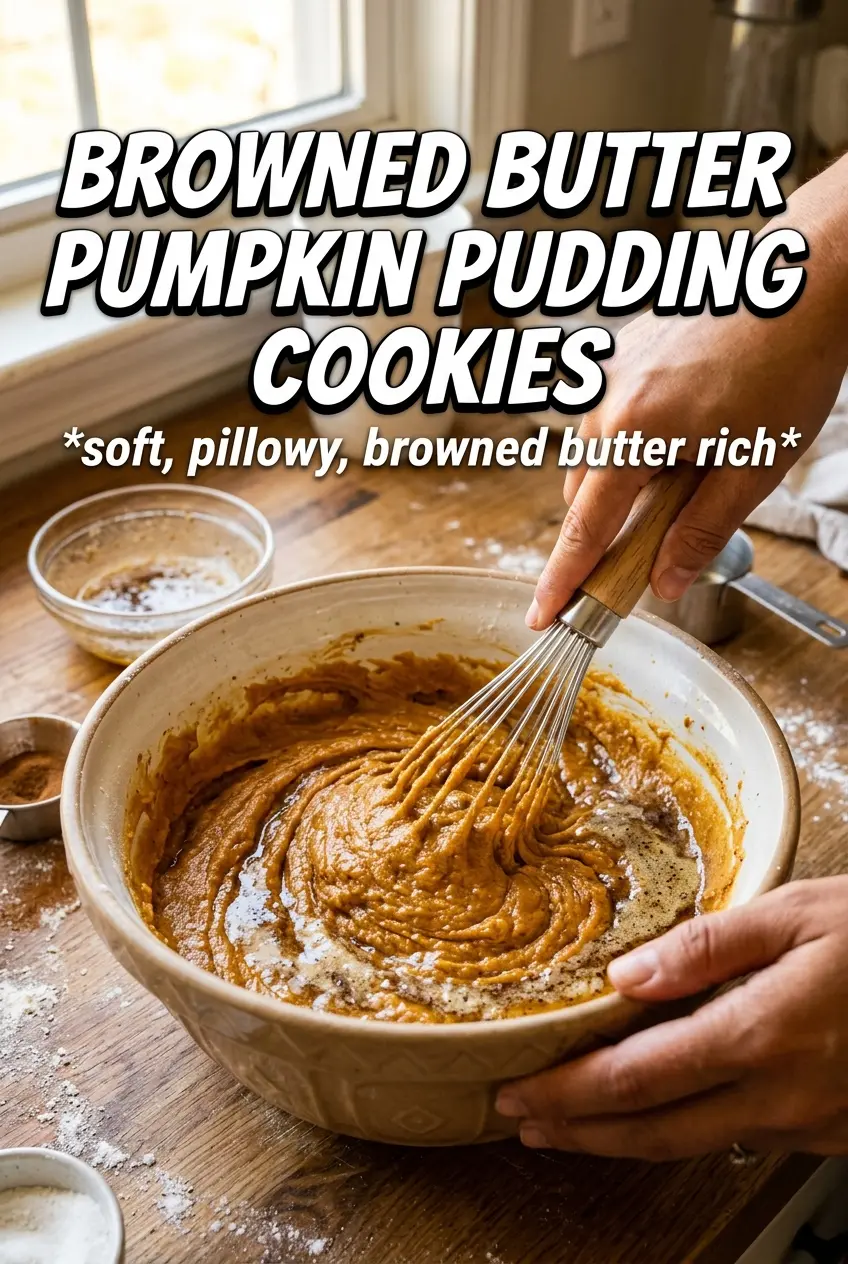
Browned Butter Pumpkin Pudding Cookies
Ingredients
Equipment
Method
- Brown the unsalted butter in a cast iron skillet and let it cool until it turns solid again, about 1 hour in the refrigerator.
- Refrigerate the browned butter until solid so it creams properly later.
- Preheat the oven to 375F and line baking sheets so they’re ready for scooping.
- Blot the pumpkin puree dry.
- Whisk the all-purpose flour, instant butterscotch or vanilla pudding mix (dry), baking soda, pumpkin pie spice, cinnamon, and salt until evenly combined.
- Beat the solidified browned butter and both sugars until smooth.
- Add the blotted pumpkin puree, then beat in the eggs and vanilla until the dough looks thick and cohesive.
- Fold the flour mixture into the dough until just combined.
- Scoop 2-tablespoon rounds onto the lined baking sheets, spacing them apart.
- Bake for 10-12 minutes at 375F, until the cookies look set at the edges.
- Sprinkle flaky sea salt immediately after baking so it adheres while the cookies are hot.