Pumpkin spice latte iced oatmeal cookies hit that sweet spot between hearty and bakery-style: chewy oatmeal centers, crisp edges, and a thick coffee glaze that sets with just enough crackle on top. The oats keep these from eating like a plain sugar cookie, while the espresso in the dough and glaze pulls the pumpkin spice flavor in a deeper, less sugary direction.
The trick is keeping the pumpkin under control. Too much moisture and the cookies spread into soft puddles, so blotting the pumpkin before it goes into the bowl matters. I also like pulsing the oats only a little; you want some texture left, not oat flour. That gives the cookies a sturdy bite and keeps the glaze from feeling like the only thing going on.
Below, I’ve included the small details that keep the dough from getting sticky, plus the best way to glaze them so the icing stays thick instead of sliding off the tops.
The glaze set up beautifully and the cookies stayed chewy in the middle even the next day. I loved that little espresso kick with the pumpkin spice — it kept them from tasting too sweet.
Love the chewy oats and coffee glaze? Save these pumpkin spice latte iced oatmeal cookies for the next time you want a cookie with a little more personality.
The Pumpkin Problem That Changes These Cookies Completely
These cookies only stay chewy if the pumpkin stays dry enough to behave like an accent instead of a wet ingredient. Fresh pumpkin puree holds a lot of water, and if you add it straight from the can, the dough softens, the cookies spread more, and the oats lose some of their bite. Blotting the pumpkin on paper towels takes just a minute, but it changes the whole texture of the cookie.
The other thing that matters here is balance. Brown sugar gives these cookies the soft, caramel-like center, while espresso powder sharpens the pumpkin spice and keeps the glaze from tasting flat. Without that coffee note, the cookies lean sweeter and less bakery-like. With it, the flavor reads like a real pumpkin spice latte instead of just pumpkin and sugar.
- Blotted pumpkin puree — This brings pumpkin flavor without too much moisture. Press it between paper towels until it looks thick and pasty, not wet.
- Espresso powder — This deepens both the cookie and the glaze. Instant coffee works in a pinch, but espresso powder gives a cleaner, stronger coffee note.
- Rolled oats — Pulsing them coarsely keeps the cookies hearty. If you grind them too fine, the cookies turn cakier and lose that oatmeal-cookie chew.
- Brown sugar — This is what keeps the centers soft and gives the cookies that warm, caramel edge. White sugar alone won’t give the same texture.
What Each Ingredient Is Actually Doing in the Dough and Glaze
- All-purpose flour — Holds the dough together without making it heavy. If you swap in a gluten-free blend, use one that includes xanthan gum so the cookies don’t crumble.
- Baking soda — Helps the cookies spread just enough and keeps the centers from baking up dense. Baking powder won’t give the same lift or browning here.
- Cinnamon and pumpkin pie spice — These build the warm spice base, but they’re also doing different jobs. Pumpkin pie spice brings the layered background note, while cinnamon keeps the flavor sharp and recognizable.
- Butter — Softened butter creams with the sugar and creates that tender, slightly crisp edge. If it’s melted, the dough turns greasy and the cookies spread too much.
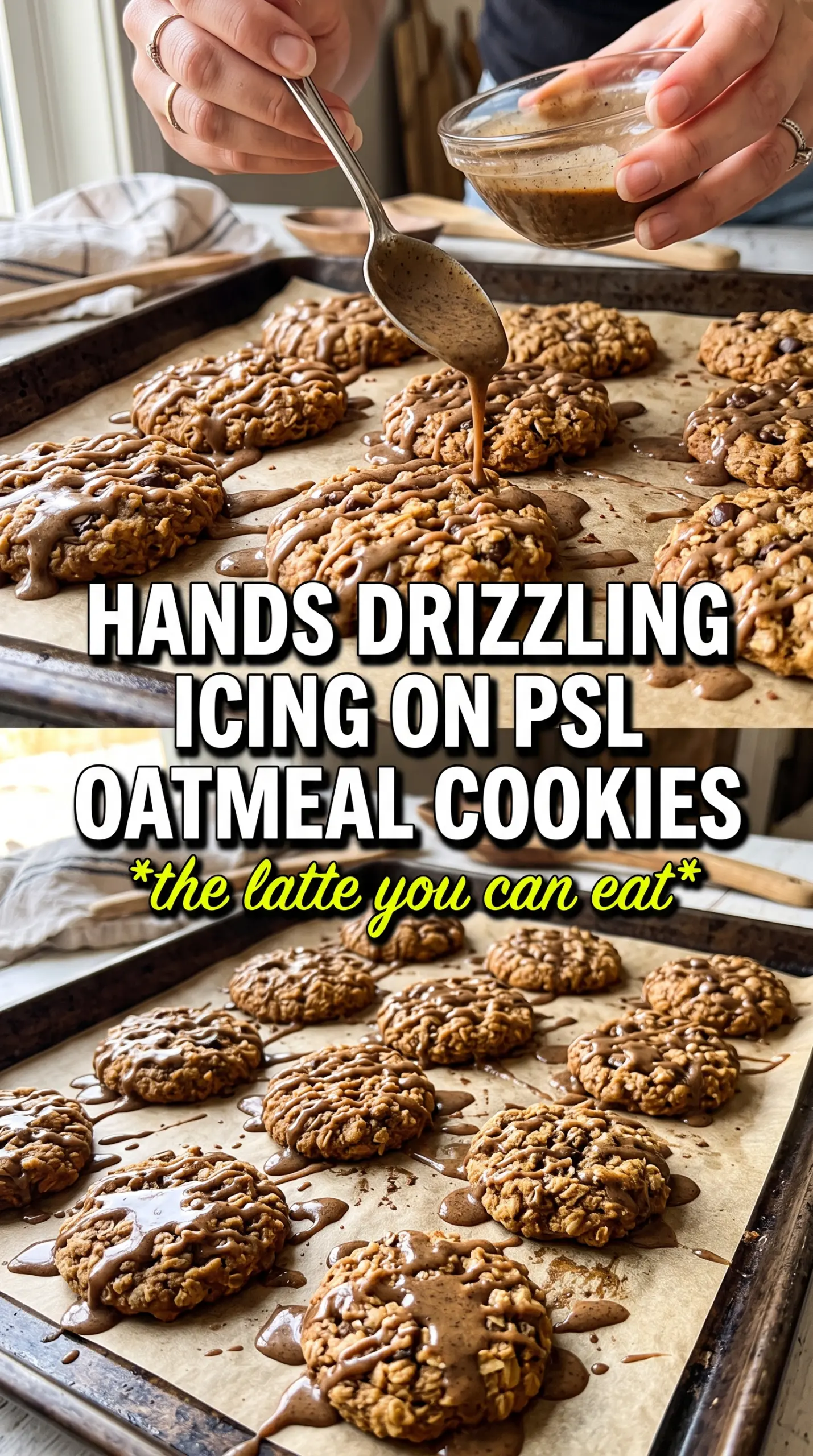
- Powdered sugar in the glaze — This gives you that thick, pourable finish that sets on top of the cookies. The glaze should ribbon off a spoon; if it runs like milk, add more powdered sugar.
- Strong coffee or espresso — This is what makes the glaze taste like a latte instead of a pumpkin icing. Brew it strong enough that it doesn’t disappear into the sugar.
Getting the Dough to Bake Up Chewy Instead of Puffy
Start with the oats and dry ingredients
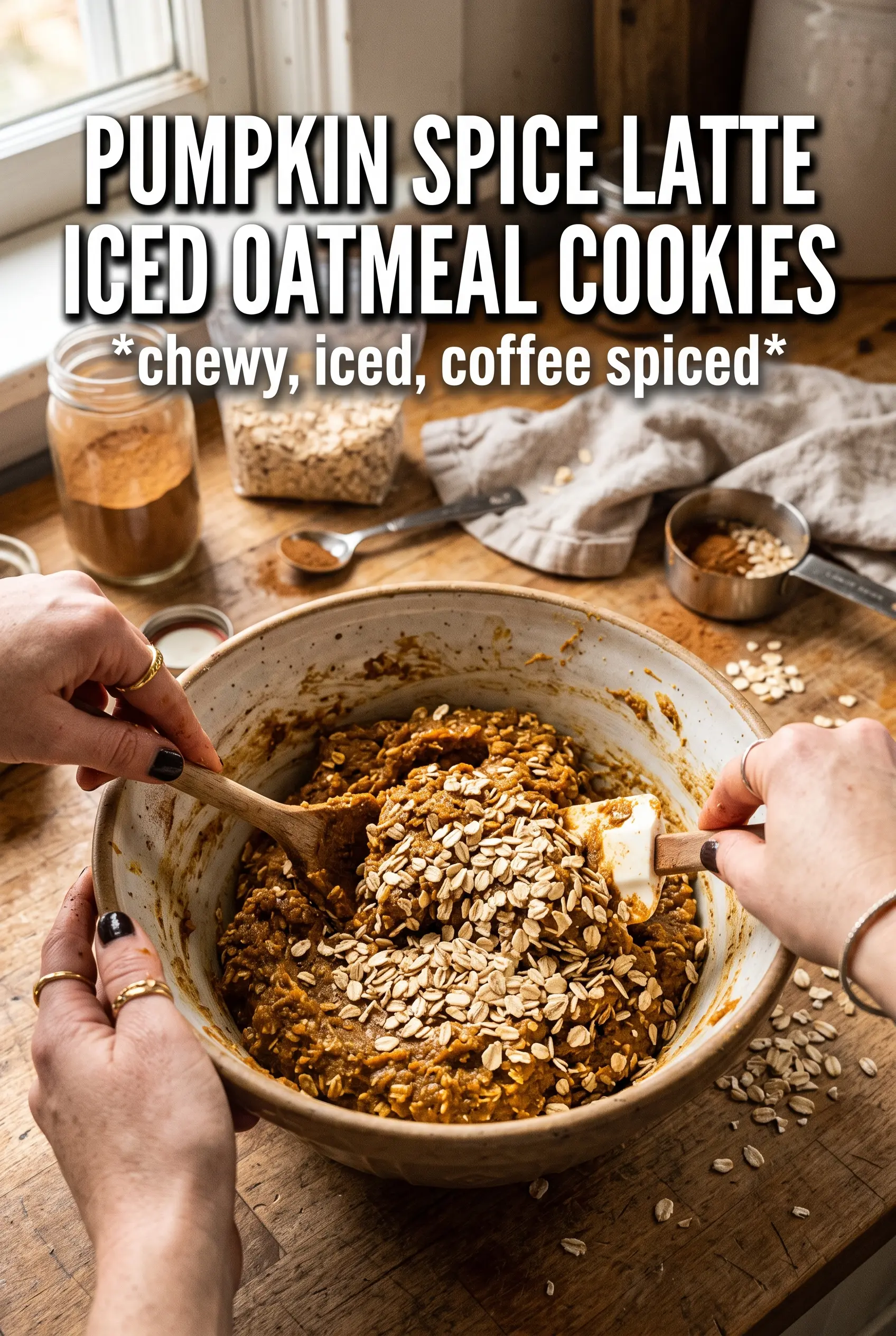
Pulse the oats just a few times so you still have visible bits of oat in the bowl. That gives the cookies texture and keeps them from baking up like soft cake rounds. Whisk the oat mixture with the flour, baking soda, spices, espresso powder, and salt so the espresso and spices distribute evenly; otherwise you’ll get pockets of spice in one cookie and none in another.
Cream the butter and sugar until it looks lighter
Beat the softened butter and brown sugar until the mixture looks fluffy and a little paler, not just combined. That step helps the cookies bake with some lift, but overbeating after the eggs go in can make the dough loose. Add the eggs one at a time, then the vanilla and blotted pumpkin, and stop as soon as everything is smooth.
Fold in the dry ingredients without overworking the dough
Once the flour mixture goes in, stir only until the last streaks disappear. Overmixing tightens the dough and makes the cookies tougher. Scoop 2-tablespoon portions and leave enough room on the pan for them to spread into rounded cookies with set edges and soft centers.
Glaze after the cookies cool completely
The cookies need to be fully cool before the glaze goes on, or the icing thins out and disappears into the top. Stir the powdered sugar, coffee, pumpkin puree, and spices until thick and glossy, then spoon it over each cookie and let it settle on its own. If it looks too loose, wait a minute before adding more liquid; glaze thickens fast once the sugar absorbs it.
How to Adapt These Cookies Without Losing the Chewy Center
Gluten-Free Version
Use a 1:1 gluten-free baking flour in place of the all-purpose flour, and keep the oats certified gluten-free if cross-contamination matters. The cookies will stay chewy, but they may spread a touch less, so don’t overbake them trying to force color.
Dairy-Free Swap
Replace the butter with a dairy-free baking stick that’s meant for cookies, not a soft tub spread. You’ll still get spread and chew, but the flavor will be slightly less rich, so the coffee glaze becomes even more important.
Stronger Coffee Flavor
If you want these to taste more like a true latte cookie, add an extra 1/2 teaspoon espresso powder to the dough and use espresso instead of brewed coffee in the glaze. That gives a deeper roast note without changing the texture.
Storage and Reheating
- Refrigerator: Store glazed cookies in an airtight container for 4 days. Stack them with parchment between layers so the glaze doesn’t stick.
- Freezer: Freeze the baked, unglazed cookies for up to 2 months. Thaw at room temperature, then glaze after they’ve warmed up so the icing sets properly.
- Reheating: These don’t need real reheating, but if you want that fresh-baked feel, warm an unglazed cookie for 5 to 8 seconds in the microwave. Don’t warm glazed cookies or the icing will slide.
Answers to the Questions Worth Asking
Pumpkin Spice Latte Iced Oatmeal Cookies
Ingredients
Equipment
Method
- Pulse the rolled oats coarsely in a blender until you have uneven oat pieces.
- In a mixing bowl, beat the softened unsalted butter and packed brown sugar until smooth and slightly lighter.
- Add the blotted dry pumpkin, eggs, and vanilla, then mix until combined.
- Fold in the pulsed oat mixture and then fold in the all-purpose flour mixture (flour, baking soda, pumpkin pie spice, cinnamon, espresso powder, and salt) until no dry streaks remain.
- Scoop 2-tablespoon rounds of dough onto a sheet pan, spacing them apart for spread.
- Bake at 375°F for 10-12 minutes, until edges look set and lightly golden.
- Cool the cookies completely before glazing.
- Whisk powdered sugar with strong coffee or espresso, pumpkin puree, pumpkin pie spice, and cinnamon until smooth and thick.
- Spoon the pumpkin spice latte glaze over each cookie, letting it drizzle and settle into an even layer.
- Let the glazed cookies set until the icing firms up before serving.