Pumpkin shakshuka lands on the table with a sauce that’s thick, smoky, and a little sweet, then gets finished with eggs that set right in the tomato-pumpkin base. The result is hearty enough for dinner and still feels bright and spoonable, with feta cutting through the richness and warm pita ready for the last bits of sauce.
What makes this version work is the balance. Pumpkin puree adds body without turning the skillet heavy, and the crushed tomatoes keep the dish from tasting flat or overly sweet. The spices bloom in oil before the tomatoes go in, which deepens everything and keeps the sauce from tasting raw. Once the sauce simmers down, the eggs poach gently in the steam, so the whites set without the yolks turning chalky.
Below, I’ll show you how to keep the sauce thick enough to cradle the eggs, which spice swap I’d use if you’re out of one of the warm spices, and how to reheat leftovers without overcooking the eggs.
The sauce thickened up beautifully and the eggs stayed soft after 7 minutes under the lid. I’ve made shakshuka before, but the pumpkin gave it a richer texture without making it sweet.
Love this pumpkin shakshuka? Save it to Pinterest for the nights when you want a smoky tomato skillet with perfectly poached eggs and feta.
The Sauce Has to Shrink Before the Eggs Go In
Shakshuka fails when the sauce is too loose. If the tomato base is still watery, the egg whites spread into thin ribbons and overcook before the yolks have a chance to stay runny. Pumpkin puree helps here because it adds body fast, but it still needs the full simmer so the skillet holds a shallow, thick sauce instead of soup.
Look for the sauce to mound slightly when you drag a spoon through it. That’s your cue. If it runs back together immediately, keep simmering uncovered for a few more minutes. You want enough moisture for steam, but not so much liquid that the eggs poach unevenly.
- Pumpkin puree — This is what gives the dish its velvety body. Use plain pumpkin puree, not pumpkin pie filling, or the spices and sweetness will be off.
- Crushed tomatoes — They keep the base bright and acidic. A thick, good-quality can matters here because watery tomatoes force you to cook the sauce down longer.
- Eggs — Fresh eggs hold their shape better when they’re cracked into the wells. Older eggs can spread more, which makes the finished skillet look less neat.
- Feta — Salty, crumbly feta sharpens the whole dish. If you need a swap, use goat cheese for a softer finish, but it won’t give the same briny bite.
What Each Ingredient Is Actually Doing in This Recipe

- Primary ingredient (the star) — Quality matters most. Choose the best you can find.
- Cooking medium (oil, butter, or broth) — This carries flavors and prevents dryness.
- Seasonings (salt, pepper, spices, herbs) — Layer flavors so nothing overpowers. Build depth gradually.
- Aromatics (garlic, onion, herbs) — Cook with fat to bloom flavors. Become the foundation.
- Supporting ingredients — Complement the main ingredient without overpowering it.
- Sauce or liquid (if applicable) — Brings flavors together. Balance richness with acid.
- Acid (lemon, vinegar, wine, or other) — Brightens and prevents flat-tasting results.
- Final finish (garnish, glaze, or sauce) — Prevents one-dimensional taste and adds visual appeal.
What Each Spice Is Actually Doing in the Skillet
The spice blend is what makes this taste warm and layered instead of like pumpkin-tomato sauce with eggs dropped in on top. Cumin and coriander bring earthiness, smoked paprika adds depth, turmeric gives the sauce a golden edge, and cayenne keeps the sweetness from taking over. Blooming them in oil for a minute or two wakes them up; if they go in with the tomatoes right away, they taste flatter.
The garlic should go in after the onion and pepper soften, not before, or it can scorch in the oil. If you’re missing one spice, smoked paprika is the one I’d keep no matter what because it carries the most flavor. You can reduce the cayenne for a milder skillet, but don’t skip the salt at the end — pumpkin needs it.
Make It Dairy-Free
Leave off the feta and finish with extra herbs and a drizzle of olive oil. The dish still has enough richness from the pumpkin and eggs, but you’ll lose the salty tang that feta brings.
Make It Vegetarian-Heavy and More Filling
Stir in a handful of baby spinach right before you add the eggs, or fold in chickpeas with the tomatoes. Spinach disappears into the sauce, while chickpeas add chew and make the skillet more of a full meal.
Make It Spicier or Milder
Increase the cayenne to 1/2 teaspoon for more heat, or leave it out entirely for a softer, more family-friendly skillet. The pumpkin smooths the spice either way, so heat changes are easy to control without changing the structure of the dish.
Storage and Reheating
- Refrigerator: Store leftovers for up to 3 days. The eggs will firm up, but the sauce stays good.
- Freezer: Freeze the sauce without the eggs for up to 2 months. Eggs get rubbery after freezing, so cook fresh eggs into reheated sauce instead.
- Reheating: Warm the sauce gently on the stove over low heat until steaming, then add fresh eggs if you’re making a second round. If reheating a portion with already cooked eggs, use low heat and cover just until heated through so the yolks don’t turn chalky.
Questions I Get Asked About This Recipe
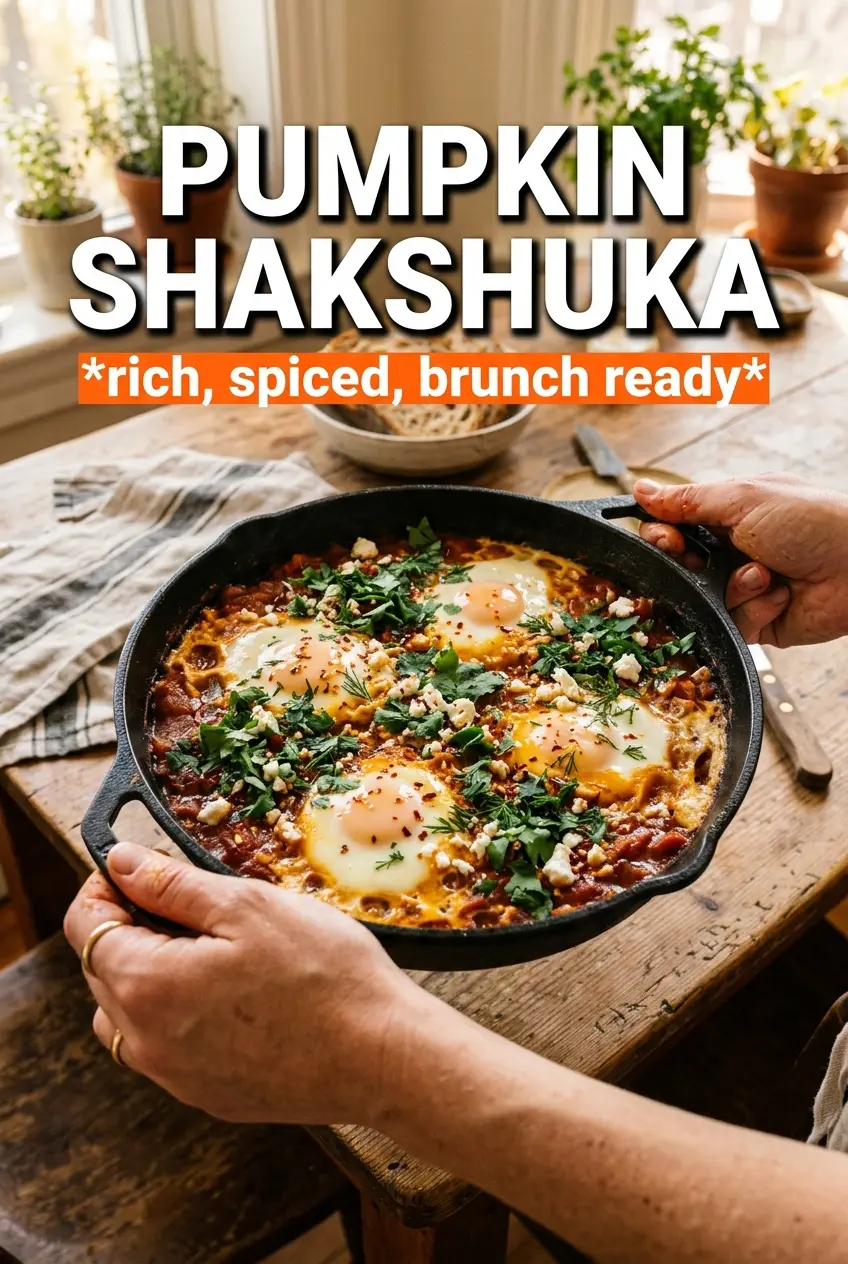
Pumpkin Shakshuka
Ingredients
Equipment
Method
- Heat 3 tablespoons olive oil in a large oven-safe skillet over medium heat. Sauté the onion and red bell pepper until softened, about 6 minutes, stirring so they don’t brown.
- Add the minced garlic and all spices (cumin, smoked paprika, coriander, turmeric, and cayenne) to the skillet. Cook for 2 minutes, stirring constantly, until fragrant and slightly darkened at the edges.
- Pour in the crushed tomatoes and pumpkin puree. Simmer over medium-low heat for 10 minutes until the sauce thickens enough to coat a spoon.
- Season the sauce with salt and pepper to taste. Stir once and make the surface even so the eggs can sit in place.
- Make 6 wells in the sauce, then crack 1 egg into each well. Cover and cook for 6 to 8 minutes, until the whites are set but the yolks stay runny, watching through the lid for doneness.
- Scatter the crumbled feta and fresh parsley and cilantro over the eggs. Serve immediately with warm pita on the side.