Soft, cakey pumpkin cookies with a thick vanilla-cinnamon glaze are the kind of bake that disappears fast because they hit that sweet spot between a cookie and a little frosted cake. The edges stay tender, the centers bake up plush instead of dry, and the glaze sets into a smooth finish that cracks just slightly when you bite in. They’re the kind of cookie people reach for twice without thinking about it.
What makes this version work is the balance. Pumpkin brings moisture, but not too much flour keeps the texture light enough to stay cookie-like, and the butter-sugar base gives the dough enough structure to hold its shape on the pan. The glaze is intentionally thick, which matters more than people think; if it’s thin, it slides right off and turns sticky instead of setting into that pretty, spooned-on finish.
Below, I’ve included the texture cue I watch for when these are done, plus the glaze consistency that keeps them from becoming messy. If you’ve ever had pumpkin cookies spread too much or bake up dull and dense, the notes here will help you avoid both problems.
The glaze set up beautifully and stayed on top of the cookies instead of running off the sides. I baked them for 11 minutes and they were soft in the middle with just enough structure to hold up after cooling.
Love these glazed pumpkin cookies? Save them to Pinterest for the soft, cakey batch with that thick vanilla-cinnamon glaze.
The Dough Needs to Stay Soft, Not Loose
Pumpkin cookies can go wrong fast if the dough is treated like a standard drop cookie dough. Pumpkin adds a lot of moisture, which means the batter can look loose at first and still bake into a proper cookie if the flour is measured correctly and the dough is mixed just until combined. Overmixing tightens the dough and pushes these from tender to bready.
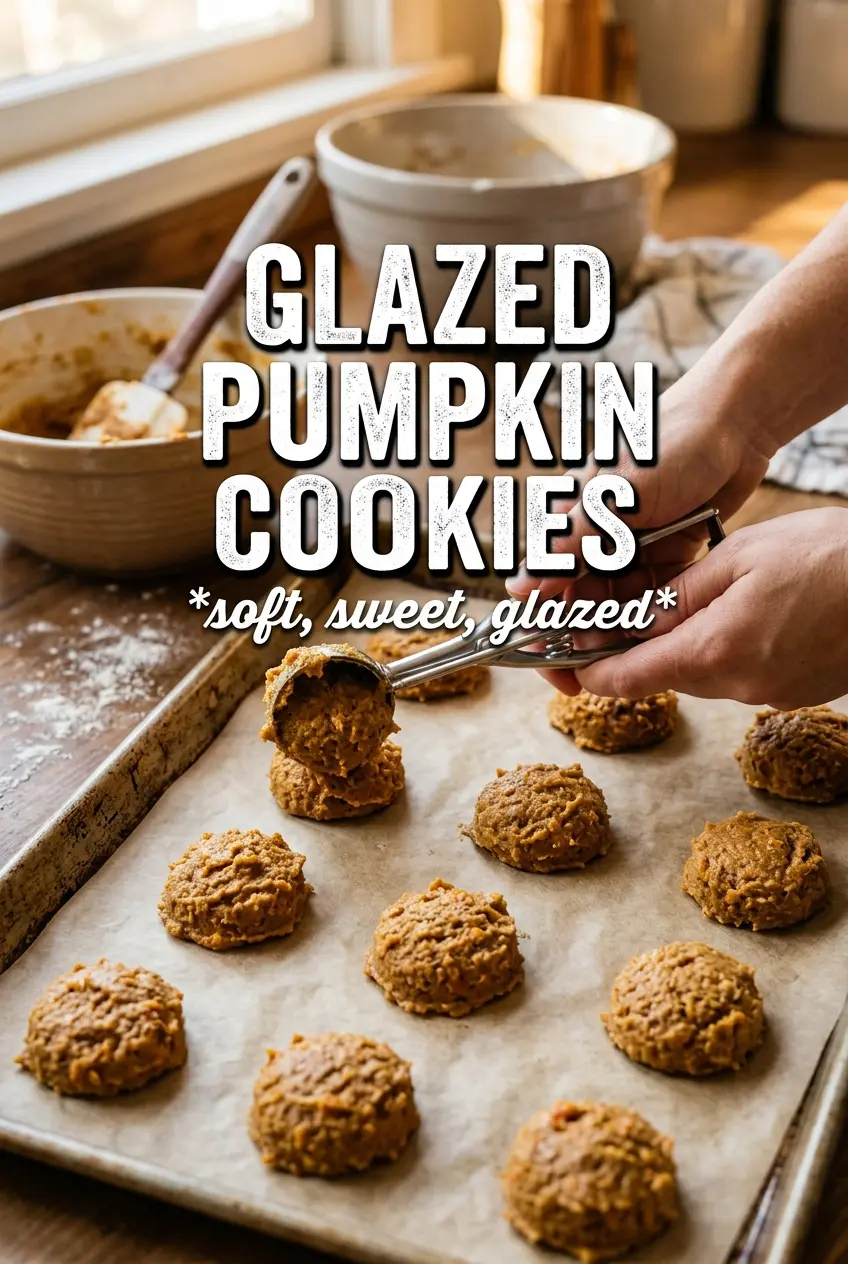
The other place people miss is portion size. These bake best as rounded two-tablespoon scoops because that gives you the cakey center and the lightly set edge without spreading into flat little pancakes. If your dough seems sticky, that’s normal for this style; the goal is a soft scoopable dough, not something dry enough to roll by hand.
- Pumpkin puree — Use plain pumpkin puree, not pumpkin pie filling. Pie filling is already sweetened and spiced, and it throws the dough off immediately. If your puree looks extra watery, blot it lightly with paper towels first so the cookies don’t spread too much.
- Butter and sugar — Cream them until the mixture looks fluffy and pale. That air helps the cookies bake up soft instead of heavy. Brown sugar would add more chew, but this version is built around a lighter, cakier texture, so granulated sugar keeps the crumb cleaner.
- Flour — Spoon and level it if you can. Too much flour makes the cookies dry and domed; too little leaves them loose and underbaked in the middle. The recipe’s flour amount is doing important structural work here, so don’t pack it into the cup.
What the Glaze Is Doing Besides Looking Pretty

The glaze isn’t just decoration. It adds the sweet finish that balances the spice in the cookie, and because it’s thick enough to spoon rather than pour, it sets into a soft shell instead of soaking in. That gives each cookie a little contrast: plush crumb underneath, glossy top on the outside.
- Powdered sugar — This is what gives the glaze body. If you use less, the glaze gets too thin and runs; if you add more, it becomes paste-like and won’t spread. The sweet spot is thick, spoonable, and just loose enough to nudge toward the edges.
- Melted butter — It gives the glaze a richer finish and helps it set with a slight sheen. Cold butter won’t whisk in evenly, so melt it first and use it while it’s still fluid.
- Milk — Add it slowly. A teaspoon or two too much turns the glaze from a topping into a drizzle, and these cookies need that thick cap on top. Whole milk gives the smoothest result, but any milk works in a pinch.
- Vanilla and cinnamon — Vanilla rounds out the sugar, and cinnamon keeps the glaze from tasting flat. You don’t need a heavy hand here; the cookie already brings spice, and the glaze should echo it, not compete with it.
The Bake That Keeps Them Soft and Cakey
Creaming the Base
Beat the butter and sugar until the mixture looks fluffy and lighter in color. That step builds the structure that keeps the cookies from baking up dense, and it matters more here because pumpkin adds weight. Once you add the pumpkin, egg, and vanilla, the mixture may look a little curdled. That’s normal. It comes together once the dry ingredients go in.
Bringing the Dough Together
Fold in the flour, baking soda, baking powder, spices, and salt just until no dry streaks remain. Stop there. If you keep mixing after the flour disappears, the cookies can turn tough and lose that soft, cake-like crumb. The dough should look thick and scoopable, almost like a very soft muffin batter.
Baking Until Just Set
Drop rounded two-tablespoon portions onto the baking sheet and bake at 350°F for 10 to 12 minutes. Pull them when the tops look set and the centers no longer look wet, even if the cookies still feel soft. They finish setting as they cool, and if you wait until they look deeply browned, they’ll be overbaked by the time they hit the rack.
Spreading the Glaze
Let the cookies cool completely before glazing, or the topping will melt into the surface instead of sitting on top. Whisk the glaze until it’s smooth and thick enough to mound on a spoon, then spoon it over each cookie and spread it lightly. If it runs off the edges in a puddle, it’s too thin; add more powdered sugar a spoonful at a time until it holds its shape.
Make Them Dairy-Free
Use a plant-based butter in both the cookie dough and the glaze. The cookies will still be tender, but they may spread a touch more, so chill the scooped dough for 15 minutes if it looks soft. A neutral milk like oat or almond works fine in the glaze.
For a Stronger Spice Finish
Add an extra 1/2 teaspoon cinnamon or a pinch of cloves to the dough if you want the spice to stand out more against the glaze. This pushes the cookies toward a warmer, more bakery-style flavor without changing the texture.
If You Want a Less Sweet Cookie
Cut the glaze amount in half and drizzle instead of fully coating the tops. The cookie itself is still soft and flavorful, but the final result reads more balanced and a little less dessert-heavy.
Storage and Reheating
- Refrigerator: Store in an airtight container for up to 4 days. The glaze stays set, but the cookies soften a little more by day two.
- Freezer: Freeze the unglazed cookies for up to 2 months. Glaze them after thawing for the cleanest look and best texture.
- Reheating: These don’t need real reheating. Let chilled cookies sit at room temperature for 15 to 20 minutes so the glaze and crumb lose the fridge chill. Microwaving can melt the glaze and make the cookies gummy.
Questions I Get Asked About This Recipe
Glazed Pumpkin Cookies
Ingredients
Equipment
Method
- Beat the butter and sugar together until smooth, then add the pumpkin, egg, and vanilla and beat again until combined.
- Fold in the flour, baking soda, baking powder, pumpkin pie spice, cinnamon, and salt just until no dry streaks remain.
- Drop 2-tablespoon rounds onto a sheet pan, spacing them about 2 inches apart so they have room to spread.
- Bake at 350°F for 10-12 minutes, until the edges look set and the centers still look slightly soft.
- Cool completely before glazing so the glaze sets on top instead of melting into the cookies.
- Whisk powdered sugar, melted butter, milk, vanilla, and cinnamon until smooth and thick, with a spoonable consistency.
- Spoon a generous amount of glaze over each cookie and spread slightly so the glaze covers the top with a few soft drips at the edges.
- Let the glaze set for 20-30 minutes before serving, until it looks matte and no longer jiggles.