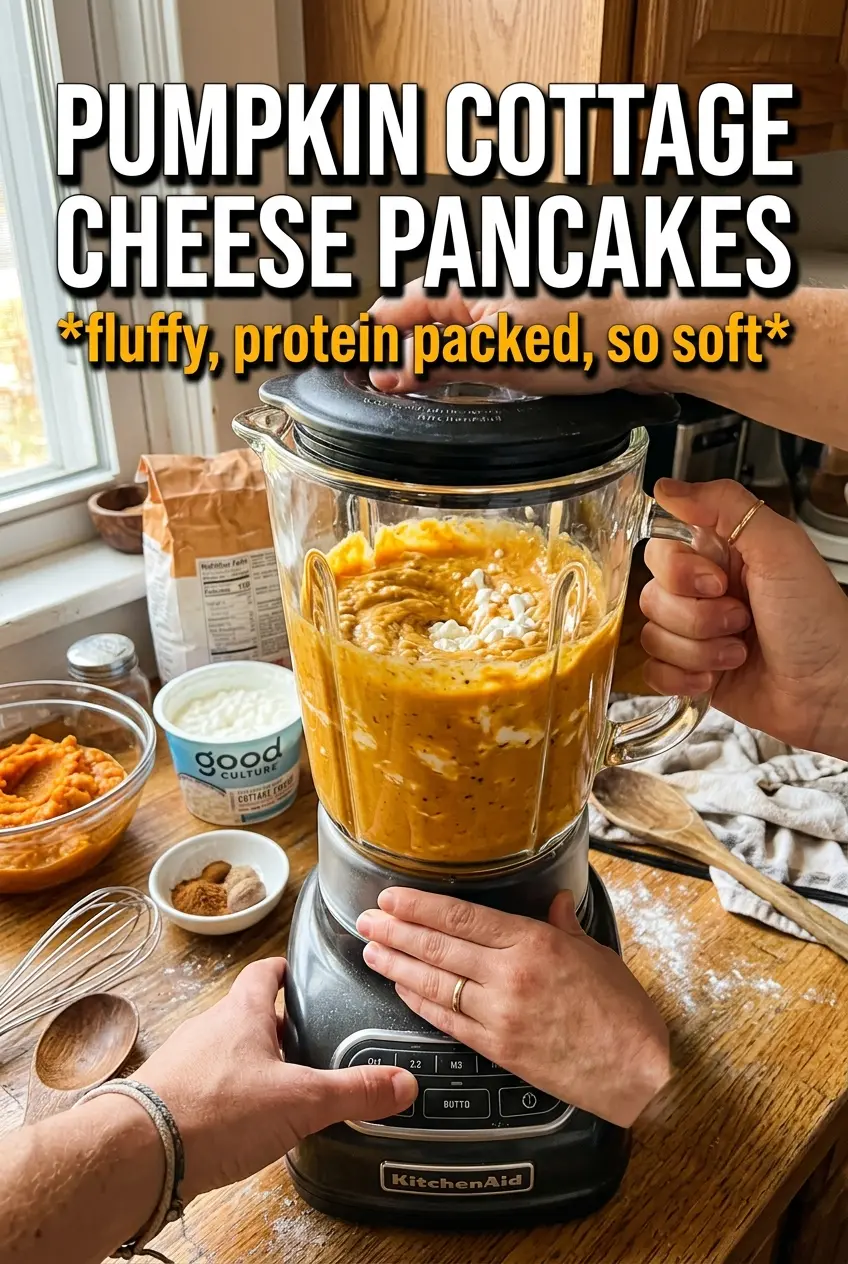
Pumpkin cottage cheese pancakes come out light, tender, and just substantial enough to keep you full past breakfast without feeling heavy. The pumpkin brings a soft, earthy sweetness, while the cottage cheese gives the pancakes a creamy middle and a boost of protein that keeps them from eating like dessert.
What makes this version work is the batter texture. Blending the cottage cheese smooth keeps the pancakes from turning lumpy or wet-looking in the pan, and the oats help the batter set without making the pancakes dense. A short rest matters here, too. It gives the oats time to hydrate and the baking powder time to wake up, which means better lift once the batter hits the skillet.
Below, I’ve included the little timing and texture cues that matter most, plus a few variations for using what you have on hand without losing that fluffy, custardy center.
I blended the cottage cheese first and the batter cooked up so evenly. The pancakes were fluffy, not soggy, and the pumpkin spice came through without being too sweet.
Save these pumpkin cottage cheese pancakes for a fluffy high-protein breakfast with maple syrup and pecans.
The Trick to Fluffy Pumpkin Pancakes Without the Gummy Center
Most pumpkin pancakes go wrong for the same reason: too much moisture and not enough structure. Pumpkin puree and cottage cheese both bring a lot of water to the batter, so if you try to cook them like standard flour pancakes, the centers can stay custardy long after the outside looks done. That’s why this batter leans on oats or oat flour, plus a short rest before cooking.
The other key is heat. Medium heat gives the pancakes time to rise and set without scorching the sugars from the pumpkin and maple syrup. If the pan is too hot, the outside darkens before the middle firms up. If the pan is too cool, the pancakes spread, absorb oil, and turn pale instead of lightly golden.
- Blended cottage cheese keeps the texture smooth and helps the batter cook evenly. If you leave it curdy, the pancakes can look speckled and uneven, though they’ll still taste fine.
- Oats or oat flour absorb the extra moisture from the pumpkin and eggs. Oat flour gives a slightly softer, more uniform pancake; rolled oats blended in give a little more body.
- Baking powder adds lift, but it needs a rested batter to work at its best. That three-minute pause gives the pancakes a better rise and a more tender crumb.
What Each Ingredient Is Doing in These Pancakes
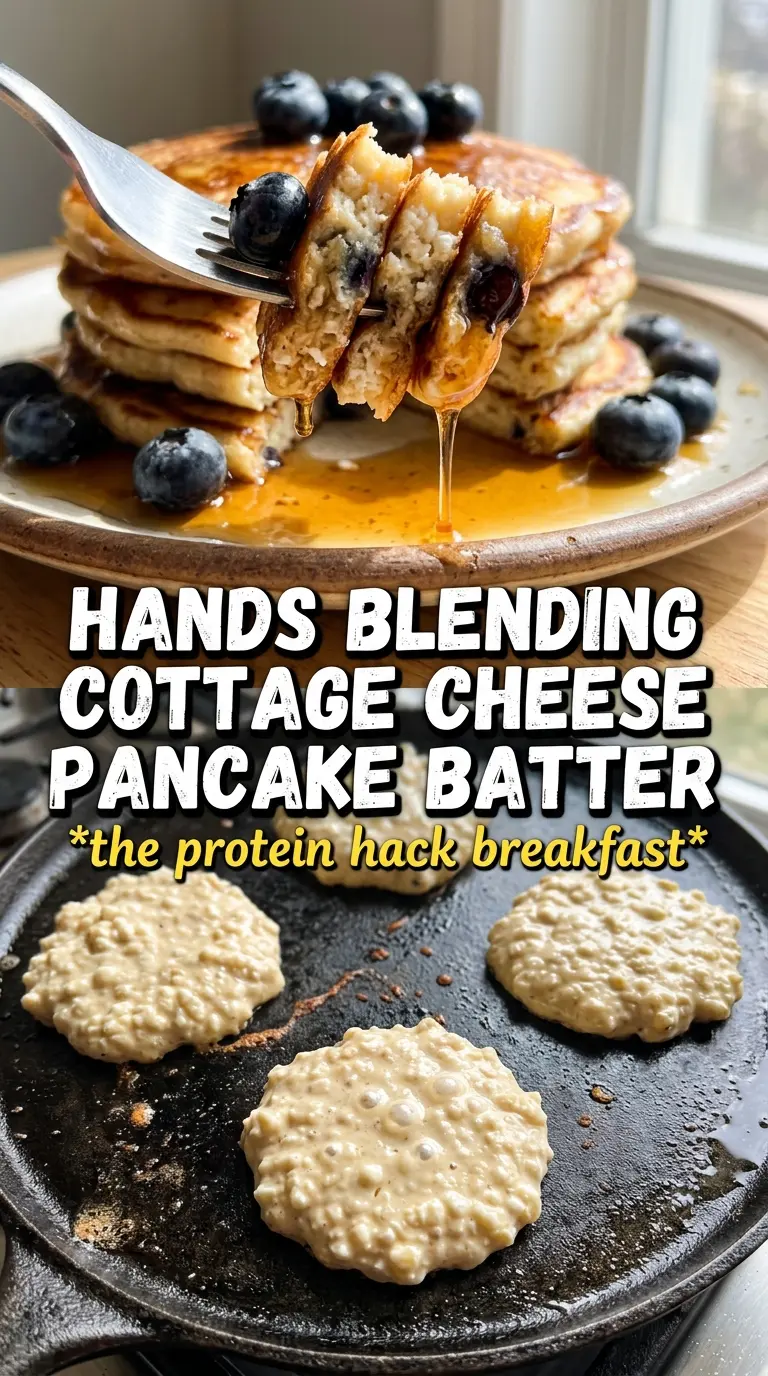
- Cottage cheese — This is the protein and moisture anchor. Blending it smooth gives you a more unified batter and a lighter texture, while using it unblended gives a few soft curds in the finished pancakes. Either works, but smooth is the safer choice if you want a uniform stack.
- Pumpkin puree — Use pure pumpkin, not pumpkin pie filling. Pie filling has sugar and spices already mixed in, which throws off the balance and can make the pancakes overly sweet and heavy.
- Eggs — The eggs are doing a lot here. They bind the batter, help it puff, and keep the pancakes from falling apart when you flip them.
- Oats or oat flour — Oat flour makes the easiest, most consistent batter. If you only have rolled oats, blend them first for a smoother pancake; otherwise the texture will be a little rougher and more rustic.
- Maple syrup or honey — Just enough sweetness to round out the pumpkin and spice. Honey browns a touch faster than maple syrup, so keep an eye on the pan if you use it.
- Pumpkin pie spice and cinnamon — The pumpkin pie spice brings the classic warm notes, and the extra cinnamon sharpens the flavor so the pancakes don’t taste flat. If your spice blend is old, the pancakes will taste dull no matter how good the batter is.
Cooking Them So the Centers Set and the Edges Stay Tender
Blend the Batter Smooth
Add everything to a blender and blend until the batter looks thick and cohesive, with no visible oat pieces if you’re using rolled oats. If you’re whisking by hand, use smooth cottage cheese and expect a slightly more rustic texture. The batter should pour slowly off a spoon, not run like milk. If it seems loose, give it a minute before judging it; oats keep absorbing liquid after blending.
Let the Batter Rest
Rest the batter for 3 minutes before it hits the pan. That brief pause lets the oats swell and helps the pancakes hold their shape instead of spreading into thin rounds. You’ll also notice the batter thickening a little, which is exactly what you want. If you skip this, the pancakes tend to cook up flatter and softer in the center.
Watch the First Side Carefully
Use a lightly greased skillet over medium heat and drop the batter in 2- to 3-tablespoon portions. Cook until bubbles appear across the top and the edges look set, not wet. Pumpkin batter browns faster than plain pancake batter, so don’t chase deep color. If the bottoms are dark before the tops have bubbled, the heat is too high.
Flip Gently and Finish the Center
Turn the pancakes once and cook just until the second side is set, usually 1 to 2 minutes. The goal is a soft, springy center, not a long second cook that dries them out. Press the top lightly with a finger; it should bounce back without feeling wet. If the pancakes tear when you flip them, they need another 20 to 30 seconds on the first side.
Make Them Dairy-Free Without Losing the Protein Boost
Use a thick dairy-free yogurt in place of the cottage cheese, then blend the batter a little longer so it stays smooth. The pancakes will be a touch softer and less high-protein, but they’ll still hold together well if the batter rests before cooking.
Use Oat Flour for the Most Tender Texture
Oat flour gives you the smoothest, most uniform pancakes. Rolled oats work fine, but they make the stack a little heartier and more textured. If you want a softer bite that feels closer to classic pancakes, oat flour is the better move.
Make a Bigger Batch for the Freezer
This recipe doubles cleanly. Cook the pancakes a shade lighter than you think you need, then cool them completely before freezing so they don’t stick together. Reheat from frozen in a toaster or low oven until the centers are warm.
Storage and Reheating
- Refrigerator: Store in an airtight container for up to 4 days. They’ll soften a little as they sit, which is normal for pumpkin-based pancakes.
- Freezer: Freeze in a single layer, then stack with parchment between layers. They keep well for about 2 months.
- Reheating: Warm in a toaster, toaster oven, or dry skillet over low heat. The common mistake is microwaving too long, which makes them rubbery instead of fluffy.