Silky coconut curry, tender pumpkin, and bright basil make this Pumpkin Thai Curry the kind of dinner that feels generous without asking for much work. The sauce turns glossy and fragrant as it simmers, and the pumpkin holds its shape just long enough to give each spoonful some texture instead of dissolving into the pot. Spoon it over rice and the whole bowl settles into that sweet spot between comforting and fresh.
What makes this version work is the order. The onion, garlic, and ginger go first so the curry paste has something savory to cling to, and a short cook in the paste wakes up the spices before the coconut milk goes in. Using both coconut milk and a little broth keeps the sauce rich but not heavy, and the final hit of fish sauce, brown sugar, and lime gives it the salty-sour edge that Thai curries need.
Below, I’ve included the little timing detail that keeps the pumpkin from going mushy, plus a few swaps for making this dairy-free, vegetarian, or a touch hotter.
The curry paste bloomed beautifully and the pumpkin held its shape instead of turning to mush. I added a little extra lime at the end and the sauce was perfect over jasmine rice.
Save this Pumpkin Thai Curry for the nights when you want a fast coconut curry with tender pumpkin, bell peppers, and plenty of basil.
The Trick to Keeping Pumpkin Tender, Not Watery
Pumpkin and coconut milk sound gentle, but this dish still needs a little discipline. If the heat runs too high, the pumpkin breaks down before the curry paste has time to season the sauce, and you end up with a muddy pot instead of distinct cubes in a silky broth. Keep the simmer active but not aggressive, and the pumpkin will soften without losing its shape.
The other thing that matters is size. Cut the pumpkin into even cubes so they cook at the same pace. Small pieces can disappear before the bell pepper is done, while oversized chunks stay firm in the center and throw off the balance of the bowl. You want pieces that yield at the tip of a knife but still hold a clean edge when you stir.
What Each Ingredient Is Actually Doing in the Bowl

- Pumpkin or butternut squash — Either one works here, but butternut is usually sweeter and a little easier to find. Pumpkin gives a slightly earthier finish, while squash turns softer and silkier. Cut it into even cubes so it cooks through without falling apart.
- Thai curry paste — This is the backbone of the dish, so use a paste you actually like the taste of. Red paste brings more heat and deeper color; yellow paste is milder and rounder. Cooking it for a couple of minutes in the oil is what opens up the aromatics and keeps the curry from tasting flat.
- Coconut milk — Full-fat coconut milk gives the sauce its body and helps it cling to the rice. Light coconut milk works in a pinch, but the curry will be thinner and less lush. Shake the can before opening so the cream and liquid are mixed together.
- Fish sauce or soy sauce — Fish sauce gives the most authentic savory depth, but soy sauce makes this work well as a vegetarian dish. Add it near the end so the salt doesn’t concentrate too much while the curry simmers. Taste before adding more, because the curry paste may already bring some salt.
- Thai basil — Add it at the very end so it stays fragrant and fresh. Regular basil can work if that’s what you have, but it loses the peppery, anise-like note that makes this dish stand out.
How to Build the Curry So It Stays Bright and Balanced
Softening the Aromatics
Start with the coconut oil, onion, garlic, and ginger in a wide pan so they can soften instead of steam. The onion should look translucent at the edges and smell sweet, not browned. If the garlic starts to color quickly, your heat is too high and the curry will pick up a bitter edge before the paste even goes in.
Blooming the Curry Paste
Stir the curry paste into the hot aromatics and give it a minute or two in the oil. It should smell deeper, almost toasted, and the oil will look more vibrant around the edges of the pan. This step is what makes the curry taste layered instead of one-note, and skipping it leaves the sauce tasting thin even if the ingredients are good.
Simmering the Pumpkin
Add the pumpkin, bell pepper, coconut milk, and broth, then bring the pan to a gentle simmer. You want steady bubbles around the edge, not a hard boil, because boiling can split the coconut milk and beat up the pumpkin. Cook until the pumpkin is just tender when pierced with a fork; it should still hold its shape when stirred.
Finishing the Sauce
Stir in the fish sauce and brown sugar once the pumpkin is cooked. The sugar rounds out the curry paste, and the salt makes the coconut taste fuller rather than sweet. Fold in the basil off the heat so it keeps its aroma, then taste one last time and add lime at the table for brightness.
Three Ways to Make This Curry Fit What You Have
Make It Vegetarian Without Losing Depth
Use soy sauce instead of fish sauce and keep the curry paste vegetarian if yours contains shrimp. You’ll still get a savory, rounded sauce, but it will read a little cleaner and less briny than the fish sauce version. A small extra squeeze of lime helps replace the punch fish sauce normally brings.
Swap the Pumpkin for Butternut Squash
Butternut squash is the easiest swap and cooks on the same timeline, often with a little more sweetness and a smoother finish. It holds up nicely in the curry and gives you the same cozy, spoonable texture. Just keep the cubes even so they all soften at the same pace.
Turn Up the Heat Without Changing the Texture
Use red curry paste instead of yellow, or add sliced fresh chilies with the onion. That gives you a sharper, warmer finish without changing the sauce structure. If you want more heat but the same mellow body, keep the curry paste amount the same and finish with chili oil at the table.
Add Protein Without Overcrowding the Pan
Stir in cooked chicken, shrimp, or crispy tofu near the end so the sauce doesn’t have to cook around a raw protein. Pre-cooked additions keep the curry fast and prevent the vegetables from going soft while you wait for meat to finish. If you use tofu, browning it first gives the bowl better texture.
Storage and Reheating
- Refrigerator: Store for up to 4 days in a sealed container. The flavors deepen overnight, and the sauce may thicken as it sits.
- Freezer: This freezes well for up to 2 months, though the pumpkin will soften a little more after thawing. Cool it completely before freezing and leave some room in the container for expansion.
- Reheating: Reheat gently on the stove over low to medium-low heat with a splash of broth or water if needed. High heat can separate the coconut milk and turn the pumpkin too soft, so warm it slowly until just steaming.
Questions I Get Asked About This Recipe
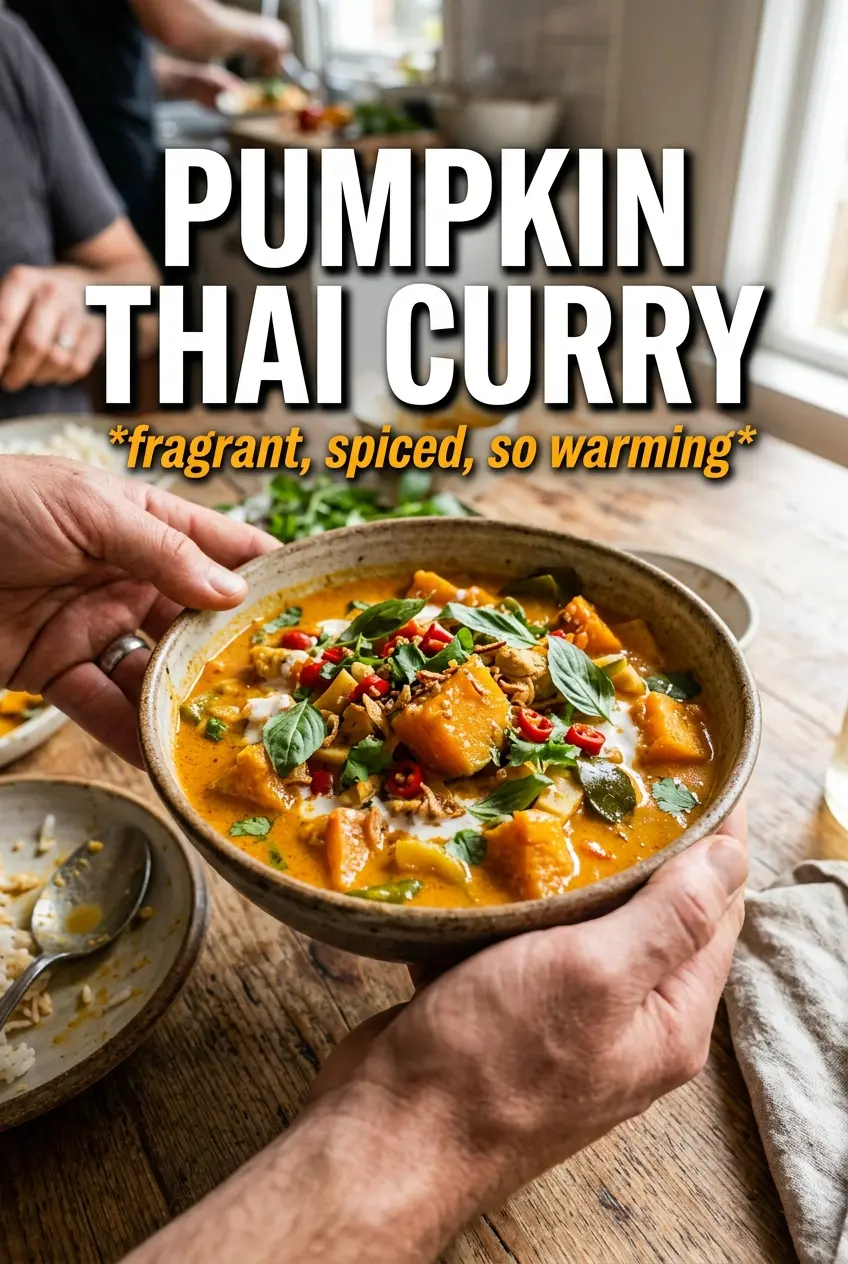
Pumpkin Thai Curry
Ingredients
Equipment
Method
- Heat the coconut oil in a Dutch oven over medium heat, then sauté the onion, garlic, and ginger for 3 minutes, stirring until fragrant and softened.
- Add the Thai curry paste and cook for 2 minutes, stirring frequently, until fragrant and darker in color.
- Add the pumpkin, bell pepper, coconut milk, and vegetable broth, then bring the mixture to a simmer.
- Reduce to a steady simmer and cook for 15-18 minutes, until the pumpkin is just tender.
- Stir in the fish sauce or soy sauce and brown sugar, then taste and adjust seasoning to your preference.
- Fold in the Thai basil leaves and cook for 1 minute, just until wilted.
- Serve the curry over steamed rice with lime wedges.