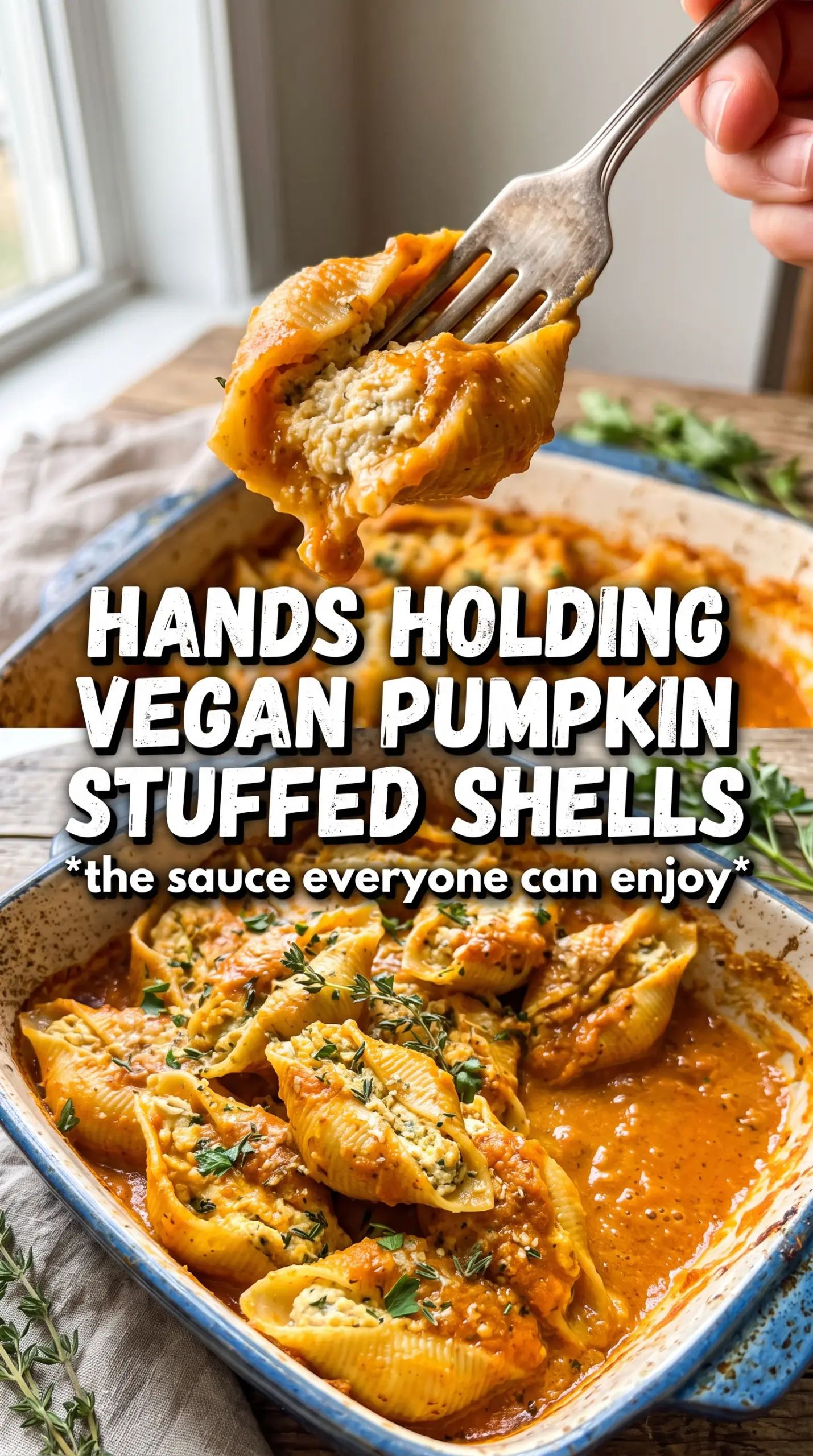
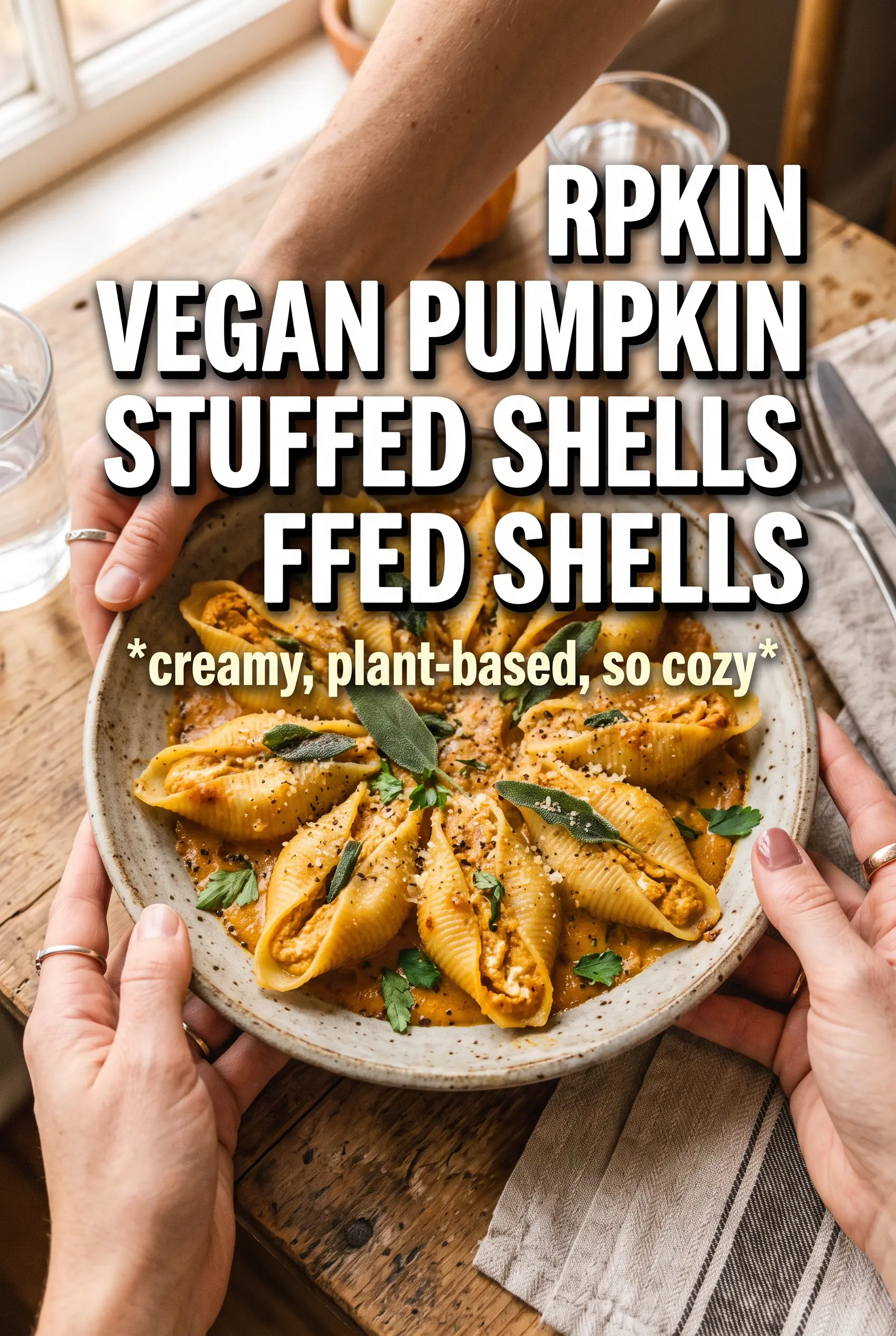
Vegan pumpkin ricotta stuffed shells bake up creamy, savory, and generous, with tender pasta pockets tucked into a rich orange sauce that clings to every ridge. The filling stays light but satisfying, and the top turns bubbling and bronzed in the oven so each spoonful lands somewhere between cozy baked pasta and a proper main dish.
What makes this version work is the balance. Tofu gives the filling structure, cashew cream brings the soft richness you want from ricotta, and nutritional yeast adds that salty, cheesy depth that keeps the pumpkin from tasting flat. The sauce leans on coconut cream for body, but the garlic, broth, and Italian seasoning keep it grounded in savory territory instead of dessert-adjacent pumpkin.
Below, I’m walking through the texture cues that matter most, the one place people usually go wrong with stuffed shells, and a few easy ways to adapt the dish depending on what’s in your kitchen.
The pumpkin sauce turned silky in the oven and the shells held together beautifully. I worried the tofu filling would be bland, but the garlic and nutritional yeast made it taste like a real ricotta bake.
Save these vegan pumpkin ricotta stuffed shells for a creamy baked pasta night with a savory pumpkin sauce and a tofu-cashew filling.
The Part That Keeps the Shells from Turning Watery
Stuffed shells go wrong when the filling is too loose or the sauce is too thin. In this recipe, both parts are built to stay put. The tofu needs to be pressed first so it blends into a thick, spreadable ricotta instead of a soft puree, and the pumpkin sauce needs a brief simmer so the coconut cream and broth cook down into something spoonable rather than soupy.
The other thing that matters is the pasta itself. Cook the shells just to al dente and stop there, because they keep softening in the oven. If they start out fully tender, they can split while you fill them and turn mushy after baking. You want enough structure that each shell opens cleanly, holds a mound of filling, and still feels distinct after the sauce and cheese go on top.
- Firm tofu — This is the backbone of the filling. Soft tofu won’t hold up; it turns the mixture loose and bland. Pressing the block first is non-negotiable because extra water is the main reason vegan ricotta turns grainy or runny.
- Cashew cream — This gives the filling the creamy body that makes it taste rich. If you don’t have it, blended soaked cashews with a splash of water works well. A plain dairy-free cream substitute won’t give the same nutty roundness, so the filling will taste flatter.
- Pumpkin puree — Use plain pumpkin, not pie filling. You want the mellow sweetness and thick texture without added sugar or spice. The puree thickens the sauce and helps it cling to the shells instead of sliding to the bottom of the pan.
- Coconut cream — This is what makes the sauce lush enough for baked pasta. Canned coconut milk can work in a pinch, but the sauce will be thinner. Stir it well before measuring so you get the thick part from the can, not just the liquid underneath.
What Each Ingredient Is Actually Doing in This Recipe
- Primary ingredient (the star) — Quality matters most. Choose the best you can find.
- Cooking medium (oil, butter, or broth) — This carries flavors and prevents dryness.
- Seasonings (salt, pepper, spices, herbs) — Layer flavors so nothing overpowers. Build depth gradually.
- Aromatics (garlic, onion, herbs) — Cook with fat to bloom flavors. Become the foundation.
- Supporting ingredients — Complement the main ingredient without overpowering it.
- Sauce or liquid (if applicable) — Brings flavors together. Balance richness with acid.
- Acid (lemon, vinegar, wine, or other) — Brightens and prevents flat-tasting results.
- Final finish (garnish, glaze, or sauce) — Prevents one-dimensional taste and adds visual appeal.
Building the Sauce Before the Pasta Goes In
Blooming the Garlic
Start by sautéing the garlic just until it smells sweet and fragrant, not browned. Burnt garlic makes the whole sauce bitter, and once that happens there’s no fixing it. Keep the heat moderate and stir as soon as it hits the pan. You only need enough time to take the raw edge off and let it perfume the oil before the pumpkin goes in.
Turning Pumpkin into a Real Sauce
Once the pumpkin puree, coconut cream, broth, nutritional yeast, seasoning, and nutmeg are in the pan, let the mixture simmer for about 5 minutes. It should look glossy and slightly thicker when you stir through it, with a texture that coats the back of a spoon. If it still pours like soup, it hasn’t reduced enough and your shells will swim. Season at the end, after it thickens, because the salt level tastes different once the liquid has cooked down.
Filling and Nestling the Shells
Spoon the sauce into the baking dish first, then tuck the filled shells into it. That base layer keeps the pasta from sticking and starts the cooking from underneath. Fill each shell generously, but don’t overpack it to the point that the opening tears wider and the filling spills out in the oven. Arrange them snugly, because a little crowding helps them hold their shape.
Baking to the Bubbling Point
Cover the shells with the remaining sauce and top with vegan mozzarella. Bake until the edges are bubbling and the cheese has melted into soft golden pockets, usually 35 to 40 minutes. If the top browns too quickly before the sauce is hot, lay a piece of foil loosely over the dish for the last stretch. Let it rest a few minutes before serving so the filling settles and the shells lift more cleanly from the pan.
How to Adapt These Shells for Different Kitchens
Gluten-Free Pasta Shells
Use a gluten-free jumbo shell that holds up well when boiled. Some brands split more easily, so pull them from the pot a minute early and handle them gently while stuffing. The flavor stays the same, but the texture can be a little more delicate, which is why the sauce underneath matters even more.
Nut-Free Filling
Swap the cashew cream for unsweetened oat cream or a thick dairy-free plain yogurt if that’s what you keep on hand. The filling will be a little less rich and less naturally sweet, but it still bakes into a creamy, sliceable texture. Add the cream a little at a time so the ricotta stays thick enough to spoon into the shells.
Extra Veggie Add-Ins
Fold finely chopped spinach, sautéed mushrooms, or wilted kale into the ricotta if you want a heartier pan. Cook the vegetables first and squeeze out excess moisture so the filling doesn’t turn wet. This is the best way to stretch the recipe for a bigger crowd without changing the base sauce.
Storage and Reheating
- Refrigerator: Keep leftovers covered for up to 4 days. The shells will absorb more sauce as they sit, so the dish gets thicker by day two.
- Freezer: This freezes well baked or unbaked. Wrap tightly and freeze for up to 2 months; thaw overnight before reheating or baking so the center heats evenly.
- Reheating: Warm covered in a 350F oven until hot in the middle, adding a splash of broth or water if the sauce has tightened too much. The common mistake is microwaving uncovered, which dries the pasta and makes the filling tough at the edges.
Questions I Get Asked About This Recipe
Vegan Pumpkin Ricotta Stuffed Shells
Ingredients
Equipment
Method
- Preheat the oven to 375F and grease a 9x13 baking dish.
- Sauté minced garlic in a Dutch oven until fragrant, about 1 minute with no browning.
- Add pumpkin puree, coconut cream, vegetable broth, nutritional yeast, Italian seasoning, nutmeg, and salt and pepper, then stir to combine.
- Simmer the sauce for 5 minutes, stirring occasionally until slightly thickened and cohesive.
- Pour most of the sauce into the greased baking dish, spreading it into an even layer.
- Blend pressed firm tofu, cashew cream, nutritional yeast, garlic, Italian seasoning, and salt and pepper until completely smooth, stopping to scrape as needed.
- Stuff each cooked jumbo shell with the tofu-cashew ricotta and nestle them in the sauce in the baking dish.
- Pour the remaining sauce over the stuffed shells so they’re covered.
- Top with vegan mozzarella.
- Bake for 35-40 minutes at 375F until hot through and the mozzarella is bubbling at the edges.
- Garnish with fresh basil right before serving.