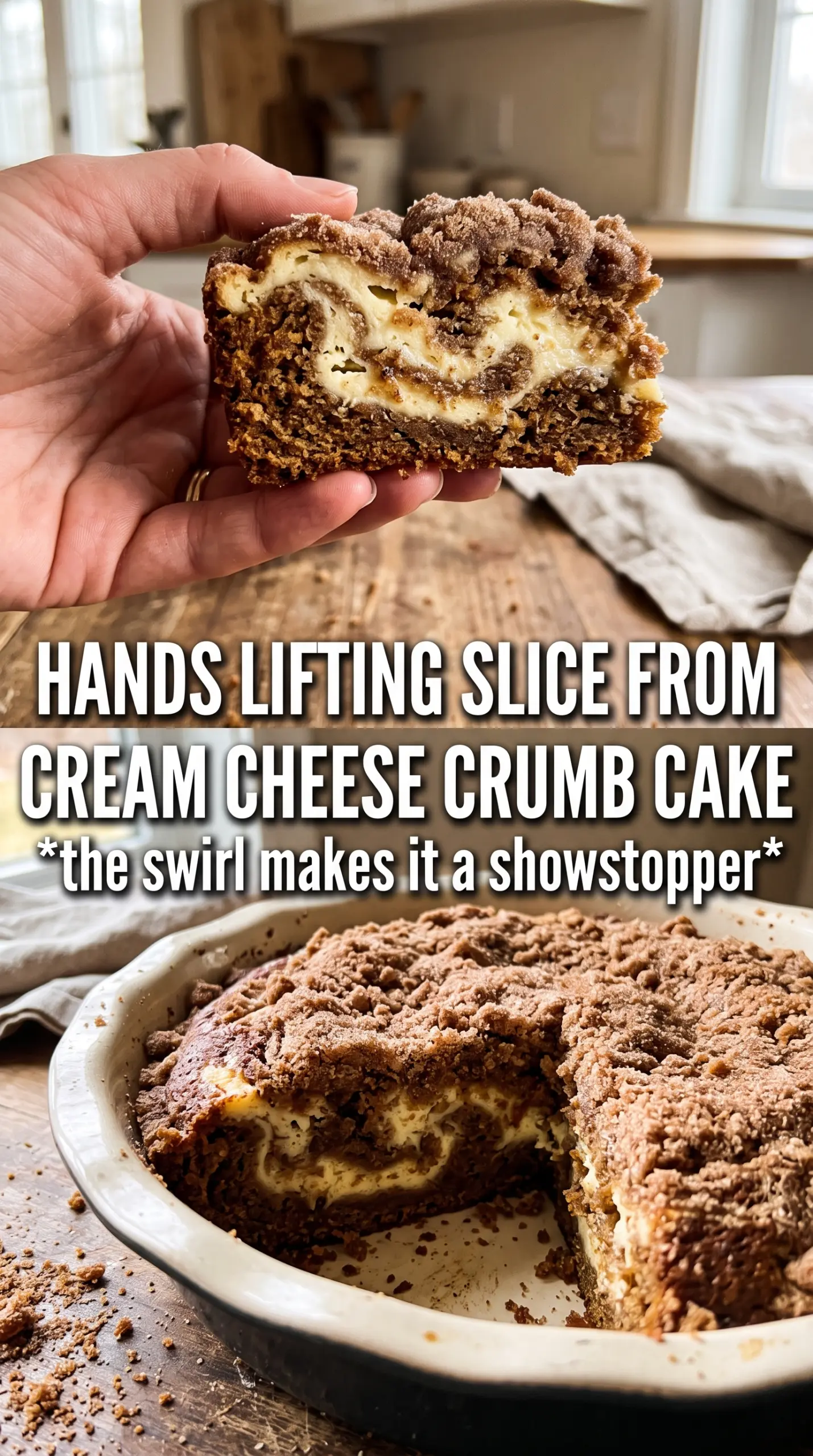
Pumpkin cream cheese crumb cake is the kind of breakfast bake that disappears fast because it hits every good note at once: tender pumpkin cake, a tangy cream cheese layer, and a thick cinnamon crumb topping that bakes up crisp at the edges and buttery in the middle. Each slice looks like something from a bakery case, but it eats like a home kitchen favorite.
What makes this version work is the balance. The pumpkin batter stays soft because of the sour cream, which keeps the crumb from turning dry or dense, and the cream cheese layer is mixed until smooth so it bakes into a clean, creamy ribbon instead of a lumpy pocket. The crumb topping gets chilled before it goes on top, which helps it hold those big, sandy clusters instead of melting into the cake.
Below you’ll find the small details that matter most here: how to keep the crumb topping lofty, how to spread the cream cheese without dragging the batter underneath, and what to look for when the center is done but still soft enough to stay moist.
The cream cheese layer stayed distinct and the crumb topping baked up crunchy, not soggy. I served it warm and my family kept sneaking back for another piece.
Pin this pumpkin cream cheese crumb cake for a breakfast bake with a thick cinnamon crumb, tangy cream cheese swirl, and a soft pumpkin center.
The Step That Keeps the Cream Cheese Layer from Sinking
The most common problem with a layered crumb cake like this is letting the fillings blur together. If the batter is too loose or the cream cheese mixture is too thin, the middle can sink and disappear into the cake instead of sitting in a neat ribbon. Here, the batter is thick enough to support the swirl, and the cream cheese layer is beaten until smooth so it spreads without tearing the pumpkin base underneath.
The other place people lose texture is on top. A crumb topping that starts soft turns pasty in the oven, so chilling it before baking matters more than it sounds. Cold crumbs hit the heat and set in place before they melt, which is how you get those chunky, bakery-style bits instead of a sandy lid.
- Pumpkin puree — Use plain pumpkin puree, not pumpkin pie filling. Pie filling already has sugar and spices added, which throws off both the sweetness and the structure.
- Sour cream — This is the ingredient that keeps the cake plush. Full-fat Greek yogurt works in a pinch, but the crumb will be a little less rich and a touch tangier.
- Cream cheese — Softened cream cheese blends into a smooth layer without lumps. Cold cream cheese is the fastest way to end up with little white pockets after baking.
- Brown sugar — Brown sugar does the heavy lifting in both the cake and the crumb because it brings moisture and a deeper caramel note. Light or dark both work; dark brown sugar gives a slightly stronger molasses flavor.
- Butter — Melted butter in the crumb makes the topping clump into large pieces. For the cake, softened butter creams with the sugar and helps build a more tender crumb.
What Each Ingredient Is Actually Doing in This Recipe
- Primary ingredient (the star) — Quality matters most. Choose the best you can find.
- Cooking medium (oil, butter, or broth) — This carries flavors and prevents dryness.
- Seasonings (salt, pepper, spices, herbs) — Layer flavors so nothing overpowers. Build depth gradually.
- Aromatics (garlic, onion, herbs) — Cook with fat to bloom flavors. Become the foundation.
- Supporting ingredients — Complement the main ingredient without overpowering it.
- Sauce or liquid (if applicable) — Brings flavors together. Balance richness with acid.
- Acid (lemon, vinegar, wine, or other) — Brightens and prevents flat-tasting results.
- Final finish (garnish, glaze, or sauce) — Prevents one-dimensional taste and adds visual appeal.
Building the Layers So the Cake Bakes Evenly
Start with the crumb topping
Mix the flour, brown sugar, and cinnamon first, then pour in the melted butter and stir until you get large, shaggy crumbs. You want pebbles, not a paste. If the mixture looks greasy and wet, add a spoonful or two of flour; if it looks dusty and won’t clump at all, add a little more butter. Chill it while you build the batter so the pieces stay chunky in the oven.
Make the cream cheese filling smooth
Beat the softened cream cheese, sugar, egg, and vanilla until the mixture looks glossy and completely lump-free. Stop and scrape the bowl so you don’t leave a streak of cream cheese hiding at the bottom. If the filling is thick but spreadable, it will sit nicely between the batter layers instead of mixing through them.
Build the pumpkin batter
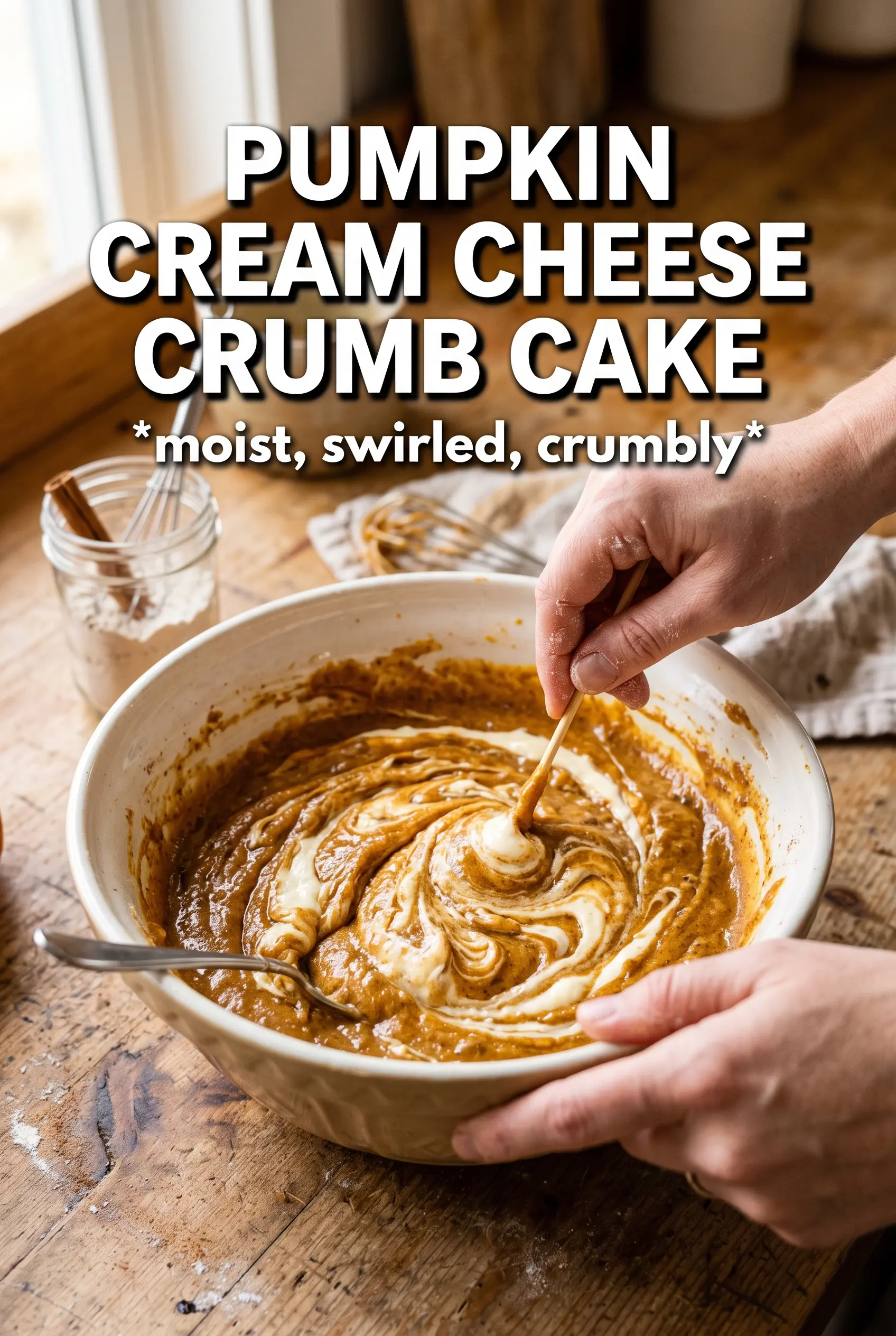
Cream the butter and brown sugar until the mixture looks lighter and fluffy, then beat in the eggs one at a time. Stir in the pumpkin, sour cream, and vanilla, and don’t worry if the batter looks slightly curdled for a moment; it comes back together once the dry ingredients go in. Fold in the flour, baking powder, baking soda, spices, and salt just until no dry streaks remain, because overmixing makes the cake tough and gummy.
Layer it without disturbing the swirl
Spread half the batter into the pan first, then dollop the cream cheese filling over the top and spread it gently toward the corners. A small offset spatula works best, but the back of a spoon does the job if you move slowly. Add the remaining batter in spoonfuls so you don’t drag the cream cheese into the bottom layer, then scatter the chilled crumbs over everything in a generous, even layer.
Bake until the center is set
Bake until the top is deep golden and the middle no longer looks wet when you gently nudge the pan. A toothpick inserted into the cake portion should come out with a few moist crumbs, not raw batter; if you hit the cream cheese layer, that will read softer, so check a couple of spots. Let it cool before dusting with powdered sugar, because sugar will melt into the top if the cake is still steaming.
Three Ways to Change the Texture Without Losing the Point
Make it gluten-free
Use a good 1:1 gluten-free baking flour in both the cake and the crumb topping. The texture will be a little more delicate and less springy than the wheat version, but the cream cheese layer and buttery crumb still carry the whole dessert. Let the cake cool fully before slicing so it sets cleanly.
Make it dairy-free
Swap in plant-based butter for the crumb and cake, and use a dairy-free cream cheese that’s meant for baking or spreading. The result will be slightly softer and less rich, but the structure still holds if the substitutes are full-fat. Avoid thin, whipped dairy-free spreads, which can loosen the filling too much.
Turn it into muffins
Portion the batter into lined muffin tins, add a small spoonful of cream cheese filling to each, and top with crumbs. They bake faster and come out with more crust in every bite, but you lose the dramatic swirl you get in the pan. Start checking around 20 to 24 minutes.
Swap in walnuts for part of the crumb
Replace up to half of the crumb topping with finely chopped walnuts for extra crunch and a toastier finish. The topping gets a little more rustic and less sandy, which works well with pumpkin, but keep some flour in the mix so the crumbs still clump.
Storage and Reheating
- Refrigerator: Store covered for up to 4 days. The crumb softens a bit in the fridge, but the flavor stays great.
- Freezer: This freezes well. Wrap individual slices tightly and freeze for up to 2 months, then thaw overnight in the fridge.
- Reheating: Warm slices in the microwave for 15 to 20 seconds or in a 300F oven until just heated through. Don’t overheat it or the cream cheese layer can get loose and the crumb topping will lose its crunch.
Answers to the Questions Worth Asking
Pumpkin Cream Cheese Crumb Cake
Ingredients
Equipment
Method
- Preheat oven to 350F and grease a 9x13 pan.
- Make crumb topping by mixing flour, brown sugar, cinnamon, and melted butter into large crumbs, then refrigerate while you prepare the layers.
- Beat cream cheese with sugar, egg, and vanilla until smooth.
- Beat butter and brown sugar until smooth, then beat in the eggs, pumpkin, sour cream, and vanilla.
- Fold in the dry ingredients (flour, baking powder, baking soda, pumpkin pie spice, cinnamon, and salt) until just combined.
- Spread half the batter in the prepared pan.
- Dollop the cream cheese layer over the batter and spread gently.
- Top with the remaining batter, then scatter crumb topping generously over the surface.
- Bake at 350F for 50-55 minutes, until the cake is set and a tester comes out clean.
- Dust with powdered sugar before serving.